
Cedar Waxwing
Cedar Waxwings are the kind of bird that makes people stop and look twice. Sleek, smooth plumage with no harsh edges, a swept-back crest, a yellow-tipped tail, and the red waxy wingtip droplets that give the species its name. They move in flocks that descend silently on berry trees, strip them efficiently, and disappear. When you do find them, they pass berries to each other — a behavior so unusual it looks deliberate.
Here is everything about Cedar Waxwings: what they look like, why they behave the way they do, and how to find them.
Identification
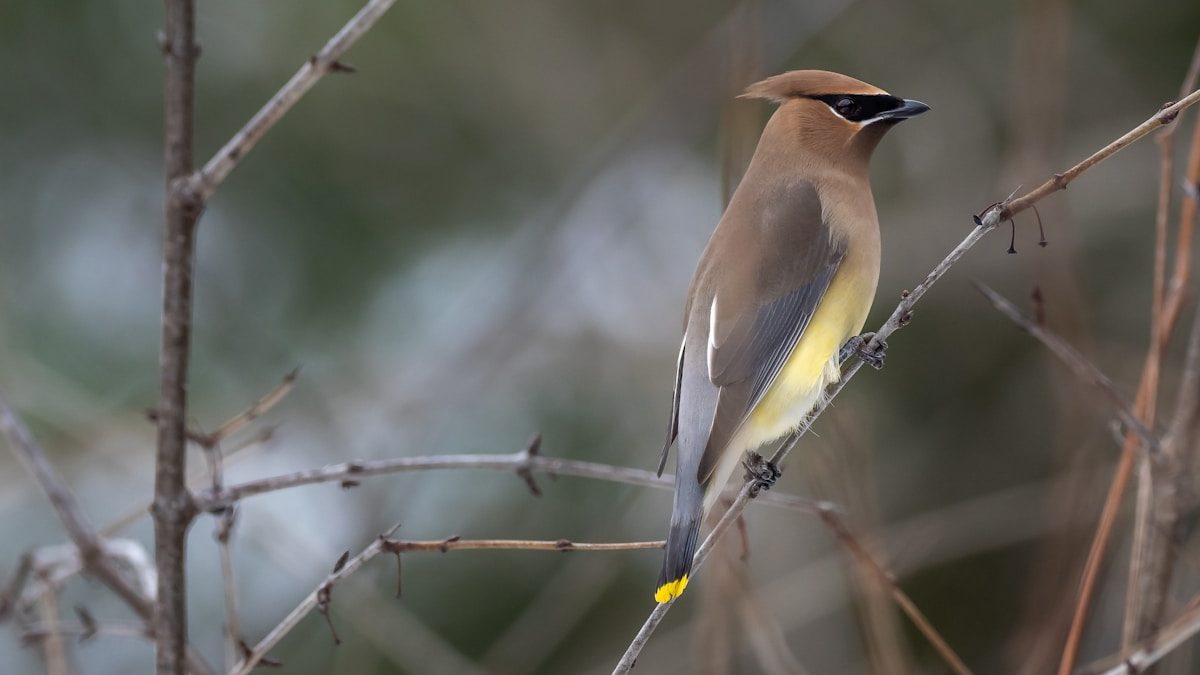
Overall impression: Smooth and elegant. The plumage appears airbrushed — no sharp boundaries between colors, just gradual transitions from warm brown on the head and back to gray-brown wings to yellow on the belly. The effect is unlike most North American birds.
Key field marks:
- Crest — Pointed, swept back. Raised when alert, flattened when relaxed.
- Black mask — Runs through and behind the eye, edged with white below.
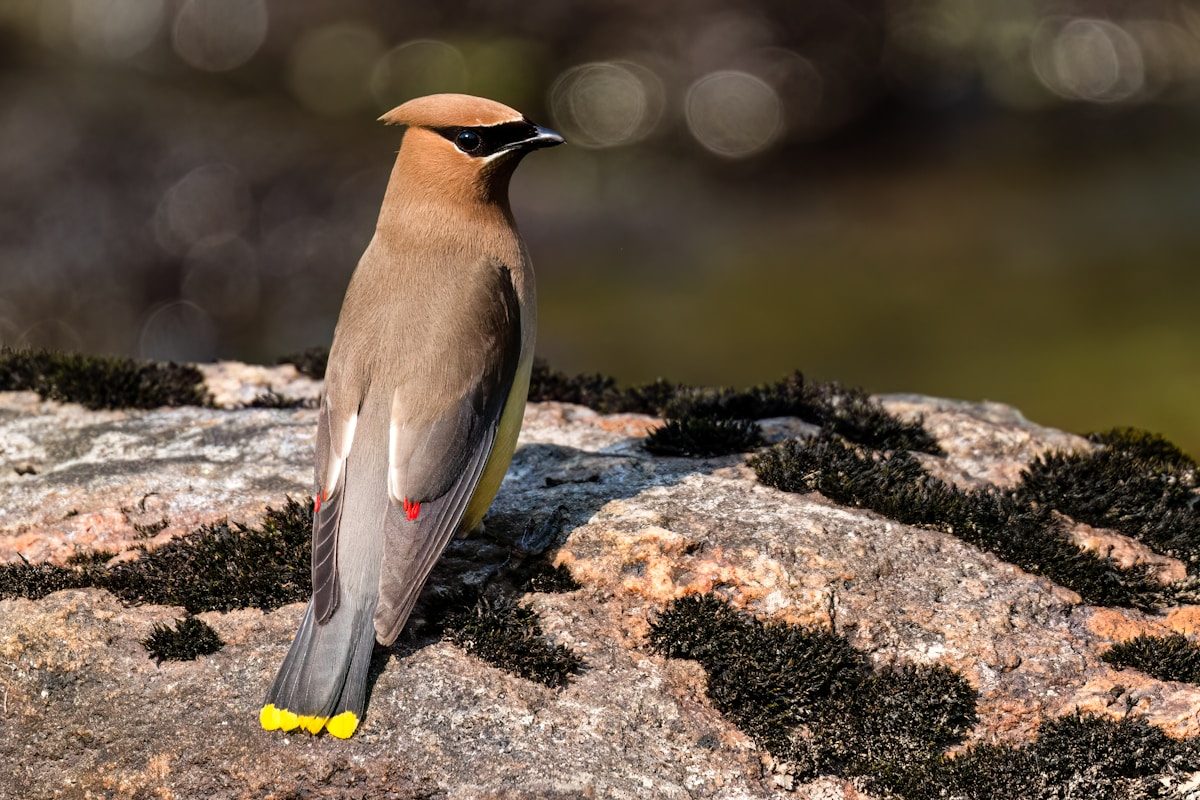
- Yellow tail tip — A clean yellow band across the tail tip. Most visible in flight.
- Red waxy wingtips — Small red droplets on the tips of the secondary feathers. More prominent on older birds. The purpose is not fully understood — likely a signal of age and condition to potential mates.
- Silky texture — The overall smooth appearance is one of the most distinctive things about this bird at any distance.
Size: 5.5–6.7 inches — similar to a starling but slimmer.
Similar species: Bohemian Waxwing is larger, grayer, with rusty undertail coverts and yellow and white in the wing. Range overlap is mostly in the northern US in winter. If you see a waxwing in summer in the continental US, it’s almost certainly a Cedar.
Basic Facts
| Feature | Detail |
|---|---|
| Scientific name | Bombycilla cedrorum |
| Family | Bombycillidae (waxwings) |
| Length | 5.5–6.7 inches |
| Weight | 1.1 oz (32g) |
| Wingspan | 8.7–11.8 inches |
| Lifespan | Up to 13 years on record; typically 5–7 years |
| Eggs per clutch | 2–6, pale blue-gray with dark spots |
| Incubation | 11–13 days |
| Broods per year | 1–2 |
| Conservation status | Least concern |
Diet: Almost Entirely Berries
Cedar Waxwings are among the most fruit-dependent birds in North America. Fruit makes up roughly 84% of their annual diet — a much higher proportion than most frugivorous birds. Their digestive system is specifically adapted to process large volumes of fruit quickly, extracting sugar while passing seeds intact — making them important seed dispersers for berry-producing plants.
Preferred fruit sources in order of availability through the year:
- Spring: Serviceberry (the first ripe fruit of the year — waxwings time their nesting around it)
- Summer: Mulberry, cherry, strawberry, raspberry
- Fall: Crabapple, hawthorn, dogwood berries, viburnum
- Winter: Cedar berries (the namesake food), juniper, holly, mistletoe
Cedar Waxwings can become intoxicated by fermenting berries — this is documented, not anecdotal. Overripe hawthorn or crabapple berries can ferment on the tree, and birds that eat large quantities sometimes appear disoriented, fall off perches, or are found on the ground. Most recover within hours.
In summer, they supplement their fruit diet with insects — particularly during the brief nestling period when chicks need protein. They are capable aerial flycatchers, launching from a perch to catch insects in midair.
Cedar Waxwing
The Berry-Passing Behavior
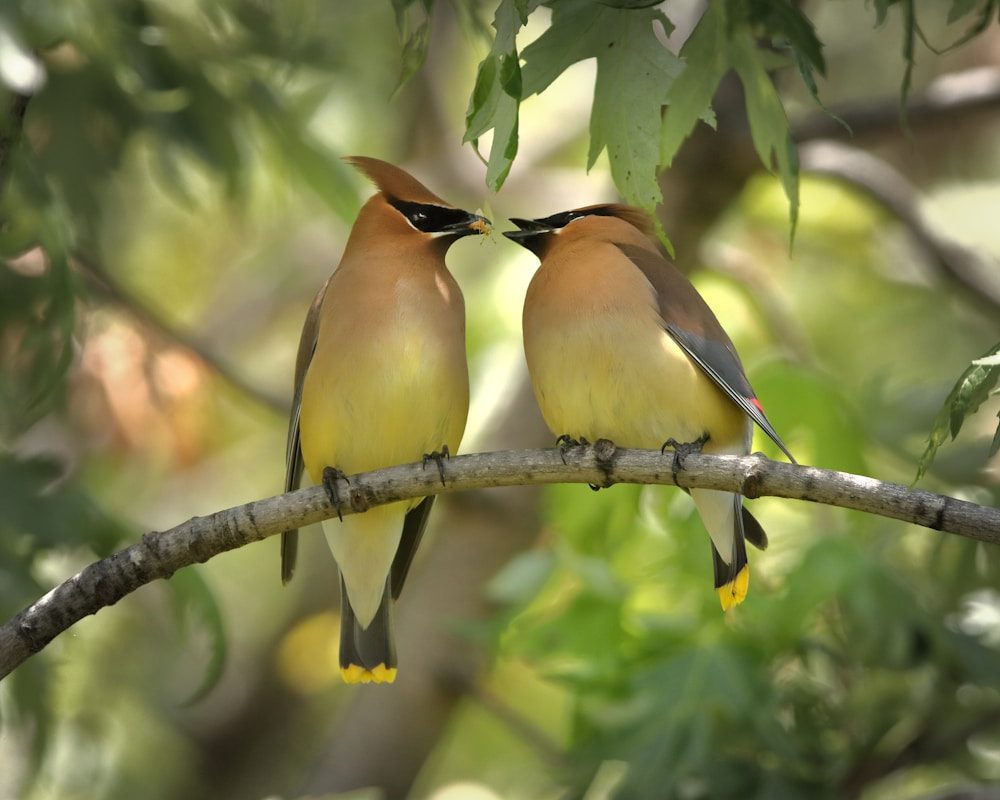
Cedar Waxwings are famous for passing fruit to each other along a perched line. One bird picks up a berry and passes it sideways to the next bird, which passes it to the next, until one bird eats it. This is observed most often between mated pairs during courtship, but also among flock members.
The function is not fully established. Current interpretations include courtship bonding (the exchange reinforces pair bonds), dominance signaling (initiating the pass demonstrates confidence), and simple social cohesion. Whatever the reason, it is one of the more striking behaviors in North American bird life and is easily observed when waxwings are present at a berry source.
Flocking Behavior
Cedar Waxwings are highly social year-round. They nest in loose colonies, forage in flocks of a dozen to several hundred birds, and move nomadically through the landscape following fruit availability. Unlike most migratory birds, their movements are not on a fixed schedule — they go where the food is.
This nomadic quality is why waxwings appear irregularly. A yard with no fruit trees may go a year without seeing one. The same yard after a crabapple ripens can have 80 birds in an afternoon. When a flock finds a productive berry tree, they stay until it’s stripped.
The flock’s contact call — a high, thin “srreee” trill — is the most reliable way to find them. When you hear that sound overhead, look up for birds in loose formation often flying in a V or undulating line.
Nesting
Cedar Waxwings nest later than most songbirds — typically late June through August — timed to coincide with berry availability. They build a bulky cup nest of grass, twigs, and plant fibers in a deciduous tree, usually near a water source. Both sexes build over 5–6 days.
The female incubates 2–6 eggs for 11–13 days. Chicks are fed fruit and insects and fledge at 14–18 days. The late breeding season allows pairs to raise a second brood if conditions allow.
How to Attract Cedar Waxwings
You can’t attract waxwings with a feeder — they don’t eat seed. What they need is fruit. The most effective way to get them in your yard:
- Plant native berry trees — Serviceberry is the single best choice. Waxwings time their movements around serviceberry ripening in May–June. Crabapple, hawthorn, and native dogwood are also excellent.
- Leave fruit on trees through winter — Don’t cut crabapples or hawthorns back before they fruit. Waxwings strip these trees in fall and winter when other food is scarce.
- Provide water — Cedar Waxwings bathe and drink frequently. A birdbath with a dripper attracts them reliably when they’re in the area.
- Listen for the call — The high trilled “srreee” is how you’ll know they’re nearby before you see them.
FAQ: Cedar Waxwing
What does a Cedar Waxwing look like?
Smooth brown plumage with a pointed crest, black mask, yellow tail tip, and small red waxy droplets on the wing tips. One of the most distinctive-looking birds in North America.
Why do Cedar Waxwings pass berries to each other?
Observed most often during courtship — the berry-passing appears to reinforce pair bonds. The behavior is also seen in flocks and may serve social cohesion functions. The exact reason is still debated.
What do Cedar Waxwings eat?
Primarily fruit — about 84% of their annual diet. Serviceberry, crabapple, hawthorn, cedar berries, holly, and many others. They supplement with insects during the breeding season.
Why do Cedar Waxwings appear suddenly then disappear?
They are nomadic fruit specialists. They follow fruit availability rather than fixed migration routes, which means their presence in any one area is tied to what’s ripe. When a berry source is exhausted, the flock moves on.
For more backyard bird identification, see our guides on American Goldfinch, Cedar Waxwing, Indigo Bunting, Pileated Woodpecker, and Barn Owl.

MD Imdadul Haque is the founder of BirdzFly, a research-backed resource on North American backyard birds. Drawing on years of independent study into bird identification, behavior, and migration patterns, he writes in-depth guides designed to help US birders understand the species in their own backyards — from common feeder visitors to seasonal migrants passing through.

