
House Finch vs Purple Finch
A red finch at the feeder gets called a “House Finch” by most people automatically — and they’re usually right, because House Finches are far more common at feeders across most of the US. But the less common Purple Finch turns up regularly enough, especially in winter, that learning the difference is worth the five minutes it takes.
The Fast Separator
Look at how much red is on the bird, and where. House Finch males have red confined mostly to the head and upper breast, with heavily brown-streaked flanks and belly. Purple Finch males have a wash of raspberry-red covering the head, breast, back, and even the wings — it looks like the whole bird was dipped in color, not just splashed on the front.
House Finch: Identification
- Male: Red on the forehead, eyebrow, throat, and breast — but the color is patchy and doesn’t extend evenly. Brown, heavily streaked flanks and belly, brown cap. Color intensity varies a lot between individuals based on diet (red comes from carotenoid pigments in food).
- Female: Plain grayish-brown overall with blurry, indistinct streaking. No strong facial pattern.
- Bill: Smaller, more curved profile, less conical than Purple Finch.
- Range: Abundant year-round across nearly all of the continental US. Originally a western species, now established coast to coast after introduction in the East in the 1940s.
Purple Finch: Identification
- Male: Raspberry-red to wine-colored wash covering the head, back, breast, and wings — much more extensive and even than House Finch. Often described as looking like it was dipped in raspberry juice. No sharp boundary between red and the rest of the body the way House Finch shows.
- Female: Strong facial pattern — a bold white eyebrow stripe and a dark stripe through the cheek, contrasting sharply with brown crown and cheek patch. Much more distinctly marked than the plain House Finch female. This is actually the more reliable mark for separating females.
- Bill: Larger, more conical, straighter profile than House Finch.
- Range: Breeds in the northern US and Canada, winters more widely across the eastern and central US, but in much lower numbers than House Finch and absent from most of the West and Southwest.
The Female Comparison Is Actually Easier
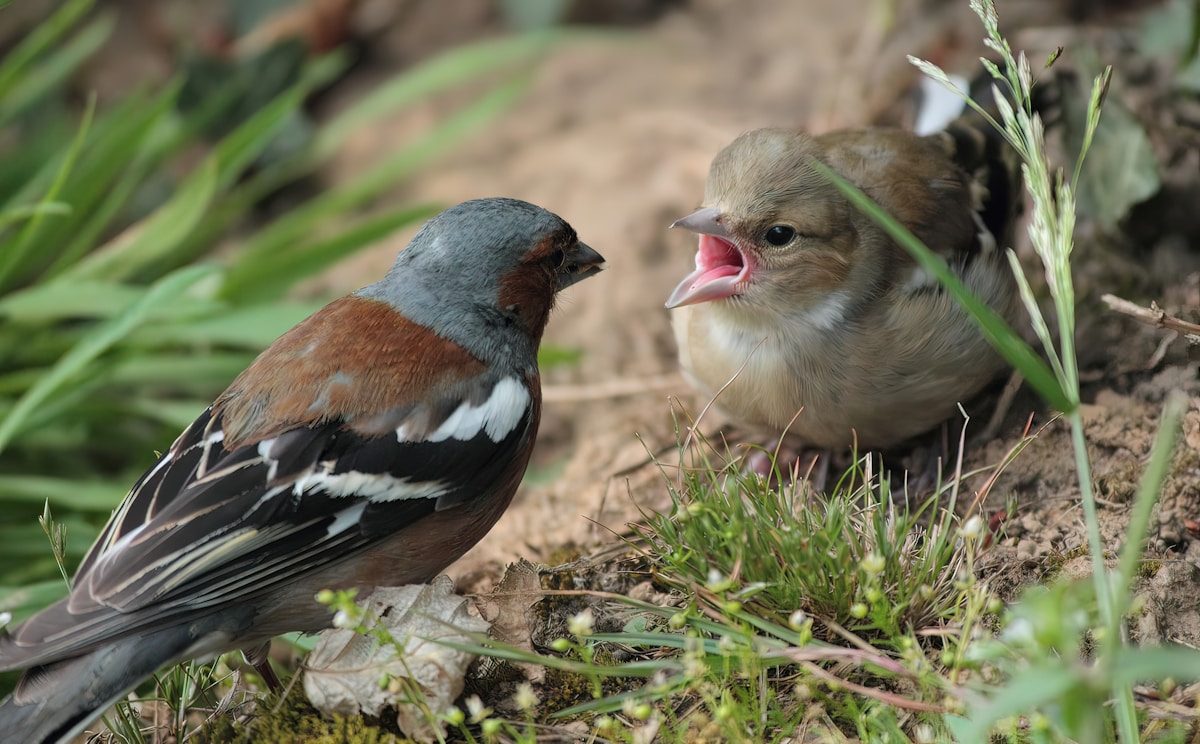
Counterintuitively, female Purple and House Finches are often easier to separate than the males, because the female Purple Finch’s bold facial pattern — strong white eyebrow stripe over a dark cheek patch — has no equivalent in the female House Finch, which is just plainly streaked brown with no strong pattern. When in doubt, check the female’s face first.
Quick Reference Table
| Feature | House Finch | Purple Finch |
|---|---|---|
| Male red coverage | Head and breast only, patchy | Head, back, breast, wings — even wash |
| Female pattern | Plain brown streaking, no strong pattern | Bold white eyebrow, dark cheek patch |
| Bill shape | Smaller, curved | Larger, straight, conical |
| Range | Year-round, coast to coast | Northern breeder, winters south in lower numbers |
| Abundance at feeders | Very common | Uncommon to rare in most areas |
Why Color Varies So Much in House Finches
House Finch vs Purple Finch
House Finch red intensity is directly tied to diet — the red pigments are carotenoids obtained from food, not produced internally. A House Finch eating carotenoid-rich foods during molt grows vivid red feathers; one with a poorer diet during molt can grow orange or even yellowish feathers instead. This is why you’ll sometimes see distinctly orange or yellow “House Finches” at a feeder — same species, different feather pigment availability during the molt that produced those particular feathers. Purple Finch coloring is more consistent because it isn’t as strongly diet-dependent.
Attracting Both Species
Both species come readily to black oil sunflower seed and nyjer feeders. House Finches will visit reliably almost everywhere in the US. Purple Finches are more of a seasonal bonus in winter in the eastern and central states — if one shows up at a feeder that normally only has House Finches, it’s worth a second look at the female facial pattern to confirm.
FAQ: House Finch vs Purple Finch
What is the easiest way to tell House Finch from Purple Finch?
Look at how much of the bird is red. House Finch males have red limited to the head and breast with brown streaky flanks. Purple Finch males have an even raspberry wash covering the head, back, and wings.
How do you tell female House Finch from female Purple Finch?
Check the face. Female Purple Finch has a bold white eyebrow stripe and dark cheek patch. Female House Finch is plainly streaked brown with no strong facial pattern.
Are Purple Finches rare?
Not rare, but much less common than House Finches in most of the US, and largely absent from the West and Southwest. They’re most likely seen in winter in the northern and eastern states.
For more on backyard finch and songbird identification, see our guides on American Goldfinch, Indigo Bunting, Cedar Waxwing, and Northern Mockingbird.

MD Imdadul Haque is the founder of BirdzFly, a research-backed resource on North American backyard birds. Drawing on years of independent study into bird identification, behavior, and migration patterns, he writes in-depth guides designed to help US birders understand the species in their own backyards — from common feeder visitors to seasonal migrants passing through.