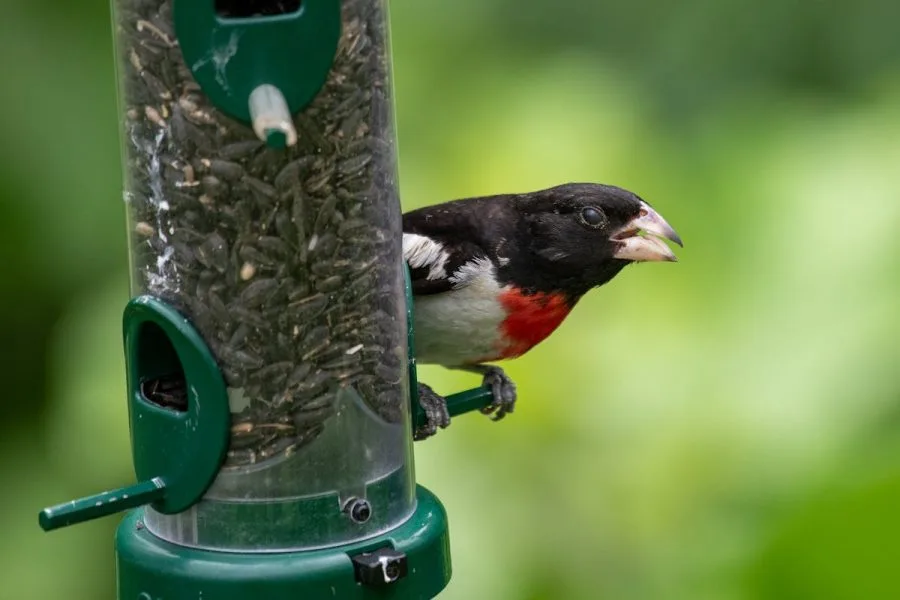


Rose breasted grosbeak
The rose-breasted grosbeak, also known as the “cut-throat” for its bright colors, belongs to the cardinal family.
Bird Introduction – Rose-breasted Grosbeak:
It is a large grosbeak that eats seeds. Males are mostly black on their heads, wings, backs, and tails. They have a bright rose-colored patch on their white breasts. Males of this species are black-and-white birds. They have a bold red chevron that runs from their black throats down to their breasts. Females and young birds are brown and have heavy streaks on their backs. They also have a blotchy, pale ridge above their eyes. Mature males show pinkish-red feathers under their wings, and females flaunt yellowish. Both sexes also have white wing and tail patches.
📝Basic Info:
-
Scientific Name: Pheucticus ludovicianus
-
Lifespan: 7.3 years (in the wild)
-
Size: 7.1 to 8.7 in
-
Weight: 1.2-2.3 oz
-
Wingspan: 11-13 in.

Rose breasted grosbeak
Rose-breasted Grosbeak Range and Habitat:
The rose-breasted grosbeak breeds in open woods. Researchers find these habitats across most of Canada and the northeastern United States.
Northern gynes move south during migration. They travel through the United States, east of the Rockies. Their wintering spots include central-southern Mexico, Central America, the Caribbean, Peru, and Venezuela.
In winter, they often appear in open woodlands or similar habitats. These areas have low tree cover. They include forest edges, urban parks, gardens, and plantations.
Rose-breasted grosbeak in the yard:
Buff chunky birds wield thick bills to eat seeds as well as fruit and insects. They are common visitors to backyard bird feeders and readily eat sunflower seeds.
Male grosbeaks arrive at the breeding grounds a few days to a week before the females. They form pairs upon arrival. Nests may start being built as early as May in Tennessee to as late as June further north in Saskatchewan. Typically, there is one brood each summer. Egg laying can occur from mid-May to mid-July.
Both male and female grosbeaks help pick a good spot and build a nest. They usually place it on a tree branch, over vines, or in other high plants near openings in woodlands. Nests are built with leaves, twigs, rootlets, or hair.

MD Imdadul Haque is the founder of BirdzFly, a research-backed resource on North American backyard birds. Drawing on years of independent study into bird identification, behavior, and migration patterns, he writes in-depth guides designed to help US birders understand the species in their own backyards — from common feeder visitors to seasonal migrants passing through.