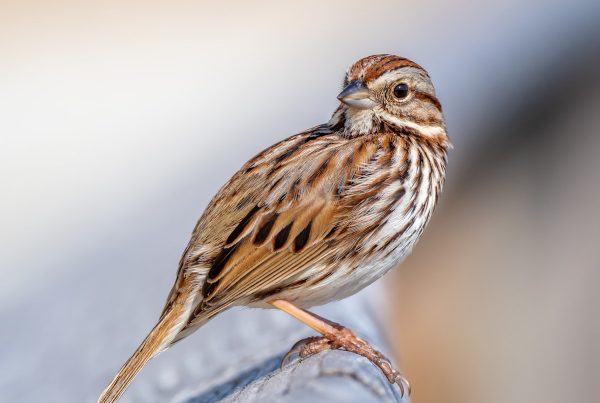

Blue Jays eat almost anything — and they eat a lot of it. Of all the common backyard birds, few are as opportunistic and as ecologically important as the Blue Jay when it comes to food. Acorns are the center of the diet story, but that center connects outward to forest ecology, seed caching behavior, and a reputation for occasional nest raiding that gets far more attention than the actual frequency warrants.
What Blue Jays Eat: The Full List
Acorns and Mast: The Primary Food Source
Acorns dominate the Blue Jay’s diet in fall and winter and are the single most important food source across the year. Blue Jays are among the most efficient acorn harvesters in North America — a single Blue Jay can carry 5 to 7 acorns at once in its expandable throat pouch, returning repeatedly to strip a productive oak and cache the harvest for winter.
The caching behavior is ecologically significant beyond the bird’s own food needs: Blue Jays bury acorns in loose soil, often far from the parent tree, and they don’t recover all of them. Uncovered acorns germinate and grow — it’s estimated that Blue Jays are responsible for a substantial portion of oak forest expansion and regeneration in North America. The post-glacial spread of oak forests northward was likely driven in part by Blue Jay caching behavior over thousands of years.
Beyond acorns, Blue Jays eat:
- Beechnuts
- Hickory nuts
- Pecans
- Chestnuts
- Various seeds including sunflower, corn, and wild grass seeds
Seeds at Feeders
At feeders, Blue Jays strongly prefer:
- Whole peanuts in the shell — the food most likely to bring Blue Jays to a specific feeder, especially a platform feeder. They’ll often carry several away to cache.
- Peanut pieces (shelled) — taken readily when whole peanuts aren’t available
- Black oil sunflower seeds — eaten at feeders and carried away to cache
- Cracked corn — an easy food that Blue Jays eat on the ground below platform feeders
- Whole corn kernels — particularly attractive in winter
Blue Jays are dominant at feeders — their size and boldness means other birds often give way. If jay activity is reducing access for smaller birds, offering peanuts on a dedicated platform feeder away from the main tube feeders often keeps the jays occupied and reduces competition.
Insects and Small Animals
Insects make up a significant portion of the spring and summer diet. Blue Jays eat:
- Grasshoppers, beetles, and caterpillars — the most commonly taken insects
- Cicadas during emergence years, when they’re extremely abundant
- Spiders and other invertebrates
- Small frogs and lizards occasionally
- Carrion — Blue Jays will eat small dead animals, though this is infrequent
Fruit and Berries
Fruit is eaten throughout the year but peaks in late summer and fall. Blue Jays take:
- Wild cherries and other Prunus species
- Elderberries
- Hackberries
- Dogwood berries
- Wild grapes
- Mulberries (an important summer food where available)
Eggs and Nestlings: How Common Is It Really?
Blue Jays have a documented reputation for raiding other birds’ nests — taking eggs and nestlings. This is real behavior, but stomach content studies consistently show that eggs and nestlings make up less than 1% of the annual diet. It’s occasional opportunism rather than a dietary staple.
The reputation is disproportionate to the actual frequency partly because the behavior is visible and dramatic when it occurs, and partly because other birds mob Blue Jays aggressively — behavior that looks like the jay is always causing harm even when it isn’t. A Blue Jay being mobbed by robins or catbirds is not necessarily raiding their nest; it may simply be in their territory.
How Blue Jays Store Food
Blue Jays are scatter-hoarders — they cache individual food items in hundreds of different locations spread across their territory rather than storing everything in one place. The caching is done primarily in fall when food is most abundant, building winter reserves.
They use spatial memory to recover cached items — research has shown Blue Jays accurately locate cached food even months later and under snow cover. The spatial memory capacity required for this is part of why corvids (the crow family, which includes jays) score highly in intelligence tests.
Items not recovered by the jay either remain in the soil (acorns may germinate), are found by other animals, or are simply lost — which is why the system benefits the ecosystem as well as the individual bird.
Seasonal Diet Summary
| Season | Primary foods |
|---|---|
| Spring | Insects, caterpillars, early berries, cached acorns from winter |
| Summer | Insects, fruit, berries, occasional eggs/nestlings |
| Fall | Acorns (heavy caching), mast, fruit, seeds |
| Winter | Cached acorns and nuts, feeder seeds, corn |
Best Feeder Foods to Attract Blue Jays
If you want Blue Jays specifically:
- Whole peanuts in shell — most effective, especially on a platform feeder
- Sunflower seeds — black oil or striped sunflower
- Cracked or whole corn — on a platform or scattered on the ground
Platform feeders work better than tube feeders for Blue Jays — their size makes clinging to tube feeders awkward, and they prefer to stand while eating. A tray or platform feeder at medium height (4–6 feet) with peanuts nearby cover will reliably attract jays.
FAQ: What Do Blue Jays Eat?
What is a Blue Jay’s favorite food?
Acorns in the wild. Whole peanuts at feeders. Blue Jays will reliably visit any feeder offering whole peanuts in the shell.
Do Blue Jays eat other birds’ eggs?
Occasionally, but this makes up less than 1% of their annual diet based on stomach content studies. It happens, but far less often than the reputation suggests.
Do Blue Jays eat sunflower seeds?
Yes — black oil sunflower and striped sunflower are both taken at feeders. They also cache sunflower seeds for winter use.
What do Blue Jays eat in winter?
Primarily acorns and nuts they cached in fall, supplemented by feeder seeds and corn. Blue Jays are one of the few songbirds that cache enough food to remain in northern areas year-round rather than migrating.
Do Blue Jays eat fruit?
Yes — wild cherries, elderberries, hackberries, dogwood, mulberries, and wild grapes are all taken seasonally.
For more on Blue Jays, see our guides on 25 surprising Blue Jay facts, Blue Jay spiritual meaning, are Blue Jays aggressive, and Blue Jay vs Scrub Jay identification.

MD Imdadul Haque is the founder of BirdzFly, a research-backed resource on North American backyard birds. Drawing on years of independent study into bird identification, behavior, and migration patterns, he writes in-depth guides designed to help US birders understand the species in their own backyards — from common feeder visitors to seasonal migrants passing through.