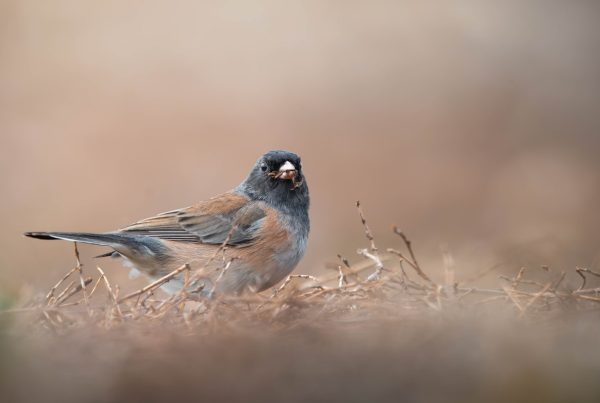

A sleeping bird on a branch looks like it’s balancing on faith. No hands, no railing, muscles presumably relaxed in sleep — and yet it doesn’t fall. The answer isn’t balance or vigilance. It’s a purely mechanical trick built into a bird’s leg that requires no muscular effort to hold on, and actually gets stronger the more the bird relaxes.
The Mechanism: A Tendon That Locks by Itself
A perching bird’s toes are connected to long tendons that run up the back of the leg. When a bird bends its leg to settle onto a branch — lowering its body weight down onto bent knees and ankles — those tendons are pulled taut by the very act of bending. The tension automatically curls the toes inward and clamps them around the branch.
This is the opposite of how it works for humans gripping something: our grip requires active muscle contraction, which tires and eventually releases as we relax. A bird’s grip does the reverse. The more its body weight settles down and its leg bends, the tighter the tendon pulls and the tighter the toes close. Falling asleep — going fully limp — doesn’t loosen the grip at all. If anything, a bird’s full body weight resting down onto bent legs increases the tension on the tendon and locks the toes more firmly in place.
This system is sometimes called a passive perching mechanism, or more specifically the flexor tendon lock, and it functions almost like a mechanical ratchet rather than a muscle a bird has to consciously keep flexed.
Why This Matters More at Night
The passive nature of the grip is exactly what makes sleeping on a branch safe. If a bird’s grip depended on continuously firing muscles, falling asleep would mean the grip loosening as the muscles relaxed — the opposite of what actually happens. Because the grip is generated by body weight pulling on a tendon rather than active muscle effort, a fully asleep, fully relaxed bird maintains its hold automatically. The mechanism requires the bird to be perched with bent legs; it isn’t something the bird has to think about or maintain moment to moment.
How a Bird Lets Go
Releasing the grip works the same way in reverse. When a bird straightens its legs — pushing its body upward and extending the knee and ankle joints, which is exactly the motion involved in launching into flight — the tension on the tendon releases and the toes open. This means the same leg motion a bird uses to take off from a perch is also what releases its grip, so the two actions happen together almost automatically rather than requiring separate deliberate steps.
Not All Birds Have This to the Same Degree
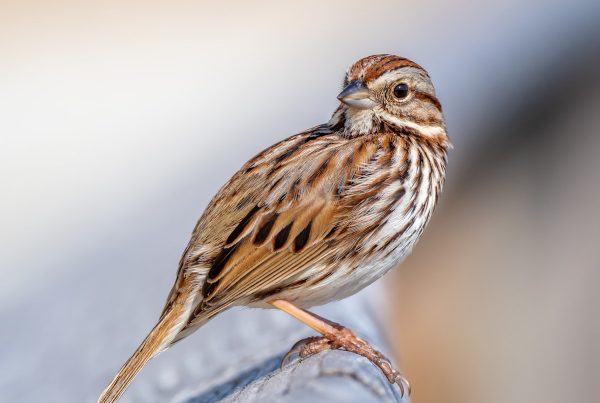
The tendon-lock mechanism is most developed in perching birds — the order Passeriformes, which includes the majority of songbirds most people see at feeders and in backyards. These birds have feet specifically structured for this kind of gripping perch behavior, generally with three toes forward and one toe pointing backward, an arrangement well suited to wrapping around a branch.
Birds with different foot structures and different lifestyles — waterfowl with webbed feet, or ground-dwelling birds that don’t typically perch on branches at all — don’t rely on this same mechanism in the same way, since their daily behavior doesn’t require it.
One Consequence: Standing on One Leg
The same passive grip system is part of why many birds are capable of sleeping while standing on a single leg, tucking the other up into their body feathers. Since the grip on the standing leg doesn’t require active muscular effort to maintain, a bird can rest most of its muscles for sleep while that one leg continues doing its job automatically, with no extra energy cost involved in keeping the perch secure.
FAQ: How Birds Sleep Standing Up
Why don’t sleeping birds fall off branches?
Their toes are connected to tendons that automatically tighten when the leg bends under body weight — a passive mechanism that doesn’t require active muscle effort, so falling asleep doesn’t loosen the grip.
Does a bird have to consciously hold on while sleeping?
No. The grip is mechanical, driven by body weight pulling on the tendon through the bent leg, not by ongoing muscular effort the bird has to maintain.
How does a bird release its grip to fly away?
By straightening its legs — the same motion used to launch into flight releases the tendon tension and opens the toes, so gripping and takeoff are connected in one continuous motion.
Do all birds have this tendon-lock mechanism?
It’s most developed in perching birds (songbirds), whose foot structure is specifically built for gripping branches. Birds with different lifestyles, like waterfowl, don’t rely on it the same way.
For more on bird biology and behavior, see our guide on how nuthatches climb head-first down trees.

MD Imdadul Haque is the founder of BirdzFly, a research-backed resource on North American backyard birds. Drawing on years of independent study into bird identification, behavior, and migration patterns, he writes in-depth guides designed to help US birders understand the species in their own backyards — from common feeder visitors to seasonal migrants passing through.