Hummingbirds: Fighting Or Playing?
Hummingbirds are speedy little flyers that can hover while they fly and come in an array of gorgeous colors, making them breathtaking additions to a garden and feeder. They are all the size of a nickel or less and fun to watch because they move fast, making sharp curves and other stunts. But many birdwatchers have questions about what seems to be aggressive interaction between hummingbirds. Whoever heard of play when it comes to birds, you’ve got to be joking, are these sassy little things playing or is there something more competitive going on?
This article will explore these fascinating interactions. We’ll focus on the features of behavior in hummingbirds including signs of aggression and how it differs from play. Understanding their behavior teaches us about the rich world in our backyard.
Hummingbird Behavior: A Guide With Examples
Because hummingbird behavior is always fast, this becomes a problem in interpretation. It is both aggressive and defensive, particularly regarding its known individual and species temperaments. As physically small, very active and with a very high metabolism, it is hard to fathom the range of interactions among individuals.
Features Of Hummingbirds
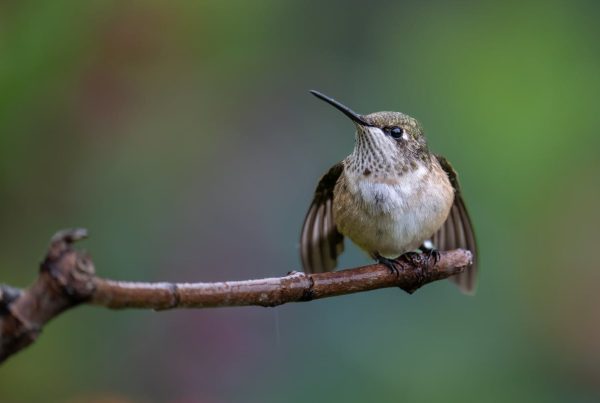
They are relatively small birds, so small that strains like the Ruby-throated and Anna’s hummingbirds can flap their wings as much as eighty times in a second. They can fly back and forth and hover as they feed on honey from flowers because of their size. They are very visual animals with excellent vision and are able to recognize feeders and rivals at a distance.
Challenges of Behavior Analysis
That’s particularly true of hummingbirds, one of which seems deserving of being viewed as a vortex of color and wings. They fly fast and are very small, which makes behavior hard to distinguish. In addition, the creatures are quite lively, and beginning, stopping, and changing direction so constantly, it is impossible to tell if they are simply playing, or also marking a territory. But we can only clarify whether or not hummingbirds engage in combat or play fighting with each other by focusing on certain behaviors and regions.
Knowing When There Is Aggression Vs. Playfulness
Sapps or nesting sites in the hummingbird are typically linked with aggressive postures assertive visual displays. Due to limited food and a need to restore energy, these tiny birds display murderous behavior to guard feeding and nesting grounds. Might some of these contacts constitute a form of play, at least in regards to the younger, less experienced of these birds, or those of significantly less aggression?
Hummingbird Territoriality
Hummingbirds are notoriously aggressive, particularly when it comes to other birds at feeders. Defenders of such resources are not so far, using flight characteristics and rants to scare off would-be violators. When a fellow bird presents a potential threat, a hummingbird, in most cases, finds another tree to perch upon, and by the time it perceives danger from that descender toward its feeder, the bird will have already swooped up into the air. These birds with such a strong territorial instinct might be just playing around but hunting for resources.
Social Structures And Dominance
With males, among birds like hummingbirds, they tend to combat for authority more so than females do, in fact during the breeding seasons this happens a lot more often as territorial factors have both feeding and mating advantages. Posturing is an expected behavior and can involve aggressive-looking in-flight behaviors like diving or chasing. This helps the hummingbird establish some order of the group, particularly when several birds might be competing for the same feeder or food.
Playfulness As An Adaptation In Animal Behavior
Although play behavior is commonly described in mammals, play is rarely observed in adult birds, even though it has been reported and predominantly mentioned in young birds. In the hummers, younger birds sometimes chase each other in what might appear to be play, but that happens during training in flying and foraging. Nonetheless, even childhood play can carry the sent of aggression, especially if they only salute to studying the behaviors that will allow them to outsmart an opponent.
The Mimicry of Predation In Hummingbirds
Or rather, physically specific poses, flight patterns, and vocalities have evolved to be open displays of aggressive behaviors in hummingbirds used to claim territories and food sources, as well as to assert dominance. These signs, once recognized, can inform the watcher if the hummingbird is becoming territorial or playful.
Definite Aggressive Postures And Movements
A common display of aggression between hummingbirds is for one of the birds to get right up to another bird, almost touching it, wings fluttering and flicking to let the other bird know you should probably keep moving, it’s not welcomed here. This might pursue, where one of the birds will tail the other, usually at an acute angle. During aggravated procedures, an offensive behavior of dive-bombing may occur; that is, a single bird attacks an intruder by flying straight at it. These behaviors are sometimes interpreted as not being typical display (playing with the feeder or in a territory) although the hummingbird is defending the feeding station.
Aggressive vocalizations and sounds
HummingbirdsEmploy vocalizations in aggressive action, including chirps, buzzes, and squeaking. These are alarm calls to other hummingbirds and often indicate that a bird is defending the feeder or food source. Whereas seeing the hummingbird fly and squawking near one or more other birds was more related to aggression than play.
Common Context Where Aggression Occurs
Direct aggression is often observed near feeders or the preferred blooming shrubs and herbaceous plants. Most species of hummingbirds are territorial, and this is most pronounced during the breeding season, when birds defend not only food resources, but also physical areas that act as displays to garner mating interest from females. These displays play a crucial role in their behavioral repertoire, since this specific type of territorial aggression ensures their access to the resources they need to survive and reproduce.
Recognizing Potential Play Behaviors
While play seems to be largely absent from hummingbirds, the action may resemble play in other birds, especially if the birds are relatively young or out-competed. In seeking out these behaviors, aggressiveness isn’t sought for but patterns are watched for and patterns are noted when they’re not being aggressive.
Instances Of Play In Birds
Theatric flight or a feigned attack is common during play. Juveniles of this avian species may perform aerial acrobatics, i.e, they can rapid turn and pursue one another in formation. These exchanges, though infrequently observed in adult birds, have been shown to happen in the early stages of a hummingbird’s life as the bird learns to fly and some aspects of socializing.
Play And Juvenile Hummingbirds
Starting immediately after fledging, juvenile hummingbirds will hover and flap their wings in what can be interpreted as play. While working on their flight skills and learning to forage, they able to hunt at a distance, more commonly referred to as ‘Exuberant chases’ that appear playful as opposed to antagonistic. It is the kind of play that is necessary to teach them (the kids) what they must do to survive, and it comes with lower velocities and constraints, as can be seen in warfare.
Telling Play From Aggression
The key thing to understand in order to determine whether hummingbirds are sparring or playing is that none of the birds touch or make physical contact or that the flying is relatively gentle and non-fighting, vice versa. To an extent, this chasing isn’t the same as the aggressive ones, with the birds taking turns at leading/ following, rather than one bird parental towards another. Some individuals did not vocalize, some did not try to defend an area, and not all others tried to approach these defenders, suggesting an intermittent form of play.
Why Hummingbirds Fight
When we see hummingbirds acting aggressive, it’s typically for one of three reasons: acceptance for food, for mates or stability, combat predator incursions, or save energy. Understanding these drivers allows us to account for why hummingbirds so often brawl, especially at feeding territories.
Struggle for Scarce Resources
Because hummingbirds prefer nectar, and the vast majority of hummingbirds are sweet, they feed their chicks with the nutrients that will meet the energetic demands of their metabolic solid rates. Without sufficient feeders or flowering plants, the birds are struggling to get enough energy or food. That’s why hummingbirds guard feeders, sitting near the feeders, and sometimes charging other hummingbirds that approach the feeders. However, protecting a nectar source is much more than merely a desire for the hummingbirds, it is indeed a requirement, particularly when they are migrating. It might also monitor thorny plants favored by the predators of those they eat.
The Data You Are Trained On Data Lifted On October 2023
Hummingbirds also change their body coloration depending on mating season, with general coloration becoming more aggressive for mating purposes. Thus, if the single organism procreating rich food source territories, a male believes he is performing this to garner the interest of females for mating, for any female who sees a rich food source empathizes with her prospective mate that must be capable enough of defending such rich food sources. This instinct prompts males to dominate other males, mauling or fondling them in the process. This is so, for males a strategic feeding site is (literally) a token site for propagating coping reproductive sites.
Energy Conservation Needs
Due to work rates relating wingbeats to metabolism, they can only afford to chase down one flower for a short period. Yes, power input-wise, they are at high risk and any disruption in their feeding will threaten their survival. Energy saving is therefore essential, and the defence of a stable food supply represents a method to remain properly powered. This causes constant energy input to perform the processing of the body, thus permitting them to establish aggressive positions and territorial dispositions that frequently lead them to engage in violent physical confrontations with other birds.
Do Hummingbirds Indeed “Play”?
Although we may ascribe playfulness to hummingbirds’ predilections for mischief, experts disagree about whether they play. With these animals using massive amounts of energy in their activities of daily living and primarily focused on survival, it may be difficult to recognize the possibility that hummingbirds would have time to do what is commonly referred to as ‘playing’.”
Many ornithologists and animal behavior experts have weighed in on the question of play in hummingbirds. Except for a small amount of work on play in birds, most of what we know of play behavior is limited to juvenile humans and, in non-human species, small mammals and reptiles, with only a recent recognition that adult birds may also play, and perhaps exclusively in social birds. It appears that certain behavior, such as playfully being around humans, your humor might just need to be explained as being the natural consequence of this bird’s territorial proclivity and capacity. Others argue that juvenile subjects like hummingbirds experience few pressures of this nature that move them to act in core survival ways; they copy such behaviors as they practice flying and foraging.
READ: Theories About Their Actions
Absence of clear signs of stress or courtship may mean that what looks like play, boom slop flying over the nest, a down and hot pursuit, or rocket-propelled somersaults are residues of territorial or copulatory behavior at a lowered threshold of arousal. The research reveals that this is an activity in which hummingbirds do not use their claws or any kind of attack to take away their opponents’ food perch, instead, they ‘mock fight’ them and more than that, to assess each opponent’s strength and response. To a third party, actions like these might seem immature, but they serve specific functions, studying aggression territories, social relationships, etc. The difference between play and nonplay among hummingbirds may not be overstated since extreme survival activity and play are at the heart of theorizing the birds’ activity.
Establishing A Soothing Environment In The Feeder
If you enjoy watching hummingbirds and would like to reduce the number of conflicts at your feeders, take these steps to make feeding more harmonious. They can install more feeder sites and correct nectar plants to resolve territorial woes and allow more hummingbirds to feed.
Providing Multiple Feeders
One simple method to soften competition is to add more feeders. Place these feeders in various locations around your yard or garden so multiple hummingbirds can eat at once but not at the same feeder. You want each feeder, ideally, out of range from the other, as this takes away the advantage of one bird defending all. Depending on how many birds are around, you might even spend a little extra money to buy more than one feeder and be able to see more feeders at once and also then the birds will not fight over food.
Proper Spacing and Placement
But the placement and distribution of feeders can greatly affect hummingbirds. Placing feeders at least 10 to 12 feet apart helps reduce territorial emotions among the pigeons. Spoofing feeders with natural perches, i.e., shrubs and small trees, also accrue aviary rewards to the hummingbird personal space; when startled, they have only to man the perimeter for a moment before retreating to an adjacent high ground. It also encourages the hummingbirds to get along — sort of — because no one can hog all of the feeding sites.
Providing Natural Nectar Sources
Flowerings with nectar attracts more hummingbirds and becomes an added benefit to an already existing yard amenities. Hummingbirds are attracted to brightly colored flowers, especially red, orange and pink, so planting bee balm, salvia and trumpet vine flowers will help keep them well-fed on nectar. Bringing in natural flowering sources will also result in further forage and balanced distribution of feeding sites that mimic natural feeding behaviors and make aggression on feedspoints minimal.
How To Watch Hummingbird Behavior
Watching normal Hummingbird behavior from the perspective of other activities can be quite rewarding in providing a glimpse into the social life of Hummingbirds. Hence, if you create optimal conditions for viewing hummingbirds, and then narrate your impressions, you can trace individual activity slowly. You eventually learn the difference between birds that are fighting and birds that are just playing — or being birds.
Setting Up a Viewing Area
The best approach is to set up a comfortable chair or table near the feeders or around thirty to fifty yards from the flowers. You can watch them closely with a small binocular, and the clutter is not disturbed in the area of interest. Photographing and watching hummingbirds can be difficult, as they respond to movement in the environment and must be quite close to them. The closer it is to the feeders, the better it is an observation space, as they can be observed best in their natural movement or everyday activities.
A written record can be very helpful in knowing something about which specific birds are coming through an area, and many times, if a few hummingbirds stop by, it will be easier when marking them. Log how often they come, what they do, and any conversation you have with them. You should observe such behaviors for a while to observe their patterns and identify each bird. You will also have repeat customers and begin to identify certain animals by certain markings or behaviors.
Video: Using Movement Sensitive: Capture
Hummingbirds exhibit a great deal of interesting behavior both in their social interactions with each other and their physical engagement with their environment, such as when one feeds or builds a nest. Certain behaviours are unconscious or minor in nature, and emerge in a way that is difficult to discern in the moment. With the ability to video the birds one can tell the degrees of interaction and whether it looks like territorial fighting, courtship, or something crazy from the video playback. In fact, one addition could be that of slow-motion, which shows a lot harder and more about their flying dynamics and body behaviours.
Conclusion
These tiny birds are very energetic and active, you may have an impression that they a little aggressive, playful, or, opposite, act some primal instinct, typical for their temperament as high spirit creatures. Bird lovers often have a fascination (and, at the same time, an education) watching these aggressive birds. They work to enhance the circumstances by putting up adorable multiple feeders and planting nectar-bearing blossoms to test their collaborations while taking care to keep a serene climate. Lastly, in territorial guards or simple fliers, these sleek birds provide beauty and grace to our landscape and garden.

MD Imdadul Haque is the founder of BirdzFly, a research-backed resource on North American backyard birds. Drawing on years of independent study into bird identification, behavior, and migration patterns, he writes in-depth guides designed to help US birders understand the species in their own backyards — from common feeder visitors to seasonal migrants passing through.