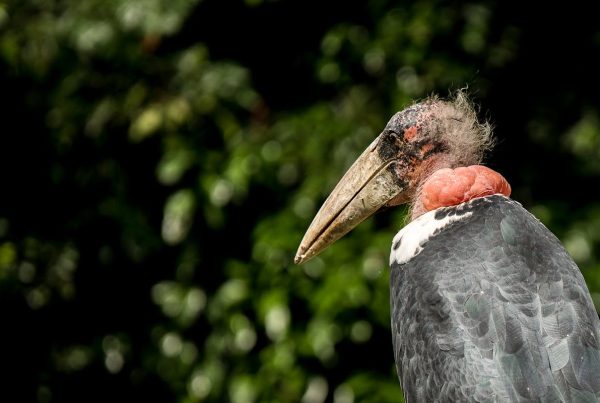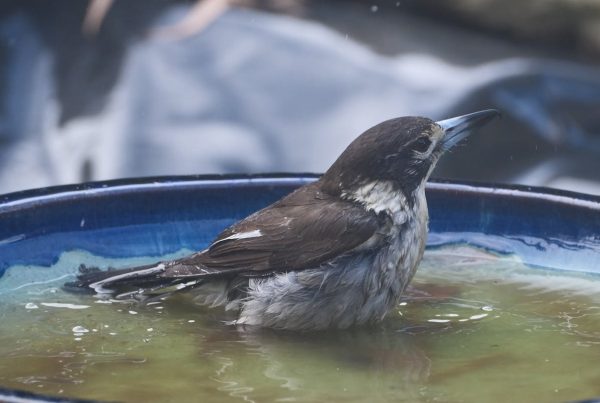

Birds around barns and livestock facilities can cause damage and create unsanitary conditions. Birds can eat and spoil food and water, assisting in disease transmission to livestock and poultry. Collected droppings are unsightly and can ruin farm equipment. Nest material can clog drains and gutters, adding weight to both overflows, and birds can also destroy insulation.
how to keep birds out of barn
There are things you can do to prevent birds from becoming a problem or, if you have a problem, to minimize it. Before starting any control program, you need to understand the legal protections for birds. Also, identify which birds are causing the issue and where they are roosting or nesting. It is important to do this because whatever the bird species the method that is used to tackle the problem, is watching bird species specific.
Nuisance species near barns and farm structures include:
-
Pigeons
-
European starlings
-
House finches
-
House sparrows
Pigeons, or rock doves
Pigeons, although they are commonly seen worldwide, are a nonnative (exotic) species. They are omnivores. They mainly eat seeds and grain. They also consume a lot of waste grain, as it’s easy to find and abundant. Additionally, they eat vegetation, insects, bread, and similar items. In and about barns pigeons can be maintained on spilled or badly stored grain. They nest in ledges, rafters and buildings. Nests are loosely constructed, flat platforms of sticks, twigs, and grass. They can breed at any time during the year, with the highest level of productivity in the spring and fall.
European Starlings
European starlings are an introduced (exotic) species to North America from Europe. This is a very common bird — it’s often in large flocks — and it’s very people-tolerant. The starling, like pigeons, eats many things. It enjoys insects, seeds, berries, grains, garbage, and even handouts from people.
These birds are cavity nesters. They build nests in drain pipes, wall and ceiling cavities and any other cavity such as under houses or within piles of refuse near the home. Starlings breed April to July normally producing two broods.
House Finches
House finches, which are native to the western part of the United States, are a fairly recent arrival to Pennsylvania. Released in New York in 1940, they spread to at least 22 other states. They have also bred in Pennsylvania since the 1970s. They resemble Purple Finches except males show much less red on the face and breast. Females are streaked brown overall. House finches consume mainly seeds. On account of this diet it has a penchant for bird and livestock feeders.
House finches have adapted particularly well to urban and suburban habitats and nest in a range of locations. They nest in vines, conifers, hanging plants, and cavity-like openings in buildings and building ledges. House finches can nest as early as March in Pennsylvania. They usually have two or more broods a summer.
House Sparrows
House sparrows are an invasive European species. (It is the black bib and white cheeks of the male, that distinguish the two). The female, though harder to distinguish, is most often mistaken to be other sparrows. It is gray brown and has an unstreaked but dull breast, buff eye stripes and streaked back. Her loud monotone chirp is difficult to miss. It is crucial to be able to identify this species, because all other sparrows are illegal to disturb under the law.
House sparrows eat a great deal of insects in spring and summer. Being generalists, they also eat grain and weed seeds around barns and in fields, and they eat the garbage and other food that people throw out.
Nests, constructed in hollow cavities are bulky, dirty masses of grass, straw, leaves and rubbish. Open seated nests are typically domed.
Preferred roosting sites near barns and buildings include:
-
Rafters
-
Wall openings
-
Space behind shutters
-
Areas under the eaves
House sparrows are mostly nesting from March to September. There are two to three broods and female breeds.
Legal Status and Permit Process
Except for rock doves, house sparrows and European starlings, all birds are protected by state and/or federal law. It is a crime to kill any other bird species except with a special licence (as it is to cause a protected species to be killed). For instance, if you release a toxic chemical to kill starlings, and in the process kill a protected bird, you are legally responsible.
It is also against the law to harass a nesting bird that has young or eggs in a nest. There is one exception to the statute. English: Blackbirds, Cowbirds, Crows, and Grackels may be killed without a permit when they are found doing or about to do damage. Crows do attract a shooting season.
To use damage control methods when they will harm protected birds, permits are required. A “Migratory Bird Depredation Permit” is available from the FWS. Pennsylvania is in Region 5 of the FWS. Mail your permit application to the Regional 5 headquarters in Hadley, Massachusetts. You can get a copy of the permit application online or from the USDA-APHIS Wildlife Services in Pennsylvania. Their address is P.O. Box 60827, Harrisburg, PA 17106. Toll-free number: 866-487-3297). Wildlife Services will help with permits. They will also provide information and loan out damage control materials.
When the permit is submitted to FWS, Wildlife Services gets a copy. They then inspect the property related to the permit and suggest actions to FWS. Wildlife Services gets input from the local wildlife conservation officer at the Pennsylvania Game Commission. The recommendations are forwarded to FWS, and FWS then forwards the permit to the Game Commission’s Bureau of Law Enforcement. The Game Commission has to approve the permit before it is valid. If the Game Commission and FWS concur that the permit should be granted, you will receive it.
how to keep birds out of barn
Damage Control
There is no single best way to control birds in and around farm buildings, because every situation is unique. The methods below have been successful for other individuals. You’ll likely need a combination of approaches. Whichever you choose to try, do so early in the season, before the problem just gets out of hand, and keep up your efforts. Reducing bird problems takes time. Learn about the biology and behavior of the pest species, so you can choose the methods most likely to succeed.
Avoid the Problems
Super abundant food: A primary reason birds are attracted to feedlots.
Farm management practices every day
To reduce the risk of many birds being near buildings, limit their access to food and water. Farmers can cut down on bird gatherings by controlling the food and water available to all animals.
- Clean up all spilled grain.
- Store grain in birdproof containers.
Where feasible, employ covered feeders that birds can’t get in to.
Keep the water level in your waterer deep enough so poultry can’t reach it. Make sure it’s also shallow enough that they can’t access it from the edge.
Exclude Birds
Prevention is the Best Method for Reducing Bird Problems in Buildings The most effective way to minimize problems in buildings is to keep birds out of the buildings. It may be expensive initially, but it is the cheapest in the long run.
Hang plastic strips in doorways. Plastic strips above doors block birds. If there are doorways that are unable to be maintained closed, hang strips of heavy plastic vertically in the doorway to prevent entry. They let machines and people through but keep the birds out.
Seal any openings which are greater than 0.5 inch. Block openings to attics, fireplaces, vents and eaves with wood, metal or wire mesh. Repair broken window panes.
Discourage birds from roosting – Net the undersides of rafters.
Plastic Strips
Suspend strips of plastic from the door and birds won’t come in.
Lower Appeal of Roosting and Nesting Sites
Reduce the appeal of roosting and nesting areas when exclusion isn’t practical or cost-effective. Those nontoxic methods are safe for people, livestock and nontarget wildlife, but they can be time consuming to install and costly.
Now, adjust the angle of the roosting ledge to be at least a 45-degree angle. Fitting roost sites with slanted metal or wooden boards at a pitch of not less than 45 degrees.
Fit mechanical roost inhibitors (tactile wires) These, as new growths, are made up of sharp wires, or pegs, which spread out and project in all directions. Spikes attach to a solid base and can be easily installed in any area that birds perch or nest. The points cause a temporary discomfort which makes birds avoid these areas. House sparrows and similar-sized birds don’t have the same instincts and can slip between the points to nest in the site.
Apply electronic bird repellents to roosting and nesting areas. This apparatus is a cable which is provided with two electrical conductors. The conductors are electrified, shocking birds when they land. These instruments need repairs in order to continue to function properly.
Use chemical perch repellents. These are sticky or greasy items that can be caulked, sprayed or painted on ledges and rafters that are used by birds as perches or nest sites. They won’t be effective in a highly dusty space.
Install catwalks. Put in walkways along the rafters and ledges to give cats a place to access the active roosting and nesting spots. Birds ‘stee-roooooos’ round these places – when cats roam.
Porcupine Wires
Porcupine wires deter pigeons from roosting on buildings.
Reduce Reproductive Rate
In addition to others, employ methods of suppressing bird reproductive capacity. Only nonprotected state or federally protected species can be handled in such a fashion. These species will be pigeons, house sparrows and European starlings.
Tear down nests every two weeks using a hook attached to the end of a long pole. If they’re accessible, take a pin and stab holes in the eggs. This is often more effective than simply destroying nests. That’s because birds will keep sitting on the eggs to incubate them until they hatch — not immediately build a new nest, as they often do when their eggs are destroyed. Both methods are very time-consuming.
Trapping
Birds can be captured by live traps and relocation. There are many trap designs to choose from or purchase. The apparatus most commonly in use appears to be the “bob” trap, which is designed with reference to the swinging-rods, or bobs, at the entrance. Pigeons can push their way inside the trap, but because bob can only be pushed in, they can’t get out.
The best traps for house sparrows are funnel traps. They have large entrances, which make it easy for birds to get in — but also easy for birds to get out. Traps should be monitored daily and the non-target birds released. Desired species may also be euthanised or relocated.
For the traps to work effectively the area should be prebaited for several days. This conditions the birds to feeding in the area and if at all possible, encourages them to feed in the traps. The traps should be set and inspected regularly after a few days of prebaiting. This not only has the bonus of training the larger flock, but makes some traps more effective as well. This makes incoming birds feel safe. Maintain food and water in traps at all times.
Lethal Methods
See the section on Legal Status above to learn what if any permits are required to use lethal control. Exercise caution to not cause injury to nontarget species when using lethal methods. Lethal methods are AO only for three non-protected ones, specific individual protected birds, and nuisance blackbirds. Before using lethal control, check with USDA-APHIS Wildlife Services if you’re worried about protected species being affected.
Shooting. Pigeons, starlings, and house sparrows can be shot in most locations where this is legal. Check your local firearms rules or ask the Pennsylvania Game Commission before shooting in your area.
Chemical frightening agents. They are compounds known as Avitrol® and are considered a chemical repellent. Birds that eat the bait exhibit physical discomfort and act erratically; other birds are then frightened and leave the flock. Birds will die or get sick according to the quantity of food eaten. By law only licensed pesticide applicators with bird control training can purchase and use Avitrol®.
Summary
It’s challenging to control birds around buildings, and you might have to deploy a combination of methods. “Sometimes I say you have to rent a technician to solve it. Wildlife pest control are licensed across the state. These individuals are licensed by the Pennsylvania Game Commission to manage problem wildlife. County extension agents keep lists of nuisance wildlife control operators for each county. Some people also advertise in the Yellow Pages under “Pest Control.””
Some points to take into account prior to choosing your control measures include:
Effect on nontarget species. This is particularly crucial when deadly control methods are employed. You will have to know this won’t hurt nontarget wildlife.
Safe for operator. Select a method that will be safe for the operator. If working with hazardous materials, read the label and take all recommended precautions.
Economical to use. Choose a method that is also economically feasible. The technique is not applicable if control cost > damage.
Socially acceptable. DontDo what’s politically correct, keep in mind the public and be delicate. For instance, if you are highly visible to the public, lethal control is not a good idea, even if it is the most effective method of control.

MD Imdadul Haque is the founder of BirdzFly, a research-backed resource on North American backyard birds. Drawing on years of independent study into bird identification, behavior, and migration patterns, he writes in-depth guides designed to help US birders understand the species in their own backyards — from common feeder visitors to seasonal migrants passing through.