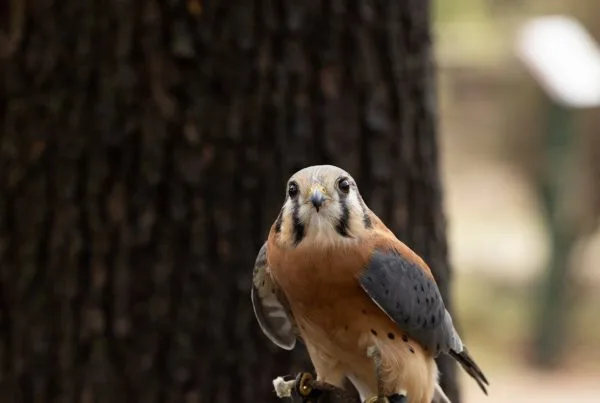
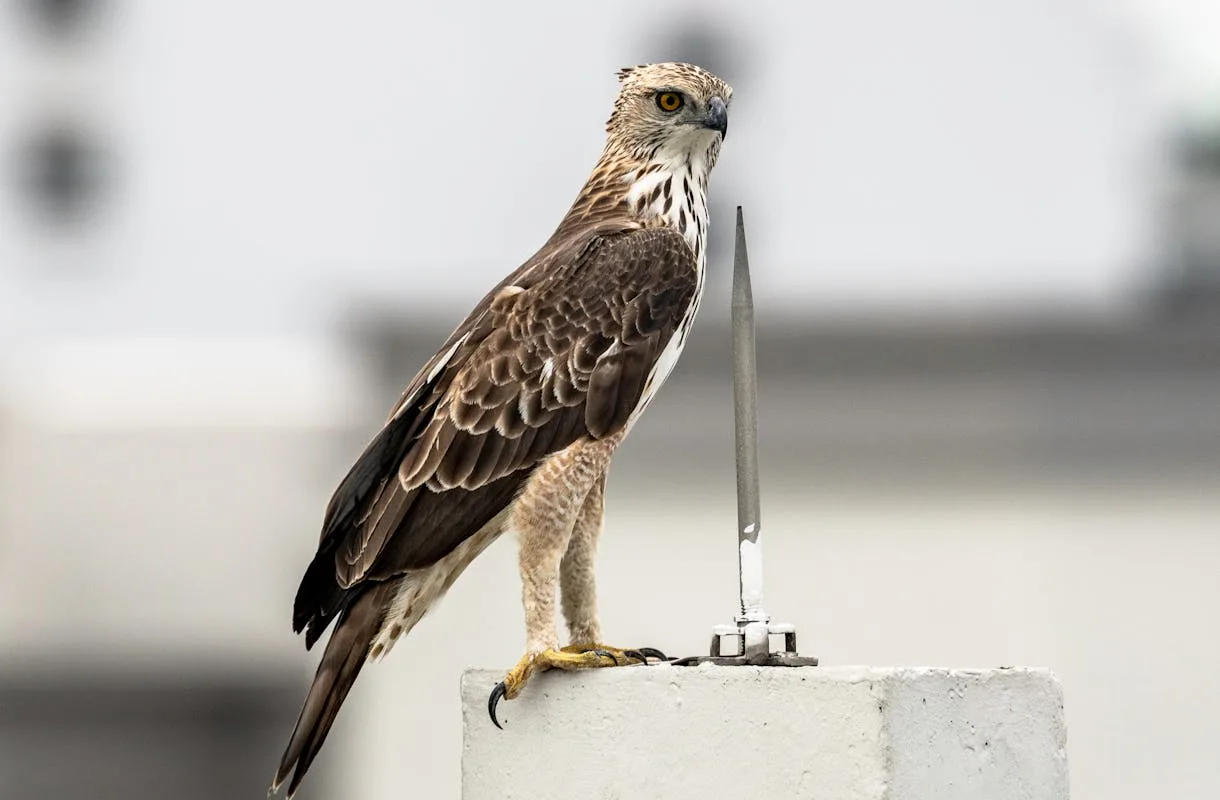
Hawk diet varies significantly by species — buteos (Red-tailed, Red-shouldered) hunt mostly small mammals from the air, while accipiters (Cooper’s, Sharp-shinned) specialize in catching other birds. Here is what the most common backyard hawks actually eat, and what to do if one starts hunting at your feeder.
What Do Red-Shouldered Hawks Eat?
Red-shouldered Hawks hunt small mammals, reptiles, amphibians, and large insects from forest edges near water. Young, inexperienced birds will sometimes take easier prey like earthworms while still learning to hunt more difficult targets.
What Do Rough-Legged Hawks Eat?
The Rough-legged Hawk is the default winter buteo across much of the northern and central US — breeding in the High Arctic and moving south for winter. They specialize almost entirely in small rodents, particularly voles, hunting from a perch or hovering flight over open fields.
What Do Cooper’s Hawks Eat?
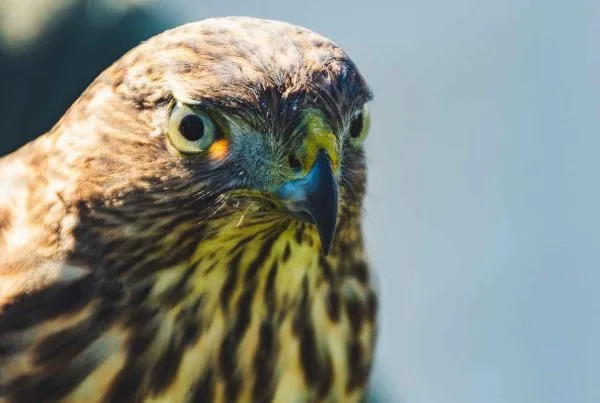
Cooper’s Hawks are frequent visitors to backyard feeders — not for the seed, but for the songbirds the seed attracts. This medium-sized accipiter specializes in ambushing small birds in flight, using speed and agility rather than soaring. Adults have a blue-gray back with reddish barring on the chest; juveniles are brown above with streaked underparts and yellow eyes rather than the adult’s red eyes.
Protecting Songbirds From Hawk Predation
It’s a common and understandable concern: a hawk starts hunting at a feeder, and visits from smaller birds drop noticeably. A few things genuinely help:
- Place feeders 5-6 feet from dense shrubs or cover — close enough that songbirds have a quick escape route, but not so close that cats or other ground predators can ambush them from the same cover
- Use caged feeders — wire cages around a feeder allow small birds through while excluding hawks, which are too large to fit inside
- Temporarily remove the feeder — if a hawk becomes a persistent problem, taking the feeder down for a few days breaks the pattern. Hawks hunt by learned association; without an easy food source drawing songbirds, most will move to another territory. Feeder birds typically return within a few days once the feeder goes back up.
It’s worth remembering that hawks are native predators playing a completely natural ecological role — a hawk at your feeder isn’t a problem to be eliminated, just a temporary shift in yard dynamics that resolves itself.
Why Some Songbirds Aren’t Afraid of Hawks
Response to hawk presence varies significantly by context. Birds in larger flocks tend to behave more boldly than solitary individuals — more eyes watching means an approaching hawk is spotted earlier, giving the flock more reaction time, and there’s safety in numbers since a hawk can only target one bird at a time. Some species, including crows, will actively mob a perched hawk rather than flee.
The type of hawk also matters. Cooper’s Hawks and Peregrine Falcons are fast, agile bird-hunters that pose a real and immediate threat, and songbirds react to them with much greater caution. Red-tailed Hawks, by contrast, are built for soaring and open-country hunting rather than fast pursuit through cover — they’re simply not built to catch most small songbirds in flight, so smaller birds often tolerate a nearby Red-tail with far less alarm.
For more on hawks and raptor identification, see our complete guides on the 5 most common hawks in North America, what hawks eat in winter, and Cooper’s vs Sharp-shinned Hawk identification.

MD Imdadul Haque is the founder of BirdzFly, a research-backed resource on North American backyard birds. Drawing on years of independent study into bird identification, behavior, and migration patterns, he writes in-depth guides designed to help US birders understand the species in their own backyards — from common feeder visitors to seasonal migrants passing through.