

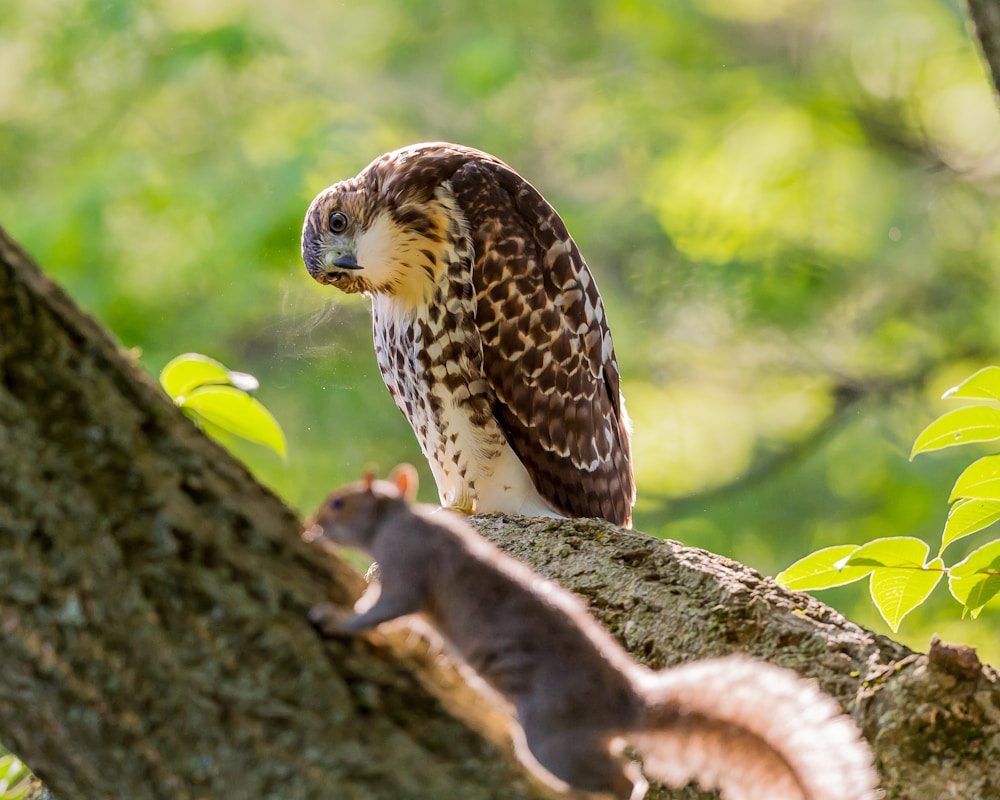
Cooper’s Hawk vs Sharp-shinned Hawk
This is the single most notorious bird identification problem in North America. Even experienced birders routinely disagree on Cooper’s Hawk versus Sharp-shinned Hawk in the field, and for good reason — they’re nearly identical in color pattern, hunt the same prey, and overlap across the same range. The difference comes down to proportion, not pattern.
Why This Is So Hard
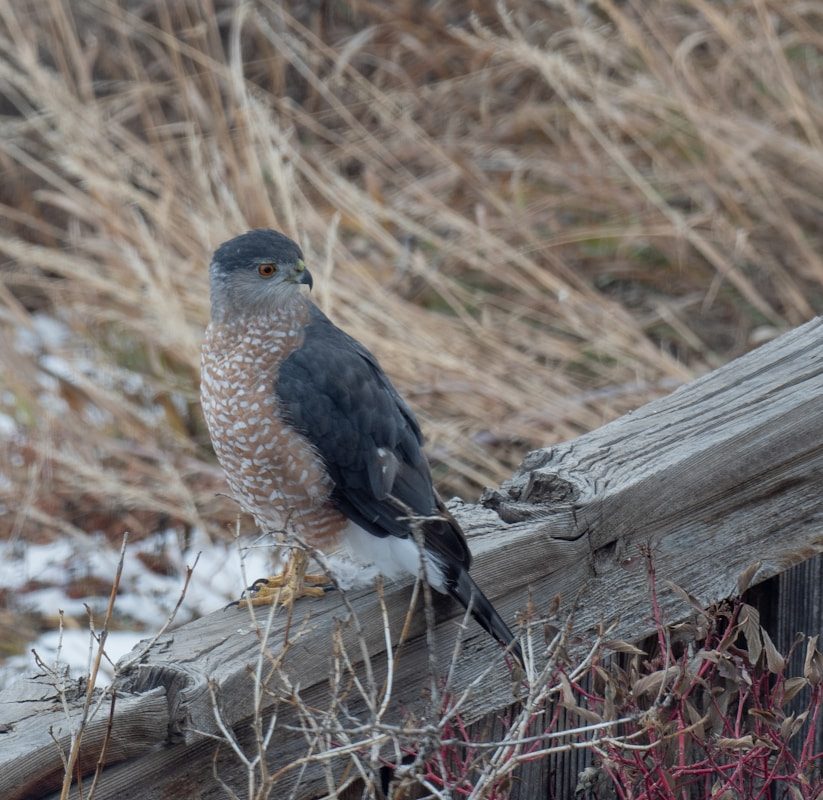
Both species are accipiters — woodland hawks built for short bursts of speed through trees, hunting small birds at feeders. Both have the same basic plumage: blue-gray back, rust-barred chest (adults), brown-streaked chest (juveniles), and long banded tails. From a quick look at a hawk that just snatched a sparrow off your feeder, the two are genuinely confusable even for people who’ve birded for decades.
The Reliable Field Marks
Size — but only as a loose guide. Cooper’s Hawks are larger (14–20 inches) than Sharp-shinned Hawks (9–13 inches). The problem: female Sharp-shinned Hawks are bigger than male Cooper’s Hawks, so size alone fails in mixed comparisons. Size only works when you have a clear sense of scale, like a known object nearby.
Head shape — the single best mark. Cooper’s Hawk has a proportionally larger, rounder head that projects forward from the body, almost like the bird is “wearing a hood.” The Sharp-shinned Hawk’s head is small and barely projects past the shoulders — described by experienced birders as looking like it has no neck at all.
Tail shape. Cooper’s Hawk has a longer tail that is rounded at the tip, with the outer feathers slightly shorter creating a curved edge. Sharp-shinned Hawk has a shorter, square-tipped or slightly notched tail — straight across rather than rounded.
Flight silhouette. In flight, Cooper’s Hawk shows the head projecting clearly in front of the wings — the “flying cross” silhouette is asymmetrical with more bird in front of the wings than behind. Sharp-shinned Hawk’s head barely projects, making the silhouette more symmetrical, like a flying T.
Behavior at feeders. Sharp-shinned Hawks tend to be more nervous and quicker to flee when noticed. Cooper’s Hawks are often bolder, sometimes remaining on a perch in plain view for extended periods after a strike.
Quick Reference Table
| Feature | Cooper’s Hawk | Sharp-shinned Hawk |
|---|---|---|
| Length | 14–20 inches | 9–13 inches |
| Head | Large, rounded, projects forward | Small, barely projects, “no neck” |
| Tail tip | Rounded | Square or notched |
| Flight silhouette | Head clearly in front of wings | More symmetrical, T-shaped |
| Behavior | Often bolder, lingers after a strike | More skittish, flees quickly |
Why They Look So Similar: Shared Hunting Style
Both species evolved the same basic toolkit for the same job: ambushing small birds in dense cover. Short, rounded wings for maneuvering through branches. Long tails for tight turning. A surprise low-altitude attack rather than the high soaring style of buteos like the Red-tailed Hawk. The convergent body plan exists because it’s the most effective design for that specific hunting niche — which is exactly why the two species look so alike despite being genuinely different in size and proportion.
Range and Season
Both species occur across most of the continental US, with Cooper’s Hawk somewhat more tolerant of suburban and urban environments — it’s become one of the most common backyard hawks in many American cities specifically because of the abundance of feeder birds. Sharp-shinned Hawks are more associated with forest edges and are more migratory, with many individuals moving south in fall in numbers visible at hawk-watch sites.
What to Do If One Is at Your Feeder
Cooper’s Hawk vs Sharp-shinned Hawk
A hawk at your feeder eating a songbird is not a sign of anything wrong — it’s the food chain working normally, and accipiters are a normal part of a healthy backyard ecosystem. If you’d rather discourage repeat visits, temporarily taking feeders down for a few days disrupts the easy hunting pattern and the hawk typically moves to a new territory. Most people, once they see one up close, find the experience memorable rather than upsetting.
FAQ: Cooper’s Hawk vs Sharp-shinned Hawk
What is the easiest way to tell a Cooper’s Hawk from a Sharp-shinned Hawk?
Look at the head. Cooper’s Hawk has a large, rounded head that projects forward; Sharp-shinned Hawk’s head is small and barely extends past the shoulders.
Are Cooper’s Hawks always bigger than Sharp-shinned Hawks?
Not reliably. Female Sharp-shinned Hawks can be larger than male Cooper’s Hawks, which is why size alone is not a dependable field mark.
Why are these two hawks so often confused?
They are closely related accipiters that evolved nearly identical body plans and plumage for the same hunting style — ambushing small birds in dense cover.
For more raptor identification, see our guides on juvenile Red-tailed Hawk ID and hawk nests.

MD Imdadul Haque is the founder of BirdzFly, a research-backed resource on North American backyard birds. Drawing on years of independent study into bird identification, behavior, and migration patterns, he writes in-depth guides designed to help US birders understand the species in their own backyards — from common feeder visitors to seasonal migrants passing through.

