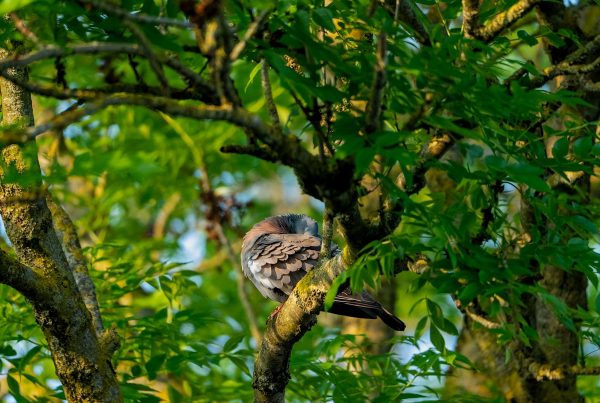

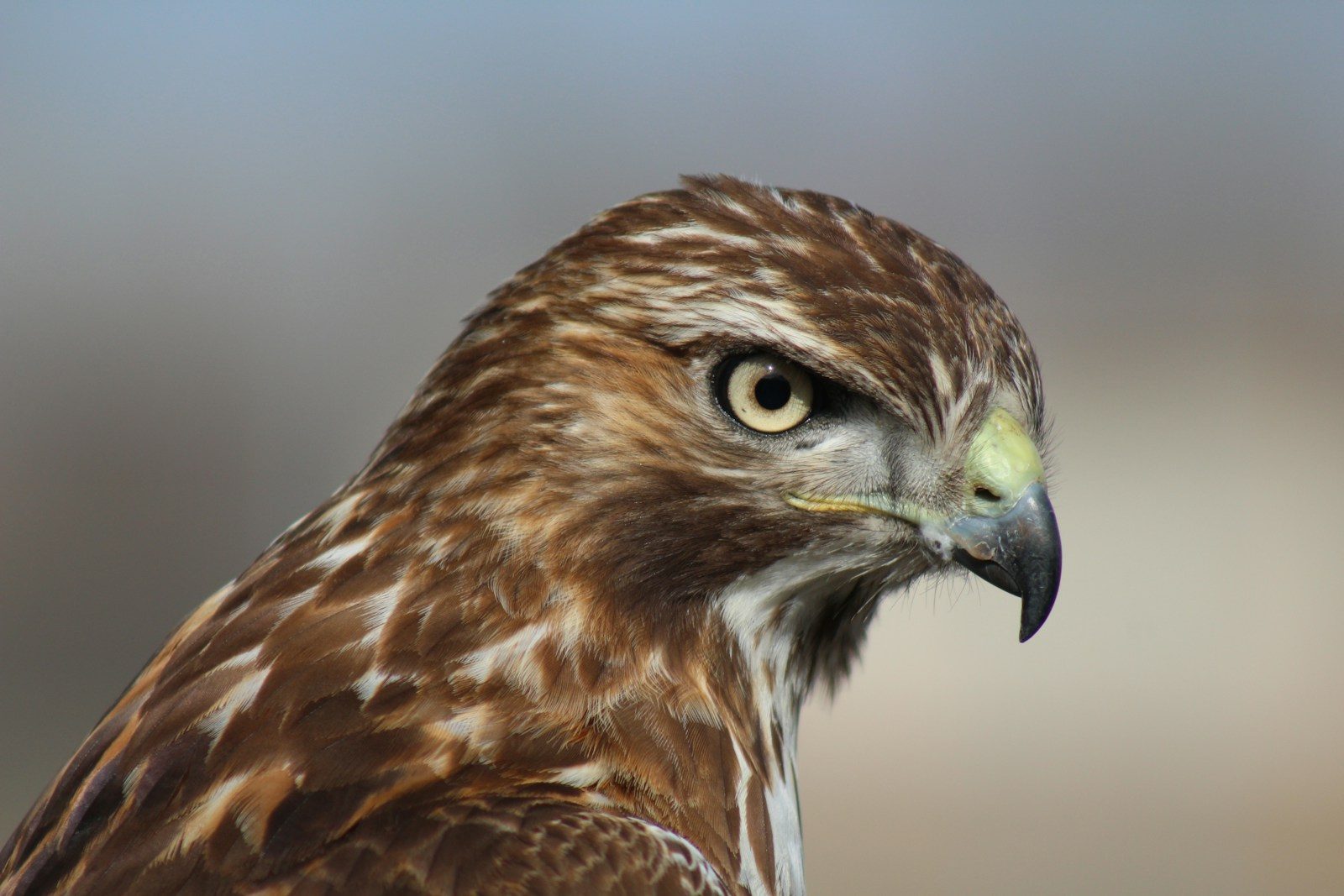
Juvenile Red-Tailed Hawk
Most people who learn to ID hawks start with the red tail. Makes sense — it’s the obvious field mark, right there in the name. The problem is that juvenile red-tailed hawks don’t have one. They spend their entire first year with a brown-banded tail that looks nothing like the rusty red of an adult. Miss that, and you’ll spend a lot of time second-guessing birds that are actually quite common.
I’d guess this is the single most frequent hawk ID mistake made by beginning birders in North America.
What a Juvenile Red-Tailed Hawk Actually Looks Like
Skip the tail for a moment. The other field marks are just as useful:
- Tail — Brown with multiple thin dark bands. No rust, no red. This is the most obvious sign you’re looking at a first-year bird, once you know to look for it.
- Belly band — A band of dark streaking across the lower belly, usually heavier than on adults. Visible from below when the bird is in flight, which is often the only view you get.
- Eyes — Pale yellow. Adult red-tails have darker, browner eyes. The yellow fades to amber and then brown over the first year or two.
- Back — Dark brown with pale scalloping on the feather edges. From above, these pale tips line up across the shoulder area — birders sometimes call them “landing lights.”
- Underparts — Pale with streaking, often heavier than on adults.
Size doesn’t change with age. Red-tails are large hawks at every age — 45 to 52 inch wingspan. Females are bigger than males, and that holds for juveniles too.
Juvenile vs. Adult: What Changes
| Feature | Juvenile | Adult |
|---|---|---|
| Tail color | Brown, banded | Rust-red, mostly plain |
| Eye color | Pale yellow | Dark brown to amber |
| Belly band | Heavy, streaked | Variable, often lighter |
| Back scalloping | More visible | Less visible |
Once you’ve seen that banded brown tail on a large hawk, you won’t forget it. It has a completely different feel from the plain rusty tail of an adult.
When Do They Get the Red Tail?
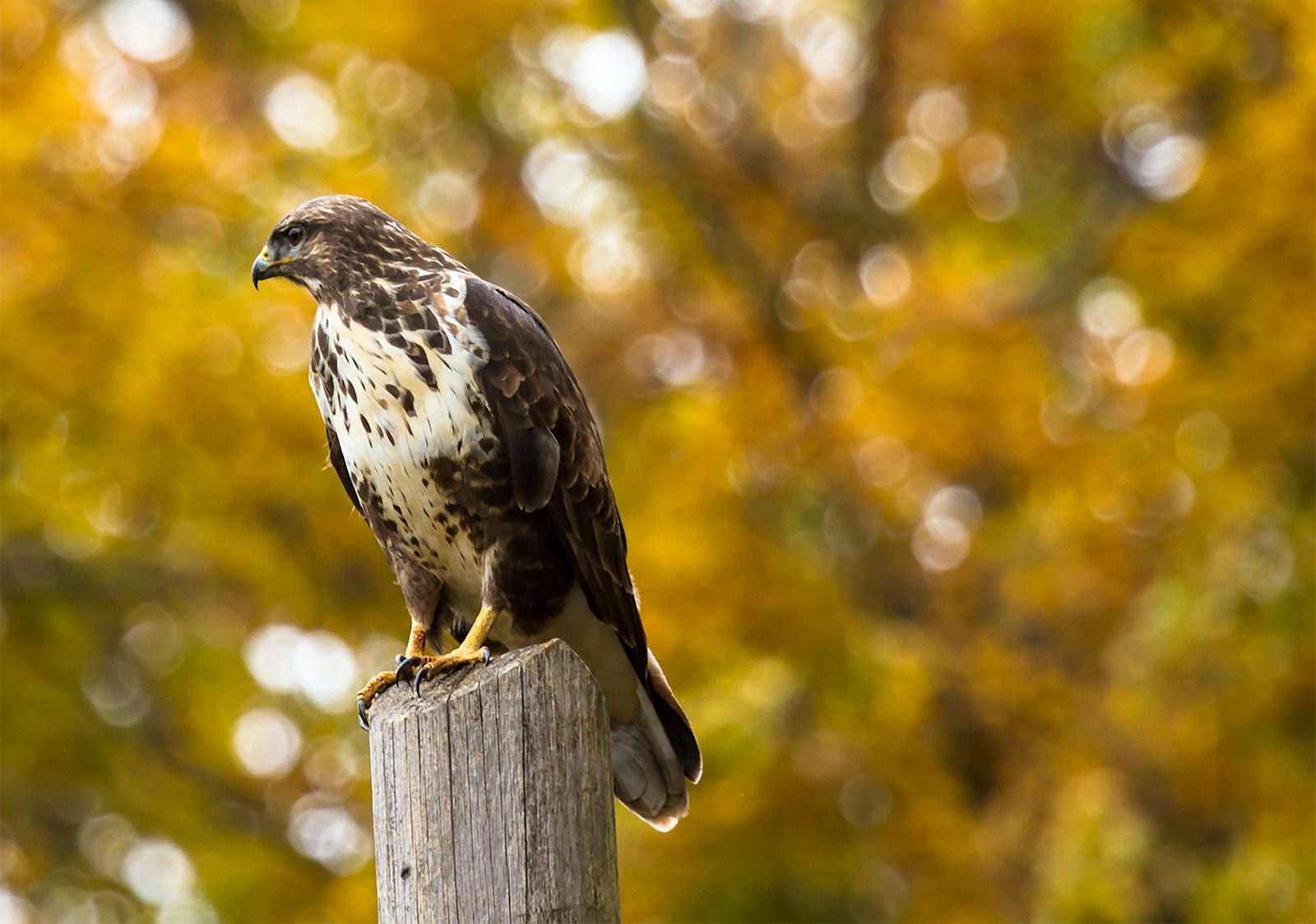
Juvenile Red-Tailed Hawk
The red tail comes in during the first complete molt — roughly 12 to 16 months after hatching, typically completing by late summer of the bird’s second calendar year.
During the molt you sometimes see a genuinely odd-looking bird: a few old banded feathers mixed in with new red ones on the same tail. Half juvenile, half adult. It’s one of those looks that trips people up at hawk watches, and honestly it’s kind of fascinating once you know what you’re seeing.
How Juveniles Behave
Much like adults, mostly. Same sit-and-wait hunting strategy from exposed perches, same prey — voles, mice, rabbits. They’re slightly less efficient in their first year, which means you sometimes see them committing to hunts that an experienced adult would pass on.
They’re also noticeably less wary of people than adults. A young bird might sit on a low fence post ten feet from your car for a surprisingly long time before flushing. Adults rarely give you that.
Where and When to Find Them
September through December is the window. Juveniles disperse from nesting areas in late summer and spread broadly across the continent. By fall you can find them in farm fields, highway medians, grasslands, suburban edges — basically anywhere open with good perch sites.
If you’re in the eastern US, hawk watch sites like Hawk Mountain in Pennsylvania count hundreds of red-tails daily in October and November. A large chunk of those are first-year birds.
What They’re Commonly Confused With
- Red-shouldered hawk — Smaller, rufous barring on the chest, banded black-and-white tail. Wings more pointed, wingbeats faster.
- Cooper’s hawk — Much smaller, rounded tail, accipiter flight (flap-flap-glide). Red-tails are buteos — broad wings, shorter tail, built for soaring.
- Ferruginous hawk — Larger, found mainly in the West, pale rust tail, large white V on the back when viewed from above.
- Rough-legged hawk — Arctic winter visitor, similar size, but white tail base with a dark terminal band — the opposite pattern of a juvenile red-tail.
Large size plus broad soaring wings plus belly band narrows it to a red-tail in most North American settings. Banded brown tail closes the ID.
FAQ
What does a juvenile red-tailed hawk look like?
Large brown hawk, banded brown tail (no red), pale yellow eyes, heavy streaked belly band. The banded tail is what tells you it’s a first-year bird.
How long until they get the red tail?
12 to 16 months, finishing by late summer of the second calendar year.
Are juveniles the same size as adults?
Yes. Females bigger than males at all ages, but size doesn’t change between juvenile and adult.
Do juveniles hunt?
From day one after leaving the nest. Same prey as adults, slightly less efficient in year one.
How do you separate a juvenile red-tail from other hawks?
Large size, broad soaring wings, belly band, banded brown tail. That combination is pretty much definitive in most of North America.
For more on hawks, see our guide on how to deter hawks from your yard humanely.

MD Imdadul Haque is the founder of BirdzFly, a research-backed resource on North American backyard birds. Drawing on years of independent study into bird identification, behavior, and migration patterns, he writes in-depth guides designed to help US birders understand the species in their own backyards — from common feeder visitors to seasonal migrants passing through.