

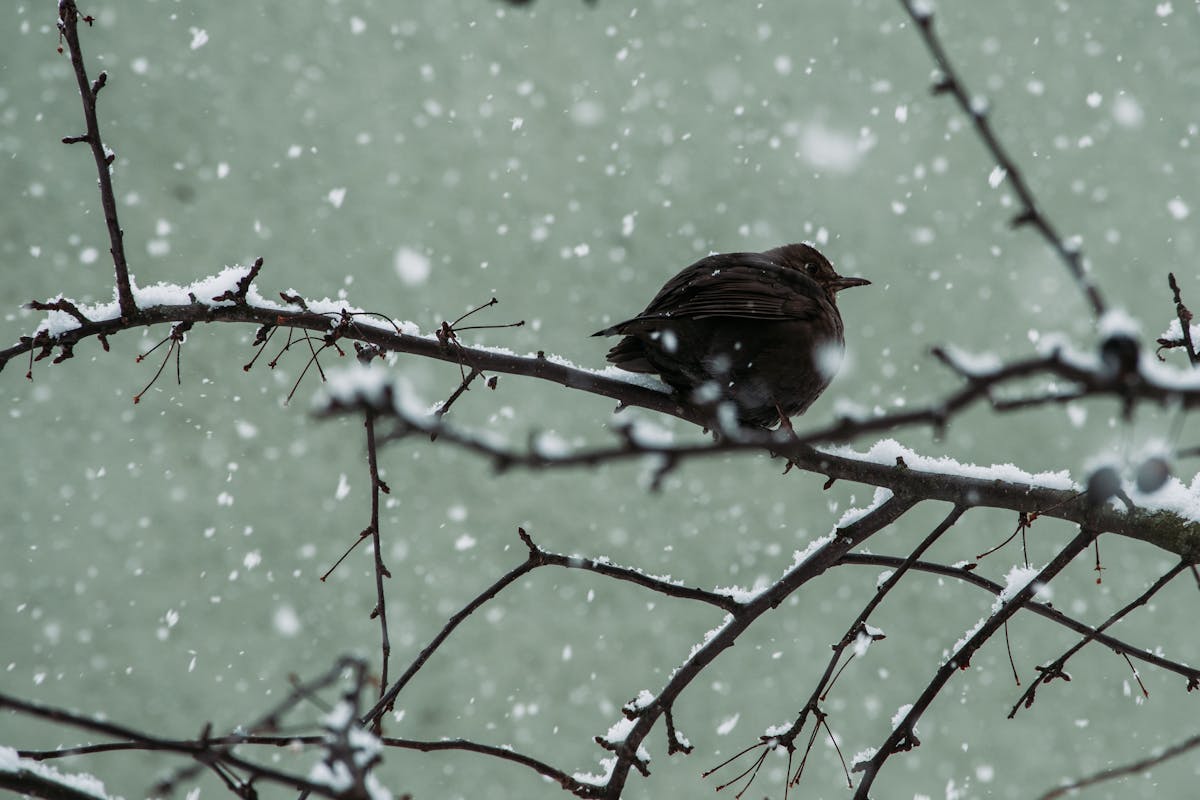
Birds Survive Snowstorms
In February, a woman in Minnesota posted an image online that made people stop scrolling. It showed her backyard bird feeder buried in snow, and sitting on top of it was a Black-capped Chickadee. The temperature was minus 11 degrees Fahrenheit. The caption simply said: “How?”
This question sparked thousands of responses. It reveals one of nature’s most fascinating mysteries. These tiny birds, some lighter than a nickel, endure conditions that would send any human to the emergency room in hours. They have no heated shelter, no warm coats, and no way to call for help. They rely only on feathers, instinct, and millions of years of evolution.
Understanding Winter’s Threats
To know how birds survive winter, you must first understand what winter truly threatens. Every bird facing a snowstorm must win two battles:
Battle One: Don’t Freeze
-
Birds have a normal body temperature between 104°F and 108°F.
-
If they can’t maintain that temperature, their organs start to fail.
-
In a blizzard, with wind-chill temperatures dropping to minus 20°F, keeping warm requires a lot of energy.
Battle Two: Don’t Starve
-
Staying warm burns a lot of calories.
-
Snowstorms bury food sources and reduce foraging time.
-
Birds often huddle instead of feeding, making it harder to find food.
All the survival strategies you’ll read about solve one or both of these problems.
The Feather System: Nature’s Most Sophisticated Insulation
Imagine wearing a warm down jacket that grows out of your skin, is waterproof, and adjusts itself. That’s what bird feathers do.
-
Feathers consist of two layers:
-
Outer contour feathers: Stiff, structured, and waterproof. They repel rain and snow while blocking wind.
-
Down feathers: Soft and thick, they trap air close to the body, forming insulation.
-
In cooler temperatures, birds fluff their feathers to maximize air pockets. More trapped air means better insulation. A fluffed chickadee on a cold branch is not cold; it’s adjusting its own thermal layer.
Many species grow thicker plumage in fall for winter. On the coldest nights, birds may pack into tree cavities with their neighbors to share warmth.
Interestingly, birds’ legs and feet can drop to near-freezing temperatures without harm. This allows them to stand on snow-covered branches without frostbite.
Where Do They Go When the Storm Strikes?
When a blizzard arrives, birds don’t stay outside. They have a plan.
Safe Places Birds Choose
-
Evergreen Trees: Spruce, pine, and hemlock provide natural windbreaks and snow shelters. The ground below these trees can be warmer and almost snow-free.
-
Tree Cavities: Birds like woodpeckers and chickadees look for hollow spots in old trees. These cavities stop wind and keep warmth close.
-
Other Structures: Birds also use shrub piles, the space under decks, and even fence posts. Your yard may have hidden spots where birds seek shelter during storms.
Torpor: The Emergency Power-Down Mode
Some bird species, including chickadees and hummingbirds, can enter a state called torpor in extreme cold.
-
Torpor is a suspension of normal metabolic activity.
-
Body temperature and heart rate drop, using 30% less energy.
-
It lasts for hours and can be reversed quickly when conditions improve.
A chickadee in torpor may look dead, but it’s conserving energy until daylight.
The Pre-Storm Feeding Frenzy
You can see this behavior in your backyard. Birds sense changes in barometric pressure, signaling an incoming storm.
-
As pressure falls, they react by eating frantically.
-
They gather around feeders and forage for food.
Keeping your feeders filled before and during winter storms is crucial. A bird that misses this chance has a low chance of survival.
The Huddle Strategy: The Power of Grouping
There’s a saying: “There’s safety in numbers.” For winter birds, it’s more like “There’s warmth in numbers.”
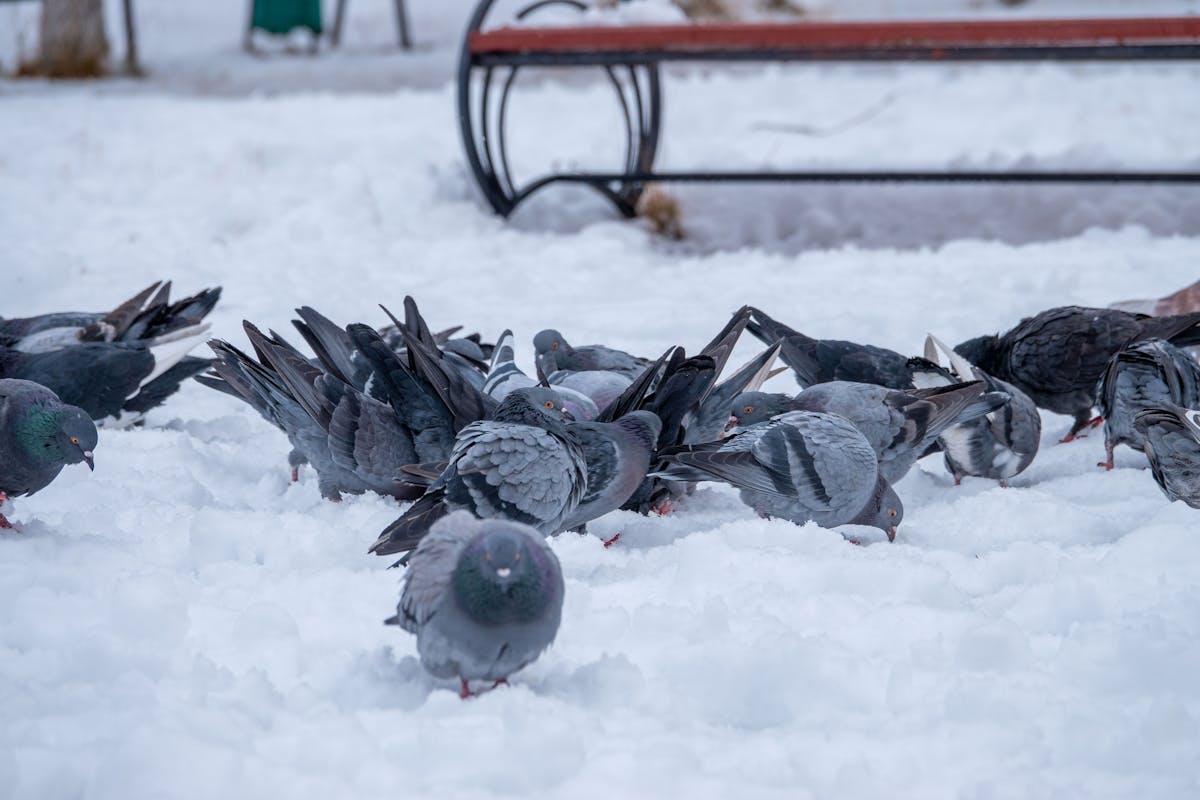
Many species roost together in harsh cold, clustering in cavities or bushes to share body heat.
-
Bluebirds are known for this. In winter, they can pack into a single nest box, sharing warmth without conflict.
-
Researchers counted 29 bluebirds in one box during a cold snap in Virginia.
This communal behavior is a smart survival tactic, keeping them warm through the night.
Understanding how birds survive snowstorms reveals the incredible adaptations of these creatures. By observing their behavior, we can appreciate their resilience in the face of harsh conditions.
They all made it.
The mathematics involved may be simple, but it’s also elegant. It’s obvious — more bodies in a tight space, the shared heat inside rises. Each bird benefits. No one has to do all the heating by themselves.
Black-capped Chickadees
The Amazing Memory of Black-capped Chickadees
Black-capped Chickadees are among the most studied animals in terms of memory. Each fall, they methodically stash away food. They hide single seeds in various places:
-
Tree bark
-
Under leaves
-
In soil
They remember where they put the food and return to it in winter. Their hippocampus, the part of the brain linked to spatial memory, actually expands in autumn to store this information. In spring, it shrinks back down when the food is no longer needed. This seasonal brain upgrade helps them survive winter.
A chickadee that has stored enough food before a storm doesn’t need to search for open ground or visible seeds during a blizzard. It already knows the location of hundreds of hidden food caches around its territory.
How Birds Survive Snowstorms: 7 Strategies They Use
Birds have several strategies to endure snowstorms:
-
Fluffing their feathers to trap warm air for insulation
-
Seeking thick evergreens for wind protection and shelter
-
Cavity roosting in trees to shield from wind and share warmth
-
Huddling together to generate heat from each other’s bodies
-
Entering torpor to reduce energy use by 30% or more on cold nights
-
Gorging before storms to build fat reserves when food is scarce
-
Caching food to create hidden pantries that remain accessible under snow
How You Can Actually Help
Your backyard can make a difference for local birds in winter. Here’s how:
-
Keep feeders well stocked — especially during storms. Use high-energy foods like black oil sunflower seeds, peanuts, and suet cakes.
-
Add a heated birdbath. Open water is crucial for hydration and easier to find than food during extreme cold.
-
Leave your brush pile. A messy pile of sticks provides shelter for sparrows, wrens, and juncos. Don’t clean it up until spring.
-
Install a roost box from October 33. Unlike nest boxes for breeding, roost boxes have a bottom entrance to trap warm air. They help small birds find shelter during harsh nights.
-
Don’t rake under your evergreens. Dense conifers create an insulating layer of leaves and debris, offering food for ground-feeding birds during storms.
The Quiet Miracle Outside Your Window
Next time a snowstorm hits, take a moment before drawing your curtains. Look outside one last time.
See that chickadee on the branch? That little sparrow clinging to the sheltered side of the fence? The cardinal, bright red against the white snow, perched quietly in the cedar tree?
They are not struggling. They are not suffering. They are simply doing what millions of years of evolution have taught them. They operate with a collection of biological and behavioral systems that allow them to thrive, even in a minus-20 night.
While we build furnaces and wrap ourselves in insulation, they grow their own coats. They remember where they hid their food, share warmth, and wait it out.
Every single storm. Every single winter.
And every morning after, they return to the feeder as if nothing happened.
Enjoyed this article? Continue Reading on BirdzFly:

MD Imdadul Haque is the founder of BirdzFly, a research-backed resource on North American backyard birds. Drawing on years of independent study into bird identification, behavior, and migration patterns, he writes in-depth guides designed to help US birders understand the species in their own backyards — from common feeder visitors to seasonal migrants passing through.

