
Surprising Answer for 12 Popular Species
Many of us were taught that swans mate for life. That eagles stay loyal forever. That the two cardinals you see together at your feeder are basically a bird version of a happily married couple.
Some of that is true. Much of it is more complicated. And some of it — hold on to your hat — is utterly wrong.
The real story of how birds mate, remain bonded, cheat on one another, divorce, and sometimes become bonded to something truly lifelong is one of the most interesting chapters in all animal behavior. It has been the subject of scientific research for decades. What DNA analysis unveiled beginning in the 1980s upended almost all that we believed we knew about it.
Let’s get into it.
What Does “Mating for Life” Really Mean
Before we get into species-by-species stuff, let’s get one thing straight — the term “mating for life” can be slippery.
Scientists sort relations between birds into several categories:
-
Sexual monogamy — A male and female mate only with each other, having offspring together without outside mates. True, verified fidelity.
-
Social monogamy — A male and female bond, share the same territory, and rear young together. But genetic testing frequently shows that some chicks were sired by a different male.
-
Seasonal monogamy — Birds mate exclusively for one breeding season and then disperse to possibly different mates the next year.
-
Lifetime monogamy — Year after year, the same two birds return to each other until one of them dies.
Now for the jaw dropper: more than 90 percent of bird species are socially monogamous. But of these, the overwhelming majority engage in what researchers call “extra-pair copulations.” In other words, cheating is common.
Genuine lifelong sexual fidelity is rare in the bird world. This makes the species that actually do it even more impressive.
12 Common Species: The Lowdown on Their Love Lives
Bald Eagle — Yes, in General, with Some Qualifiers
In most cases, the United States’ national symbol does mate for life. Mated pairs return to the same nesting spot each year. They build new sticks on top of the previous year’s mound, which can grow to nearly 10 feet in width and weigh more than a ton.
However, the loyalty is as much to the nest as it is to the partner. If one eagle does not return in spring, the survivor will quickly accept a new mate at that same nest site. Pairs that consistently fail to produce healthy offspring sometimes “divorce” and look for new mates.
Successful pairs do tend to stay together for a decade or more, which counts in eagle terms.
Canada Goose — Yes, Genuinely
Canada Geese form pair bonds that come close to true lifelong monogamy.
-
They pair up at around two to three years old.
-
They often remain together for life until one dies.
-
When a mate goes missing, the surviving goose undergoes a period of mourning.
Their loyalty includes migration. Mated pairs travel and forage together. If one gets injured, the other may stay behind to help.
Northern Cardinal — Occurring, with Regularity, Seasonally
This species often surprises backyard birders. Cardinals are not the devoted partners they seem to be. They are seasonally monogamous — bonded for a single breeding season.
That said, established pairs in stable territories often meet again the following year. It looks like loyalty but is more about habitual convenience. Cardinals have also shown through DNA testing to be promiscuous.
Bald Eagle vs. Golden Eagle: A Tale of Two Eagles
Golden Eagles are long-term bonders, like Bald Eagles. They return to the same nest sites and mates for as long as they remain in successful breeding pairs.
Bald Eagles are faithful until the relationship ceases to function properly. It’s more practical than romantic.
Mourning Dove — Indeed, and Tenderly
Mourning Doves are some of the most devoted birds in North America.
-
Mates remain together for the entire breeding season and often reunite in subsequent years.
-
The male’s courtship behavior continues long after pairs are established.
When one partner dies, the survivor usually seeks a new mate. But established pairs show strong fidelity and attachment.
American Robin — Socially Monogamous, But Complicated
Robins mate, construct nests, and rear offspring together. The male sings to protect the territory and feeds the female while she incubates. It appears to be a strong partnership.
However, DNA tests show that many chicks in a nest are not fathered by the attending male. Mated females often solicit copulations from neighboring males.
The pair bond is real, but the exclusivity is not.
Mute Swan — The Gold Standard of Fidelity
Mute swans often come to mind when people think of mate-for-life birds, and for good reason. Researchers have tracked mute swan pairs for over 50 years. Among thousands of pairs that successfully reared young, not one instance of genetic infidelity has been documented.
Mute swans do find new partners when a mate dies, but rarely promptly. Widowed swans may spend years alone before finding another mate.
Blue Jay — Loyal and Underrated
Blue Jays often don’t get credit for their romantic lives, but they truly are partners for life.
In successful relationships, pairs tend to remain together. Both parents are involved in nest building, incubation, and rearing young.
Divorce can happen after repeated breeding failures, but successful pairs show impressive long-term fidelity. For a bird known for stealing and making noise, the Blue Jay’s home life is surprisingly wholesome.
House Sparrow — Matrimoniacally Paired, Genetically Mad
House sparrows are socially monogamous. This means pairs form, nest, and raise young together.
Everything else is messy.
-
Males will breed with several females if possible.
-
Females often engage in extra-pair matings to secure good nest sites and improve the mating success of their partner.
Genetic studies show that outside paternity is common in house sparrow egg clutches. Despite this, they are dedicated parents to whatever chicks end up in the nest. However, they are not devoted companions.
Sandhill Crane — It’s for the Long Haul
Sandhill Cranes are some of the most consistently monogamous large birds in North America.
Pairs bond at about two to three years of age and usually mate for life. Their iconic courtship dancing involves:
-
Jumping
-
Spreading wings
-
Calling in sync
This dance is not just a one-time performance. Bonded pairs continue to dance throughout their lives, reinforcing their bond each breeding season.
If a crane loses a partner, it may eventually find a new one, but this process is slow and requires extensive courtship displays.
Black-capped Chickadee — So Loyal, Yet So Complicated
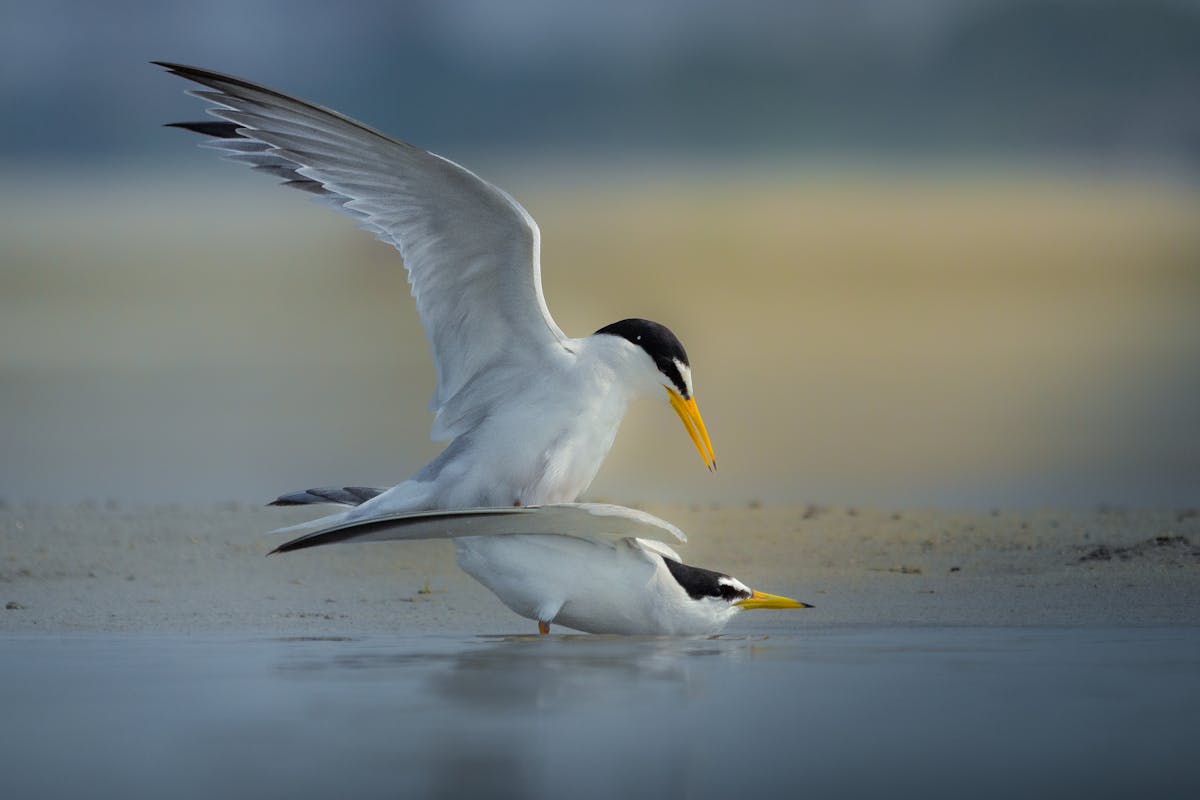
Birds Mate for Life
Chickadees are fascinating contradictions.
Established pairs are socially monogamous. They raise young together and maintain strong bonds during the breeding season. In winter, mated pairs may stay loosely associated in the same flock.
However, genetic testing reveals a high degree of extra-pair paternity. Females, especially those with lower-ranked males, often seek out higher-ranking males for genetic material while maintaining their social relationship.
This strategy maximizes genetic quality while ensuring parental investment. Effective, but not exactly faithful.
Atlantic Puffin — Long-term, Dedicated, and Cute About It
Puffins finish the list on a high note.
Atlantic Puffins return to the same burrow and the same partner year after year, starting around five years old. Both parents incubate and feed one chick each season.
Their bonding behavior, known as billing, involves rubbing beaks together. This daily ritual is one of the most delightful sights in birding.
Puffins can live into their 20s and 30s. Documented long-term pairs have been mates for over a decade. If one partner disappears, the remaining one may wait more than a breeding season before accepting a new mate.
Quick Reference: At a Glance — 12 Species
| Species | Mating Pattern | Faithful? |
|---|---|---|
| Bald Eagle | Long-term | Mostly yes |
| Canada Goose | Lifelong | Yes |
| Northern Cardinal | Seasonal | Often reunites |
| Golden Eagle | Long-term | Yes |
| Mourning Dove | Long-term | Yes |
| American Robin | Seasonal | Socially yes, genetically no |
| Mute Swan | Lifelong | Gold standard |
| Blue Jay | Long-term | Yes |
| House Sparrow | Seasonal | Not really |
| Sandhill Crane | Lifelong | Yes |
| Black-capped Chickadee | Seasonal | Socially yes, genetically complex |
| Atlantic Puffin | Long-term | Yes |
Long-Term Bonding: Why It Even Exists
It’s a fair question. If mating outside of a pair bond is so common, why do so many species bother with pair bonds?
The answer is simple: Raising chicks is hard.
Bird eggs need constant incubation. Hatchlings require constant feeding. Fledglings need protection and guidance. Two parents have a significant advantage over one, leading to:
-
More food gathered
-
Better nest defense
-
Higher offspring survival rates
Long-term bonds enhance these advantages. Established pairs can predict each other’s behavior, share territory, and have synchronized routines. They don’t waste time negotiating every breeding season. Research shows that proven pairs raise more young and are generally more successful than new pairs.
In the avian realm, love is mainly a survival strategy. Yet, it doesn’t feel any less real.
What the Science Is Unable to Fully Explain
DNA testing has challenged many romantic notions about birds. However, it has revealed something intriguing.
This holds true even in species with common genetic infidelity. The social bond remains intact:
-
The male Blue Jay continues to feed the female.
-
The male chickadee helps raise chicks that may not be his.
Bird behavior resembles commitment, even when genetics are complex. Among species that form true lifelong bonds—like swans, geese, and puffins—these connections last through years of winters, migrations, and losses.
Whether this counts as love is a question science avoids answering.
But watching a pair of Canada Geese fly south together in October—just as they did in March—makes it hard not to feel that the word fits.
Want to Learn More?

MD Imdadul Haque is the founder of BirdzFly, a research-backed resource on North American backyard birds. Drawing on years of independent study into bird identification, behavior, and migration patterns, he writes in-depth guides designed to help US birders understand the species in their own backyards — from common feeder visitors to seasonal migrants passing through.