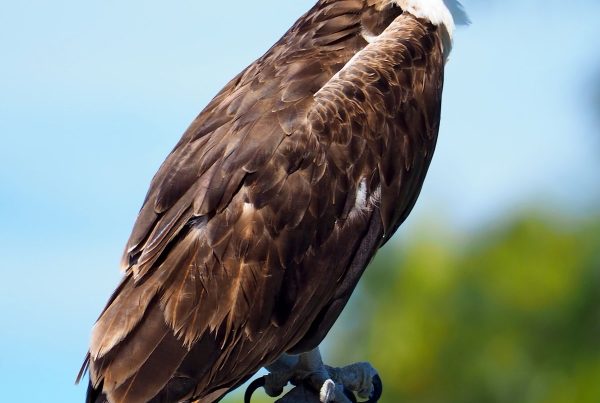

Hawk Nests
Hawk nests are easier to find than most people think. The catch is timing. If you go looking in April or May, the trees are leafed out and the nests are invisible. Go in February or November and the same nests are sitting there in plain view — large stick platforms against bare branches that you can spot from a car window.
Most people who never find hawk nests aren’t looking in the wrong places. They’re looking at the wrong time of year.
What a Hawk Nest Looks Like
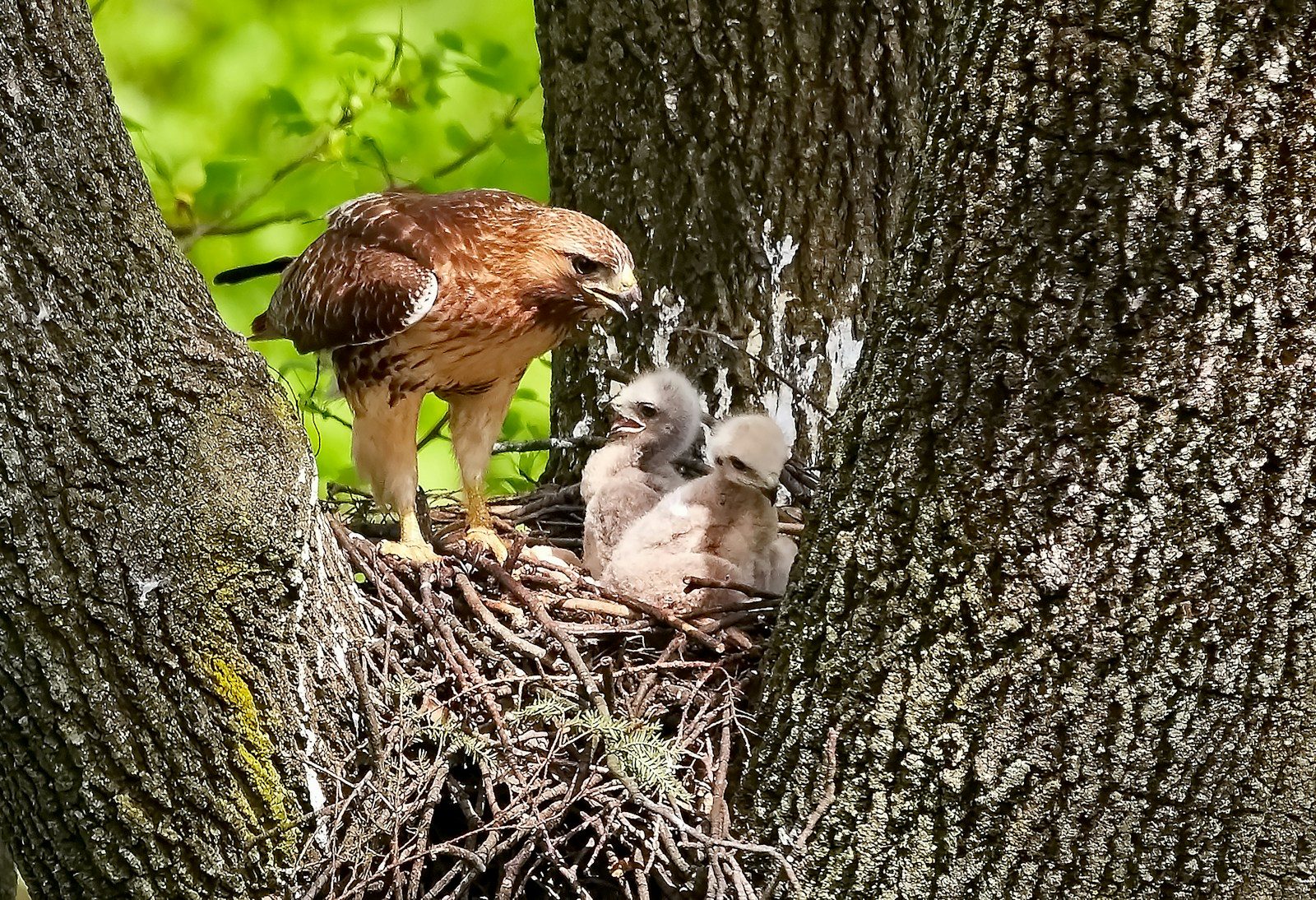
All hawk nests are variations on the same basic structure: a platform of sticks, lined with softer material — bark strips, pine needles, green leaves. The outer layer is rough and angular. The cup in the center where the eggs sit is deeper and smoother.
From the ground, the first impression is usually “that’s a big squirrel nest.” The differences: hawk nests are much larger, they sit in a main fork or against the trunk rather than wedged out in the branches, and they get added to year after year until some of them are genuinely massive. A Red-tail nest that’s been in use for a decade looks nothing like something a squirrel built.
How Big Are They?
- Red-tailed Hawk: 28–38 inches across, 4–36 inches deep. New nests are modest; old ones get very deep.
- Cooper’s Hawk: 27–30 inches across, shallower
- Sharp-shinned Hawk: 20–24 inches — smallest of the group
- Red-shouldered Hawk: Similar to Red-tail
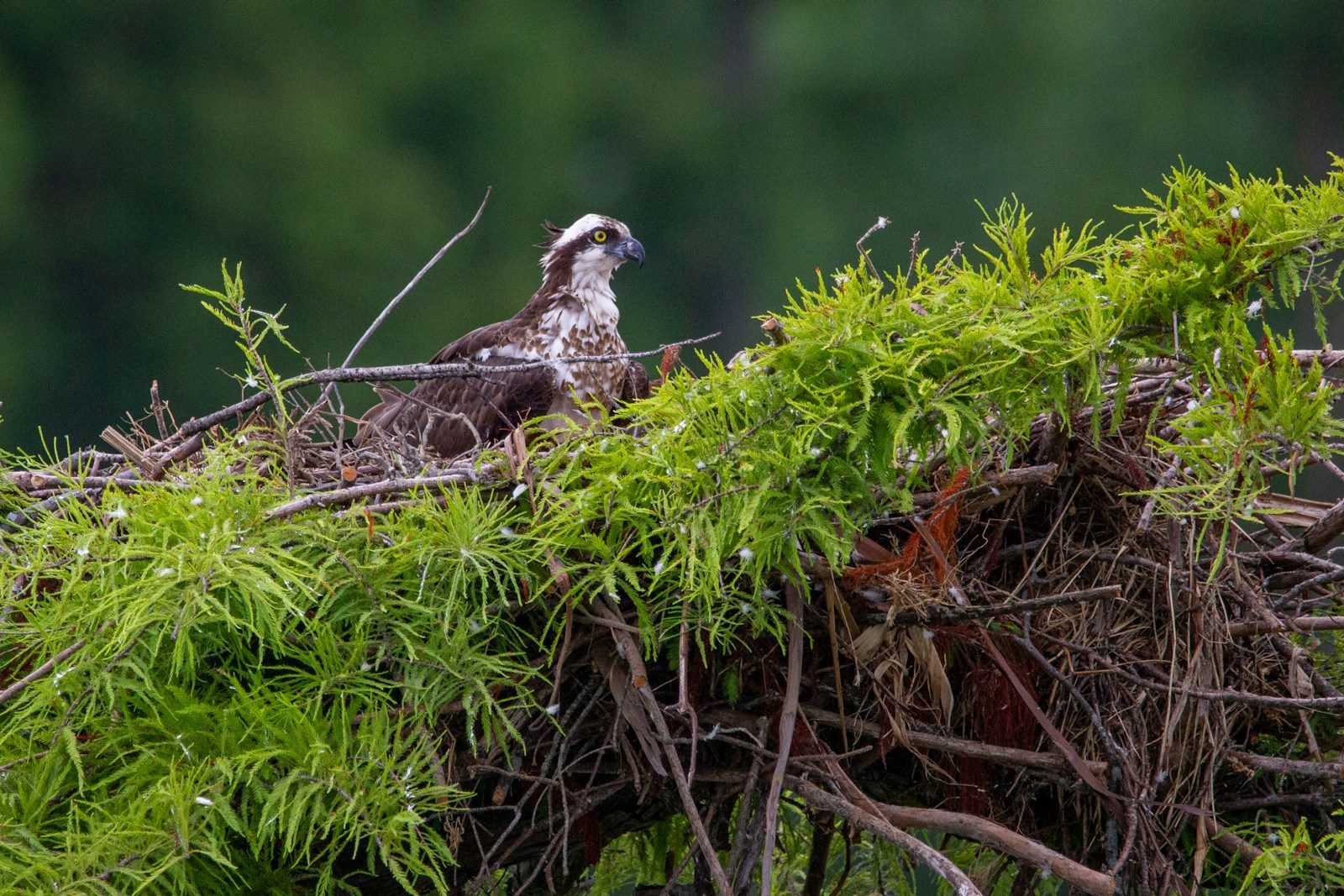
- Osprey: Can reach 6 feet across after decades of additions — genuinely impressive structures
Where Each Species Nests
Red-Tailed Hawk
Tall trees at the edge of open areas — a large oak or elm overlooking a field is the classic location. They also nest on cliff ledges, building ledges, and highway billboards in cities. The nest is usually in the main fork in the upper third of the tree. Same pair, same nest, year after year. The nest grows.
Cooper’s Hawk
Mature forest, often conifers, increasingly in suburban neighborhoods with large trees. Usually 25–50 feet up in a fork near the trunk. Unlike Red-tails, Cooper’s Hawks typically build a new nest each year rather than reusing, though they sometimes start from an old crow or squirrel nest.
Hawk Nests
Red-Shouldered Hawk
Wet forest — bottomland hardwoods, riparian corridors, forest near streams. Nests lower than Red-tails, usually 35–65 feet up in the main crotch of a large hardwood. One useful tell: Red-shouldered Hawks regularly add fresh sprigs of green leaves to the nest during the breeding season. If you see a stick nest with green leaves worked in, it’s likely a Red-shouldered.
Sharp-Shinned Hawk
Dense young conifers — spruce and fir, usually in younger, thicker stands than Cooper’s Hawks prefer. The nest is hidden deep inside the canopy and is genuinely hard to find even when you know the pair is there. Don’t feel bad if you can’t locate one.
Osprey
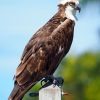
The easiest hawk nest to find: a large flat platform on top of a dead tree, power pole, channel marker, or purpose-built nest platform near water. Ospreys reuse the same nest for decades, adding material each year. Old osprey nests can be taller than they are wide. If you’re near water and you see a big messy pile of sticks on top of something, it’s almost certainly ospreys.
How to Find a Hawk Nest
Late winter is the window — late February and March, before leaves emerge. Hawks are vocal during courtship, and if you hear Red-tails calling repeatedly in a wooded area, look up at the tallest trees near the forest edge. You’ll often see the nest within a few minutes.
Other approaches that work:
- Look for large stick structures in bare trees November through March
- Follow circling hawks — pairs often circle above their nest area during territory disputes
- Look for whitewash on branches below a nest site — droppings accumulate during nesting and stay visible after the season ends
- Near water, check dead snags and utility poles for osprey platforms
Are Hawk Nests Protected?
Yes. All native North American hawks are protected under the Migratory Bird Treaty Act. Disturbing an active nest, damaging it, or harming eggs or young is a federal offense.
If there’s a hawk nest on your property, you can watch it — just don’t approach closely during nesting season. Early in incubation, repeated disturbance can cause abandonment. Later in the season, once the young are older, hawks are more tolerant.
FAQ
What does a hawk nest look like?
A large platform of sticks in the upper third of a tree, lined with softer material. Bigger and more centrally placed than a squirrel nest — usually 2–3 feet across when new, larger in older established nests.
Do hawks reuse their nests?
Red-tails and Ospreys do, year after year. Cooper’s Hawks usually build new nests annually. The reused Red-tail and Osprey nests get progressively larger each season.
How high up are hawk nests?
50–75 feet for Red-tails, lower for Red-shouldered. Ospreys nest at the very top of dead snags or on artificial platforms.
Is it illegal to disturb a hawk nest?
Yes. Active hawk nests are federally protected. Disturbing the nest, eggs, or birds is a federal offense under the Migratory Bird Treaty Act.
See our guide on deterring hawks from your yard humanely if you’re having conflicts.

MD Imdadul Haque is the founder of BirdzFly, a research-backed resource on North American backyard birds. Drawing on years of independent study into bird identification, behavior, and migration patterns, he writes in-depth guides designed to help US birders understand the species in their own backyards — from common feeder visitors to seasonal migrants passing through.