
Spring Birds
The first real sign of spring isn’t a temperature. It’s a sound — a robin singing before dawn, or a red-winged blackbird calling from a marsh that still has ice on the edges. Birds start moving before the weather makes up its mind, and if you know what to watch for, you can track the whole season turning week by week.
Here are 15 worth knowing, with rough arrival windows and what to actually look for.
1. American Robin
Arrives: February–March across most of the US
Robins don’t actually leave most of the US in winter — they just vanish from lawns and spend the cold months in berry-producing trees. The signal that spring is close isn’t their return, it’s when they start singing before sunrise and showing up on wet lawns looking for earthworms. That’s the moment.
2. Red-Winged Blackbird
Arrives: February–March
Males come in 2–3 weeks ahead of females to stake out marsh territories. The “conk-la-ree” call carrying across a frozen wetland in late February is one of those sounds that genuinely feels like a season changing. You don’t need a marsh nearby — males also use roadsides, field edges, and hedgerows.
3. Eastern (or Western) Bluebird
Arrives: February–March
Bluebirds start checking nest boxes before the last frost. If you have a box on a fence post in open country, peek inside in late February. You might already have a pair investigating. The male’s blue back and rust-orange chest are hard to misread.
4. Tree Swallow
Arrives: March–April
Usually the first swallow species north each spring, pushing up as soon as there are insects flying. Iridescent blue-green on top, white below. They nest in cavities near water. Watching a loose flock swirling over a pond in early April is one of the better spring birding experiences out there — they just look good doing it.
5. Baltimore Oriole
Arrives: April–May
The male looks genuinely tropical — brilliant orange and black, arriving from Central America in late April. They check yards early in migration and move on quickly if there’s nothing for them. Get your orange halves and nectar feeders out in the last week of April, before they arrive. Waiting until you see one is too late.
6. Ruby-Throated Hummingbird
Arrives: April–May (East) / February–March (Southwest)
The only hummingbird breeding in the eastern US. Males arrive before females — late April in the mid-Atlantic and Midwest, a week or two later in New England. Same deal as the oriole: feeder out before they arrive, not after. Males establish feeding territories and return to the same spots year after year. Check the migration map to see how close the wave is to your area.
Spring Birds
7. Yellow Warbler
Arrives: April–May
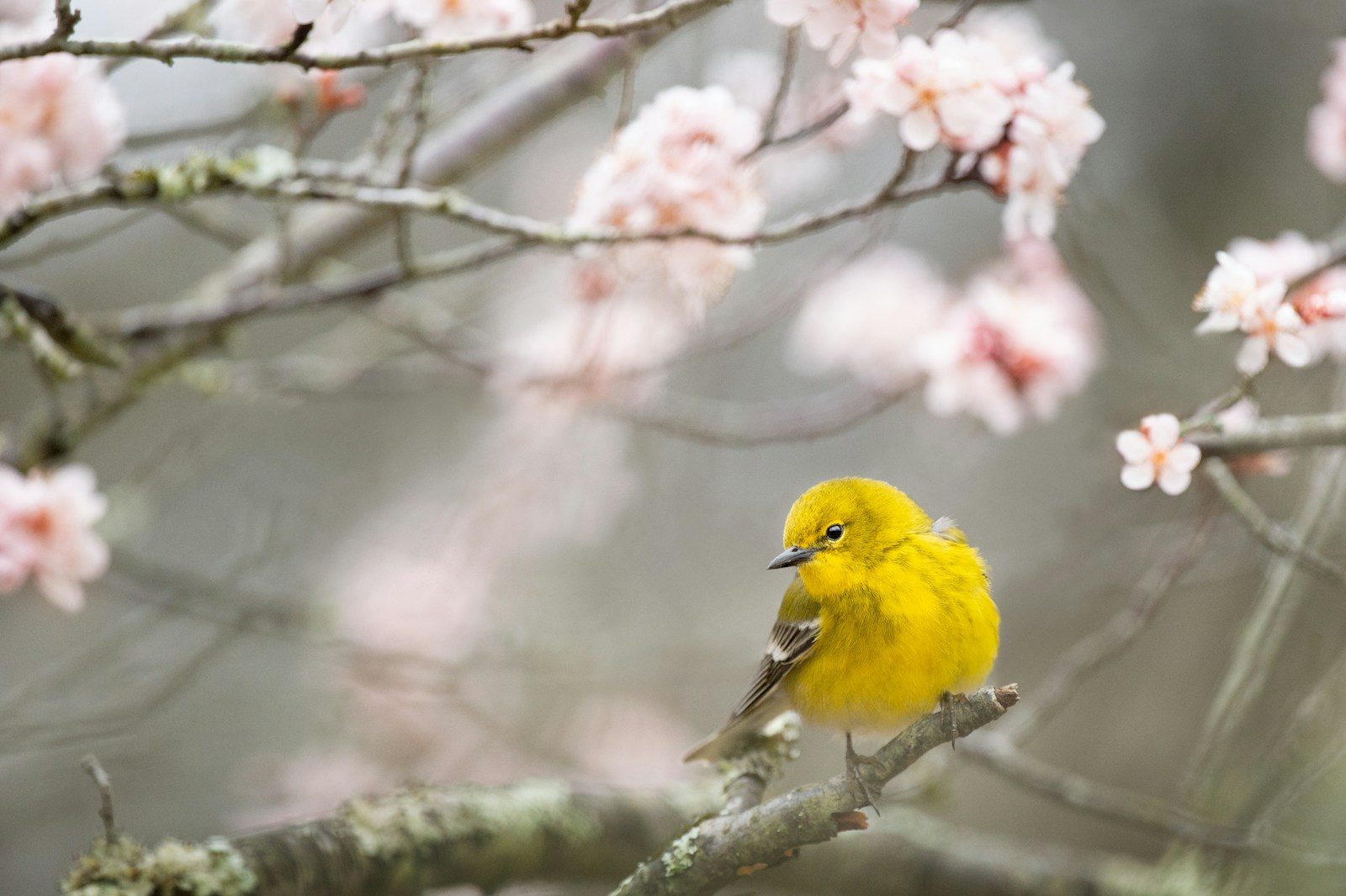
An all-yellow bird with rusty chest streaking on the male — one of the easier warblers to identify, which is a relief after some of the confusing fall warblers. They stick to shrubby edges near water. Their song (“sweet-sweet-I’m-so-sweet”) is cheerful and distinctive once it’s in your head.
8. Barn Swallow
Arrives: April–May
Deeply forked tail — no other common North American swallow has that shape. They nest on barns, bridges, and porches, arriving after Tree Swallows and setting up fast. Good birds to have around if you dislike insects.
9. Indigo Bunting
Arrives: May
The male is an almost unreal electric blue. Not blue-ish. Blue. They show up in May along forest edges and old fields, visit white millet feeders, and males often sing from an exposed perch at the top of a shrub — which makes them easier to spot than most warblers. The female is plain brown, which consistently surprises people who see the male first.
10. Rose-Breasted Grosbeak
Arrives: May
Black and white with a rose-red triangle on the chest. Hard to misidentify. They love sunflower seeds and drop in at feeders during migration, often staying a few days. May is a good month to keep feeders well stocked for exactly this reason.
11. Common Yellowthroat
Arrives: April–May
Small warbler, black mask, yellow throat — looks like a tiny masked bandit. They stay low in dense vegetation near water, so you often hear the “witchety-witchety-witchety” before you see the bird. Very common, but easy to overlook if you don’t know where to listen.
12. House Wren
Arrives: April–May
Small, brown, and much louder than makes sense for their size. They investigate every cavity they can find — nest boxes, hanging baskets, old boots on the porch. Males fill candidate nesting spots with sticks before females arrive to pick one. If you have a nest box, a House Wren will find it.
13. Gray Catbird
Arrives: May
Slate gray, black cap, rust under the tail. Named for the mewing call they throw in while mimicking other species — unlike mockingbirds, catbirds regularly include that cat sound in their repertoire, which makes them identifiable even when the song shifts around. They like dense shrubby thickets, often near water.
14. Cedar Waxwing
Arrives: Nomadic — can appear anytime berries are available
Sleek, crested, yellow tail tip, red wax-like droplets on the wing feathers. They move in flocks following berry crops and can show up anywhere at almost any time of year. You usually hear the thin high trilling call before you see them. Plant serviceberry, crabapple, or cedar and they’ll find you eventually.
15. Eastern Towhee
Arrives: March–April (year-round in the South)
Black hood, white belly, rufous sides. They scratch loudly through leaf litter under dense shrubs — you hear them before you see them. “Drink-your-tea” is the song. Ground feeders; scatter white millet under a feeder and they’ll come to it.
Arrival by Month
- February: Red-winged Blackbird, Robin (singing), Bluebird
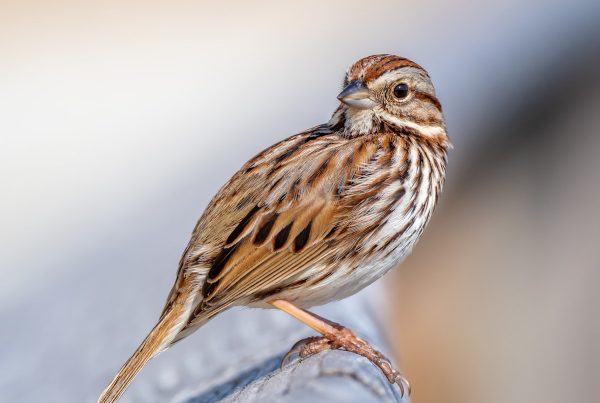
- March: Tree Swallow, Song Sparrow, Eastern Phoebe, Towhee
- April: Hummingbird (South), Yellow Warbler, Yellowthroat, House Wren
- May: Baltimore Oriole, Indigo Bunting, Rose-breasted Grosbeak, Catbird, most warblers
A Few Things That Actually Help
- Get hummingbird and oriole feeders out before the birds arrive — not after you spot one
- Moving water in a birdbath pulls in more species than still water
- Leave leaf litter under shrubs for towhees, thrushes, and sparrows
- Native berry shrubs work for waxwings, robins, and catbirds all season
- Nest boxes go up in late winter, before cavity nesters start scouting
For more on specific species, see our guides on hummingbird migration timing and cardinal feeders.

MD Imdadul Haque is the founder of BirdzFly, a research-backed resource on North American backyard birds. Drawing on years of independent study into bird identification, behavior, and migration patterns, he writes in-depth guides designed to help US birders understand the species in their own backyards — from common feeder visitors to seasonal migrants passing through.