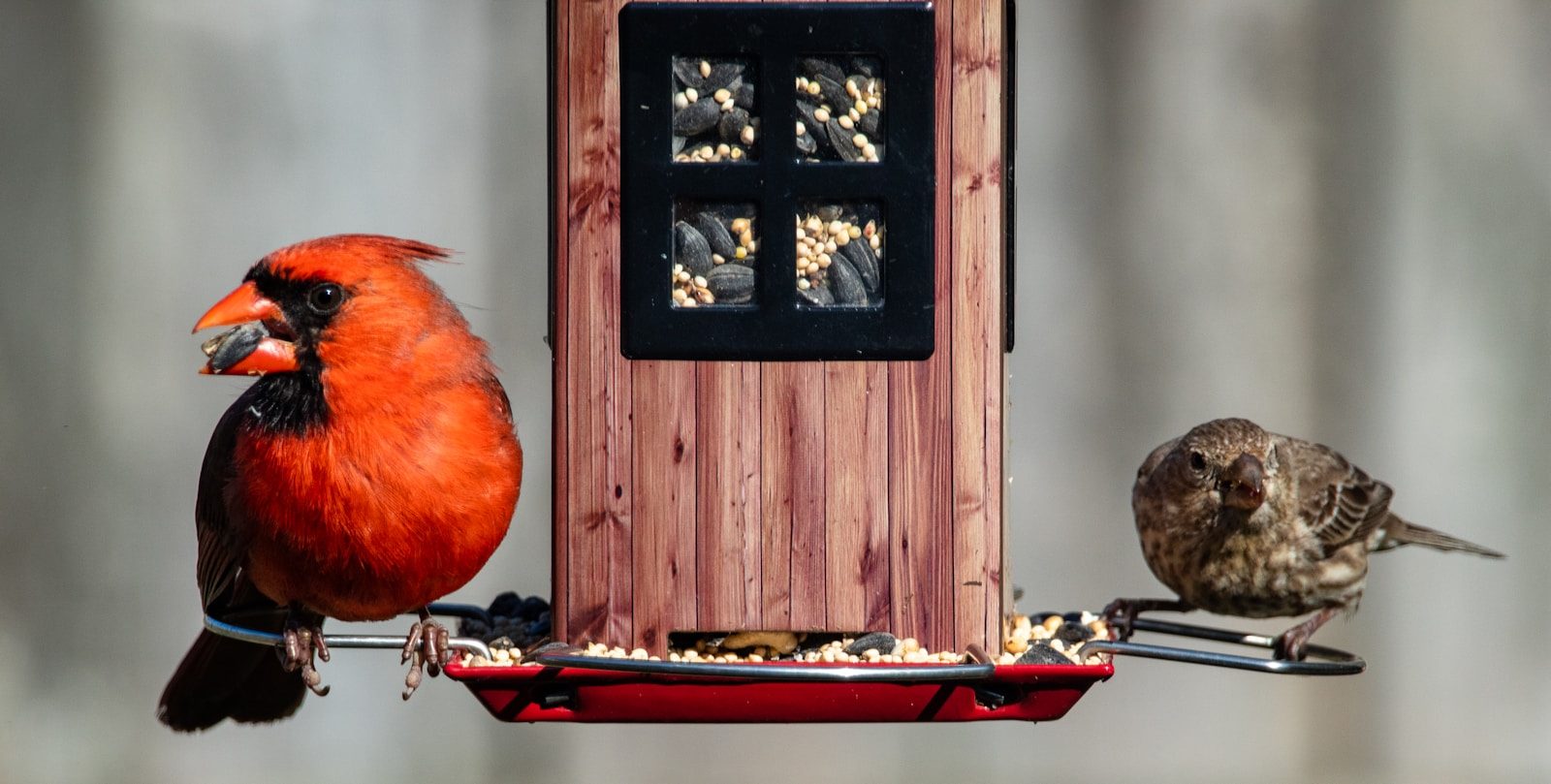
 Cardinals are year-round birds across most of the eastern US, which means there’s no “cardinal season” — they’re just always around. The males are hard to miss. The females are worth paying attention to too: brown with reddish tinges and that same heavy orange bill, and they often show up at feeders before the males do.
Getting them to visit consistently comes down to two things: the right seed, and a feeder design that fits their size. Get those right and they’ll be regulars.
What Cardinals Eat
Cardinals are seed eaters primarily, with insects added during nesting season. At feeders, they’re pretty consistent about what they want:
- Black-oil sunflower seeds — The single best option. Thin shells, high energy, easy for cardinals to crack with their heavy bill. If you only put out one thing, make it this.
- Safflower seeds — Cardinals eat safflower readily, and most squirrels and starlings won’t touch it. If you have a squirrel problem, switching to safflower is worth trying.
- White millet — Less popular than sunflower but eaten regularly, especially by females and juveniles. Works well in a ground tray.
- Shelled peanuts — Taken in winter when high-fat food matters. You need a feeder with ports large enough for peanut pieces.
- Berries — Part of the wild diet. Dogwood, serviceberry, and winterberry all attract them. Planting these keeps cardinals around when they’re not at the feeder.
One thing to skip: nyjer seed. Cardinals’ bills are too large and blunt for nyjer feeders. That’s finch food.
Which Feeders Work
Cardinals need room to stand and turn around. They don’t hang upside-down or cling to small perches — they eat facing forward on stable platforms. Small tube feeders with narrow perches don’t work well for them.
What does work:
- Hopper feeders — Covered platform with seed dispensed from a central hopper. Wide perch area, seed accessible without acrobatics, cover keeps rain off the seed. Cardinals use these reliably.
- Platform or tray feeders — Open trays give cardinals all the room they need. Seed does get wet, so a tray with drainage holes under some kind of roof is the better version.
- Wide-perch tube feeders — Standard tube feeders don’t work, but some are made specifically with wider perch ledges below the ports for exactly this reason.
 Where to Put the Feeder
Cardinals are cautious. They like to perch nearby and watch before committing to a feeder. Two placement details make a real difference:
Put the feeder within 10–15 feet of shrubs or dense trees. Cardinals use cover as a staging area — perch, look around, then fly in. A feeder sitting alone in the middle of an open lawn will get less action than one near good escape cover.
Lower is often better. Cardinals feed at ground level in the wild, and feeders at eye level or below tend to draw them more reliably than feeders hung high. A ground tray under a hanging feeder catches spilled seed and gives them a second option at a comfortable height.
Beyond the Feeder
A few additions that bring cardinals in and keep them:
- Water — They bathe and drink regularly. A birdbath with a drip or fountain creates movement and sound that draws them in. Keep it clean; they’ll skip dirty water.
- Dense shrubs — Cardinals nest in dense shrubs 3–6 feet off the ground. Roses, hawthorns, and evergreen shrubs are favorites. Get a pair nesting in your yard and you’ll have cardinals year-round.
- Native berries — Winterberry holly, dogwood, and serviceberry turn your yard into something more than a pit stop.
- Year-round feeding — Cardinals don’t migrate. Stop filling the feeder in summer and they won’t leave the neighborhood, but they may stop visiting your yard. Consistency matters.
Male vs. Female at the Feeder
Same diet, different behavior. Females tend to be more cautious and take longer to commit to visiting. Males usually arrive first and are more obvious about it. In breeding season you sometimes see a male pick up a seed and feed it directly to the female — courtship feeding. It looks exactly as sweet as it sounds.
Juveniles — the gray-brown birds with developing crests that appear in late summer — eat the same seeds as adults.
How Feeding Changes by Season
- Winter: Feeders are most important. Natural food is scarce, and cardinals visit more frequently. This is when you’re most likely to see groups of 6–10 birds at once.
- Spring/Summer: They add insects to their diet for nesting-season protein. Feeder visits drop but don’t stop. If you haven’t seen cardinals in a while in summer, they haven’t left — they’re just eating more broadly.
- Fall: Loose pre-winter flocks form. Multiple birds at feeders at the same time becomes more common again.
FAQ
Best food for cardinals?
Black-oil sunflower seeds. They’ll choose it over almost everything else.
What seeds do cardinals eat?
Black-oil sunflower, safflower, white millet, shelled peanuts. Not nyjer.
Best feeder type?
Hopper or platform/tray feeders. Wide stable perches are what they need.
Do cardinals come to feeders in summer?
Yes, just less often. They’re eating insects and wild fruits too, but they’ll still stop for sunflower seeds.
For feeder recommendations, see our guide to the best cardinal feeders. For the other side of cardinal visits, see what it means when a cardinal visits you.

MD Imdadul Haque is the founder of BirdzFly, a research-backed resource on North American backyard birds. Drawing on years of independent study into bird identification, behavior, and migration patterns, he writes in-depth guides designed to help US birders understand the species in their own backyards — from common feeder visitors to seasonal migrants passing through.