

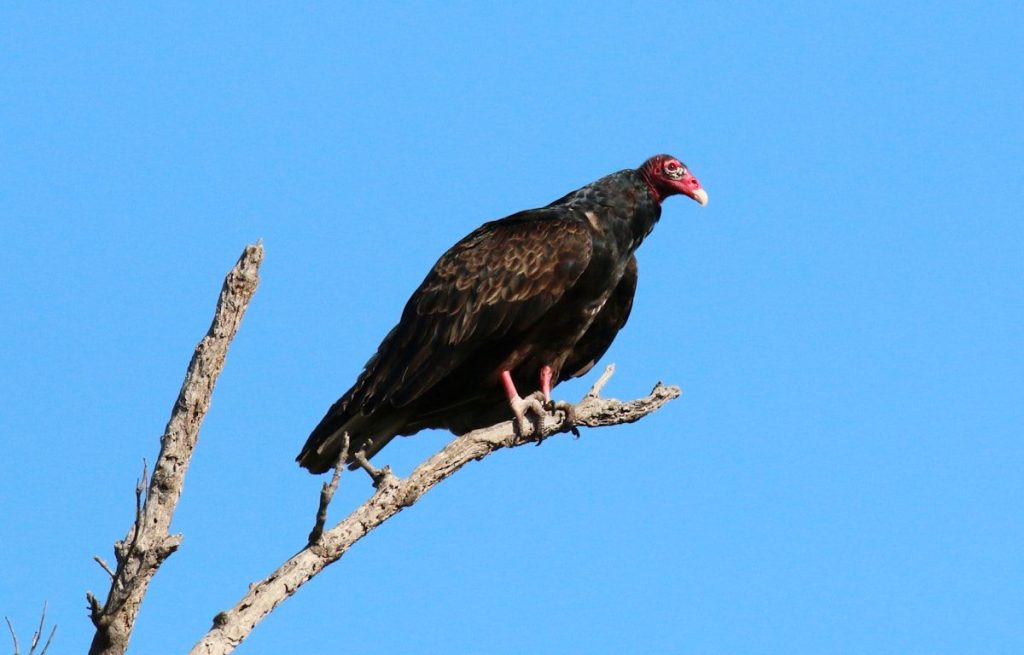
Black Vulture vs Turkey Vulture
Black Vultures and Turkey Vultures are the two most common large soaring birds in eastern North America, and they frequently roost and soar together. At a distance, both look like big dark birds working the thermals. Once you learn three field marks, you won’t confuse them again.
The Three Marks That Always Work
1. Wing Pattern in Flight
This is the fastest ID from below and works at any distance where you can make out wing detail.
Turkey Vulture: The entire trailing half of the wing — the flight feathers — is silvery gray. The leading half is dark. Two-toned: dark front, silver back. From below the wings look like they have a silver lining.
Black Vulture: Mostly dark wings with a small white patch at the very wingtip — just the outermost primary feathers. Dark wing, white fingertips. The contrast is much more restricted than the Turkey Vulture’s broad silver pattern.
This difference works even when you can’t see the head or tail clearly. It’s the one to learn first.
2. Head Color
Turkey Vulture: Bare red head on adults. Juveniles have a dark gray head. The red is visible at moderate distances.
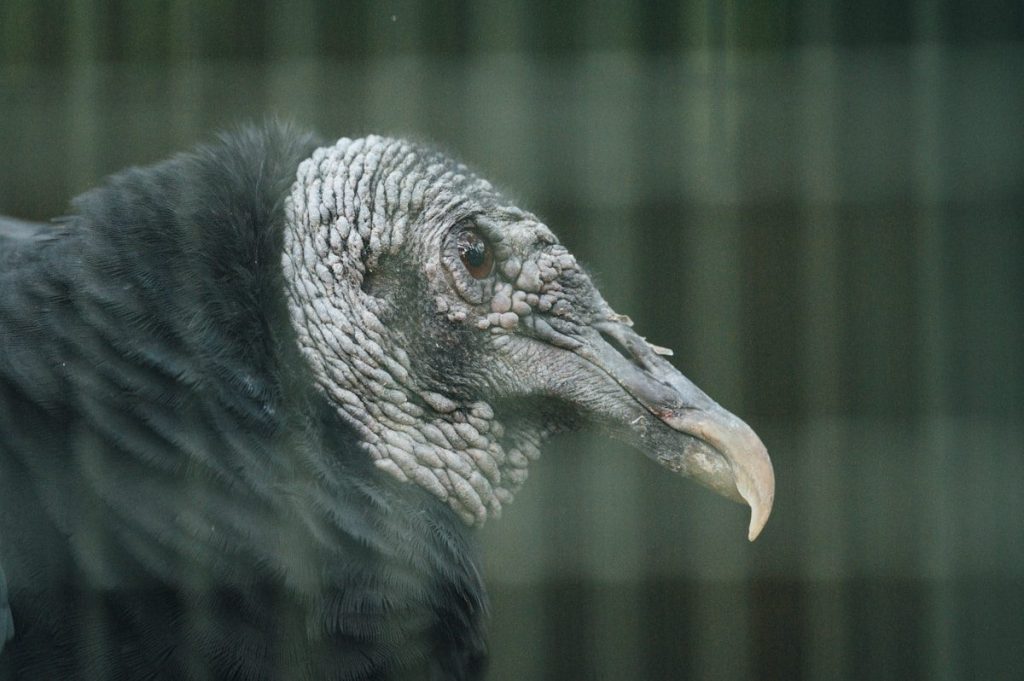
Black Vulture: Bare gray to black head at all ages. Never red.
More useful at closer range than at a distance, but good to have as a confirming mark.
3. Flight Style and Tail
Turkey Vulture: Wings held in a pronounced V (dihedral), rocks and tilts noticeably in flight — almost like a tightrope walker. Long, narrow tail.
Black Vulture: Wings held flatter, nearly horizontal. More stable, less rocking. Short squared-off tail. Flaps more frequently, alternating quick flaps with short glides.
The rocking, tilting Turkey Vulture flight is one of those things that once you’ve seen it, you can pick it out from a mile away. Black Vultures look steadier and more purposeful.
Black Vulture vs Turkey Vulture
Size
Turkey Vultures are slightly larger (67–70 inch wingspan versus 55–60 for Black). In mixed groups the size difference is sometimes visible, but it’s unreliable without something to compare against. Use the wing pattern instead.
Range
Turkey Vultures are found across all of North America including Canada. Black Vultures are primarily southeastern and south-central US, extending into the mid-Atlantic, and their range has been expanding northward. In much of the South, both are present year-round and regularly seen together.
Why They’re Always Together
Turkey Vultures find food almost entirely by smell — they have a remarkably well-developed olfactory system for a bird. Black Vultures have poor smell and primarily find food by watching Turkey Vultures and following them. This is why the two species are so often seen together: Black Vultures shadow Turkey Vultures to the carcass, then use their numbers and aggression to push the Turkey Vulture aside once they arrive.
Quick Reference
| Feature | Turkey Vulture | Black Vulture |
|---|---|---|
| Wing pattern | Silver trailing half | White wingtips only |
| Head | Red (adults) | Gray/black |
| Flight | Strong V, rocks and tilts | Flat, stable, flaps more |
| Tail | Long, narrow | Short, squared |
| Finds food by | Smell | Following Turkey Vultures |
FAQ
Easiest way to tell them apart?
Wing pattern from below. Turkey Vultures have silver on the entire trailing half of the wing. Black Vultures have only small white patches at the wingtips.
Are Black Vultures more aggressive?
Yes. More aggressive at carcasses and more likely to cause property damage (tearing rubber seals, damaging HVAC units). Turkey Vultures are generally less assertive.
Do vultures attack living animals?
Turkey Vultures almost never do. Black Vultures occasionally target newborn or weakened livestock, which creates conflicts with farmers in some areas.
For more large bird ID, see our guides on identifying juvenile red-tailed hawks and hawk nests.

MD Imdadul Haque is the founder of BirdzFly, a research-backed resource on North American backyard birds. Drawing on years of independent study into bird identification, behavior, and migration patterns, he writes in-depth guides designed to help US birders understand the species in their own backyards — from common feeder visitors to seasonal migrants passing through.

