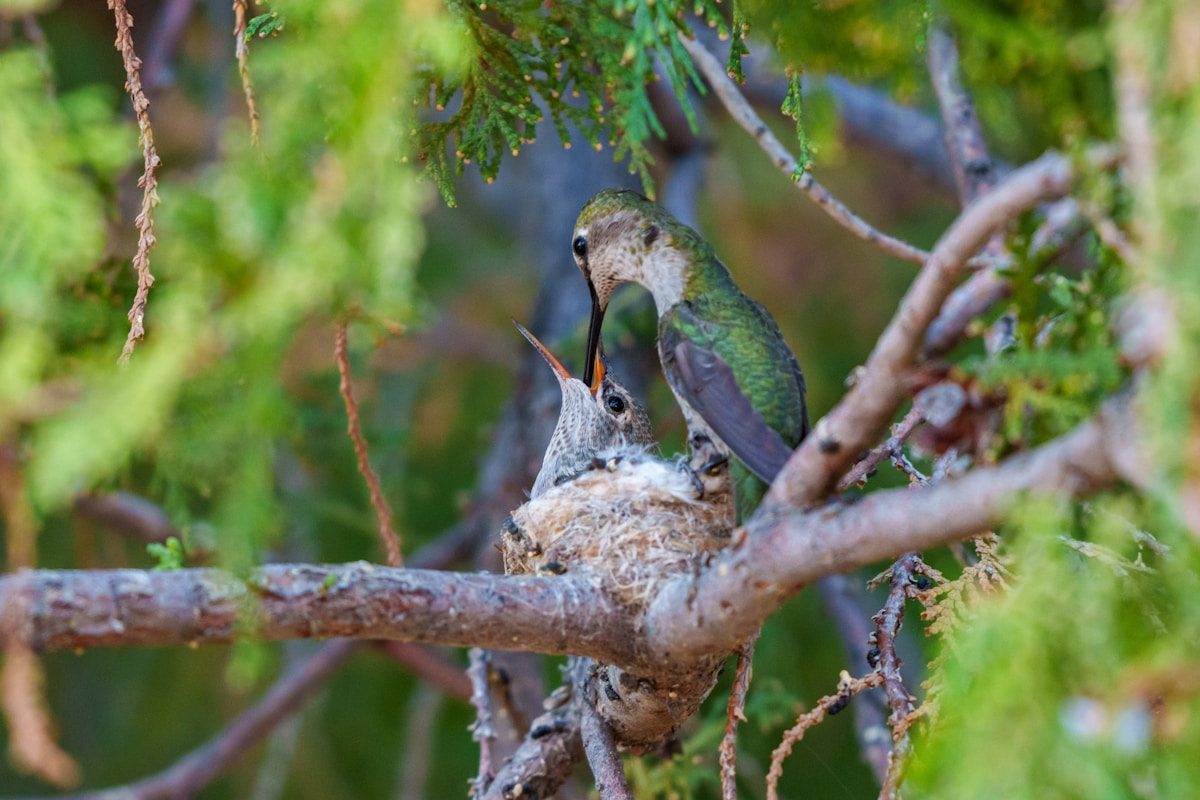
Baby Hummingbird
A newly hatched hummingbird weighs about 0.62 grams. That’s roughly the weight of a paper clip.
It’s blind. It has no feathers. Its skin is dark gray and you can see the organs beneath it. The bill is short and straight — nothing like the long needle it will become. It fits in a teaspoon with room to spare.
Three weeks later, it leaves the nest and flies.
The growth rate of hummingbirds in the nest is one of those facts that sounds wrong until you look at the timeline and realize it has to be that fast — the nest is exposed, the chicks are vulnerable, and every extra day in the nest is a day something can go wrong.
What Baby Hummingbirds Look Like at Each Stage
Day 1–5: Newly Hatched
Dark gray to black skin, visible through sparse gray down on the back. Eyes closed. Bill short and straight. Body roughly the size of a jellybean. The chick shivers to generate warmth — it cannot yet regulate its own body temperature, so the female broods almost continuously at this stage, leaving only briefly to feed.
Day 6–12: Pin Feathers Emerging
Pin feathers — feathers still sheathed in a waxy tube — begin pushing through the skin on the wings and back. The chick starts to look more textured and less translucent. Eyes begin to open around day 7–9. Bill starts to lengthen noticeably. The mother begins spending more time away from the nest foraging, and the chicks are left alone for longer periods.
Day 13–18: Feathers Opening
The pin feather sheaths split and the feathers unfurl. The bird starts to look like a bird. Green iridescence begins to show on the back — the same structural color that makes adult hummingbirds appear to change color with the angle of light. Wing feathers extend. The chick begins to move around the nest, standing and stretching.
Day 19–22: Near Fledging
Fully feathered. The bill has reached near-adult length. The chick exercises its wings — rapid flapping while still perched on the nest rim. It may leave the nest briefly and return. By day 21–28 (varies by species), it makes its first sustained flight.
The first flight is competent. Not skilled — the young bird will spend weeks refining its abilities — but it can fly from the moment it leaves the nest. It doesn’t fall out and learn from the ground. It leaves and flies.
What the Female Does During This Time
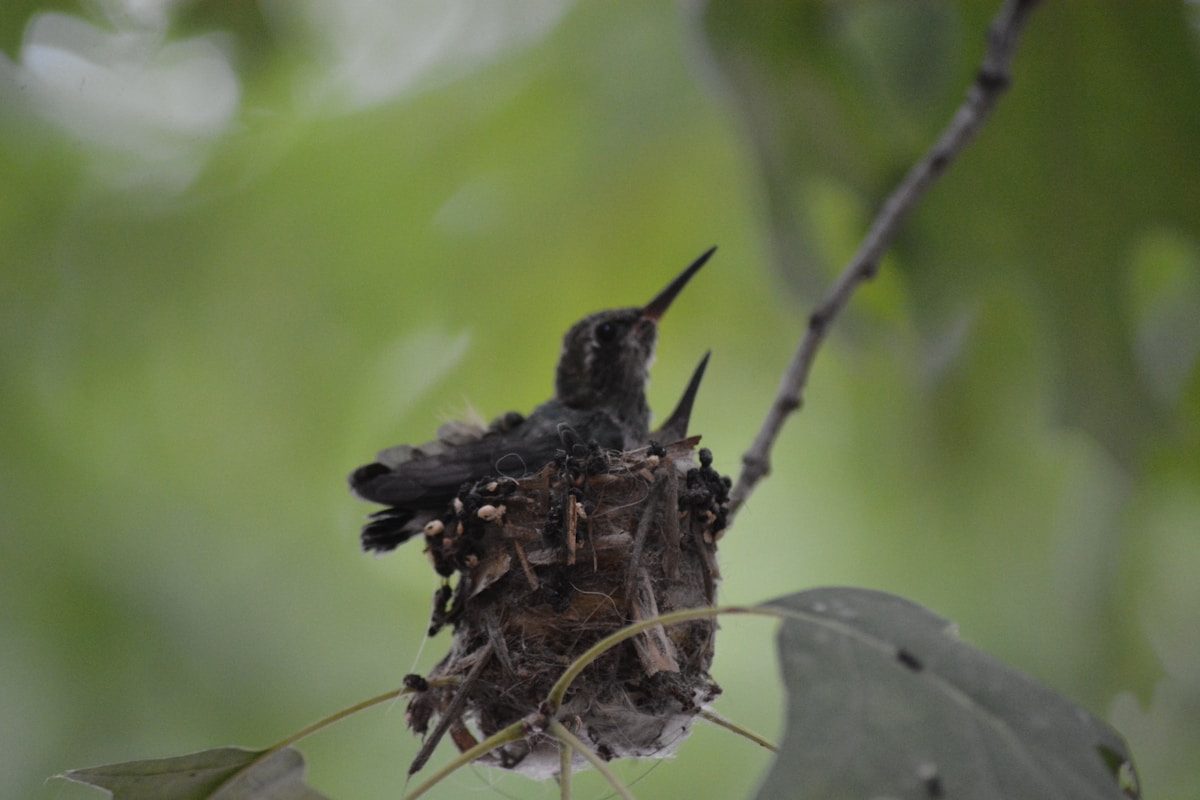
Baby Hummingbird
Everything. The male hummingbird is absent from the moment mating is complete. The female builds the nest alone, incubates the eggs alone (16–18 days), and raises the chicks alone.
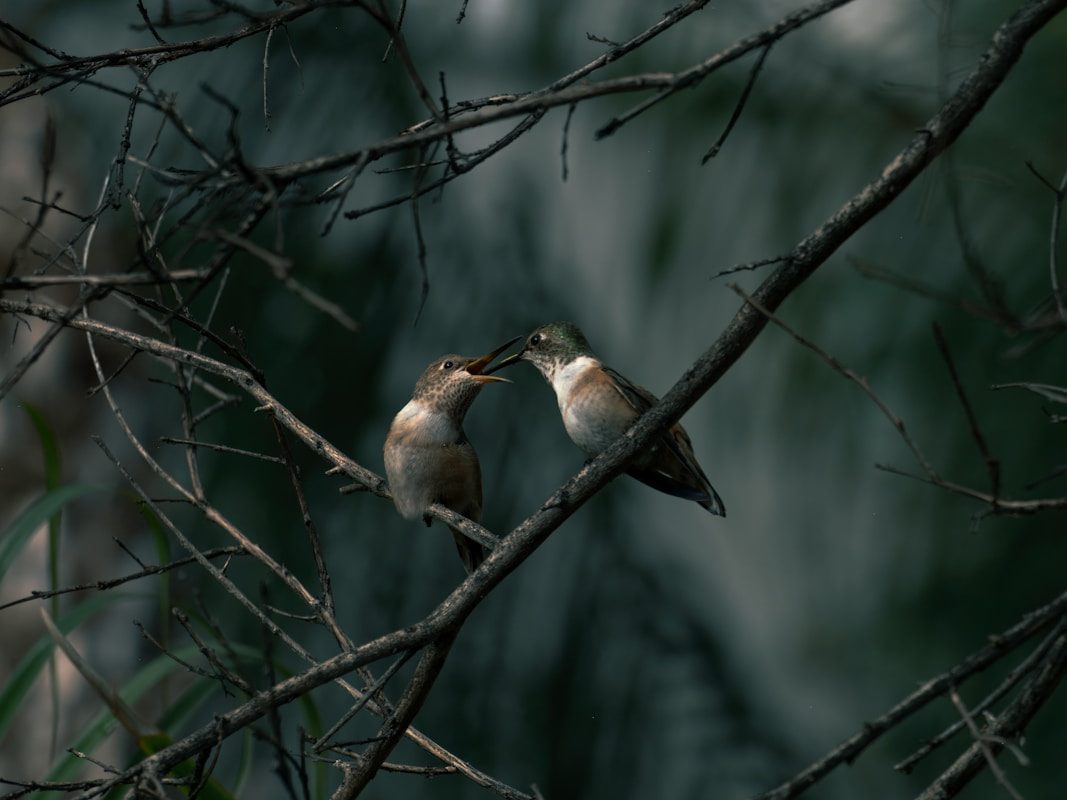
She feeds the chicks by inserting her bill into their open mouths and pumping regurgitated nectar and insects into them — the insects provide protein, the nectar provides energy. As the chicks grow, feeding visits increase in frequency and the amount per visit grows.
She also keeps the nest clean, removing the chicks’ fecal sacs, and expands the nest as the chicks grow. The nest is made from plant down and spider silk — the silk allows it to stretch rather than crack as the chicks develop.
The Nest
Hummingbird nests are built to be invisible. They’re constructed from plant down, bud scales, and other soft material, bound and camouflaged with lichen and bark fragments on the exterior using spider silk. From above or the side, a hummingbird nest on a branch looks like a natural bump or growth on the wood.
They’re roughly the size of a large thimble when new. A walnut shell gives you the right mental image. They’re almost always placed on a downward-sloping branch, often above water or in dappled shade.
People who find them usually do so by accident — following the female, or noticing her behavior and looking carefully at the branches she keeps returning to.
If You Find a Baby Hummingbird
If you find a baby hummingbird on the ground, the right response depends on what you’re actually looking at.
A chick with no feathers or pin feathers only — it has fallen from the nest. Look for the nest within a few feet, usually directly above. If you can reach it, place the chick back in. The mother will continue to care for it; the “human smell” rejection story is a myth.
A chick with full feathers that can grip your finger — it’s a fledgling and may be intentionally out of the nest. Watch from a distance for 30–60 minutes. If the mother doesn’t return and the bird appears injured or in danger, contact a licensed wildlife rehabilitator. Do not attempt to feed it sugar water from a dropper — hummingbirds fed incorrectly can aspirate fluid into their lungs.
How Fast Baby Hummingbirds Grow
| Age | Development |
|---|---|
| Day 1 | Blind, no feathers, ~0.62g |
| Day 7–9 | Eyes open, pin feathers emerging |
| Day 13–15 | Feathers unfurling, bill lengthening |
| Day 18–20 | Fully feathered, wing exercises begin |
| Day 21–28 | First flight |
FAQ
What does a baby hummingbird look like?
Newly hatched: dark gray skin, no feathers, eyes closed, bill short and straight. By three weeks: fully feathered, iridescent, bill near adult length. The transformation is fast and visible at each stage.
How long do baby hummingbirds stay in the nest?
About 18–28 days depending on species. Ruby-throated Hummingbirds typically fledge at 18–22 days.
What do baby hummingbirds eat?
Regurgitated nectar and insects provided by the female. The insects supply the protein needed for rapid growth. They cannot be fed sugar water from a dropper safely — contact a rehabilitator if you find one that needs help.
Does the male hummingbird help raise the young?
No. The female does everything from nest construction through fledging. The male plays no role after mating.
For more on hummingbird biology, see our guides on hummingbird eggs and do hummingbirds mate for life.

MD Imdadul Haque is the founder of BirdzFly, a research-backed resource on North American backyard birds. Drawing on years of independent study into bird identification, behavior, and migration patterns, he writes in-depth guides designed to help US birders understand the species in their own backyards — from common feeder visitors to seasonal migrants passing through.