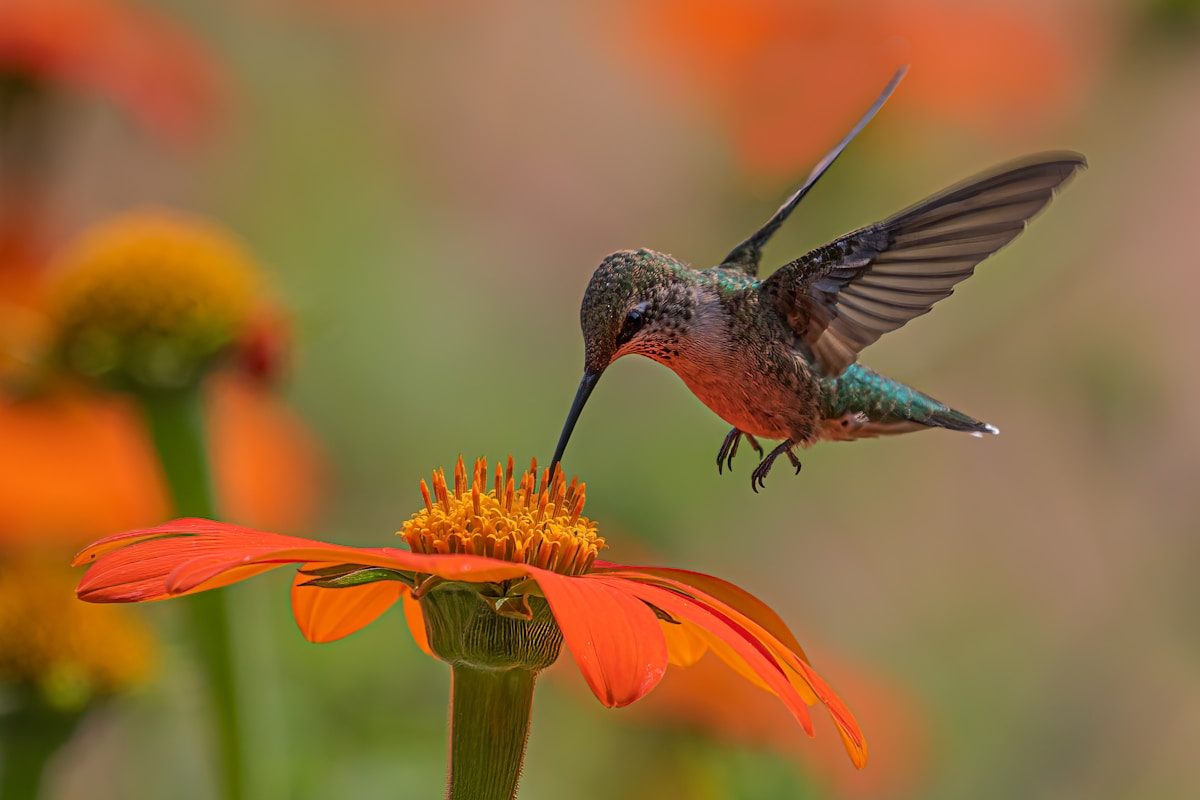
Hummingbird Fall Migration
Fall hummingbird migration runs from July through November. It is longer, quieter, and less dramatic than spring migration — birds move individually rather than in waves, spread across a wider front, and don’t concentrate at predictable stopover sites the way spring migrants do. But it happens every year on a consistent schedule, and knowing that schedule tells you what to expect at your feeders.
Fall Migration Timeline: What Happens When
Late June – July: Adult males depart
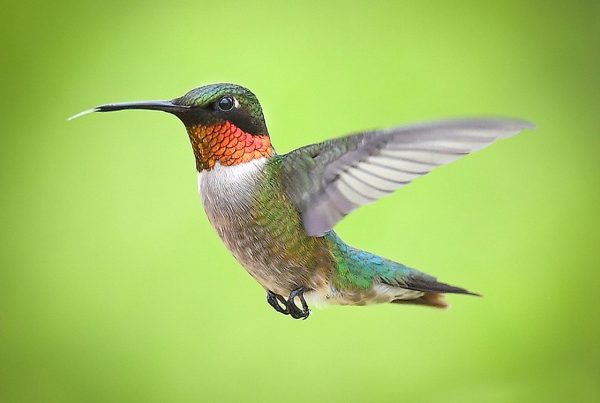
Adult male Ruby-throated Hummingbirds are the first to leave breeding grounds — often in late June or early July in Canada, mid-July in the northern US. Most people don’t notice because females and juveniles are still present. The male’s role ends after mating; there is no reason for him to stay.
August: Adult females and early juveniles
Females finish the last brood of the season and begin moving south. The first juveniles — offspring of the first spring clutch — also begin migrating. Feeder activity often seems to peak in early August as late juveniles and southbound adults pass through simultaneously.
Late August – September: Peak juvenile movement
This is when most people notice “the hummingbirds are leaving.” What they’re seeing is the wave of juvenile birds — born that summer, making their first migration with no learned route. Activity at feeders can be intense in late August as multiple birds fuel up before continuing south.
October – November: Stragglers and western strays
By October, most Ruby-throated Hummingbirds have left the eastern US. Late birds are either stragglers finishing a delayed migration or western species — primarily Rufous Hummingbirds — that have wandered east instead of going south. These birds regularly winter at Gulf Coast feeders.
Fall Migration Route: Where They Go
Ruby-throated Hummingbirds have two main fall routes:
Gulf crossing route: Birds from the eastern US funnel down through Florida and the Gulf Coast, accumulate fat reserves over several days of intensive feeding, then attempt the nonstop crossing of the Gulf of Mexico to the Yucatan Peninsula. The crossing is 500 miles of open water — 18 to 24 hours of continuous flight. This is the most direct route but also the most dangerous. Storms and headwinds can be fatal.
Overland route through Texas and Mexico: Many birds, particularly those from the interior of the continent, travel through Texas and into Mexico overland. This route is longer but provides continuous fueling opportunities. It’s the predominant route for western Ruby-throated populations and many Rufous Hummingbirds.
From Mexico, birds continue south through Central America to winter grounds in Guatemala, Belize, Honduras, Costa Rica, and Panama.
Where to Track Fall Hummingbird Migration
Two free tools give you current migration data:
Journey North (journeynorth.org) — Crowd-sourced sighting reports mapped in real time. Updated daily during migration. Shows last sighting dates across the country, giving you a clear picture of the migration front moving south. In fall, watch for the reports showing “last sighting of the season” spreading southward through August and September.
eBird (ebird.org) — Cornell Lab’s citizen science database. Search your county or state for recent hummingbird reports. The “Recent Sightings” feature shows exactly what has been reported near you in the past week. Useful for confirming whether hummingbirds are still active in your area before taking down feeders.
Fall Migration by State: What to Expect
| State/Region | Peak Fall Activity | Last Expected Bird |
|---|---|---|
| Canada | Late July–August | Early September |
| New England (ME, VT, NH, MA) | Mid–late August | Mid September |
| Northeast (NY, PA, CT) | Late August | Late September |
| Midwest (OH, MI, WI, MN) | Late August–early September | Late September |
| Mid-Atlantic (VA, MD, DC) | Early–mid September | Early October |
| Southeast (NC, SC, GA) | Mid September | Mid October |
| Deep South (AL, MS) | Late September | Late October |
| Gulf Coast (TX, LA, FL) | October | November |
Rufous Hummingbird: The Other Fall Migration
While Ruby-throated Hummingbirds dominate the eastern fall migration, the Rufous Hummingbird runs a separate and equally remarkable fall migration in the West.
Adult male Rufous Hummingbirds begin leaving Alaskan and Pacific Northwest breeding grounds as early as late June — making the Rufous fall migration the earliest of any North American hummingbird. They move south through the Rocky Mountains, passing through Colorado, New Mexico, and Arizona in July and August, fueling at mountain wildflower meadows along the way.
The Rufous migration through the Rockies in late July and August produces some of the most concentrated hummingbird activity of the year. High-elevation feeders in Colorado and Wyoming can have dozens of Rufous Hummingbirds per day at peak passage.
How Fall Migration Differs from Spring

Hummingbird Fall Migration
Spring migration is a concentrated northward push over 6–8 weeks. Fall migration is a gradual southward drift over 4–5 months, with different age classes moving at different times and individual birds making their own schedules.
In spring, the migration wave moves north predictably — you can watch it advance on Journey North day by day. In fall, the diffuse timing and the fact that birds spread across a wide front makes fall migration feel more like a slow fading than a dramatic departure.
Fall migration is also less studied and less tracked by citizen science, partly because the birds are less conspicuous and partly because people pay less attention once breeding season is over. But the numbers are the same — every bird that arrived in spring will leave in fall.
What to Do With Your Feeder in Fall
Keep it clean and full through peak migration. Late August and early September are the highest-traffic weeks at most eastern feeders as juveniles fuel up for their first migration. A clean, full feeder in late August does more good than at almost any other time of year.
Change the nectar every 2–3 days — September can still be warm, and fermented nectar harms birds. See our guide on how to clean a hummingbird feeder for the full process.
Take feeders down 2 weeks after the last sighting of the season — not before.
FAQ: Hummingbird Fall Migration 2026
When does hummingbird fall migration happen?
It starts in late June with adult male departures and ends in November along the Gulf Coast. Peak activity at most US feeders is late August through mid-September.
Where do hummingbirds go in fall?
Ruby-throated Hummingbirds winter in Mexico and Central America. Most cross the Gulf of Mexico or travel overland through Texas. Rufous Hummingbirds winter in western Mexico.
How do I know when hummingbirds have left my area?
Check eBird or Journey North for recent sightings in your county. If no sightings have been reported in 2 weeks, the season is likely over in your area.
Should I leave my feeder up after hummingbirds leave?
Keep it up for 2 weeks after the last sighting. Late migrants and western strays pass through after the main departure. Taking feeders down early may leave these birds without a fuel stop.
For timing details by state, see our guides on when hummingbirds leave by state, where hummingbirds go in winter, and when to take down your feeders. For the spring side of the picture, see our 2026 spring migration map. For hummingbird biology, see our guides on how fast hummingbirds fly and what hummingbirds eat.

MD Imdadul Haque is the founder of BirdzFly, a research-backed resource on North American backyard birds. Drawing on years of independent study into bird identification, behavior, and migration patterns, he writes in-depth guides designed to help US birders understand the species in their own backyards — from common feeder visitors to seasonal migrants passing through.