
Hummingbirds Mate for Life
No. Hummingbirds don’t mate for life. They barely stay together for an afternoon.
The mating system is about as far from monogamy as birds get — males arrive on the breeding grounds, establish feeding territories, perform courtship displays for any female that enters, mate, and then have essentially no further involvement. The female builds the nest, incubates the eggs, and raises the young entirely alone. The male, meanwhile, is back to displaying for other females.
How It Actually Works
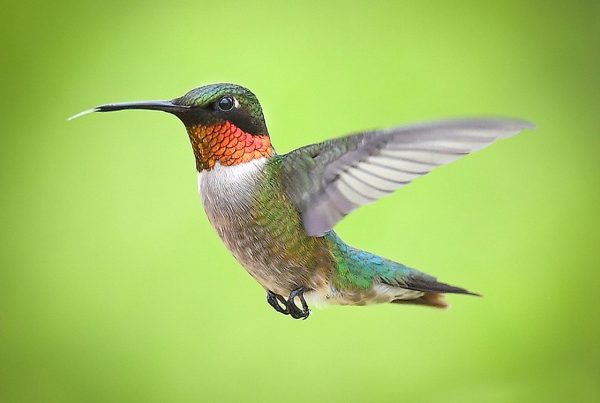
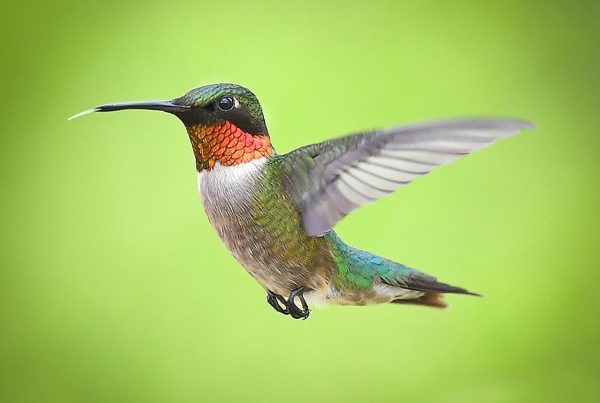
The technical term is polygyny — one male mating with multiple females in a season. A successful male Ruby-throated Hummingbird may mate with several females across a summer. The females each raise their young independently, without any help from him.
This isn’t unusual behavior in the bird world, but it is striking for hummingbirds because the whole thing is compressed into such a short interaction. There’s no pair bond, no nest-building together, no joint territory defense. The male’s role begins and ends with the courtship display and mating.
Why Hummingbirds Don’t Pair Bond
Simple answer: there’s no benefit to it for either sex. Female hummingbirds are fully capable of raising young alone — they don’t need the male to find food or defend the nest. A male that stayed with one female would miss the chance to pass on his genes through additional matings. So natural selection produced a system where the male maximizes mating opportunities and the female maximizes parental investment.
This contrasts with species like cardinals, where the male feeds the female during incubation and helps feed nestlings. In those species, the male’s contribution genuinely improves chick survival — which is why pair bonding evolved. In hummingbirds, it apparently doesn’t.
The Courtship Display
The male’s entire breeding strategy centers on the dive display. When a female enters his territory, he performs a series of steep U-shaped dives — sometimes reaching 60 mph at the bottom of the arc — while producing a distinctive sound with his tail feathers. It’s energetically expensive and demonstrates fitness. A male that can pull off dramatic dives while maintaining a productive feeding territory is advertising that he has good genes.
After mating, he’s done.
Do They Return to the Same Partner?
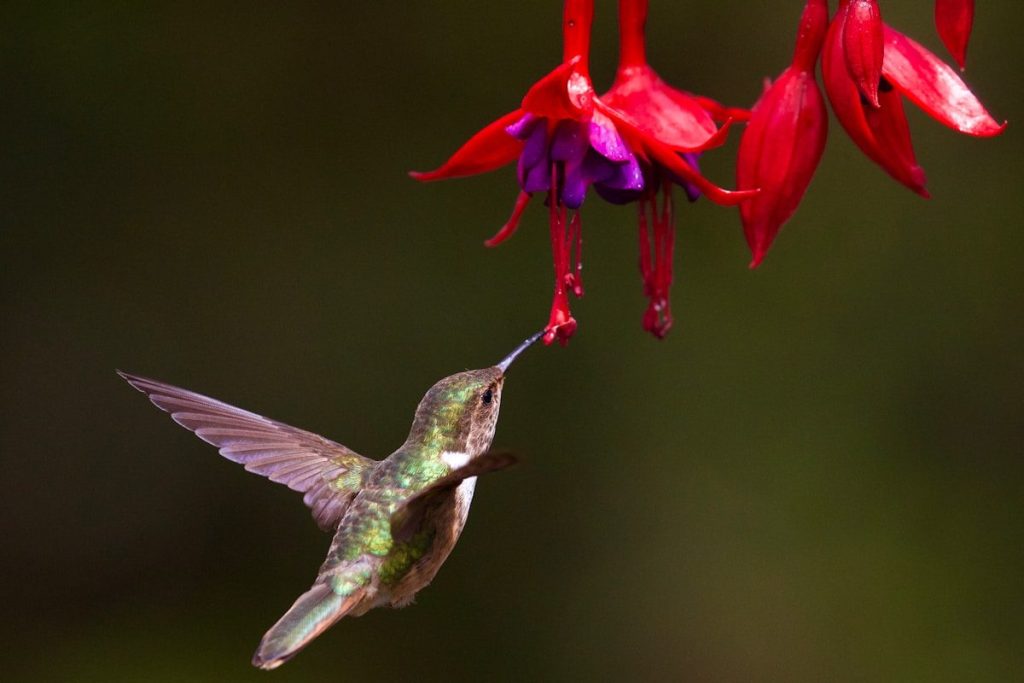
Hummingbirds Mate for Life
No evidence of this. Both sexes return to the same general territories year after year — so the same birds may end up in the same area each summer — but there’s no documented recognition of previous partners or preferential mating. Each season starts fresh.
Site Fidelity vs. Partner Fidelity
Hummingbirds don’t form bonds with mates. They do form strong bonds with places. A male may defend the same feeder territory for multiple years. A female may rebuild a nest on or near the same site she used the previous year, sometimes directly on top of an old nest. This site fidelity is the closest thing to long-term commitment in hummingbird social life — but it’s a relationship with a location, not a partner.
The Male’s Role After Mating
None. The female builds the nest, incubates the eggs (about 16–18 days), and feeds the nestlings for another 18–28 days until they fledge. If you see a hummingbird at a nest, it’s the female. The male doesn’t have the behavioral drive or the appropriate food production to raise young, and he’s not there.
FAQ
Do hummingbirds mate for life?
No. Males mate with multiple females in a season and provide zero parental care. Females raise all young alone.
Do they stay together as a pair?
No. After mating, the male and female separate immediately. The female handles everything from there.
Do they return to the same mate each year?
No documented evidence of this. Both sexes are site-faithful — they return to the same territories — but they don’t seek out previous partners.
Which birds do mate for life?
Many raptors, albatrosses, swans, geese, and some songbirds including Northern Cardinals. See our guide on which birds mate for life.
For more on hummingbird behavior, see our posts on why hummingbirds are territorial and why hummingbirds can fly backwards.

MD Imdadul Haque is the founder of BirdzFly, a research-backed resource on North American backyard birds. Drawing on years of independent study into bird identification, behavior, and migration patterns, he writes in-depth guides designed to help US birders understand the species in their own backyards — from common feeder visitors to seasonal migrants passing through.