
Confused? Let me explain, maybe, it will all make sense!
Same name, different family
Let’s begin with one of our most famous and cherished birds, the Robin. In fact this is not one species, but two: the American Robin and the European Robin.
The American Robin is one of the larger visitors to your yard: 10 inches long, and 2.7 ounces in weight. Its European counterpart is smaller, measuring about 5.5 inches long. It weighs only two-thirds of an ounce, which is less than a quarter of the American version’s weight.
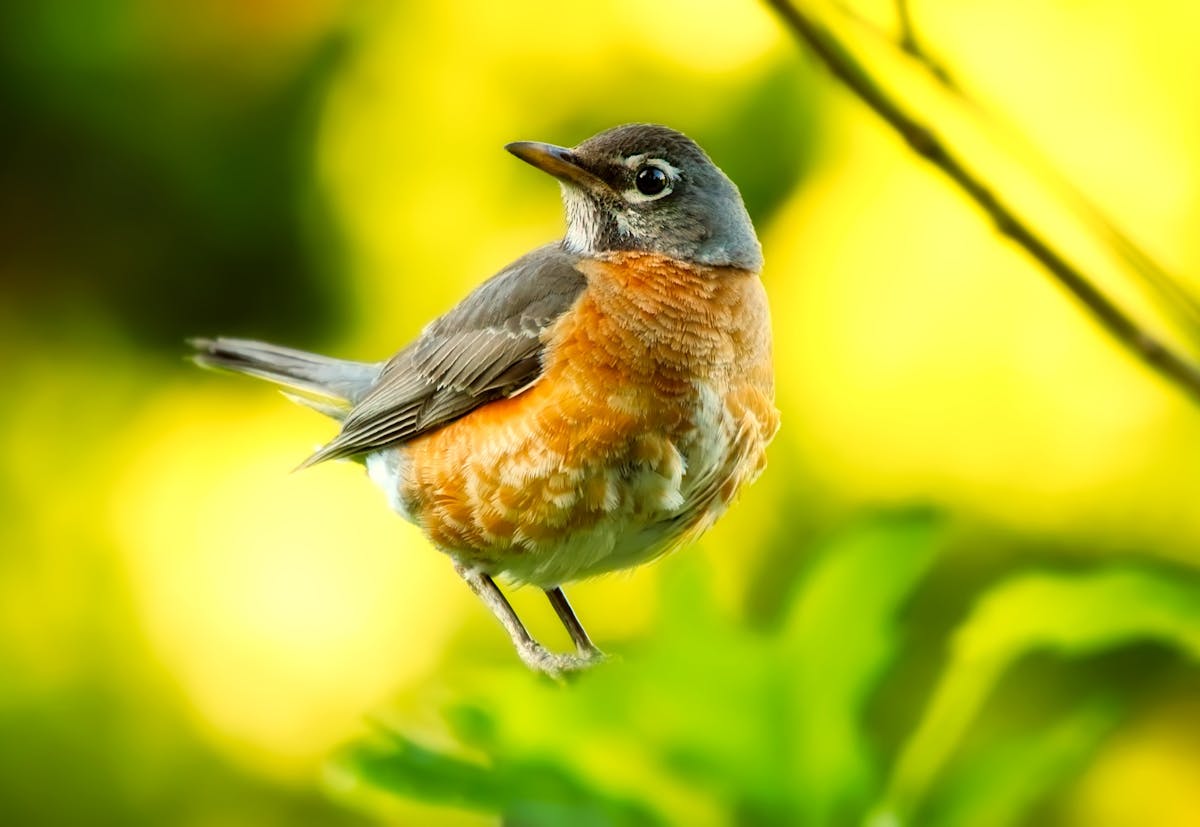
American Robin Bird
American Robin
American Robins and European Robins are quite different. American Robins are long, with a deep russet belly and breast. Their upperparts are dark grey. In contrast, European Robins are short and plump. They have a brownish back and a bright orange-red breast.
European Robin
And that’s the hint to the confusion. When the Pilgrims arrived in the New World in the fall of 1620 they were tired, disgruntled and far from home. When they spotted a ground-hopping bird with a russet-red breast, they thought it like a familiar bird from home and dubbed it the ‘robin’. And while the American Robin is indeed a member of the thrush family (the European Robin is an Old-World flycatcher), the name stuck!
The Robin is not the only New-World bird to carry an Old-World name. Look more closely at those familiar visitors I mentioned: blackbirds, warblers and sparrows. In Europe, the Blackbird is a big thrush — in fact it is a close relative of the American Robin, and very similar in size and shape.
In North America, birds called ‘blackbirds’ are part of the Icteridae family. This family is large and diverse. It includes the Red-winged Blackbird, the most common bird on the continent. Other members are orioles, cowbirds, grackles, and even meadowlarks. Meadowlarks are not closely related to the Old-World larks.
Red-winged Blackbird
Homesick British settlers saw birds with dark black feathers. These birds looked like the Blackbird from home, so they gave them the same name.
European Blackbird
The same process then played out in two families of small, insect-eating, mostly migratory birds, the so-called ‘warblers’. Most species spend the winter far south. North American breeders migrate to Central and South America. British and European species head to Africa.
The word ‘warbler’ comes from Britain. It refers to a group of similar birds. These birds are hard to tell apart, but their unique songs help us identify them. In North America, the name ‘wood-warblers’ refers to over fifty types of small, colorful birds from the Parulidae family. Most of these birds include ‘warbler‘ in their name.
In the UK, so many species derive their names from where they’re found: Willow, Wood, Reed, Marsh and Sedge warblers / are just a few. That’s because those differences in plumage are often so subtle, they cannot always be distinguished based on field marks.
Willow Warbler
Warblers are bright, colorful birds found in North American bushes. They have unique plumage, which is why they often get named for their appearance. Examples include Yellow, Black-and-white, Bay-breasted, Black-throated Green, and Black-throated Blue Warblers. And, of course, there’s the Yellowthroat.
Yellow Warbler
The free-performing third group of birds with the same name belong to a different family of birds: sparrows. Over thirty North American birds have ‘sparrow’ in their name. All but one belong to the Emberizidae family.
In Britain, these are known as buntings (from an old word meaning ‘little plump thing’) and include the Snow Bunting, which also occurs in North America.
The sole exception is, of course, the House Sparrow. This species comes from the Old World. About 12,000 years ago, as humans settled and farmed, the species adapted to our way of life. It started eating grain and insects, and nesting in our homes. That’s how it got its name.
House Sparrows are smart and adaptable birds. They have spread around the world, whether by chance or choice. They first arrived in North America in 1851, when birds imported from Europe were deliberately freed in Brooklyn, New York City. By 1900, they had reached the Rocky Mountains. Now, they live in all of temperate North America, including Mexico, the USA, and Canada.
House Sparrow
It’s confusing that some backyard and garden birds have different names. Yet, they belong to the same family as their European relatives. These include chickadees (tits in the UK), kinglets (crests) and creepers (treecreepers). British and American English often use different words for the same items. For example, they say “elevator” or “lift,” “faucet” or “tap,” and “sidewalk” or “pavement.” Similarly, some bird families have different names across the Atlantic. For instance, loons are called divers, and jaegers are known as skuas.
Black-capped Chickadee
The birds that grace our backyard bird feeders in the USA and Canada or come to garden bird feeders in the UK are not all from different families. Thrushes, woodpeckers, nuthatches, wrens, finches, jays, pigeons, and doves all live in the northern hemisphere. Other birds, like owls, swifts, swallows, and martins, also thrive here but don’t visit bird feeders.
Most of these spread from the Old World to the New. However, the Wrens did the opposite. The Eurasian Wren is the only member of its 90-strong family in Britain and Europe.
Euasian Wren and Carolina Wren
North America has more bird species than Britain. Here’s the breakdown:
-
Thrushes: 14 in North America, 5 in Britain
-
Woodpeckers: 22 in North America, 3 in Britain
-
Nuthatches: 4 in North America, 1 in Britain
-
Wrens: 10 in North America, 1 in Britain
-
Finches: 21 in North America, 15 in Britain
-
Jays: 10 in North America, 1 in Britain
-
Pigeons and doves: 13 in North America, 5 in Britain
One reason is our land area is much smaller. Also, since Britain is an island, many species from mainland Europe never crossed the English Channel.
Downy Woodpecker and Great Spotted Woodpecker
And finally, there are some species that you find on only one side of the Atlantic, but never (or at least almost never) on the other.
In North America, this includes hummingbirds, vireos, gnatcatchers, and tanagers. In Britain and Europe, it includes accentors like the Dunnock and wagtails.
Ruby-throated Hummingbird and Dunnock
How did Birds receive their names?
By now, you’re probably thinking, how the heck did our familiar backyard and garden birds get their names in the first place? Most names were given by regular people, which is why we call them “folk names.” Later, rarer species got names from experts like scientists, naturalists, or ornithologists.
More broadly, English names of birds can be categorized into seven distinct (and at times overlapping) categories:
- Here are birds named after their sound
- Examples of birds named for their colour or shade
- Birds identified by a pattern or plumage feature
- Birds named for their habits or behaviour
- Habitat: Birds named for their place of residence
- Examples of Birds named after the place they were first discovered
- Birds that bear a person’s name (aka eponyms)
Here are some examples for each category:
Song: Whippoorwill, Chickadee, Pewee (US); Chiffchaff, Cuckoo, Kittiwake (UK)
Colour or shade: Scarlet Tanager, Purple Martin, Yellow Warbler (US); Blue Tit, Greenfinch, Grey Wagtail (UK)
-
Pattern or plumage feature (often with a color or shade):
-
Yellow-rumped Warbler
-
Bay-breasted Warbler
-
Tufted Titmouse (US)
-
Crested Tit
-
White-fronted Goose
-
Blackcap (UK)
-
- Habits: woodpeckers, nuthatches, creepers (both U.S. and U.K.)
Habitats:
-
Sedge Wren (US)
-
Mountain Bluebird (US)
-
Waterthrush (US)
-
Sedge Warbler (UK)
-
Marsh Tit (UK)
-
Rock Pipit (UK)
-
Kentucky Warbler
-
California Gnatcatcher
-
Nashville Warbler (US)
-
Dartford Warbler
-
Kentish Plover
-
Sandwich Tern (UK)
Bachman’s Sparrow; Lucy’s Warbler; Brewer’s Blackbird (U.S.); Bewick’s Swan; Cetti’s Warbler; Montagu’s Harrier (U.K.)
Tufuted Titmouse Here’s one more fun fact: most English bird names first appeared in the British Isles. There, usually only one species from each family exists. So, names like Cuckoo, Wren, Swallow, and Kingfisher are often repeated without extra adjectives. In North America, there are many more species from each family. These birds have names such as Yellow-billed Cuckoo, Barn Swallow, Winter Wren, and Belted Kingfisher.
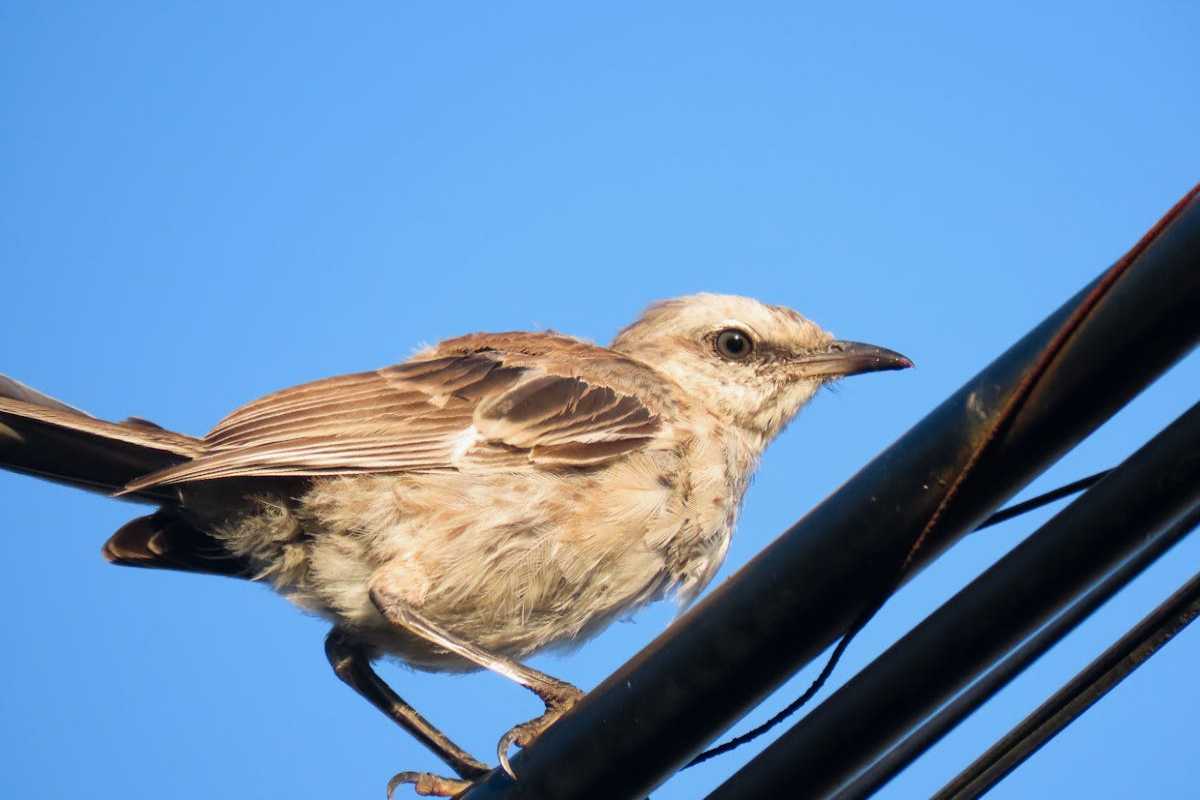
Mockingbird
Mockingbird
If you want to learn more about the interesting history of bird names, check out my book, Mrs. Moreau’s Warbler: How Birds Got Their Names. It’s published by Guardian Faber in the USA, Canada, and the UK.
Bird Names – Fun Facts!
North American Names
- Catbird – from the bird’s mewing call, which sounds very similar to a domestic cat! In fact, the bird is a part of the mockingbird and thrasher family.
- Mockingbird – the mockers are among the best avian mimics in the world, imitating the songs of many other species.
- Kingbird — kingbirds are named for their aggressive nature. They belong to the tyrant-flycatchers family, Tyrannidae, which means ‘tyrant’ in Latin.
- Chuck-will’s Widow is part of the nightjar family, Caprimulgidae. This bird and its relative, the Whip-poor-will, get their names from their spooky calls.
- Parasitic Jaeger, or Arctic Skua in the UK, is a bird related to gulls. It is famous for stealing food from other birds. Scientists call this behavior ‘kleptoparasitism.’ “Jaeger” is the German word for hunter.
- Skimmer – these birds have a lower mandible that is longer than the upper one. They get their name from their unique way of flying. They dip their long bill into the water and snap it shut to catch fish on the surface.
- Peregrine Falcon, often called ‘Peregrine’ for short, gets its name from a Latin word meaning ‘to wander.’ This reflects the bird’s habit of flying long distances while hunting.
- Roadrunner — for its tendency to run fast along roads, and popularized by the cartoon version. A word of Spanish origin, from correcamino — which means exactly the same!
- Waterthrush — two types of wood-warblers: Louisiana and Northern. They get their name from their thrush-like spotted breasts. Also, they live near rivers and streams.
British Names
- Cuckoo – named for the unmistakable two-note call of the Common Cuckoo, the quintessential sign of spring in Britain, Europe.
- Robin – [actually a pet name (after the diminutive for Robert), which became more popular than the name given by British – ‘Redbreast’.
- Yellowhammer – that has nothing to do with tools, it comes from the German word for bunting, and was originally ‘Yellow-ammer.
- Redstart – The word ‘start’ comes from the Anglo-Saxon ‘steort,’ which means tail. This refers to the bird’s bright orange-red tail. Balearic Shearwater – on Balearic Island.
- Chiffchaff – like the name ‘cuckoo’, this describes this little warbler’s feathered two-note song.
- Puffin, meaning “little fat thing, puffing,” was the original name for young Manx Shearwaters. People ate them and used their fat for oil. The scientific name for the shearwater is Puffinus puffinus!
- Stonechat — named for its distinctive call, which resembles two pebbles being tapped together.
- Crossbill — for the shape of its bill, whose two mandibles cross over each other, allowing the bird to pry open pinecones for the seeds within.
- Redpoll – following an old word meaning ‘head’, as in ‘head tax’.
Nuthatch doesn’t relate to laying eggs. It comes from an old word that means to “hack,” like “hatchet.” This name reflects how the bird uses its strong bill to open nuts.

MD Imdadul Haque is the founder of BirdzFly, a research-backed resource on North American backyard birds. Drawing on years of independent study into bird identification, behavior, and migration patterns, he writes in-depth guides designed to help US birders understand the species in their own backyards — from common feeder visitors to seasonal migrants passing through.