
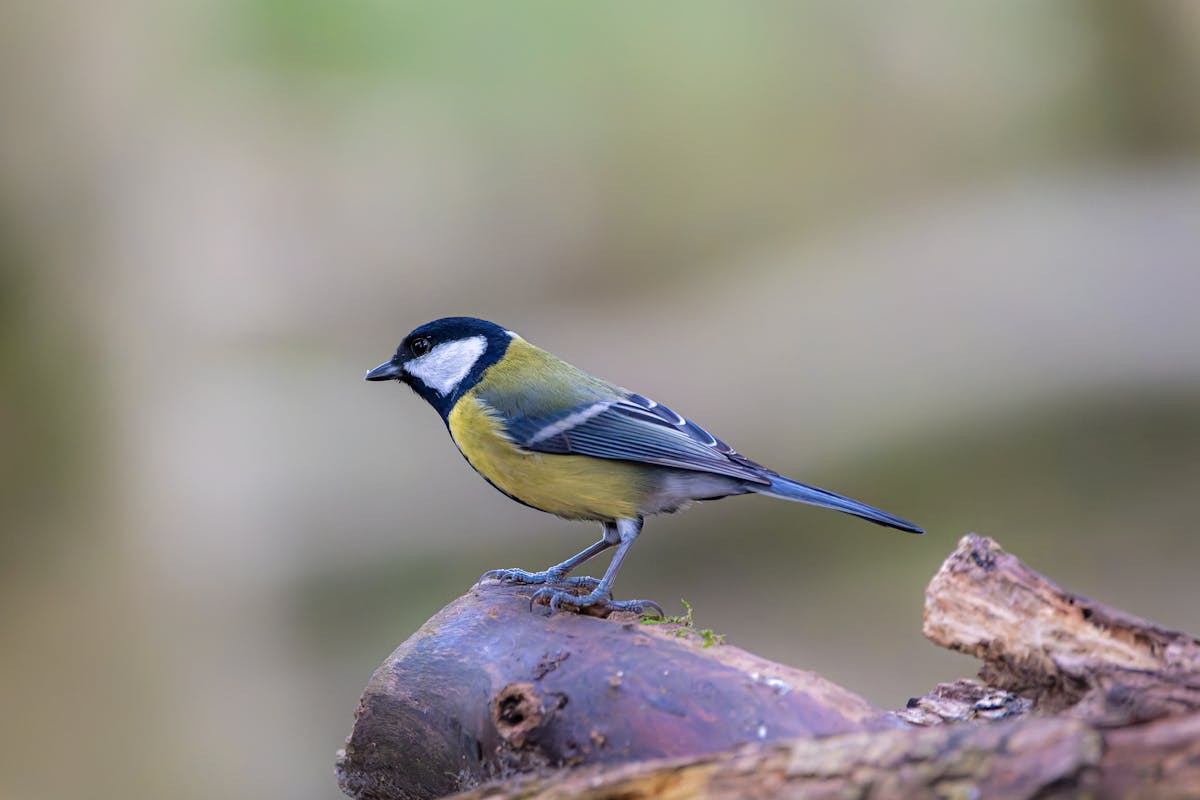
Great Tit Bird in Jungle
Great Tit (EU) — Bird Note
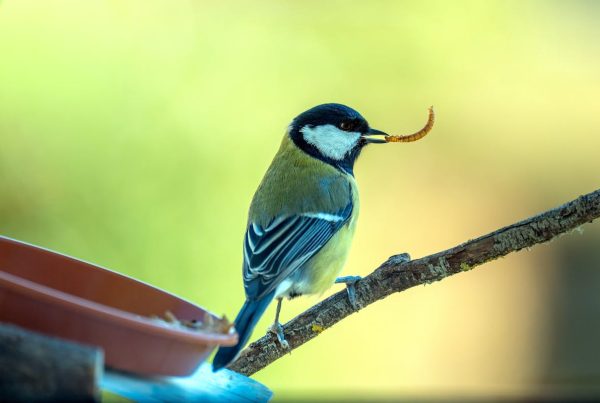
The Great Tit Bird (Parus major) is a familiar passerine bird. Look for its black head and neck, white cheeks, olive upperparts, and yellow underparts. This bird is very adaptable. It thrives in many places, like woodlands, forests, parks, gardens, and urban areas. The great tit is a passerine bird in the tit family, Paridae. It lives in Europe, the Middle East, and Central Asia. You can also find it in the Palearctic region, up to the Amur River, and in some parts of North Africa. This bird thrives in almost any forested area. Only during very harsh winters do most great tits migrate. The Great tit has a black head and neck. It also features white cheeks, olive upper parts, and yellow underparts. There are a few other differences among the many subspecies.
Great Tit Diet
In summer, its primary food is insects. In winter, they eat a more varied diet. This includes small hibernating bats. In addition to insects, they would also treat themselves to seeds, nuts, berries and buds. Black sunflower seeds, sunflower hearts, and peanuts in a mesh feeder attract colorful birds to your backyard. Suet blocks and suet fat balls also help bring them in.
Great Tit Bird Song
They are very vocal birds, and you can hear their bird song year-round. And there are a lot of different sounds they can make. In fact, male Great Tits can produce up to 40 different sounds! Their sweet chirps consist of repeated two-note phrases. That’s why some sounds like’Tea-cher, tea-cher’. عوذ / عوذهم ( ال)”, Sometimes it is also played with three notes. Great Tits have a variety of unique sounds, including whistles and chirping sounds, as well as loud aggressive noises.
📝Basic Info
- Scientific Name: Parus major
- Lifespan: around three years
- Size: 4.9-5.5 inches
- Weight: 0.49–0.77 ounces
- Wingspan: 8.85–10.03 inches
Ref=Distribution: foods/guardians the great tit.
They’re the most widespread in the UK, except for some northern and western Scottish islands. Great Tits also range in central Asia, southern Russia, and northwest Africa. They are replaced by the Japanese Tit in East Asia or the Cinereous Tit in South Asia.
Great Tits used to live in forests. Now, they can be found in parks, gardens, and other areas with similar plants.
Great Tit Breeding
The great tits are a loyal bird, monogamous with separate areas for nesting and raising baby. These territories develop in late January and great tits begin to defend territories in late winter/early spring. All this and in the coming years, reclaim and restructure these ${({}[]) territories once more.
Great tits may nest in holes, typically in trees but sometimes walls or rocks. They are also going to use nest boxes for homes. The female constructs a nest within a tree cavity. Its made with plant fibers, grass, moss, hair, wool and feathers she uses. The clutch number can be quite large, up to 18, but the usual range is between five and twelve. The eggs themselves are white, with red spots. She keeps the eggs warm (the father bird brings her food).
Climate Change
Great tits showed strong decline due to climate crisis even it is a species with only population over 300 million. The great tit is an insect-eating bird. Its breeding season lines up with when caterpillars are most available. This timing helps them feed their young. A new study on great tits finds that quick climate change leads to warmer winters and earlier springs. This change also leads to caterpillars being available sooner. But great tits require more time to adjust to that shift. Many are unable to procure enough food for the chicks before the bug bounty is spent (Harrison et al. 2015), so the chicks will have a harder time surviving and growing up (and thus population numbers are affected much more). If populations can’t adapt to climate changes long-term, they may exceed their limits. This could lead to extinction.
Backyard Visitors
Data on the great tit from different places helped scientists understand its garden behavior. Many people enjoy watching this beautiful bird show off its unique feeding skills. It uses various nuts and seeds. The species’ acceptance of nest boxes has generated a lot of interest for studies around birds. Studying bird traits, like the number of eggs in a brood, has been useful. It shows how these traits changed over time. Giving food and bird nests adds fun to your backyard. It also helps birds find enough food to adapt to the climate crisis!
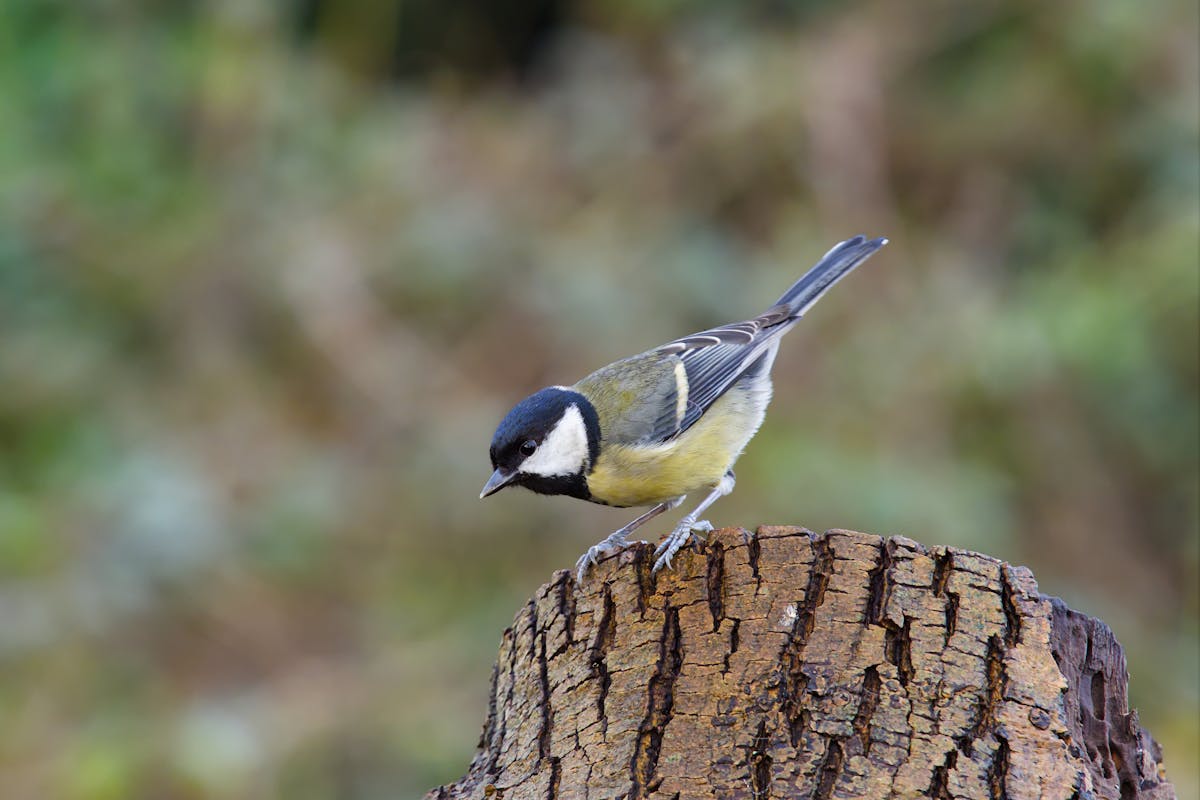
Great Tits
Great Tits vs. Blue Tits
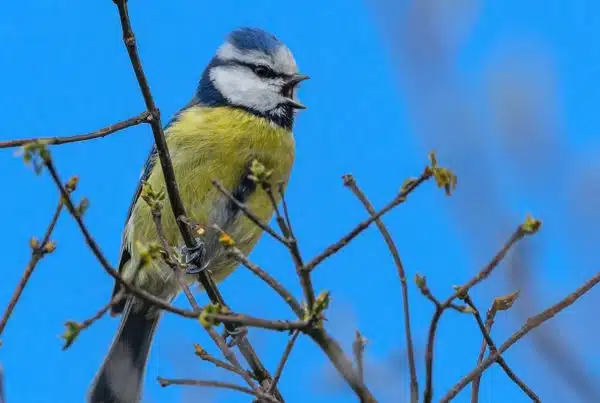
The main difference between the two is the blue beanie on the blue tit’s head. They are actually the most similarly shaped cousins in the tit family. Great tits are bigger with broader wingspans, and are also darker in colour tone overall. This is also true for Great tits, which have more greenish colored feathers in their wings when looking closely. The great tit is the largest in its family. Some can weigh twice as much as the blue tit!
Both of them are common in the Europe for habitats. The Blue tit, also called the Eurasian Blue tit, mainly lives in central and western Europe. The Blue tit lives in parts of eastern Europe and the Middle East. You can find it in countries such as Iraq, Iran, Kazakhstan, Lebanon, Libya, Morocco, North Macedonia, and Syria. However, it doesn’t range as far as the Great tit.
The Blue tit is shyer and the Great tit more placid and aggressive when agitated. Of the blue tits, the Great tits are easily fed on the ground. At bird feeders, small fights between these two cousins happen more often than we think. ‘Great tits always win because they’re larger and stronger.
Great Tits vs. Coal Tits
The great tits (Parus major) reflect their relative large sizes in the Paridae family. Nonetheless, coal tits are not referred to as “small tits” despite being the smallest ones. Great tits are also insectivorous, eating spiders among others, and coal tits do too. Coal tits feed on seeds too, and are happy to come to feeders and bird tables in gardens.
Overall, the colors of coal tits are more subdued than those of great tits and blue tits. They have grey upper-parts, black caps, white cheek and neck patches. Coal tits have skinnier bills as well, excepting the smallest bodies. They might be chattering like Great tits. Both are loud birds that love to repeat phrases. But the coal tit’s songs and usually higher and more whistle-like, which sound thinner than great tits’.
If you want to read interesting fun facts about birds then you can follow the bb blogs:
Description of the Great Tit
The Great Tit is a medium-sized passerine bird with a robust body. Adult Great Tits range from 12-14 cm long and weigh 16-21 grams.
Key Features
-
Black cap on the head
-
White cheek patches
-
Yellow underparts and olive green back
-
Thick black stripe down the center of the chest
The Great Tit can adapt to many environments. They are often seen in forests, parks, and gardens but can easily thrive in cities.
Habitat and Distribution
Great Tits are found all over Europe and parts of Asia. They are among the most common birds, ranging from the UK to parts of Asia, such as Russia and the Middle East.
Habitat Types
Great Tits adapt to various habitats, including:
-
Deciduous groves
-
Coniferous forests
-
Urban gardens
-
Parks
-
Orchards
These birds are mostly resident (non-migratory) and stay in the same habitat year-round. However, they may move to sheltered areas during winter if food is scarce. Their adaptability makes them common in city parks and gardens.
Diet and Feeding Habits
The diet of the Great Tit is varied. In the wild, they eat:
-
Insects
-
Spiders
-
Small invertebrates
They rely on high-protein foods like caterpillars, especially during the breeding season. In winter, they feed on:
-
Seeds
-
Nuts
-
Berries
Great Tits are known for their clever feeding behavior. They:
-
Use tools to get food
-
Peck at bark
-
Hang upside down while foraging
They also stash seeds in tree crevices for later use.
Breeding and Nesting
Great Tits are hole-nesting birds. They build nests in tree hollows or bird boxes.
Breeding Facts
-
The female lays 6-12 eggs.
-
The incubation period is about 10-14 days.
-
Young birds fledge at 18–21 days after hatching.
Both parents care for the young and protect their nests from threats like predators.
Behavior and Social Structure
Great Tits are active and inquisitive. They are known for their loud, bell-like calls that signal to other birds.
Social Behavior
-
They are solitary during breeding.
-
They often forage in flocks in winter.
Great Tits may join mixed-species flocks with other birds, such as finches, to find food together.
The Great Tit in Culture and Folklore
Great Tits have various myths associated with them. In Europe, they symbolize resilience as they thrive in tough environments. Their cheerful song and energetic nature make them popular among birdwatchers.
In some cultures, the Great Tit is seen as a sign of spring. Their characteristic “teacher-teacher” call is familiar in woodlands and gardens during early mornings.
Frequently Asked Questions (FAQ)
Q1: What is the lifespan of a Great Tit? A wild Great Tit can live about 2 to 3 years, but some reach 10 years. Many do not survive their first autumn due to predation or weather.
Q2: Do Great Tits migrate? No, they are non-migratory and stay within their home range year-round. They may seek sheltered places for food in winter.
Q3: How can I attract Great Tits to my garden? To entice Great Tits, offer a variety of food, such as:
-
Sunflower seeds
-
Peanuts
-
Suet
You can also add a bird box with a small entrance hole and provide a water source, like a birdbath.
Q4: Are Great Tits hostile to other birds? Great Tits can be territorial but are not aggressive towards other species unless they approach their nest or food. Males are more territorial during breeding season.
Personal Experience: How the Great Tit Won Me Over
As a birdwatcher, the Great Tit has always fascinated me. One winter afternoon, I watched a Great Tit hopping from tree to tree, its yellow belly bright against the snow.
Over the weeks, I saw more Great Tits at my feeders. Their vibrant actions and calls lifted my spirits. They reminded me that life can thrive even in the coldest months.
Conclusion
The Great Tit is a fascinating bird that plays an important role in many environments. Its adaptability, wide diet, and cheerful nature make it intriguing to birders. Whether you want to attract them to your yard or admire them in nature, this beautiful and resilient bird deserves appreciation. By understanding and supporting Great Tits, we help ensure their success in both wild and urban settings.

MD Imdadul Haque is the founder of BirdzFly, a research-backed resource on North American backyard birds. Drawing on years of independent study into bird identification, behavior, and migration patterns, he writes in-depth guides designed to help US birders understand the species in their own backyards — from common feeder visitors to seasonal migrants passing through.