
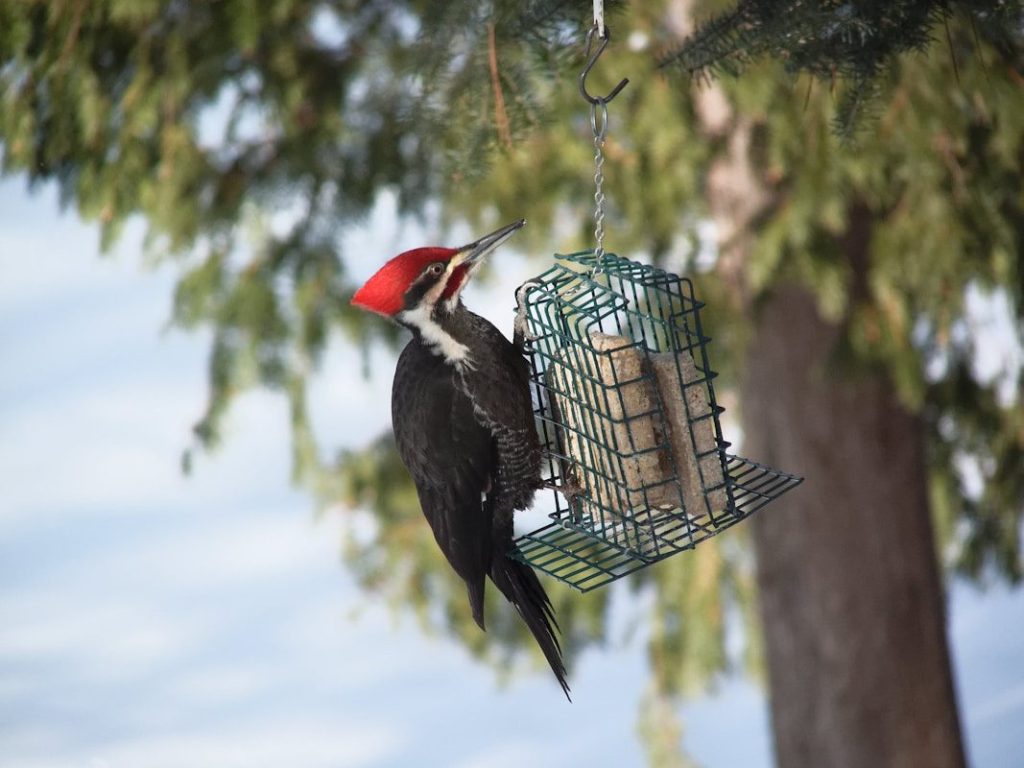
Hairy vs Downy Woodpecker
These two woodpeckers trip up beginners more than almost any other ID in North American birding. Same black-and-white pattern, same red nape patch on males, same habitat, same feeders. Field guides say “the Hairy is bigger” — which is true but useless when you only have one bird to look at and nothing to compare it against.
Here’s what actually works.
The Bill: Use This First
Forget size. Look at the bill relative to the head.
Downy: Short bill, roughly half the length of the head from front to back. It looks almost stubby — slightly out of proportion to the bird. This is visible even in poor light.
Hairy: Long bill, roughly equal to the length of the head from front to back. It looks purposeful. Like it means business.
Once you’ve looked at enough of each species, this proportion becomes immediately obvious. A Downy looks like it has a small beak. A Hairy looks like it could excavate serious wood.
Size: Real But Hard to Use
Downys are sparrow-to-starling sized (about 6–7 inches). Hairys are robin-to-jay sized (about 9–10 inches). That’s a real and meaningful difference — but woodpeckers cling to bark at varying angles and distances, which makes absolute size estimation unreliable without a reference. The bill proportion works better precisely because it’s a ratio, not an absolute measurement.
Tail Feathers: Definitive When You Can See Them
Downy: The outer white tail feathers have small dark bars or spots.
Hairy: Outer white tail feathers are clean white — no spots, no bars, nothing.
This is conclusive, but it requires a clear view of the tail. Not always available when the bird is pressed against bark facing away from you.
The Overall Impression
Downys look round-headed and approachable — large eye, small head, stubby bill. Hairys look angular and more imposing. This is gestalt rather than a measurable field mark, but experienced birders use it reliably. After enough of each species, the overall shape feels different even before you consciously register the bill or tail.
Behavior
Both use similar habitats and visit suet feeders. Downys tend to work smaller branches and weed stems — their lighter weight lets them cling to spots a Hairy wouldn’t bother with. Hairys tend to work larger trunks and main branches, excavating deeper into dead wood.
At a feeder, Downys are generally relaxed about human activity. Hairys tend to be warier, more likely to flush at disturbance.
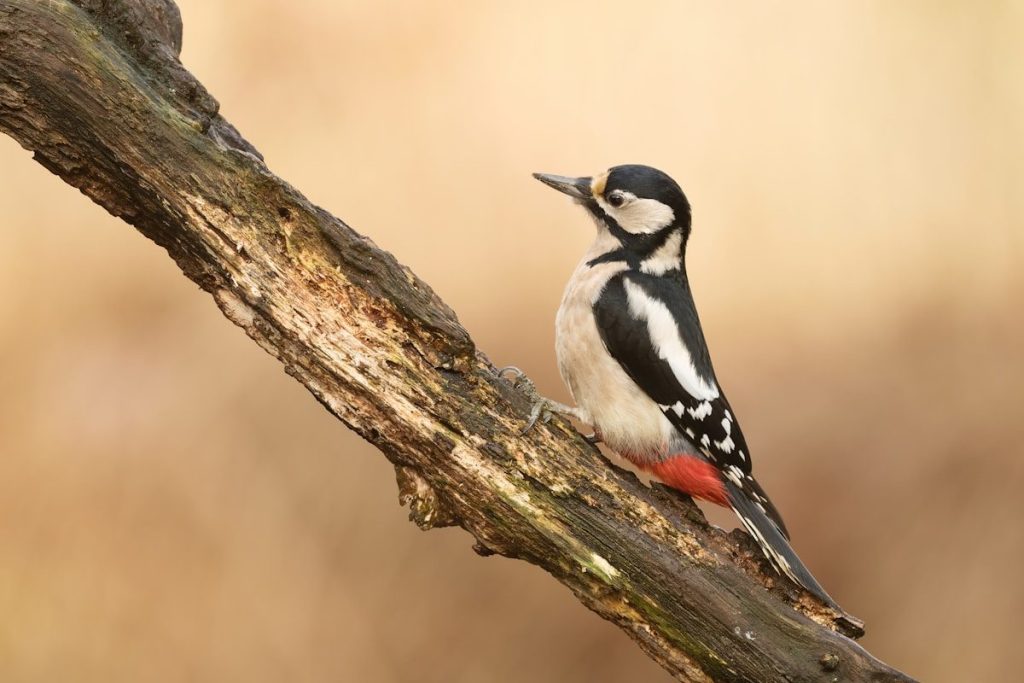
Hairy vs Downy Woodpecker
Quick Reference
| Feature | Downy | Hairy |
|---|---|---|
| Bill length | Short — about half head length | Long — about equal to head length |
| Size | Sparrow to starling | Robin to jay |
| Outer tail feathers | White with dark spots/bars | Clean white |
| Male head mark | Red nape patch | Red nape patch |
| Impression | Rounded, small-billed | Angular, substantial-billed |
How to Learn It
Put up a suet feeder and watch it. Downy Woodpeckers are extremely common at suet feeders across North America — you’ll have one within days in most suburban and rural areas. Study twenty Downys up close and the bill proportion becomes second nature. When a Hairy shows up — less frequently, but it will — the longer bill catches your eye immediately.
FAQ
Easiest way to tell them apart?
Bill length relative to head. Downy’s bill is roughly half the head length; Hairy’s is roughly equal to the head length.
Are they the same species?
No. Separate species. The resemblance is thought to be mimicry — the smaller Downy may benefit from looking like the larger, more aggressive Hairy.
Which is more common at feeders?
Downys, by a significant margin. Hairys visit feeders but are warier and less reliable.
Do both have red heads?
Males of both have a red nape patch. Females of both have no red. Neither has a fully red head — that’s the Red-headed Woodpecker, a different species entirely.
For more ID guides, see our post on birds with red heads.

MD Imdadul Haque is the founder of BirdzFly, a research-backed resource on North American backyard birds. Drawing on years of independent study into bird identification, behavior, and migration patterns, he writes in-depth guides designed to help US birders understand the species in their own backyards — from common feeder visitors to seasonal migrants passing through.