
House Sparrow: Nest and Eggs
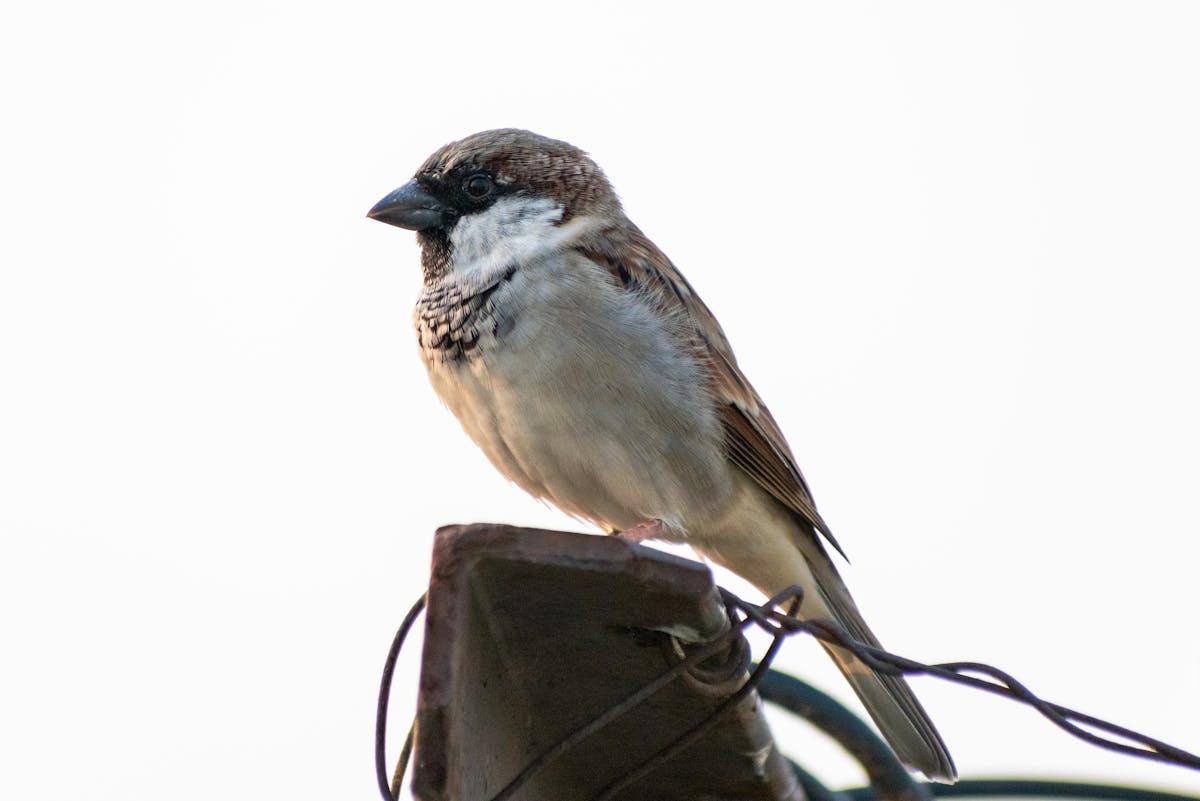
House sparrow nests
The house sparrow is among the most common birds in America. Originally from Europe, the sparrow has spread across the continent since it was introduced in 1851. House sparrows nest in cavities, but they also like enclosed spots. This includes thick vines and bridges. They are also aggressive and can outcompete native cavity-nesters. This article is for those who’d like to identify house sparrow nests and eggs!
House sparrow breeding facts
Nesting Season: Eary May to late September.
- Type of nest: Nests made in the open are dome shaped with a side entrance. Cavity nests are made up of a cup lined with coarse nesting material.
- Substrate & Location: Nest should be in a cavity if available, but can be almost anything that provides the appearance of an enclosure including at any height.
- Nest dimensions: Nest is dome-shaped when placed outside the cavity, measuring approximately in 8-12.
- Nesting Activities: M Returns to site of previous year and selects nesting position, also builds pilot nest. Males and females continue to complete the nest.
- Egg Description: Eggs are oval. It may be light brown or piceous (greenish to bluish-white). The egg pattern is checkered, but typically wreathes toward the broad side with an intermixed gray to brown points and spots.
- Egg Length x Width: 0.82 inches x 0.6 inch.
- Egg-laying: It starts one to two days after completion of the nest. The female lays one egg each morning.
- Number of eggs: Usually an average of 5 with a range anywhere from 1 to 8.
- Broods: Some Per Year.
- Latent Period: Usually 11 days, variable up to but generally less than 14 days in cold environments.
Breeding range and habitat
House sparrow map range.
The first introduction of house sparrows in New York was in 1851. They’ve colonized virtually every urban and semi-urban setting across North, Central, and South America.
House sparrows are permanent residents and breed where they are found. They are quite undemanding as far as their breeding requirements are concerned. Cavities and enclosures are preferred for nesting, but nests are also constructed on building ledges or in pipes, under awnings or roofs and at any location with an overhang that allows space to place a nest.
House sparrows are partial to open or half-open environments, and neverkhflatin> enter into forests. Favorable habitats are parking lots, gas stations, park areas and all other urban environments. They do well in agricultural and farm land.
Migration and social behavior
House sparrows are year-round residents. Investigations of natal dispersal in the house sparrow demonstrated that young birds tend to disperse more frequently than adults. Adult sparrows are non-migratory.
Flock Of young birds that travels around to different locations in search of suitable ones to settle and nest. Adults, too, flock to food sources and roosting/nesting sites.
Northern and cool latitude house sparrows are also reported to migrate south during the coldest months of the year.
House sparrows are extremely social animals, and maintain a pecking order among the group. Older males are at the top of their hierarchy and,en due to black present in bibs, have better quality areas, food and females. Old females come in higher than young males without a lot of black on their bibs.
Breeding period
The breeding season of the house sparrow is long. In North America, early March is when the first eggs are laid, with some dependent chicks reported as late as September. Breeding season starts because of temperature. Breeding season is later at higher latitudes than in warmer weather.
The cup, lining material, and egg can be seen in this nest from a house sparrow. Photo: Rich Mooney
House sparrow nest appearance
The appearance of the nest is determined by its location. This when built as a domicil to which the birds will resort after incubation, assumes a rounded or covered form from 8 to 12 inches in diameter. Nests not in an enclosed space or tree cavity are roofed and have a side entrance that opens into a cup with eggs.
Nest construction in the tube of a traffic light by house sparrows. Notice the side entrance.
The outer layer of the nest is constructed with rough material such as dry grass, twigs, plastic bits and paper. The cup is built inside the dome and can be constructed of fine material such as hair, mammal fur, feathers and other fine fibers.
Nests made in holes, boxes etc naturally would have no roof apart from a cup when the hole is small. Favoured breeding enclosures are large with nesting material and a cup in the middle.
House sparrows can have nests next to each other with a common wall. Common nesting places are of variable dimensions.
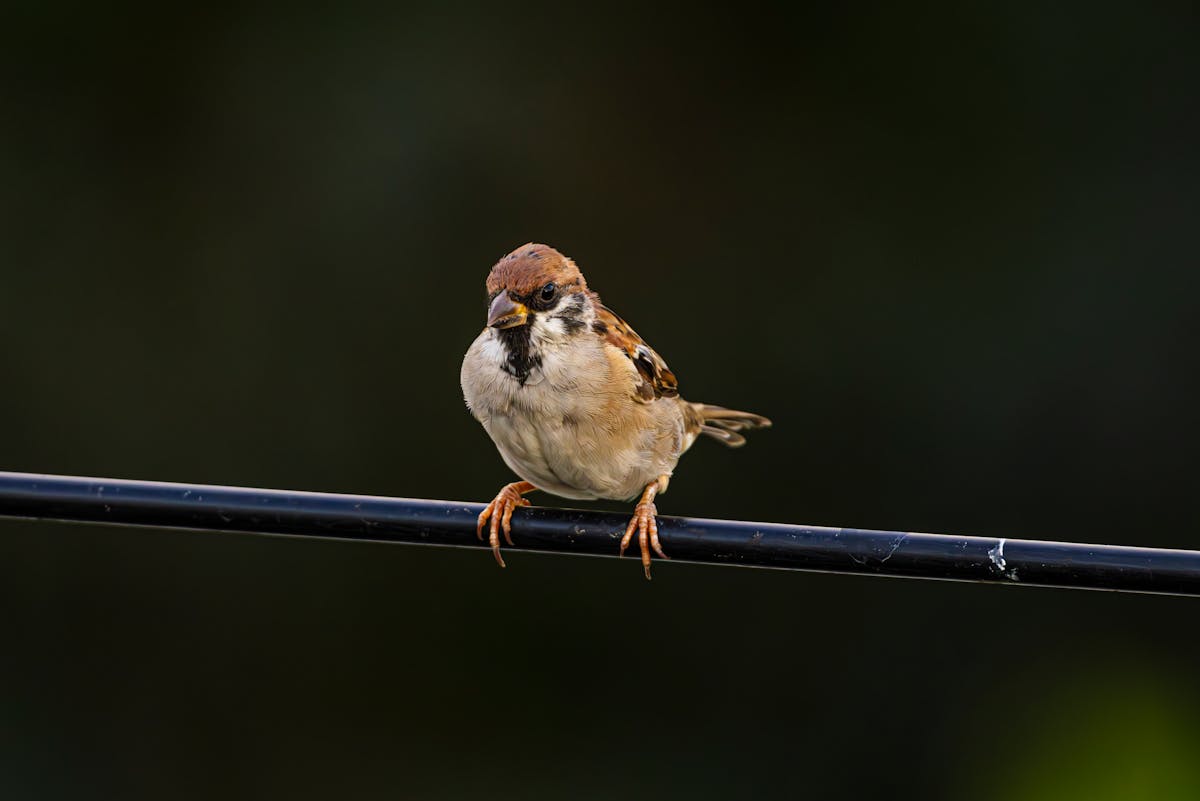
House sparrow eggs and nests
Nesting habits
Sparrow nest in bluebird box
House Sparrows do not remove bark to excavate cavities or enlarge existing structures. The habitat in which they can erect their nest ranges from cavity to outside.
They are cavity or open nester. In the absence of these, they may construct a nest in branches of heavily intertwined trees, vines, ledges at houses and buildings, under awnings as well as traffic lights or on top of large pipes or in letters located on high-up signs.
Homes, barns, buildings and utility structures offer countless holes to accommodate sparrows for nesting. They are quick to adopt nest boxes and have a reputation of being disruptive sometimes even evicting other birds whether they have laid or not.
House sparrows have built a nest in this bluebird box, seen in this photo (right). See how the sparrows have filled much of the interior with a large amount of nesting material.
Nest building
The commencement of nest building is determined by whether or not the males are still unmated or whether there has been pair formation. Bachelor males select a nesting area and build or initiate a nest. The male announces local presence and location of nest by much calling from a perch near the site. Females visit the nest site to examine it and may settle or depart. Once a pair is matched, the female takes over for the most part to develop the interior cup and lining.
Mating pairs build the nest together or refurbish the one used for broods in the previous year.
Egg appearance
The eggs of the house sparrow are ovul and have an average length of 0.82 in and 0.6in breath. The colour and markings can differ from nest to nest or even within a single clutch.
Egg colours are light brown to greenish or blueish white. Markings are also variable, but typically wreathed on the broader margin with a mingling of gray to brownish dots and spots.
House sparrow, eggs. As you can see the differences in different colors and markings.
See eggs with similar markings:
- Nest and eggs of the Carolina Chickadee.
- House Wren White-Staffed House Wren
This attractive species is fairly well distributed throughout the United States, but nest boxes are a necessity if it is to remain so.
Egg Laying
The female house sparrow lays eggs as soon the nest is ready. They lay an egg each day, usually in the morning.
House sparrows often use the same nest for another brood. Empricial evidence shows that females may begin laying nests for the next brood 8 d post the chicks of a previous brood having fledged. Typically, a female sparrow waits longer for the previous brood to leave before starting to lay her own eggs.
Clutch size
The female house sparrow usually lays 5 eggs per clutch. But research on nesting house sparrows has found clutches can contain 1 to 8 eggs.
Incubation of the eggs
The hen sparrow starts sitting when she lays the before-last egg. Once she starts laying, she will roost in the nest, but does not incubate eggs.
Both males and females alternate periods of incubation once it begins. The male incubates the eggs all but a few hours each day of the first days, at which point he becomes more regular in his 50% share of time spent doing that. The female predominates in incubating early on but becomes settled for about 50% of the time towards the end of incubation.
Incubation period
Incubation by house sparrows spans 11 days for a typical clutch of egg. In the higher latitudes that are often associated with colder average temperatures eggs take longer to hatch, up to 14 days in some cases.

MD Imdadul Haque is the founder of BirdzFly, a research-backed resource on North American backyard birds. Drawing on years of independent study into bird identification, behavior, and migration patterns, he writes in-depth guides designed to help US birders understand the species in their own backyards — from common feeder visitors to seasonal migrants passing through.