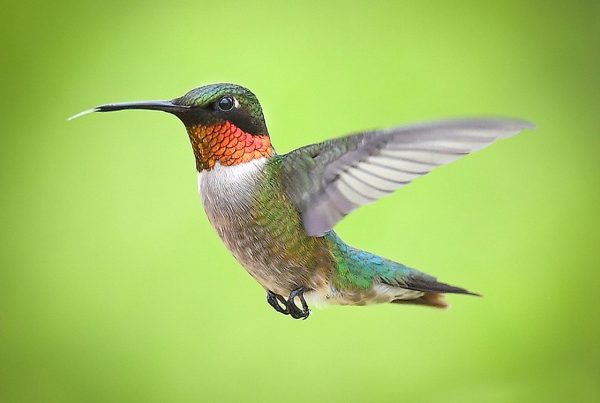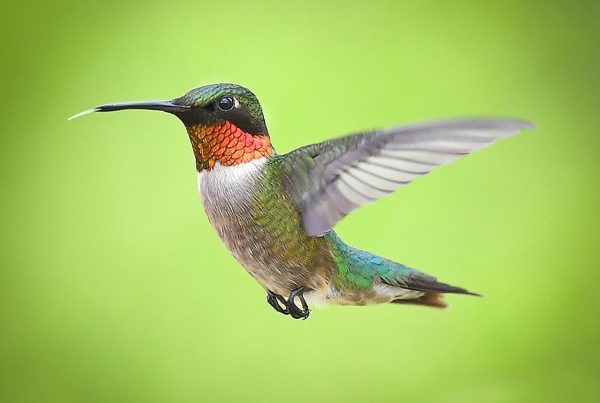

Hummingbird Migration
Find Out When to Expect Them
In spring, it’s migration time for hummingbirds. They travel from their winter homes to breeding grounds in the United States and Canada. This tracking map helps you know when they’ll arrive in your area.
Prepare for Their Arrival
Two weeks before they come, start putting out hummingbird food. Use the sugar water recipe below so it’s ready when they arrive.
Hummingbird Sugar Water Recipe
-
1 part sugar
-
4 parts water
-
Boil and cool before filling feeders
The map below updates daily as hummingbirds are reported during their spring migration.
How to Use the Migration Map
-
Tap on the map (+) to zoom in on your neighborhood.
-
Click on any bird to see the date it was observed.
Hummingbird Species to Watch For
-
Ruby-throated
-
Rufous
-
Rivoli’s
-
Costa’s
-
Calliope
-
Black-chinned
-
Anna’s
-
Allen’s
-
Blue-throated
-
Broad-billed
-
Broad-tailed
-
Buff-bellied
-
Unknown
-
Year-round
Fun Fact: Did you know that hummingbirds are individuals? They do not travel in flocks!

Hummingbird the migration journey
When Will Hummingbirds Arrive in My Area?
Here are estimated return dates for Ruby-throats based on tracking information:
-
Late February to mid-March: Arrival in South Texas, Louisiana, Alabama, Georgia, and Florida.
-
Early April: Reports in Texas, Arkansas, Mississippi, Tennessee, South Carolina, and North Carolina.
-
Mid-April: Sightings in Oklahoma, Kansas, Missouri, Kentucky, and West Virginia; strong arrivals in Virginia and Indiana.
-
Late April: Arrival in Nebraska, Iowa, Ohio, Pennsylvania, New York, New Jersey, and parts of New England.
-
May: Flowering records from North and South Dakota, Minnesota, Wisconsin, Michigan, Maine, Vermont, and Canadian provinces.
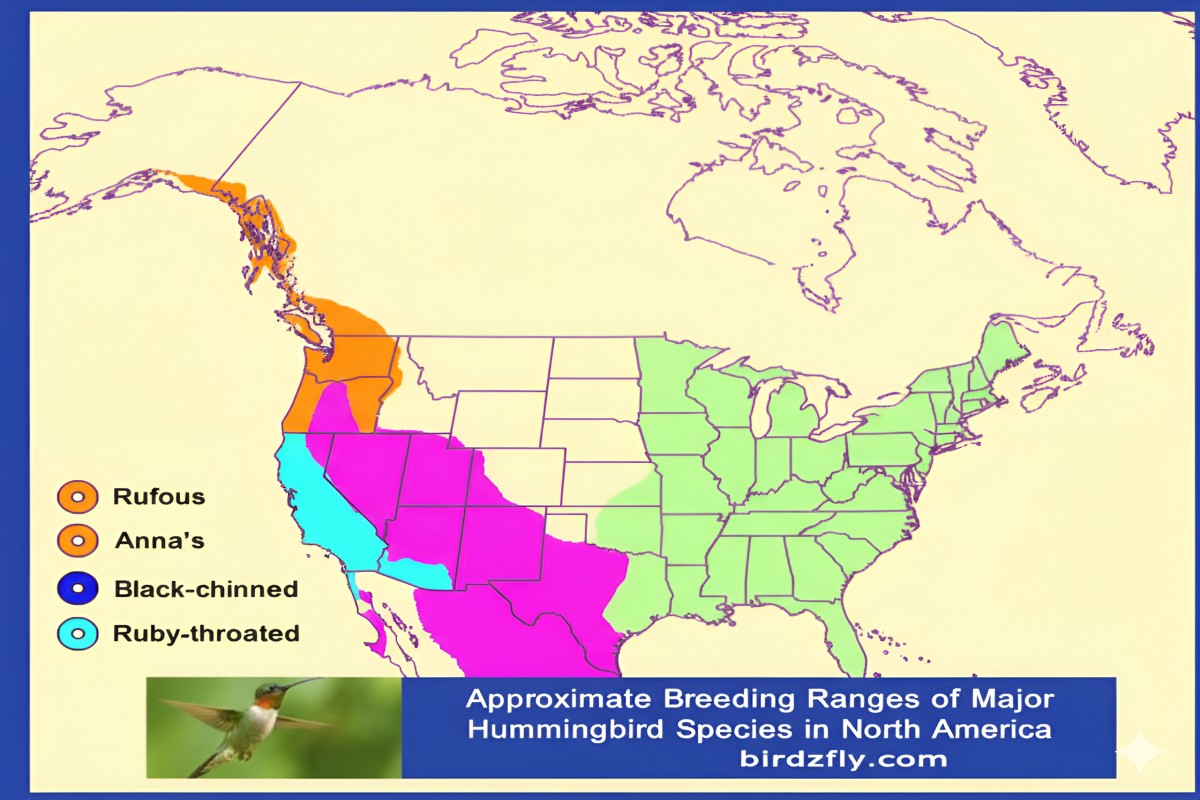
The western coasts host Anna’s and Rufous hummingbirds.
Autumn Migration
In autumn, hummingbirds migrate toward warmer climates in the south.
Other Hummingbird Species
There are over 360 known species of hummingbirds worldwide. In the United States, around 25 species appear, with 10 of those migrating to Canada. Some continue on to Alaska for summer breeding.
Most of our knowledge comes from citizen sightings. Records can sometimes include misidentified birds.
Tip: Young birds and females can look very similar, making identification tricky.
Notable Hummingbird Species
Ruby-throated Hummingbird (Archilochus colubris)
-
Summer Breeding: Canada (east of Rockies), United States (east)
-
Winter: Florida, Mexico, and Central America
-
Fun Fact: Largest population of any hummingbird species: 35 million (recent estimate)
Allen’s Hummingbird (Selasphorus sasin)
-
Habitat: Summer breeding in Coastal California, Oregon, Texas
-
Winter: Mexico, Louisiana
-
Curious Fact: Males and females reside in different habitats after mating.
Anna’s Hummingbird (Calypte anna)
-
Summer: Breeds in Canada; rare sightings east to Philadelphia
-
Winter: Very rare from May to July in the Southwest and Interior West
-
Interesting Fact: Anna’s is the northernmost species of hummingbird that stays year-round.
Black-chinned Hummingbird (Archilochus alexandri)
-
Summer Breeding: Canada, Southern B.C., Alberta, Western and Southwestern U.S.
-
Winter: Southern California, Gulf Coast, Arizona, Texas, Mexico
-
Fascinating Fact: The oldest recorded Black-chinned Hummingbird was over 11 years old.
Blue-throated Hummingbird (Lampornis clemenciae)
-
Summer Breeding: Arizona, New Mexico, Texas
-
Winter: Same southern regions
-
Interesting Fact: Males can reach nearly 5 inches and weigh up to 10 grams.
Broad-billed Hummingbird (Cynanthus latirostris)
-
Summer Breeding: Southwestern United States
-
Winter: Mexico
-
Interesting Fact: Males perform a pendulum-like motion to attract females.
Broad-tailed Hummingbird (Selasphorus platycercus)
-
Summer Breeding: California mountains, Rocky Mountains, other Western States
-
Winter: Mexico
-
Note: Makes a “cheet cheet cheet” vocalization.
Buff-bellied Hummingbird (Amazilia yucatanensis)
-
Summer Breeding: Texas near the Gulf Coast
-
Winter: Southern Louisiana
-
Interesting Fact: Vocalizations sound like “tsi-we.”
Calliope Hummingbird (Stellula calliope)
-
Summer Range: Western Canada and Northwestern U.S. (California, Colorado, Nevada, Arizona)
For more information, bookmark this page to follow the hummingbirds during their migration season!
Hummingbird Migration and Care Guide
Hummingbirds migrate from the south-western United States to Central America during winter. Here’s what you need to know about these fascinating birds.
Interesting Facts
-
Tiny Breeding Bird: The tiniest breeding bird in Canada is a hummingbird.
-
Courtship Call: Males make a high-pitched whistling sound to attract females.
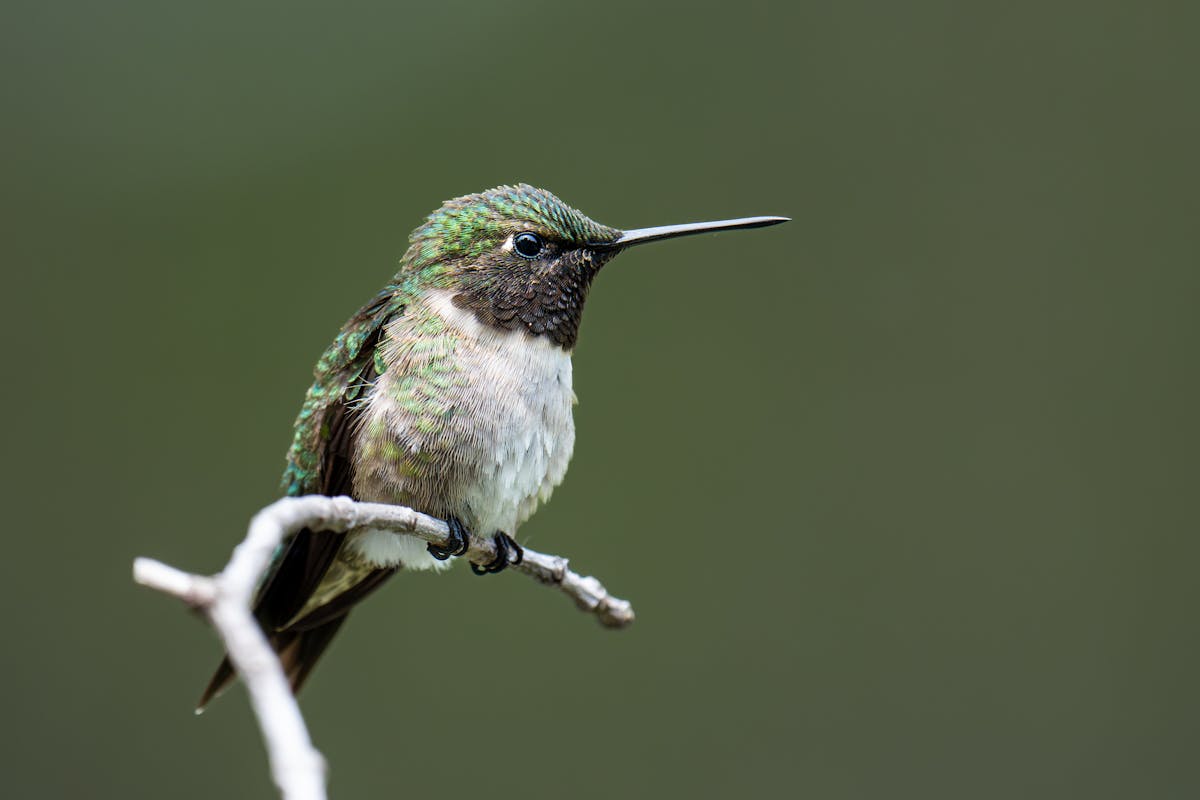
Different hummingbird species, including Ruby-throated highlighted
Hummingbird Species
Costa’s Hummingbird (Calypte costae)
-
Breeding in Summer:
-
Canada: Rare in the western part
-
United States: Southwestern America
-
-
Wintering: Mexico
Rivoli’s Hummingbird (Eugenes fulgens)
-
Summer Range Breeding Ground:
-
Texas
-
Arizona
-
New Mexico
-
-
Wintering: Mexico
-
Cool Fact: It has the fastest heart rate of any vertebrate (420-1200 beats per minute).
Rufous Hummingbird (Selasphorus rufus)
-
Summer Range:
-
Canada: Western British Columbia
-
United States: Western United States, Alaska
-
-
Wintering: Mexico
-
Fun Fact: It has one of the longest migratory routes of any bird, migrating 3900 miles from Alaska to Mexico and back, twice a year.
Feeding Hummingbirds
To attract hummingbirds, put out feeders two weeks before their expected arrival. Here are some tips:
Recommended Feeders
-
Best Feeder: Hummingbird Feeder | Amazon
-
Ant Moat: Don’t forget to buy an ant moat if ants are a problem.
Care Tips
-
Provide a resting post for the birds.
-
Offer fresh sugar water in a shaded basin.
Sugar Water Recipe
-
Formula: Use the right amount of sugar to water.
-
Tip: Wash feeders daily during hot weather.
Essential Support for Hummingbirds
Hummingbirds need:
-
Natural nesting habitat: Bushes, trees, and shrubs.
-
Bugs: Insects and caterpillars provide fat and protein.
-
Nectar plants: High-carb options are best.
Important: Avoid using sprays, pesticides, and herbicides. These can be harmful to hummingbirds.
Reducing Predation
To protect hummingbirds, minimize threats such as domestic cats.
Migration Tracking
Hummingbird Migration Map 2026
-
Stay Updated: Track the migration with the Hummingbird Migration Map 2026. It updates hourly with your sightings.
-
Report Sightings: Help others by sharing your hummingbird sightings.
Conclusion
Tracking and caring for hummingbirds is rewarding. Follow their migration, provide food, and enjoy their beauty. Here’s to an excellent hummingbird year!
~Melissa, the Empress of Dirt ♛
FTC Disclosure
If you make a purchase via a link on this site, I may receive a small commission—at no added cost to you. Thank you!

MD Imdadul Haque is the founder of BirdzFly, a research-backed resource on North American backyard birds. Drawing on years of independent study into bird identification, behavior, and migration patterns, he writes in-depth guides designed to help US birders understand the species in their own backyards — from common feeder visitors to seasonal migrants passing through.