

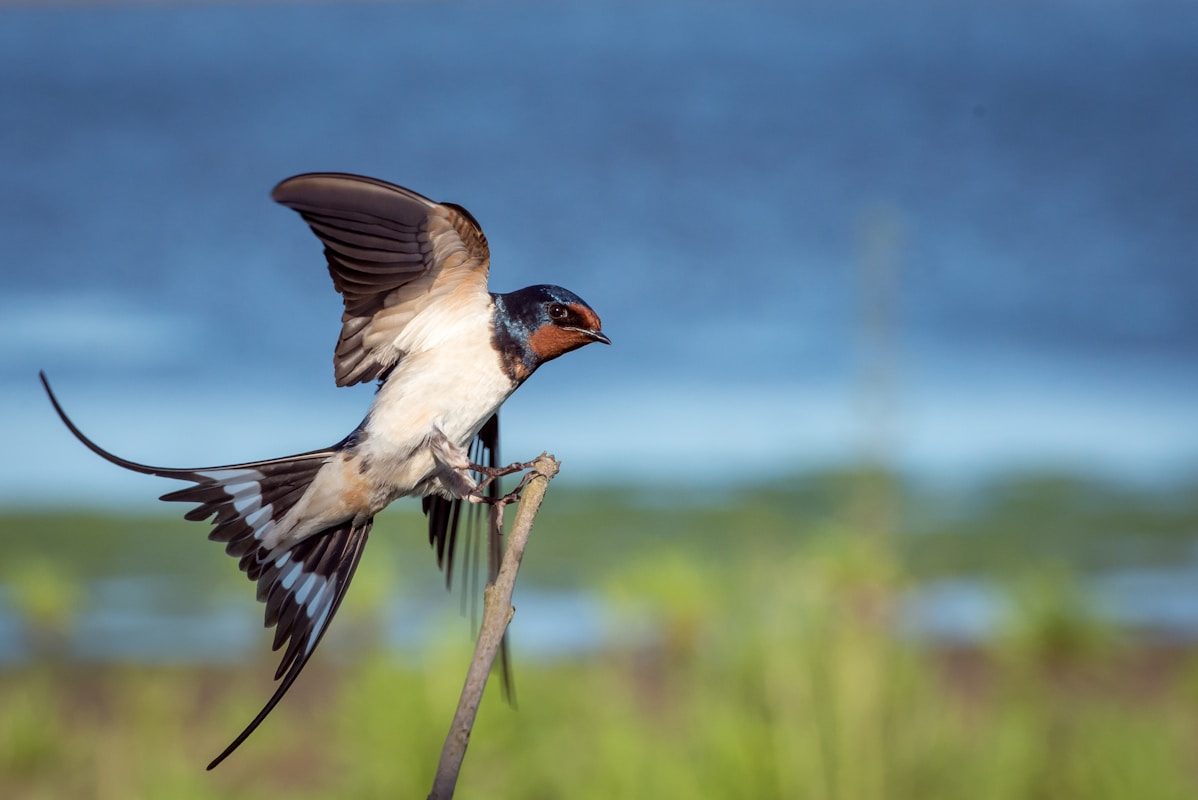
Tree Swallow
Tree Swallows return to their northern breeding grounds weeks before any other swallow species, often arriving while overnight frost is still common and most flying insects haven’t emerged yet. This early arrival looks risky — and some years it is — but it’s a calculated bet that pays off because of one thing almost no other swallow can do: eat berries when insects aren’t available.
Identification
Adult male: Iridescent blue-green to blue-black upperparts that can look almost metallic in good light, crisp white underparts, no markings. Clean, sharp contrast between the dark back and white belly.
Adult female: Similar pattern but duller, more brownish-green above, especially in first-year females. The white-below, dark-above pattern still applies.
Juvenile: Brownish-gray above rather than iridescent, with a faint grayish breast band — distinct from the clean white of adults.
Size: 4.7–5.9 inches. Wingspan 11.8–13.8 inches. Slim body, slightly notched tail (less deeply forked than Barn Swallow).
Similar species: Violet-green Swallow (western range, white extends onto the face), Bank Swallow (brown above with a distinct breast band, not iridescent), Barn Swallow (deeply forked tail, cinnamon underparts).
Basic Facts
| Feature | Detail |
|---|---|
| Scientific name | Tachycineta bicolor |
| Family | Hirundinidae (swallows) |
| Length | 4.7–5.9 inches |
| Weight | 0.7 oz (20g) |
| Wingspan | 11.8–13.8 inches |
| Lifespan | Up to 12 years on record |
| Eggs per clutch | 4–7, white |
| Incubation | 13–16 days |
| Conservation status | Least concern; some regional decline |
Why Tree Swallows Arrive So Early
Most swallow species — Barn Swallow, Cliff Swallow, Purple Martin — are obligate insectivores that arrive only once flying insects are reliably available, since insects are their only food source. Tree Swallows are different: they can switch to eating berries, particularly bayberry and other waxy fruits, when insects are scarce. This dietary flexibility allows them to arrive in early spring, sometimes weeks before other swallow species, and survive cold snaps that would starve a purely insectivorous bird.
This early-arrival strategy carries real risk. A prolonged cold spell with no insects available and limited berry supply can cause significant mortality in early-arriving populations — well-documented die-offs have occurred in years with unusually severe spring cold fronts. But on average, the strategy succeeds often enough that it persists: arriving early means claiming the best nest cavities before competition arrives.
Nesting: Fierce Competition for Cavities
Tree Swallows are secondary cavity nesters — they cannot excavate their own holes and depend entirely on cavities made by other species (mainly woodpeckers) or artificial nest boxes. This creates intense competition, particularly with House Sparrows and Eastern Bluebirds, all of which want the same limited cavities.
The nest itself is built from grass and lined distinctively with large feathers, often from waterfowl, curled so the tips arch over the eggs. Females sometimes spend considerable time and energy seeking out and competing for the best feathers — a behavior heavily documented in nest box studies and one of the more interesting aspects of their breeding biology.
Clutch: 4–7 white eggs. Incubation 13–16 days by the female alone. Chicks fledge at 16–24 days, an unusually variable range tied directly to weather and insect availability during the nestling period.
Aerial Insect Feeding
Once insects are available, Tree Swallows feed almost entirely on flying insects caught in continuous aerial foraging over open water, fields, and wetlands — a feeding style shared with most swallow species. They are highly social while feeding and roosting, often forming large flocks outside the breeding season.
Because of their reliance on flying insects over water, Tree Swallows are considered useful indicators of wetland and aquatic insect health, and they’re a common subject of long-term nest box monitoring programs used in ecological research across North America.
Migration
Tree Swallows breed across most of Canada and the northern two-thirds of the US, generally arriving in early to mid-spring depending on latitude — often the first swallow species seen each year in a given area. They winter along the Gulf Coast, Florida, Mexico, and Central America, with some of the largest documented swallow roosts in North America occurring in the southeastern US during fall migration, sometimes numbering in the hundreds of thousands of birds at a single roost site.
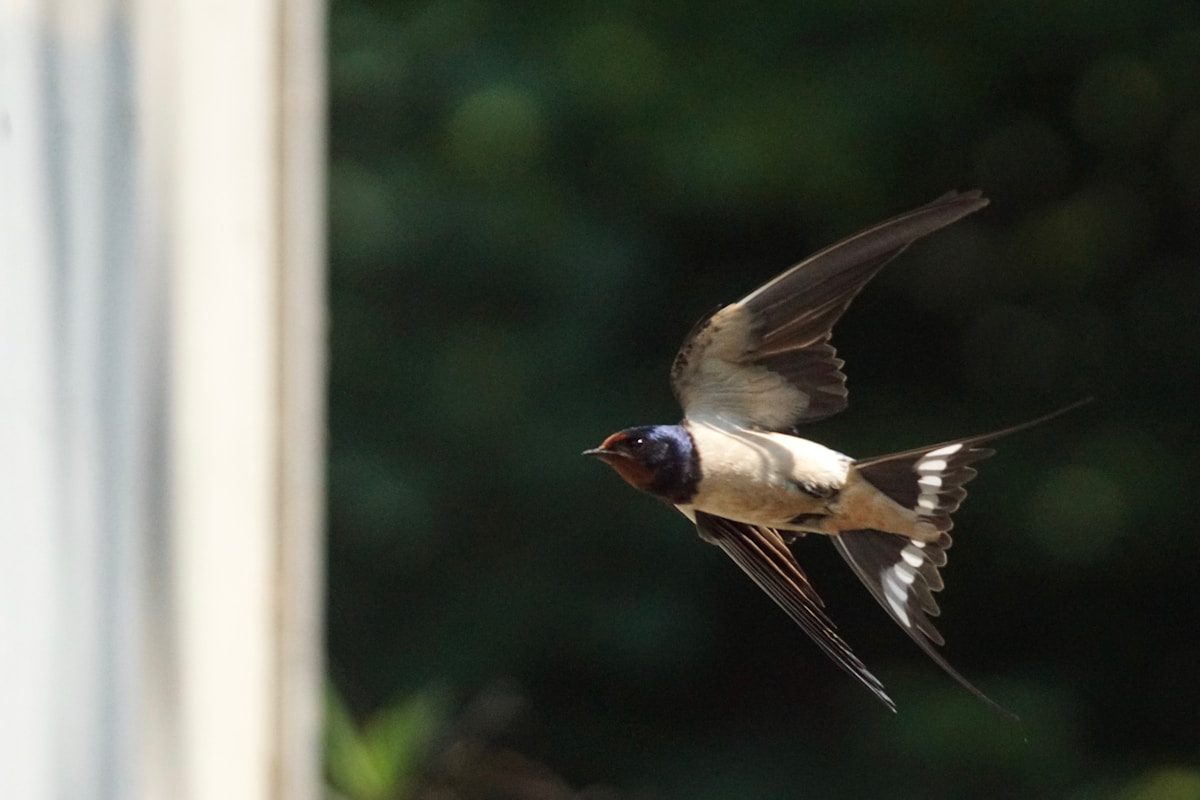
Tree Swallow
How to Attract Tree Swallows
- Nest boxes near open water or fields — Standard bluebird-style boxes work well. Entrance hole 1.5 inches in diameter, mounted 5–10 feet high in open areas, ideally near a pond, lake, or wetland.
- Provide feathers — Scattering clean white feathers near nest boxes during nest-building season (visible from a distance) can attract swallows actively seeking lining material.
- Monitor for House Sparrow competition — House Sparrows aggressively compete for the same cavities and will sometimes kill swallow nestlings. Boxes in open areas away from buildings reduce sparrow competition.
- Avoid pesticides — supports the flying insect populations Tree Swallows depend on for the bulk of the breeding season.
FAQ: Tree Swallow
Why do Tree Swallows arrive so early in spring?
Unlike most swallows, they can eat berries when insects aren’t yet available, allowing them to arrive weeks earlier than purely insectivorous species and claim the best nest cavities first.
What does a Tree Swallow look like?
Iridescent blue-green to blue-black above, crisp white below, no markings. Slim body with a slightly notched tail.
Do Tree Swallows use nest boxes?
Yes. They are secondary cavity nesters and readily use standard nest boxes, especially near open water or fields, competing with bluebirds and House Sparrows for the same sites.
For more on swallows and cavity-nesting birds, see our guides on Purple Martin migration and Eastern Bluebird nesting.

MD Imdadul Haque is the founder of BirdzFly, a research-backed resource on North American backyard birds. Drawing on years of independent study into bird identification, behavior, and migration patterns, he writes in-depth guides designed to help US birders understand the species in their own backyards — from common feeder visitors to seasonal migrants passing through.

