Hummingbirds Migrate
Hummingbird migration timing isn’t a single date you can circle on a calendar. It’s a range that shifts by several weeks depending on where you live, which species you’re watching, and whether the season is running early or late. That said, the patterns are consistent enough year over year that you can plan around them with reasonable confidence.
What Actually Triggers Migration
Hummingbirds don’t leave because it’s getting cold or food is running out. They leave because day length is shortening. Photoperiod — the ratio of light to dark — triggers hormonal changes that initiate migratory behavior regardless of whether it’s still warm. This is why hummingbirds leave in late summer during warm falls, and why keeping feeders out in October won’t stop them from going. The hormonal drive is already running.
Spring arrival timing is more directly influenced by food — the emergence of early flowers and insects along the migration route. Males arrive before females by one to two weeks to establish territories before the females appear.
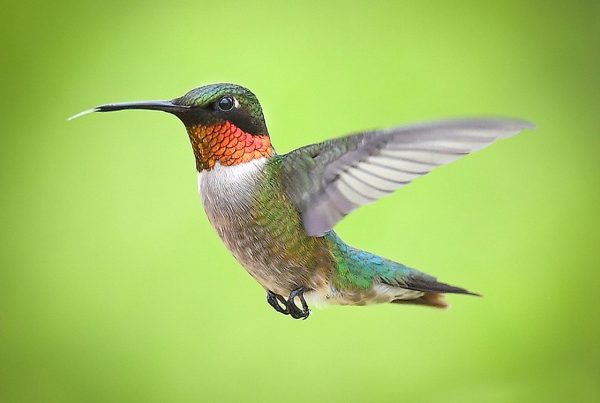
Ruby-Throated Hummingbird: Spring Arrival by Region
| Region | Spring Arrival | Fall Departure |
|---|---|---|
| Gulf Coast (TX, LA, FL) | Mid-February–March | October–November |
| Southeast (GA, SC, AL, MS) | Late March | Late September–October |
| Mid-Atlantic (VA, NC, TN, KY) | Early–Mid April | Late September |
| Midwest (OH, IN, IL, MO) | Late April–Early May | Mid–Late September |
| Northeast (NY, PA, NE) | Early–Mid May | Early–Mid September |
| Upper Midwest/Canada | Mid–Late May | Late August–September |
These are averages. Individual birds arrive earlier and later, and in warm years with early flower emergence, scouts can show up 1–2 weeks ahead of the typical dates.
Western Species Timing
Anna’s Hummingbird: Doesn’t migrate. Year-round resident on the Pacific Coast. Some individuals make short elevation shifts in winter but the species is essentially resident.
Rufous Hummingbird: Longest migration route of any North American hummingbird relative to body size. Spring arrival in the Northwest is late February to April; fall migration starts as early as July, with birds moving south through the Rockies through September.
Black-chinned Hummingbird: Arrives in the Southwest and West in late March to April. Departs September–October.
Broad-tailed Hummingbird: Arrives in Rocky Mountain meadows in April–May. Departs late August–September.
Calliope Hummingbird: Arrives in western mountain habitats April–May. Early departure — most gone by August.
Hummingbirds Migrate
When to Put Feeders Out
Put feeders out one to two weeks before the expected first arrival for your area. Early-arriving males scout territory before the main migration wave — a feeder that’s already up and full when the first scout appears gives you the best chance of establishing a bird that returns all season.
For the eastern US: Gulf Coast by late February, Southeast by mid-March, mid-Atlantic by late March, Midwest by mid-April, Northeast by late April.
When to Take Feeders Down
Leave feeders up two weeks after you see the last hummingbird of the season. Late migrants and first-year birds making their first migration pass through after the main departure wave. Taking feeders down early may leave these birds without a fueling stop at a critical moment.
Leaving feeders out in cold weather doesn’t prevent migration. The hormonal drive to migrate isn’t affected by food availability.
Tracking in Real Time
Journey North (journeynorth.org): Crowd-sourced sighting reports mapped daily during migration. Shows exactly where hummingbirds have been reported in the past few days.
eBird (ebird.org): Cornell Lab’s database. Search your county for recent sightings and see long-term arrival timing by location.
Do They Return to the Same Yard?
Yes, consistently. Both males and females show strong site fidelity, returning to the same territories and the same feeding locations year after year. A male that spends the summer in your yard has a high probability of coming back the following spring. This is why building a hummingbird-friendly yard pays off over time — the local population builds year over year.
FAQ
When do hummingbirds arrive in spring?
Gulf Coast: mid-February. Southeast: late March. Mid-Atlantic and Midwest: April. Northeast: early to mid-May.
When do they leave in fall?
Most Ruby-throats leave the eastern US by late September to early October. Gulf Coast birds may stay through November. Western species begin fall migration as early as July.
Do hummingbirds migrate at night?
Primarily during the day, feeding as they travel. The Gulf of Mexico crossing spans continuous flight that may extend through darkness.
For live tracking, see our 2026 hummingbird migration map. For behavior after arrival, see our guide on hummingbird territorial behavior.

MD Imdadul Haque is the founder of BirdzFly, a research-backed resource on North American backyard birds. Drawing on years of independent study into bird identification, behavior, and migration patterns, he writes in-depth guides designed to help US birders understand the species in their own backyards — from common feeder visitors to seasonal migrants passing through.