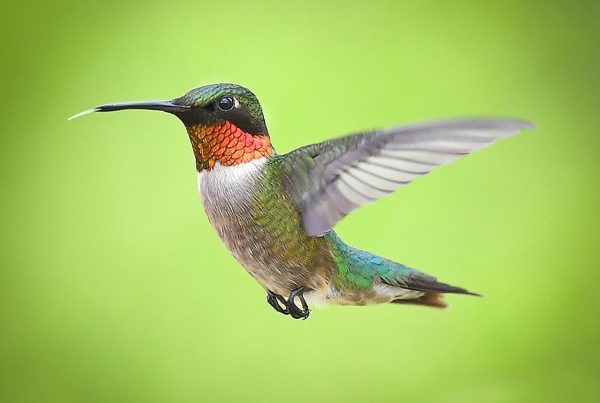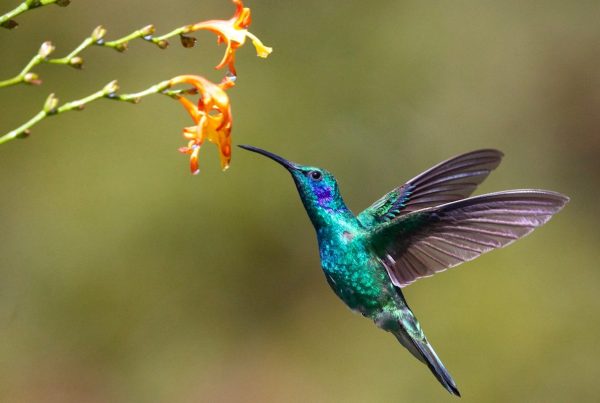

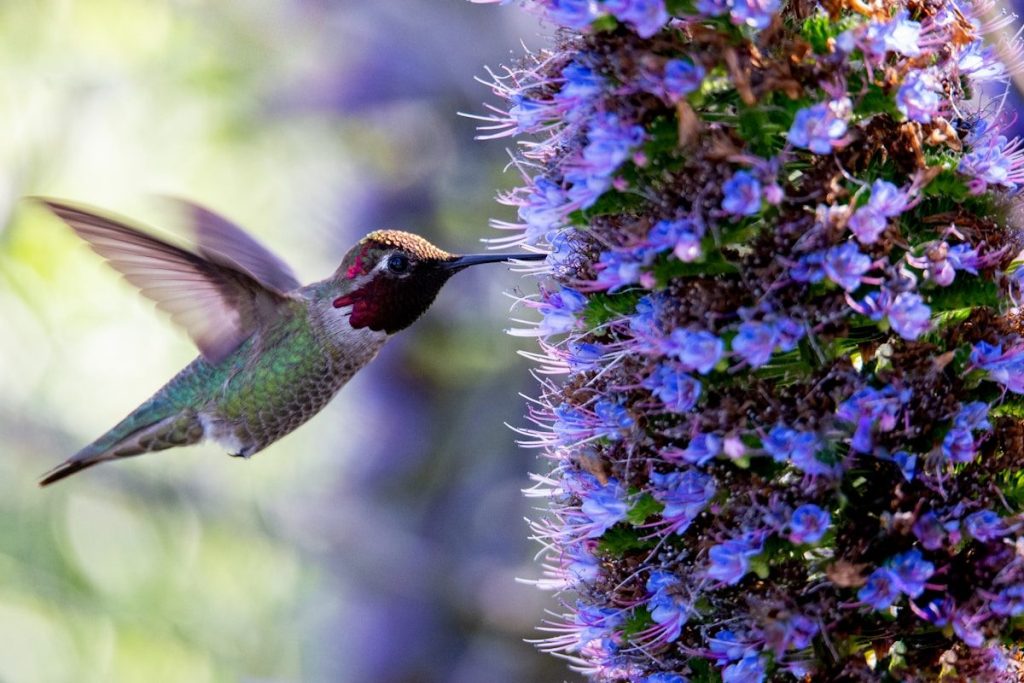
Attract Hummingbirds
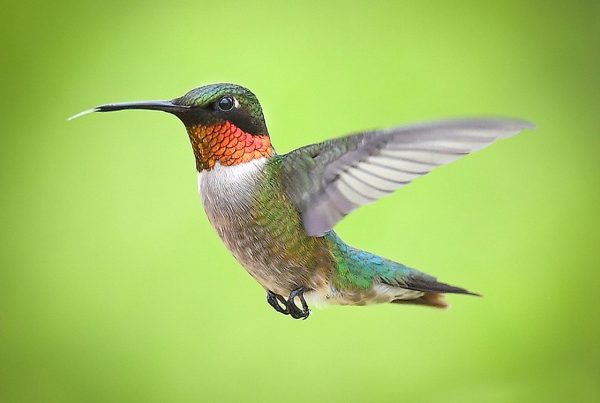
The right plants keep hummingbirds in your yard. The wrong plants — ones that look good but produce little nectar, or ones with flowers too shallow for a hummingbird’s bill — get ignored after a visit or two. Hummingbirds learn quickly which sources are worth returning to.
These 12 plants produce reliably, and they’re organized by bloom season so you can build something that covers the whole window from spring arrival through fall departure.
1. Trumpet Vine (Campsis radicans)
Season: July–September | Region: Eastern and central US
The highest-nectar-producing hummingbird plant in much of the East. Large orange-red trumpets, visited repeatedly all day when in bloom. Be warned: it spreads aggressively by underground runners and can damage structures. It needs containment, but it’s worth the management effort if you want consistent hummingbird traffic.
2. Cardinal Flower (Lobelia cardinalis)
Season: July–September | Region: Eastern US, moist soil
The flower shape co-evolved with the Ruby-throated Hummingbird — pollen is deposited on the bird’s forehead during feeding. Brilliant red spikes, 3–4 feet tall. Prefers moist soil near water features. Short-lived but self-seeds reliably once established. One of the few plants where the relationship between plant and pollinator is that specific.
3. Bee Balm (Monarda didyma)
Season: June–August | Region: Eastern US
Red flower heads made of many individual tubular florets that hummingbirds work through methodically. Spreads by rhizomes — divide every few years. Choose mildew-resistant varieties in humid climates. Red varieties draw hummingbirds most strongly; pink and purple work but less so.
4. Coral Honeysuckle (Lonicera sempervirens)
Season: April–August | Region: Eastern US
Native vine, one of the earliest hummingbird plants to bloom in spring. Red and orange tubular flowers that repeat through summer. Unlike the invasive Japanese Honeysuckle, this one behaves. Handles partial shade — useful where most hummingbird plants won’t grow.
5. Salvia (multiple species)
Season: May–frost | Region: Nationwide
Several salvias are consistently productive: Salvia coccinea (native, red), Salvia splendens (annual, red), Salvia guaranitica (blue-violet, strong nectar). All bloom continuously through summer if deadheaded. Work well in containers on decks and patios.
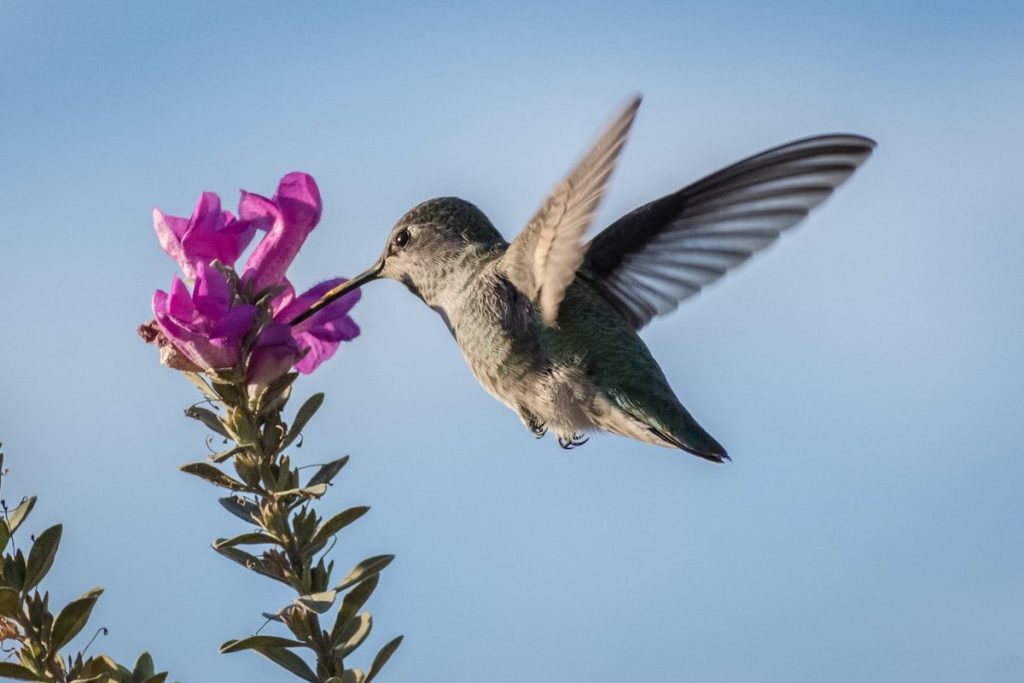
Attract Hummingbirds
6. Columbine (Aquilegia canadensis)
Season: April–May | Region: Eastern US
One of the first hummingbird flowers available in spring. Long spurred flowers hold nectar where a hummingbird’s bill reaches but shorter-tongued insects can’t easily access. Tolerates partial shade. Short-lived individually but self-seeds in suitable spots.
7. Hummingbird Mint (Agastache)
Season: June–October | Region: Nationwide
Exceptional late-season bloomer covering the critical August–October window before and during fall migration. Drought tolerant, deer resistant. See our hummingbird mint guide for variety selection.
8. Penstemon (Beardtongue)
Season: May–July | Region: Western US
Red-flowered species like Penstemon eatonii and Penstemon barbatus are heavily used in the West. Drought tolerant, native, good in rocky and dry settings. Eastern species tend toward purple and attract hummingbirds less intensively.
9. Cigar Plant (Cuphea ignea)
Season: Summer–frost | Region: Nationwide as annual
Small orange-red tubular flowers. Annual in most of the US, productive all season, works well in containers. Hummingbirds visit it constantly when it’s available.
10. Jewelweed (Impatiens capensis)
Season: August–October | Region: Eastern US, moist shade
Native annual that does something almost no other hummingbird plant does: thrives in moist shade. Orange-spotted flowers in late summer and fall, exactly when fall migration is underway. Self-seeds prolifically once established. If you have a damp shaded corner, this is the answer.
11. Red Hot Poker (Kniphofia)
Season: June–September | Region: Zones 5–9
Tall spikes of tubular red, orange, and yellow flowers. South African native adopted enthusiastically by North American hummingbirds. Long-lasting, drought tolerant. Good at the back of a border.
12. Autumn Sage (Salvia greggii)
Season: Spring and fall | Region: Southwest, Zones 6–9
Blooms twice — spring and again when fall heat breaks — giving you two distinct hummingbird windows from one plant. Native to Texas and New Mexico, extremely drought tolerant.
Building for All-Season Coverage
Four plants that together cover April through October:
- Columbine → April–May
- Coral Honeysuckle → May–August
- Cardinal Flower + Bee Balm → July–September
- Hummingbird Mint + Cigar Plant → June–October
A few things that make a difference beyond species selection: plant in groups of three to five rather than single specimens — a mass planting holds a hummingbird as a feeding territory; avoid double-flowered cultivars which often have reduced nectar; skip pesticides near these plants since hummingbirds eat insects too.
FAQ
Best single plant for hummingbirds?
Trumpet Vine for nectar volume. Cardinal Flower for the most specific hummingbird relationship. Hummingbird Mint for the longest bloom season and widest adaptability.
What works in shade?
Columbine, Coral Honeysuckle (partial shade), Jewelweed. Most high-nectar hummingbird plants want full sun.
Do all red flowers work?
No. Red is an attractant, but nectar production is what keeps them coming back. A red flower with no nectar gets ignored after one visit.
For more, see our guides on hummingbird mint and how to clean a hummingbird feeder.

MD Imdadul Haque is the founder of BirdzFly, a research-backed resource on North American backyard birds. Drawing on years of independent study into bird identification, behavior, and migration patterns, he writes in-depth guides designed to help US birders understand the species in their own backyards — from common feeder visitors to seasonal migrants passing through.