
Hummingbirds Live
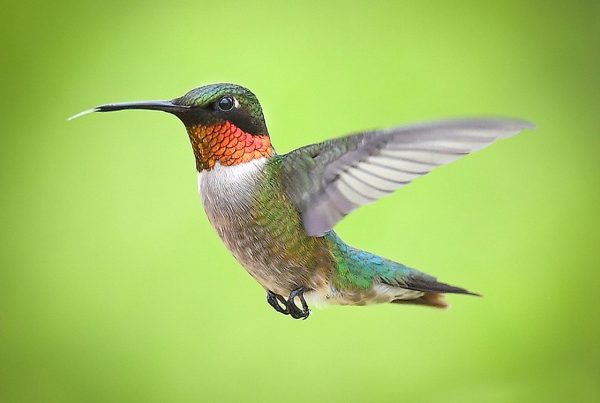
The average wild hummingbird lives 3–5 years. That number undersells the picture for survivors — birds that make it through their first year have a real chance of reaching 6, 7, or more. The oldest banded wild hummingbird on record, a female Broad-tailed Hummingbird, was at least 12 years old when she was recaptured in Colorado.
For a bird weighing 3 grams that burns energy at a rate that would be fatal for a mammal of equivalent size, these are remarkable numbers.
Average Lifespan by Species
| Species | Average Lifespan | Longevity Record |
|---|---|---|
| Ruby-throated Hummingbird | 3–5 years | 9 years (banded) |
| Broad-tailed Hummingbird | 4–6 years | 12 years (banded) |
| Anna’s Hummingbird | 4–6 years | 8+ years |
| Rufous Hummingbird | 3–5 years | 8 years |
| Black-chinned Hummingbird | 3–6 years | 10+ years |
| Calliope Hummingbird | 3–5 years | 8 years |
These records come from banding programs — researchers attach small numbered bands to hummingbird legs and record recaptures. A bird recaptured at the same station years later gives a minimum age. The actual lifespan could be longer since we only know from the original banding date forward.
Why the First Year Is the Hardest
Hummingbirds Live
Juvenile hummingbirds have the highest mortality of any age class. Three main reasons:
- Migration failure — First-year birds making their first long flight south have no experience finding stopover sites or reading weather. A Ruby-throated Hummingbird crossing the Gulf of Mexico faces 500 miles of open water with no landmarks and no chance to land.
- Predation — Younger birds haven’t learned to watch for praying mantises, spiders, cats, and small raptors. All of these take hummingbirds.
- Weather — An unexpected cold snap during migration can be fatal if the bird can’t find enough food to maintain body temperature overnight.
Birds that survive year one — especially that first migration — have substantially better odds going forward. Experience compounds.
How They Survive Their Metabolism
Hummingbirds have the highest metabolic rate of any warm-blooded animal relative to body size. Heart rates up to 1,260 per minute in active flight. Oxygen consumption roughly ten times that of a comparably-sized mammal running flat out.
They survive by entering torpor at night — a state of dramatically reduced metabolism where heart rate drops to as low as 50 beats per minute and body temperature falls close to ambient. A hummingbird in torpor uses roughly 50 times less energy than one in flight. Without this, they couldn’t survive a cold night.
What Affects Lifespan
Habitat quality: Birds with access to abundant food throughout the season — including both nectar plants and insects for protein — enter migration in better condition and survive at higher rates.
Migration distance: Species making longer migrations have higher mortality than shorter-distance migrants or year-round residents like Anna’s Hummingbird.
Window strikes: One of the leading causes of bird death in North America. Feeders placed less than 3 feet from windows can cause strikes during fast territorial chases.
Feeder cleanliness: Moldy nectar causes aspergillosis, a fatal fungal infection. A hummingbird that regularly feeds from a dirty feeder has worse odds than one feeding from clean sources.
FAQ
How long do Ruby-throated Hummingbirds live?
Average 3–5 years. Oldest banded record: at least 9 years. First-year mortality is high; birds that survive the first migration do considerably better.
Oldest hummingbird on record?
A female Broad-tailed Hummingbird from Colorado — at least 12 years at last capture. The confirmed longevity record for wild North American hummingbirds.
Do hummingbirds die in winter?
Migratory species leave before winter. Non-migratory species like Anna’s Hummingbird survive cold nights via torpor. A hummingbird unable to find food in cold weather can die, but this isn’t the typical outcome for healthy birds in appropriate habitat.
How do they survive cold nights?
Torpor — drastically reduced metabolism, heart rate dropping from 1,200 to around 50, body temperature falling near ambient. About 50 times more energy-efficient than active flight.
For more on hummingbird biology, see our guides on do hummingbirds mate for life and why hummingbirds are territorial.

MD Imdadul Haque is the founder of BirdzFly, a research-backed resource on North American backyard birds. Drawing on years of independent study into bird identification, behavior, and migration patterns, he writes in-depth guides designed to help US birders understand the species in their own backyards — from common feeder visitors to seasonal migrants passing through.