Killdeer Bird
The Killdeer nests on the ground. No nest materials, no cover, no hiding. Just gravel, or bare dirt, or short grass — wherever the eggs blend in.
This seems like a bad strategy. And it would be, except the Killdeer has a backup plan that’s been refined over a very long time.
When a predator approaches the nest, the adult runs away from it — dragging one wing along the ground, calling loudly, looking injured. A fox or a dog follows the apparently easy meal. The Killdeer keeps leading it away. When it’s far enough from the nest, it flies off. The predator has nothing. The eggs are still there.
This is called a distraction display, or broken-wing display. It works on foxes, dogs, raccoons, and people. Most people who’ve seen it describe the experience as unsettling — the bird looks genuinely hurt, and the instinct to help or follow is hard to ignore.
That’s the point.
What a Killdeer Looks Like
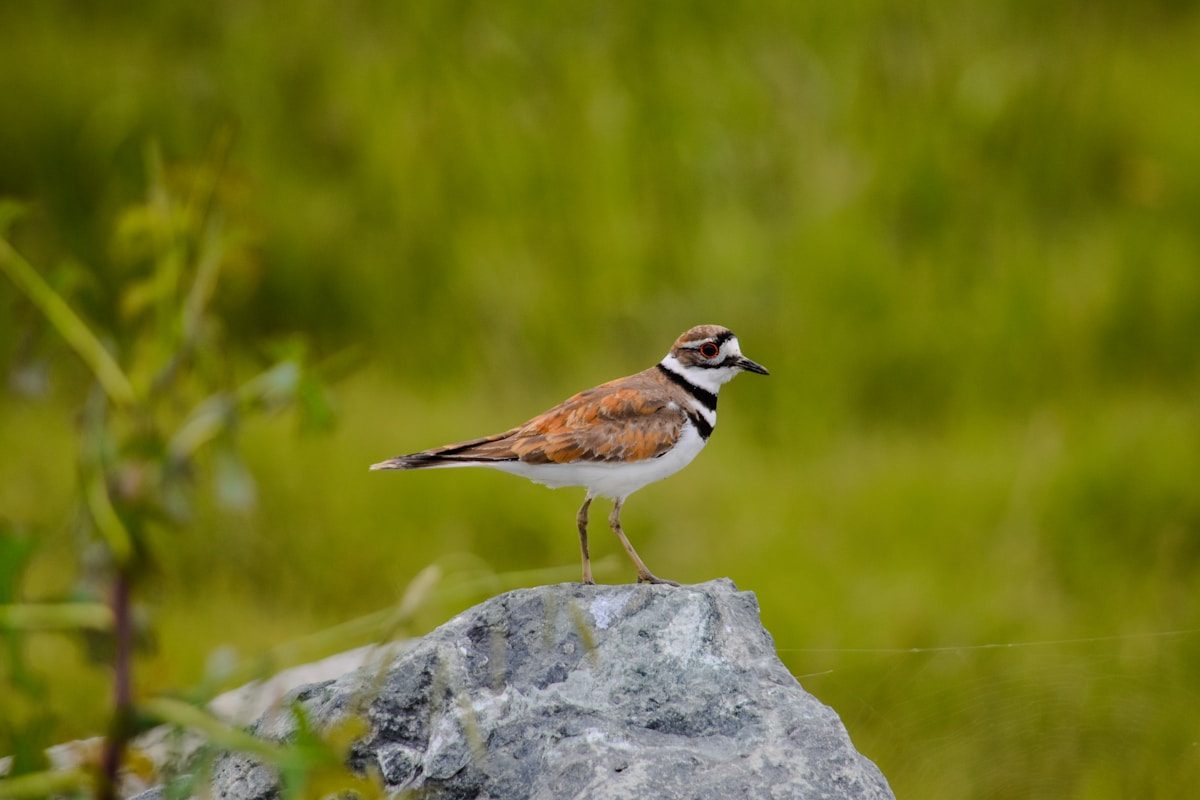
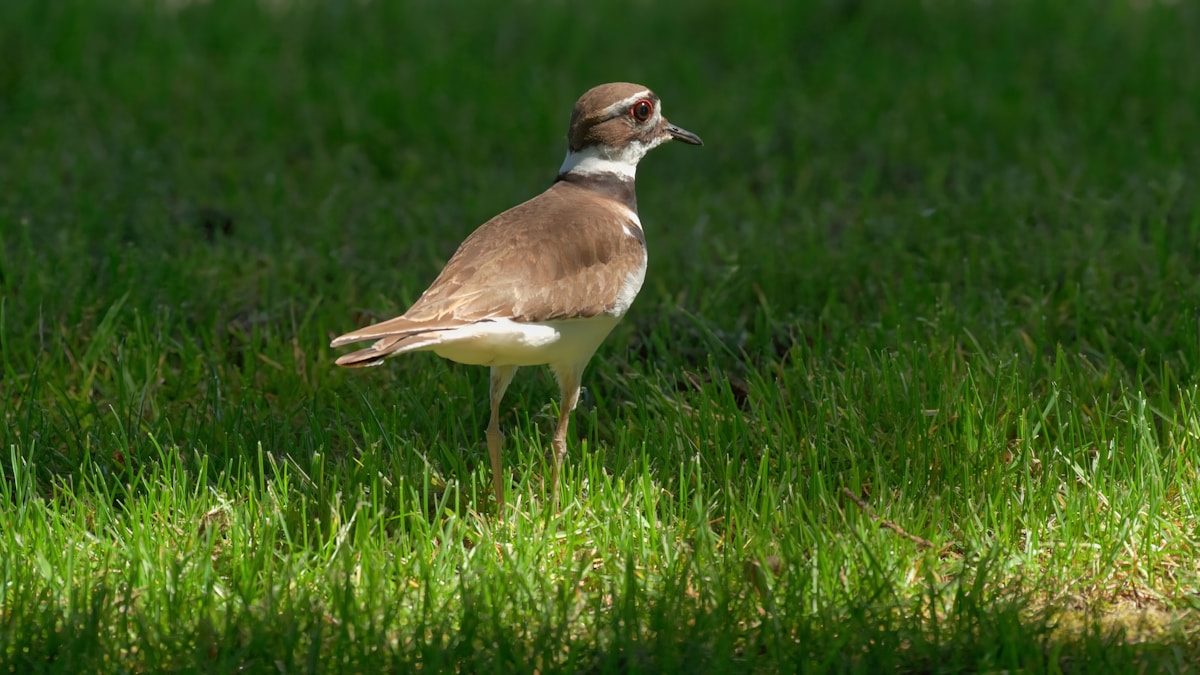
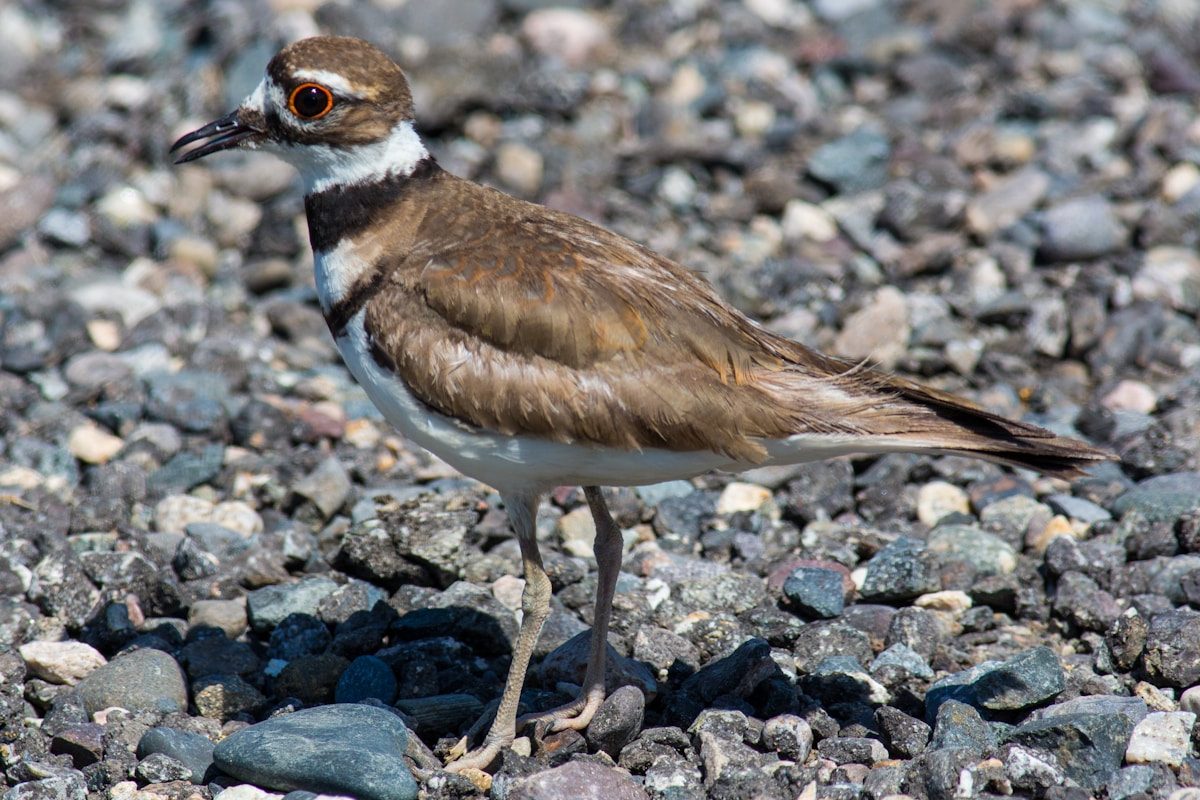
Medium-sized shorebird — about the size of a robin, but longer-legged and longer-tailed. Brown above, white below, with two distinct black chest bands. That double band is the field mark. Most shorebirds with breast bands have one; the Killdeer has two, stacked.
The rump and tail base are bright orange-rust, visible in flight. The tail itself is long and brown with white edges. In flight the wing pattern shows a white stripe, and the orange rump catches light.
Red eye ring. Long pinkish legs. The bill is short and straight — a plover bill, not the long curved bill of larger shorebirds.
The Killdeer Call
You hear it before you see it, usually. The call is a loud, insistent “kill-deer” or “kill-dee-dee-dee” — high and carrying, repeated rapidly when the bird is alarmed. It’s distinctive enough that you won’t confuse it once you know it.
The scientific name is Charadrius vociferus. Vociferus means “loud-voiced.” Someone named it honestly.
Killdeer Bird
Where Killdeers Live
Almost everywhere in North America. Killdeers are one of the most habitat-flexible shorebirds in the continent. They’re associated with open ground — fields, parking lots, golf courses, roadsides, gravel areas, lawns, athletic fields, mudflats. They don’t need water nearby the way most shorebirds do.
This adaptability is why they’re so common and why many people encounter them without realizing they’re looking at a shorebird. Killdeers in a parking lot median are not an unusual sighting.
Year-round in the southern US and along the Pacific Coast. Migratory in the northern US and Canada — they’re among the first shorebirds to move north in spring, sometimes arriving while snow is still on the ground.
The Nest
Not really a nest. A scrape — a shallow depression in the ground with a few pebbles or debris around the eggs. The eggs are buff with dark speckles that blend with gravel almost perfectly. Four eggs, typically, pointed at one end and arranged in a star pattern with the points inward — a compact shape that allows the adult to cover all four with its body.
Killdeers regularly nest in places that seem inadvisable: gravel rooftops, parking lot edges, construction sites, baseball diamonds. The camouflage of the eggs works in almost any substrate with pebbles or debris.
Both adults incubate. Incubation takes about 24–28 days. The chicks hatch fully covered in down and are mobile within hours — precocial, which means they can walk and feed themselves almost immediately, following the adults rather than being fed in a nest.
The Broken-Wing Display Up Close
When a predator or human gets within a certain distance of the nest, the adult moves away from it and begins the display. The wing droops to the ground. The tail fans out, showing the orange rump. The bird calls loudly and erratically.
The adult gauges distance constantly. If the threat follows, the bird keeps moving. If the threat stops or turns toward the nest, the display intensifies. When the bird has led the threat far enough away, it suddenly flies off — healthy, normal flight, no trace of injury.
It’s calculated. The bird knows exactly where its nest is, tracks the threat’s position relative to it, and adjusts the display accordingly. Watching it closely, you can see the calibration happening in real time.
If you’ve accidentally found a Killdeer nest by following a distraction display, that’s what happened. The bird showed you where not to look by leading you away from it — and you found it anyway by recognizing the trick.
Identification at a Glance
- Size: Robin-sized, longer-legged
- Chest bands: Two black bands — the defining field mark
- Rump: Bright orange-rust, visible in flight
- Call: Loud “kill-deer” repeated frequently
- Habitat: Open ground — fields, parking lots, gravel, lawns
- Nest: Bare ground scrape with highly camouflaged eggs
FAQ
What is a Killdeer?
A medium-sized North American shorebird that lives in open habitats rather than near water. Named for its loud call. Known for the broken-wing distraction display it uses to lure predators away from its ground nest.
Why does the Killdeer fake a broken wing?
To lead predators away from the nest. The display is a distraction — the bird draws attention to itself and away from the eggs. When the threat is far enough from the nest, the bird flies off normally.
Where do Killdeers nest?
Bare ground — gravel, dirt, short grass. They don’t build a traditional nest, just a scrape with a few pebbles. Rooftops, parking lots, and athletic fields are common nesting sites.
Are Killdeers shorebirds?
Yes. They’re plovers, in the shorebird family. Unlike most shorebirds, they don’t need to be near water and are common in inland habitats far from any wetland.
What does a Killdeer call sound like?
A loud, repeated “kill-deer” or “kill-dee-dee-dee.” Distinctive and carrying — you’ll often hear it before you see the bird.
For more on ground-nesting birds and North American bird identification, see our guide on hawk nests and our post on spring birds to watch for.

MD Imdadul Haque is the founder of BirdzFly, a research-backed resource on North American backyard birds. Drawing on years of independent study into bird identification, behavior, and migration patterns, he writes in-depth guides designed to help US birders understand the species in their own backyards — from common feeder visitors to seasonal migrants passing through.