
Yellow Warbler
Most warblers are difficult. They’re small, they move fast, and half of them look like other warblers. The Yellow Warbler is not most warblers.
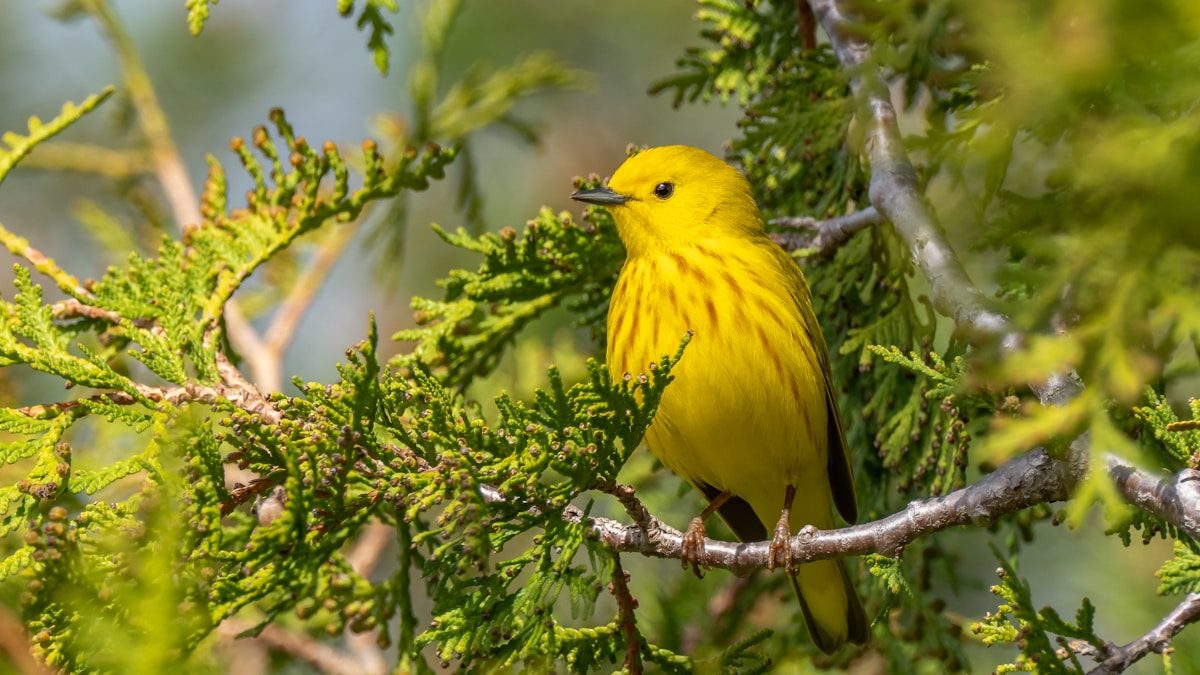
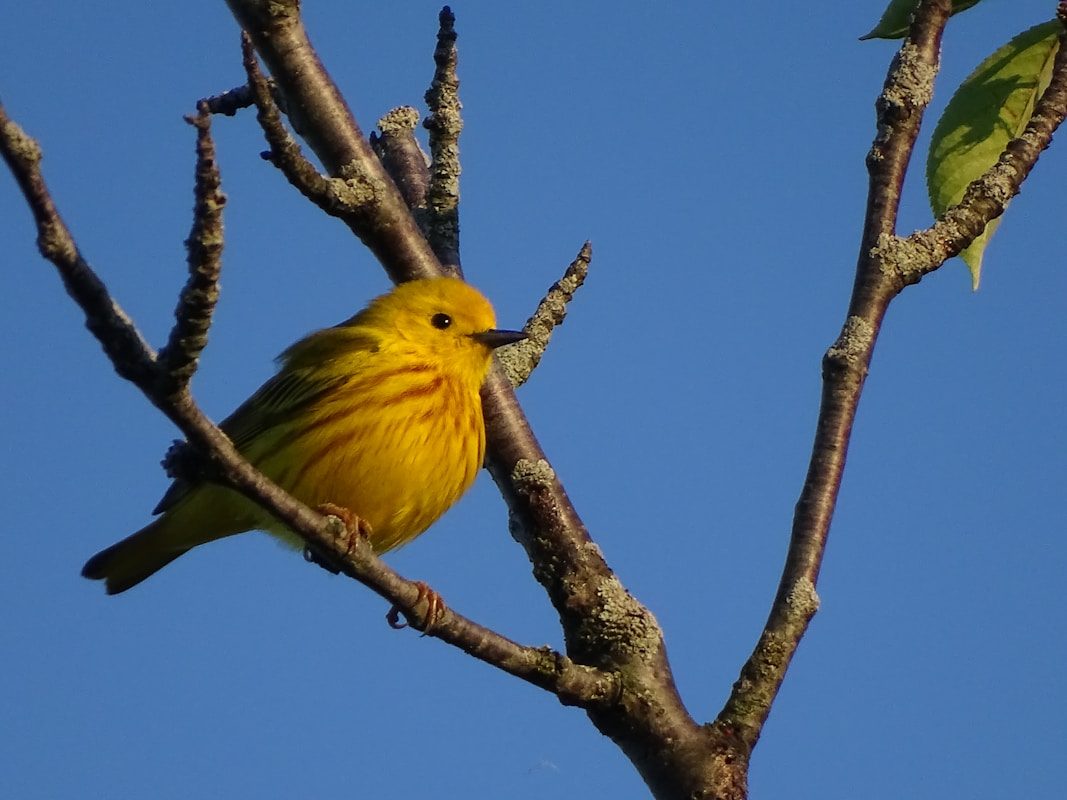
An adult male in spring is almost entirely yellow — bright yellow body, yellow-green back, rusty-red streaking on the chest. Even the tail feathers have yellow in them, which is unusual. There’s nothing in North America that looks quite like it at that time of year, and you don’t need binoculars to see the color from a reasonable distance.
That’s a useful bird to start with.
What Yellow Warblers Look Like
Male: Bright yellow throughout — head, underparts, back. The back has a yellow-green wash. The chest has rusty-red streaking, usually visible clearly from a few meters away. Yellow spots on the tail feathers distinguish this species from other warblers even when the angle is poor.
Female: Similar but more subdued — yellow overall but without the rusty chest streaking, and the back is more olive-green. Still clearly a yellow bird. Notably yellow compared to most female warblers.
Juvenile: Even more olive than females. The yellow reduces to underparts and face, with the back more greenish. The yellow tail spots remain. First-fall birds moving south in August can look quite different from the birds that arrived in May.
Size: Small. About 5 inches — smaller than a House Sparrow, similar to other warblers.
Where to Find Yellow Warblers
They prefer dense shrubby vegetation near water. Stream edges, willows overhanging a creek, overgrown wetland margins, thickets near rivers. That habitat preference is consistent enough to be useful: if you’re standing at the edge of a shrubby area near moving water in spring and summer, you’re in Yellow Warbler territory.
They also use old fields, roadsides with dense shrubs, suburban gardens with thick hedges, and the margins of suburban parks — anywhere the vegetation is thick and low. They’re not exclusively wetland birds; they’re edge birds that happen to like wet edges most.
Range and Season
Yellow Warblers breed across most of North America — Canada, Alaska, and the continental US except for parts of the Southeast and the arid Southwest. One of the most widely distributed warblers in North America by breeding range.
They winter in Central America and northern South America. Spring arrival in the US varies:
- Gulf Coast: late March to April
- Mid-Atlantic and Midwest: late April to early May
- Northeast: May
- Canada: May to June depending on latitude
Fall migration begins early — adult males start moving south in late June or July, well before most people notice summer is ending. By September, most have left the US.
The Song
The song is often described as “sweet-sweet-sweet-I’m-so-sweet” — a series of rising and falling notes, clear and musical. It carries well and is one of the more distinctive warbler songs to learn, partly because of how often you hear it in habitat where Yellow Warblers are common.
Males sing from exposed perches — the top of a willow shrub, an open branch over water — which makes them easier to locate by sound than many warblers that sing from cover.
A thin, high “tsip” call note is used year-round and is worth learning. In fall, when many warblers look similar in dull plumage, call notes are often more reliable for identification than plumage.
Brown-Headed Cowbird Parasitism
Yellow Warbler
Yellow Warblers are one of the most frequently parasitized host species for Brown-headed Cowbirds. Cowbirds lay eggs in Yellow Warbler nests, leaving the warblers to raise a much larger chick at the expense of their own young.
Yellow Warblers have developed a response. When they detect a cowbird egg in the nest, they sometimes build a new nest floor directly on top of the existing nest — burying the cowbird egg and their own eggs under new nest material, then laying a fresh clutch. Researchers have documented Yellow Warbler nests with multiple buried layers from repeated cowbird parasitism events — essentially a record of the ongoing conflict encoded in nest architecture.
That fact is interesting on its own. The warblers aren’t removing the problem; they’re containing it and starting over.
Behavior Worth Watching
Yellow Warblers forage by moving through shrubs and low tree branches, gleaning insects from leaves and stems. They’re active enough to follow. Unlike some warblers that disappear into the canopy, Yellow Warblers tend to stay in the lower and middle levels of vegetation where they’re visible.
Breeding season behavior in June includes males singing persistently, pairs moving together through shrubs, and females becoming secretive around the nest site — a behavioral shift that can tell you when nesting is active even if you can’t find the nest itself.
Identification Confusion Species
Wilson’s Warbler (male): Also yellow, but smaller, with a distinctive black cap. No rusty chest streaking.
Common Yellowthroat (male): Yellow throat and breast, but black mask and white belly. Stays lower in vegetation.
Orange-Crowned Warbler: Dull olive-yellow, faint streaking, no yellow in tail. Generally less vivid than Yellow Warbler.
Nashville Warbler: Yellow underparts but gray head, white eye ring. Different overall impression.
None of these are particularly easy to confuse with a spring male Yellow Warbler in good light. The confusion species matter more for females and fall birds.
FAQ
What does a Yellow Warbler look like?
Bright yellow overall — the most yellow warbler in North America. Males have rusty-red chest streaking. Yellow spots in the tail distinguish the species from others. Both sexes are noticeably yellow.
Where do Yellow Warblers live?
Dense shrubby vegetation near water — stream edges, willow thickets, wetland margins. Also edges of fields and gardens with thick hedges. Breed across most of North America; winter in Central and South America.
What do Yellow Warblers eat?
Primarily insects — caterpillars, aphids, beetles, and other invertebrates gleaned from leaves and stems. They don’t visit seed feeders.
When do Yellow Warblers arrive in spring?
Gulf Coast in late March to April. Mid-Atlantic and Midwest in late April. Northeast in May.
What is Yellow Warbler song?
A clear, musical “sweet-sweet-sweet-I’m-so-sweet” or similar pattern. Delivered from exposed perches, carries well, one of the more identifiable warbler songs.
For more on warblers and spring migrants, see our guide on 15 spring birds to watch for in your backyard. For understanding cowbird parasitism in context, see our post on nesting blackbirds.

MD Imdadul Haque is the founder of BirdzFly, a research-backed resource on North American backyard birds. Drawing on years of independent study into bird identification, behavior, and migration patterns, he writes in-depth guides designed to help US birders understand the species in their own backyards — from common feeder visitors to seasonal migrants passing through.