
Hummingbird Eggs
Hummingbird eggs are about the size of a coffee bean. White, smooth, no markings. Two per clutch, almost always.
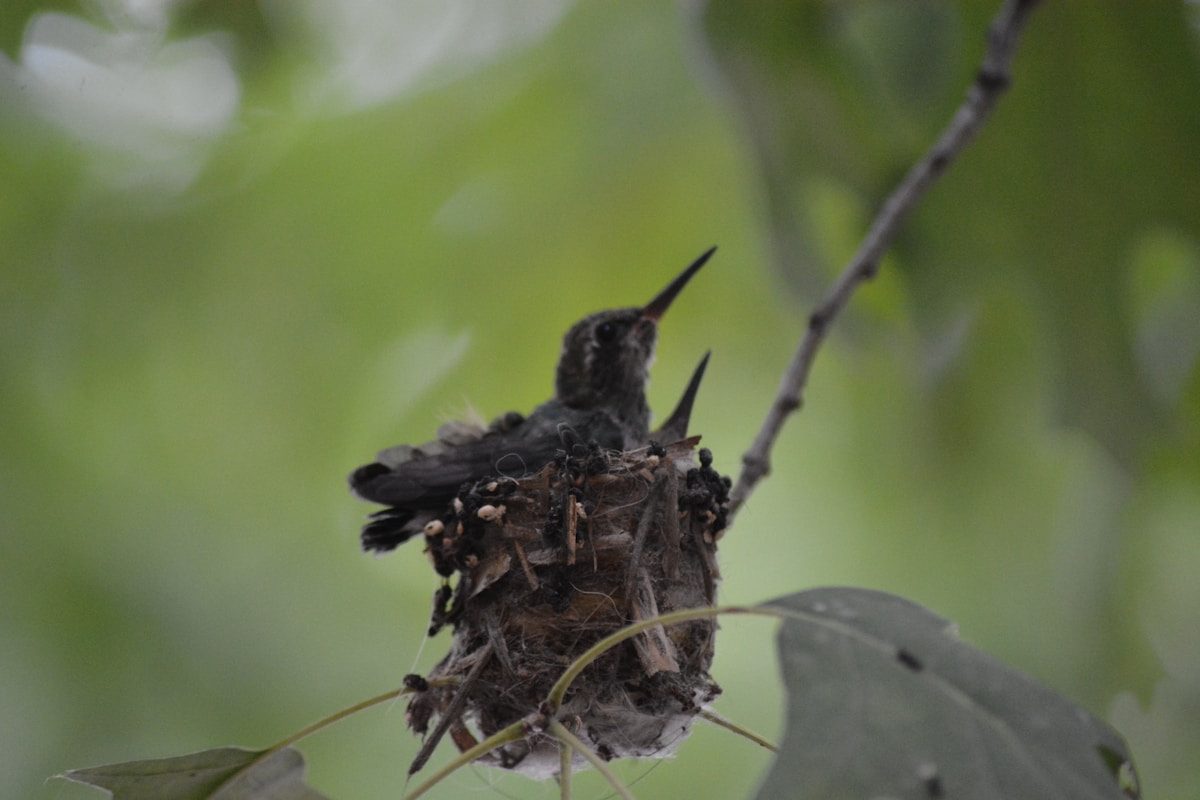
They sit in a nest the size of a large thimble, on a branch that blends into the surroundings because the nest is camouflaged with lichen and spider silk on the outside. Most people who see them describe the moment as one of those small, genuine surprises — not because hummingbirds are rare, but because the scale of the thing is hard to believe until you’re looking directly at it.
What Hummingbird Eggs Look Like
Plain white. No speckles, no markings, no color variation. The shell is smooth.
Size varies slightly by species, but for the Ruby-throated Hummingbird — the most common species in eastern North America — the eggs are approximately 12–13mm long and 8–9mm wide. That’s smaller than a navy bean.
For comparison: a chicken egg is about 55mm long. A hummingbird egg, placed beside a chicken egg, looks like something that shouldn’t be a bird egg at all.
Always two eggs per clutch. Occasionally one if a first egg is lost and replaced. Rarely three. The two-egg clutch is consistent enough to be a useful ID detail if you find a nest — two white eggs the size of coffee beans in a thimble-sized nest almost certainly means hummingbird.
How the Female Lays Them
The female lays one egg per day, with a 24–48 hour gap between the two eggs. She typically begins incubating after the second egg is laid, though she may start partial incubation with the first. This means both eggs hatch at roughly the same time rather than sequentially.
The incubation period is 14–18 days for most North American hummingbird species. Ruby-throated Hummingbirds average around 16 days. The female incubates alone — sitting on the eggs to keep them warm, leaving briefly every 20–30 minutes to feed, then returning.
The Nest the Eggs Sit In
The nest is as remarkable as the eggs. It’s constructed from plant down — the soft fibers from willow catkins, thistledown, and similar materials — bound together and attached to the branch with spider silk. The outside is decorated with lichen and bits of bark, which makes it look like a natural growth on the wood rather than a nest.
The spider silk serves two purposes. It holds the structure together, and it allows the nest to expand as the eggs hatch and the chicks grow. A hummingbird nest with two chicks three weeks old stretches considerably from its original size — the silk allows this without the nest cracking or falling apart.
The cup is about 4cm across and 3cm deep when new. By fledging time, it’s noticeably wider and shallower as the chicks have pressed outward against the sides.
Incubation: What the Female Does
She sits on the eggs for 50–80% of daylight hours. Leaving too long risks chilling the eggs; leaving too briefly means she doesn’t eat enough. The balance is tight.
At night she enters torpor — that state of dramatically reduced metabolism that all hummingbirds use to survive cold nights. The eggs are insulated by the nest material and the female’s body before she enters torpor, but they do cool somewhat overnight. This is normal. The eggs are more cold-tolerant than many people assume.
The male plays no role in incubation. He’s not present at the nest after mating. If you observe a hummingbird consistently visiting and sitting in a small nest, it is the female.
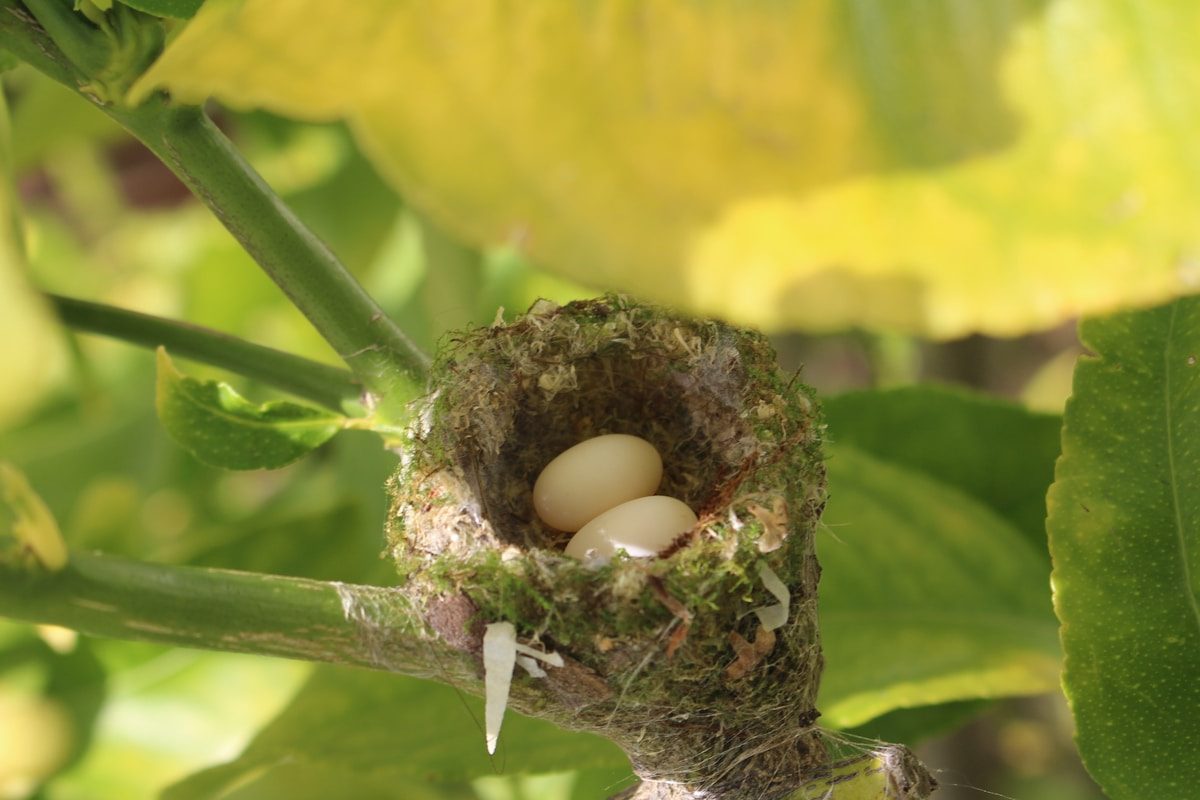
Hummingbird Eggs
Hatching
The chick pips — breaks through the shell using a small egg tooth on the tip of its bill — over the course of several hours. The process is gradual. First a small crack, then a larger opening, then the chick works its way free.
The egg tooth falls off within days of hatching. The chick that emerges is blind, featherless, and weighs less than a gram. The shell halves are removed from the nest by the female and dropped at a distance — a behavior that keeps the nest clean and reduces visual cues for predators.
Can You Find a Hummingbird Nest?
Yes, but it takes patience. The most reliable method is following the female during nest building — she makes many trips to collect material and can be tracked if you’re patient and quiet. Nests are typically placed on a downward-sloping branch, 10–40 feet off the ground, often above water or near cover. They’re on the branch, not in a fork — usually on top of the branch with the cup sitting upward.
Once you’ve found one, the location is worth remembering. Females frequently reuse nest sites in subsequent years, sometimes building directly on top of an old nest.
FAQ
How big are hummingbird eggs?
About the size of a coffee bean or navy bean — roughly 12–13mm long for Ruby-throated Hummingbirds. White, smooth, no markings.
How many eggs does a hummingbird lay?
Almost always two per clutch. One egg is laid each day, and both hatch around the same time after 14–18 days of incubation.
How long does it take for hummingbird eggs to hatch?
14–18 days depending on species. Ruby-throated Hummingbirds average about 16 days.
What does a hummingbird nest look like?
A thimble-sized cup on a branch, constructed from plant down and bound with spider silk, camouflaged on the outside with lichen and bark. It expands as the chicks grow.
Does the male hummingbird incubate the eggs?
No. The female incubates alone and raises the chicks alone. The male plays no role after mating.
For more on hummingbird reproduction, see our guides on baby hummingbirds and do hummingbirds mate for life.

MD Imdadul Haque is the founder of BirdzFly, a research-backed resource on North American backyard birds. Drawing on years of independent study into bird identification, behavior, and migration patterns, he writes in-depth guides designed to help US birders understand the species in their own backyards — from common feeder visitors to seasonal migrants passing through.