
Hummingbirds Eat
The sugar in nectar fuels flight. But sugar doesn’t build feathers, repair tissue, or grow chicks. For that, hummingbirds need protein — and they get it from insects.
Most people picture hummingbirds as flower visitors. That’s accurate but incomplete. A hummingbird that only drank nectar would be running on empty in a different way. The insect part of the diet is essential, and hummingbirds are more active hunters than most people realize.
Nectar: The Energy Source
Nectar is the primary fuel. A hummingbird’s metabolism runs fast enough that it needs to consume roughly half its body weight in sugar every day just to maintain normal function. Nectar — from flowers and from feeders — is the quickest way to meet that demand.
They prefer nectar with a sucrose concentration of around 20–25%. This is close to the concentration in many natural flowers and is why the standard feeder recipe — one part white sugar to four parts water — works well. More concentrated solutions are harder to drink quickly; less concentrated doesn’t provide enough energy per visit.
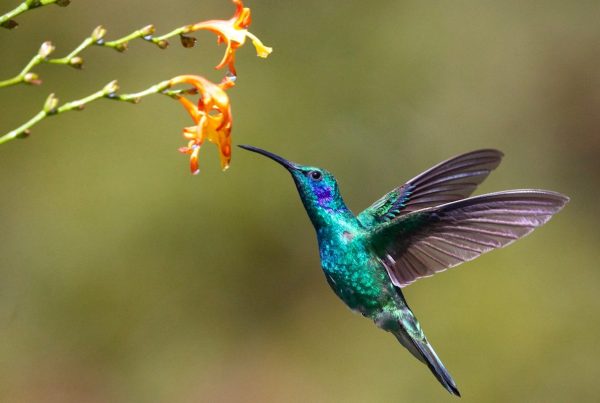
Red and orange tubular flowers are preferred, partly because of color and partly because those flowers tend to produce more nectar and are shaped for hummingbird feeding rather than bee feeding. The flowers they visit most aren’t random — they’re the ones that have co-evolved with hummingbird feeding behavior over a long time.
Insects: The Protein Source
Insects make up a significant portion of the diet — estimates suggest 10–30% of caloric intake for adults, higher for nestlings being fed by the female.
Hummingbirds catch insects several ways:
- Hawking — flying out from a perch to catch insects in mid-air, then returning. The same technique flycatchers use.
- Gleaning — picking small insects and spiders off leaves, bark, and flower surfaces while hovering.
- Probing — inserting the bill into flowers and catching the insects that were feeding there at the same time as the nectar is collected.
The insects they target are small: gnats, fruit flies, aphids, whiteflies, small beetles, mosquitoes. Spiders are also eaten regularly — they provide protein and the spider silk is sometimes used for nest construction, so a hummingbird visiting a spider web might be doing two things at once.
This is worth remembering if you use pesticides near hummingbird feeders or in a garden you’re trying to attract hummingbirds to. Eliminating the insect population removes a food source the birds depend on, regardless of how full your feeder is.
Tree Sap
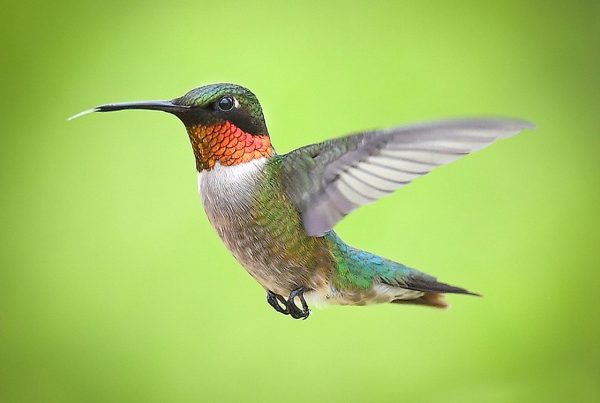
Some hummingbirds — particularly Ruby-throated Hummingbirds in early spring — feed heavily on tree sap from Yellow-bellied Sapsucker wells. Sapsuckers drill rows of small holes in tree bark to collect the sap that flows out. Hummingbirds arrive before many flowers are blooming and use these sap wells as an early-season food source.
The relationship is close enough that Ruby-throated Hummingbird spring migration timing in some parts of the East tracks closely with Yellow-bellied Sapsucker presence — the hummingbirds are following the sap wells north.
What Hummingbirds Don’t Eat
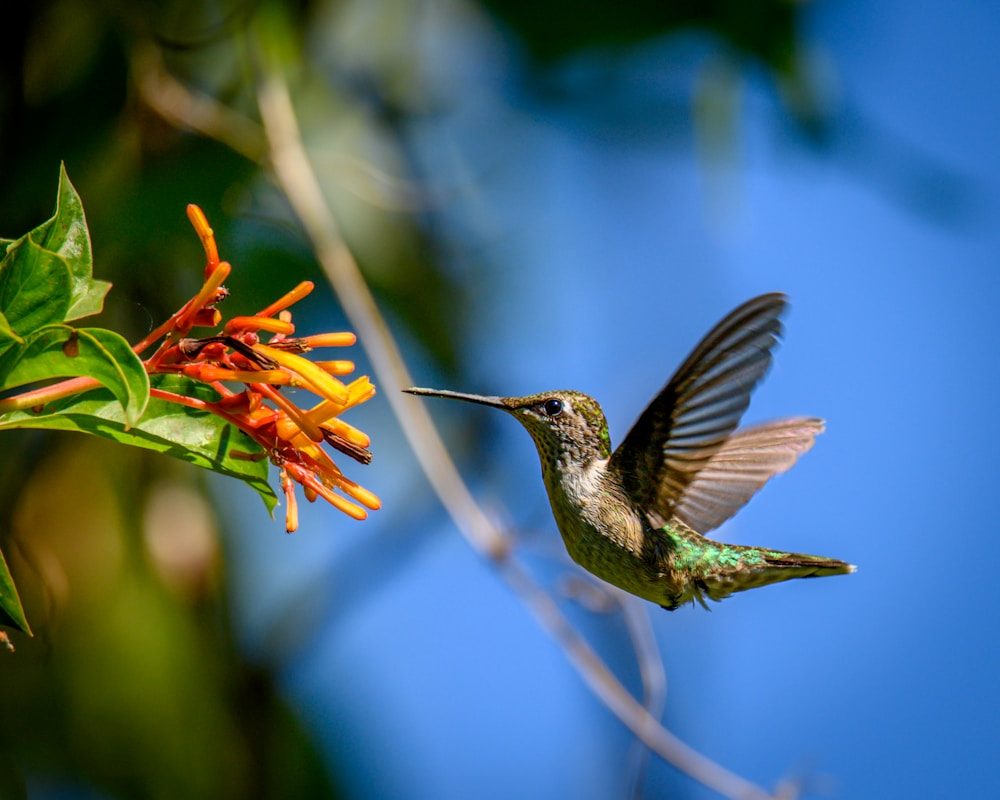
Hummingbirds Eat
Seeds. Grains. Berries in the way other fruit-eating birds eat them. Their digestive systems are not built for solid food of that kind. A hummingbird at a seed feeder is a bird that’s confused or desperate, not one feeding normally.
They also don’t eat the artificial red dye sometimes added to commercial nectar solutions. There’s no evidence red dye helps attract hummingbirds — the red feeder itself does that — and some evidence it may be harmful. Plain sugar and water is the right formula.
Feeding Behavior Worth Watching
A hummingbird visiting a feeder visits multiple times per hour, drinking for a few seconds each time. Between feeder visits, it’s often perched — resting, watching for insects, occasionally launching out to catch one. The perching is easy to miss because people focus on the feeder moments. But a significant portion of a hummingbird’s day is sitting still, which is the only time they’re not burning extraordinary amounts of energy.
In the evening before roosting and the morning after waking from torpor, feeding intensity increases. The bird needs to recover overnight energy loss and build reserves for the coming night. Those two windows — early morning and late afternoon — tend to produce the most active feeder traffic.
What to Feed Hummingbirds at Your Feeder
One part plain white granulated sugar to four parts water. Boil to dissolve, cool completely before filling. That’s it.
Not honey — it ferments quickly and can cause a fatal fungal infection. Not brown sugar or raw sugar — the molasses content may be harmful. Not artificial sweeteners — they provide no energy. Not red dye — unnecessary and potentially harmful.
Keep the feeder clean. Sugar water ferments within 2–3 days in warm weather. A dirty feeder can sicken and kill the birds using it. See our guide on how to clean a hummingbird feeder for the full process. Also see our complete guide on how the hummingbird tongue works — it’s not sucking nectar like a straw, but something far more interesting.
FAQ
Do hummingbirds only eat nectar?
No. Nectar provides energy but not protein. Hummingbirds also eat small insects and spiders, which supply the protein needed for growth, feather production, and feeding nestlings.
How much do hummingbirds eat per day?
Roughly half their body weight in sugar, plus significant insect intake. They feed many times per hour during active periods.
Do hummingbirds eat fruit?
Not in the way other birds eat fruit — their digestive systems aren’t built for solid food. They will probe overripe soft fruit for the juice, but this is occasional rather than a regular food source.
What is the best homemade hummingbird food?
One part plain white sugar to four parts water. Boiled, cooled, no additives. This closely matches natural nectar concentration and is safe and effective.
For more on hummingbird feeding, see our guides on hummingbird nectar recipe, why hummingbirds fight at feeders, how long hummingbirds live, how fast hummingbirds fly, and how hummingbird migration works.

MD Imdadul Haque is the founder of BirdzFly, a research-backed resource on North American backyard birds. Drawing on years of independent study into bird identification, behavior, and migration patterns, he writes in-depth guides designed to help US birders understand the species in their own backyards — from common feeder visitors to seasonal migrants passing through.