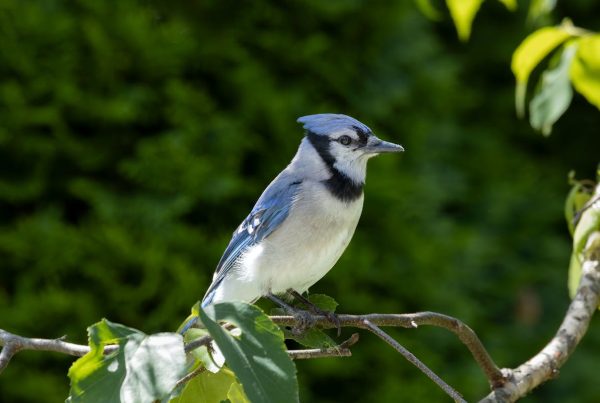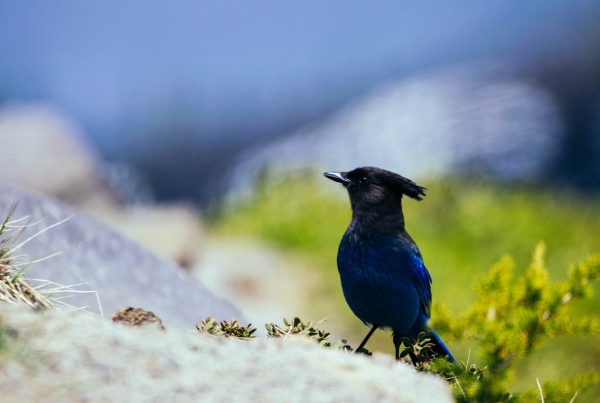


Steller’s Jay on Grass
Introducing a Bird-Steller’s Jay:
Steller’s Jay, a familiar western landscape’s fowl. Steller’s Jay mostly lives in thick conifer forests found on mountain tops and the northwest coast. It travels in flocks, but nests alone. The birds often cross clearings in a single line, one by one. They make low shook-shook calls as they swoop up to roost in a tall pine.
Steller’s Jays are often found in forests. They also visit campgrounds, parks, and backyards. They quickly notice bird feeders and leftover picnic food. While patrolling the woods, Steller’s Jays stay high in the canopy. You’ll hear their harsh, scolding calls if they’re close by.
Basic Info:
- Binomial Name: Cyanocitta stelleri
- Lifespan: 16.1 years (wild)
- Size: 12-13 inches
- Weight: 3.5-4.9 ounces
- Wingspan: 17.7–18.9 inches
Steller’s Jay Range and Habitat:
Steller’s Jays are large, dark birds found in the coniferous forests of the West. They thrive in the wilderness of mountainous regions. They are also common in campgrounds, parks, and backyards. They quickly learn to watch for bird feeders and unattended items on picnic tables.
Steller’s Jays inhabit coniferous and mixed-coniferous forests. They live in dry pine-oak forests in the southwestern U.S. and Mexico. They usually live at heights between 3,000 and 10,000 feet. You can find them mainly in the lower evergreen forests of the Pacific coastal foothills.
Steller’s Jay in the backyard:
To entice Steller’s Jays to your feeders, provide peanuts or other large seeds and nuts, as well as suet. If you see jays hogging your feeders and grabbing lots of seeds, they may be stashing some away. They do this to save food for winter.

Steller’s Jay
Are there different types of Steller’s Jays?
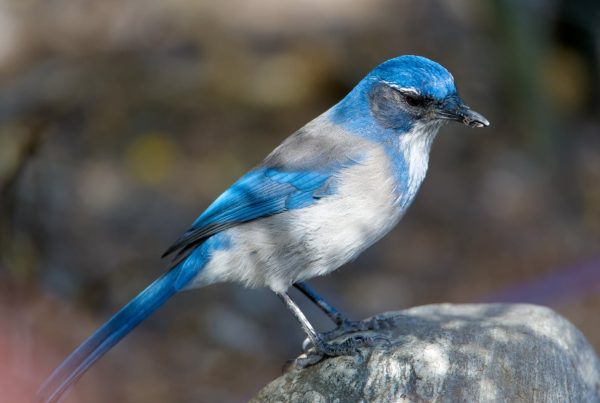
Laurie Penrod, a Birdzfly reader, asks, “Last winter, a Steller’s jay came to our place. It looks different from those I saw in the California redwoods.” Are there two species?” Bird experts Kenn and Kimberly Kaufman respond, “You’ve made a great observation. Steller’s jays in California and nearby Pacific areas have black foreheads. They also have dark blue streaks. In the Rocky Mountains, they have white stripes on their foreheads. They also have a white spot above their eyes. The Steller’s jays in eastern Idaho likely belong to the latter type. Before, these differences were thought to be just regional. However, a new study shows that U.S. Steller’s jays may be two separate species.
This isn’t official yet, but a division may happen soon.
Steller’s jays remain in their habitat year-round.
They live year-round in various places across western North and Central America. This range stretches from Alaska to Nicaragua. You can find them in campgrounds, picnic areas, and backyards. Different subspecies exist. They mainly vary in the white and blue markings on their heads, as Kenn and Kimberly noted. “I enjoy watching Steller’s jays.”
Pat Northington from Austin, Texas, is a Birzfly reader. She notes that the dusty blue feathers really pop against New Mexico’s green pines.” Fun fact: Canada jays are curious and can handle cold weather.
What do Steller’s Jays Eat?
Steller’s jays eat a variety of foods. They eat what people leave behind. They also enjoy insects, berries, nuts, bird eggs, and small animals like lizards.
As winter approaches, blue jays collect food. They stash nuts and seeds in their throats and hide them for later use. What foods do blue jays like?
Steller’s jays are smart birds. A pair of chatty Steller’s jays can be seen together. Jeff Black is a wildlife professor at Humboldt State University in Arcata, California. He has studied Steller’s jays since 1998.
These colorful birds are part of the corvid family. This family is famous for its high intelligence. Their social behavior is fun to observe. “In Arcata, California, pairs of jays claim our front and back yards. They stay here all day and all year,” says Jeff. Researchers put colored leg bands on the birds to identify them easily. “Jay pairs visit feeders, so we can see their interactions and friends,” says Jeff. Also, learn how the blue jay’s range is shifting west.
Steller’s Jay Bird Breeding:
Steller’s jays mate in monogamous pairs. The female incubates the clutch in full for about 16 days. During this time, the male feeds the female. While they are loud day and night, during nesting they are quiet so as not to attract attention.
The nest is usually in a conifer, but sometimes is made in a hollow in a tree or under the eaves of a house or other building. The nest is like a blue jay’s but bigger, measuring 25 to 43 cm (9.8 to 16.9 in). It uses natural materials and some trash, often mixed with mud. During the breeding season, two to six eggs are laid. The eggs are oval with a slightly glossy surface. Eggshells are pale greenish-blue. They often have darker speckles in brown or olive.

MD Imdadul Haque is the founder of BirdzFly, a research-backed resource on North American backyard birds. Drawing on years of independent study into bird identification, behavior, and migration patterns, he writes in-depth guides designed to help US birders understand the species in their own backyards — from common feeder visitors to seasonal migrants passing through.