
Birds of Texas
Texas has more bird species on record than any other US state — over 650. That number is genuinely hard to make sense of. For comparison, the entire country of France has around 600.
The reason is geography. Texas sits at the intersection of four major migratory flyways, spans six distinct ecological regions, and has everything from Gulf Coast wetlands to Chihuahuan Desert to pine forest. Birds that winter in Central America pass through. Birds that breed in Canada pass through. Species from the western US wander east through the Trans-Pecos. Species from Mexico cross the southern border regularly.
Most people in Texas aren’t looking for rare Mexican vagrants. They’re looking at what shows up in the yard. Here are 25 birds you’re likely to actually encounter.
Year-Round Residents
1. Northern Cardinal
The male is impossible to miss — bright red, crested, heavy orange bill. Year-round across all of Texas. One of the most common feeder birds in the state. Females are warm brown with reddish tinges and the same distinctive crest. Both sexes sing, which is less common among songbirds.
2. Northern Mockingbird
Texas’s state bird, and it earned the designation. Mockingbirds are everywhere — suburbs, roadsides, yards, open country. The male sings continuously through spring and summer nights, often from a rooftop or telephone wire. Medium gray, white wing patches visible in flight. Aggressive about its territory in ways that seem disproportionate for a songbird.
3. Carolina Wren
Small, rust-brown, louder than seems possible. Pairs stay together year-round and call back and forth throughout the day. They investigate every cavity they find — nest boxes, old boots, hanging baskets. If you have a nest box in a Texas yard, a Carolina Wren will probably claim it before anything else does.
4. Black-Crested Titmouse
Texas has the Black-crested Titmouse where most of the US has the Tufted Titmouse. Gray body, black crest, orange flanks. Active at feeders, fond of sunflower seeds and suet. Common year-round in central and eastern Texas.
5. Carolina Chickadee
Small, black cap, white cheeks. Visits feeders year-round, often in mixed flocks with titmice and nuthatches. Eats insects and seeds. One of those birds that looks the same everywhere you go — which is useful when you’re learning.
6. Downy Woodpecker
The smallest North American woodpecker. Black and white, small red nape patch on males. Very common at suet feeders statewide. Clings to small branches and weed stems more readily than larger woodpeckers.
7. Red-Bellied Woodpecker
Despite the name, the red is on the head, not the belly. Males have a full red cap; females have red only on the nape. Barred black-and-white back. Medium-sized, common at feeders in eastern and central Texas.
8. Blue Jay
Loud, blue, crested, and aware of everything happening in the yard. Blue Jays are smart in ways that become obvious if you watch them for a while. They cache food, mimic hawk calls, and remember where individual feeders are located. Year-round across most of Texas.
9. American Crow
All-black, larger than a jay, highly intelligent. Crows are more common in urban and suburban areas than most people realize. They recognize individual human faces — there’s documented research on this — and they hold grudges. Not a feeder bird, but present year-round and worth knowing.
10. House Finch
The male has a red face, forehead, and chest against a brown streaky body. Very common at seed feeders statewide. Sometimes confused with Purple Finch, which is similar but has richer, deeper red covering more of the body.
11. Mourning Dove
Soft brown, slim body, small head, long pointed tail. The mournful cooing sound that carries across a neighborhood in the early morning. Ground feeders — scatter millet under a feeder and they’ll use it. Year-round across all of Texas, one of the most abundant birds in the state.
12. White-Winged Dove
Larger than Mourning Dove, with a squared tail and distinctive white wing patches visible at rest and in flight. Originally a South Texas and Trans-Pecos bird, now abundant in urban areas statewide after expanding its range significantly in recent decades. Red eye ring, blue eye patch.
13. Great Blue Heron
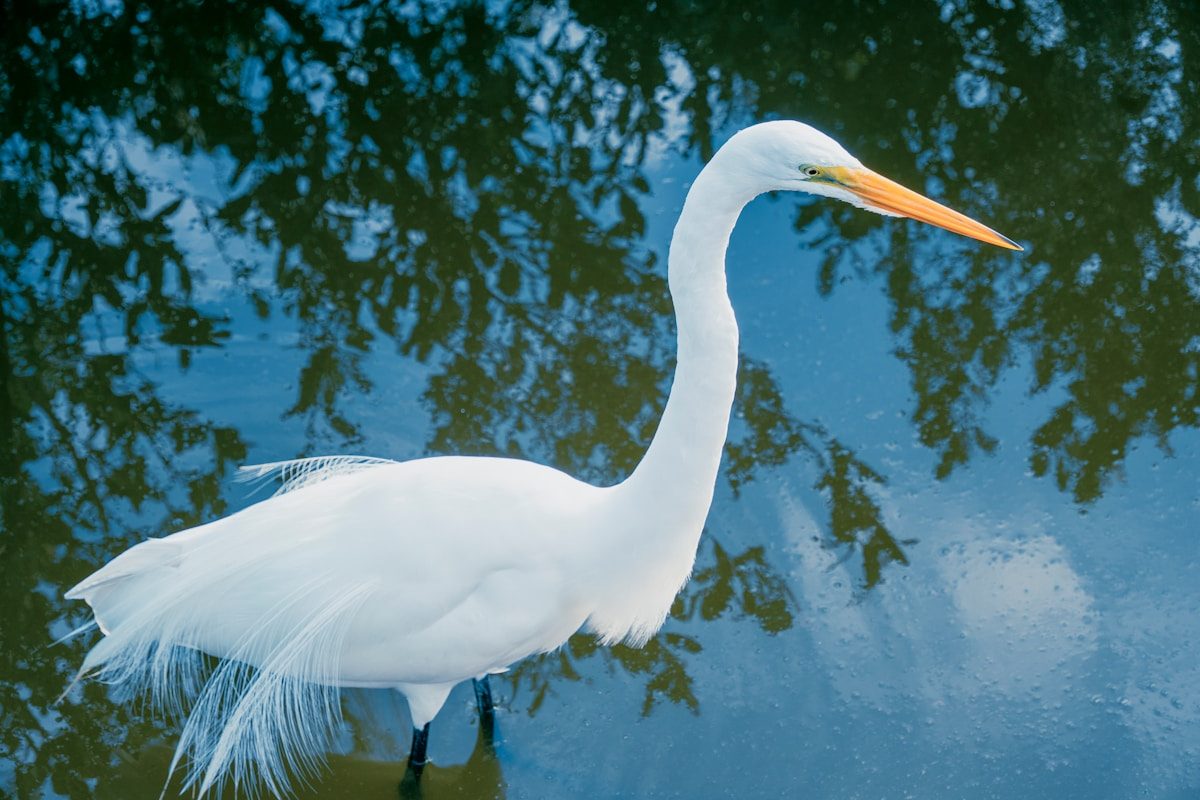
The largest heron in North America. Blue-gray, long neck, slow deliberate flight. Year-round near water anywhere in Texas. Stands still for long periods while hunting, which makes it look like a statue until it strikes.
14. Red-Tailed Hawk
The most common large hawk in North America and in Texas. Rust-red tail on adults (absent on juveniles), broad soaring wings, belly band of dark streaking. Usually seen perching on telephone poles or fence posts along roadsides, or circling overhead. Year-round statewide.
Winter Visitors (October–March)
Birds of Texas
15. Yellow-Rumped Warbler
The most common winter warbler in Texas and across much of the US. Yellow patches on the crown, sides, and rump. Brown and white streaking on the body. “Butter butt” in birder slang — not a dignified name, but accurate and memorable. Shows up in large numbers October through April.
16. American Goldfinch
Breeding males are bright yellow with black wings — mostly in Canada and the northern US during summer. In Texas in winter they’re duller, olive-yellow rather than vivid yellow. Still identifiable by the black wings and bill shape. Visit nyjer feeders.
17. Ruby-Crowned Kinglet
Tiny. Hyperactive. Olive green with two white wing bars and a concealed red crown patch that flares up occasionally. Winter visitor across Texas. Often seen flitting through low vegetation, flicking wings constantly. Easy to overlook because of size and motion.
18. Dark-Eyed Junco
“Snowbirds” — they arrive from the north each fall. Dark gray above, white belly, white outer tail feathers flash in flight. Ground feeders. Scratch through leaf litter under feeders. Leave in April when they head back north to breed.
Summer Visitors and Migrants
19. Ruby-Throated Hummingbird
The most common hummingbird in eastern Texas during summer. Males have the iridescent red throat. They arrive in spring and depart by October. Put feeders out by late March in south Texas, April in central and north Texas. Several other hummingbird species pass through or winter in west and south Texas.
20. Painted Bunting
The male is blue head, red underparts, green back — a combination that looks artificial in photographs and seems impossible in the field. Breeds across much of Texas in summer, common at feeders with white millet. Females are bright green, which is subtle but still distinctive for a small finch. One of the most sought-after birds in North American birding.
21. Scissor-Tailed Flycatcher
Oklahoma’s state bird breeds extensively in Texas too. Pale gray with salmon-pink sides and a dramatically long forked tail that streams behind it in flight. Catches insects in open country from a perch, flying out and returning with the tail spreading behind it. Unmistakable once you know it.
22. Baltimore Oriole
Brilliant orange-and-black male, migrating through Texas in April and May and again in fall. Put out orange halves and nectar feeders in late April to catch them during spring migration. Some winter along the Texas coast.
Waterbirds and Wetland Species
23. Roseate Spoonbill
Pink. Unmistakably pink. The spoon-shaped bill is diagnostic — they sweep it side to side through shallow water to catch small fish and crustaceans. Common along the Texas Gulf Coast year-round. Often seen in mixed heronries. One of those birds that makes people do a double-take.
24. Tricolored Heron
Slate blue with a white belly and a long white neck stripe. Slender, active hunter. Gulf Coast and coastal marshes, year-round in south Texas. Less bulky than the Great Blue Heron, more dynamic in its hunting.
25. Black-Bellied Whistling Duck
A duck that perches in trees, whistles loudly, and has bright red-orange legs and bill. Common in south and central Texas, increasingly present farther north. They nest in tree cavities, which is not typical duck behavior. If you see a group of red-billed ducks sitting on a fence or in a tree, that’s them.
A Note on Texas Birding
Texas is one of the best states in North America for birding. The High Island area on the Gulf Coast is famous for spring migration fallouts — days when thousands of warblers, tanagers, and other migrants drop out of the sky after crossing the Gulf of Mexico. The Rio Grande Valley hosts species found nowhere else in the US. Big Bend National Park has its own distinct bird community.
You don’t need to travel far in Texas to see something interesting. The 25 birds above are available in most backyards and along most roadsides. They’re a starting point.
FAQ
What is the most common bird in Texas?
Mourning Dove and Northern Mockingbird are among the most abundant year-round. House Finch and Northern Cardinal are the most consistent feeder birds statewide.
What is the state bird of Texas?
The Northern Mockingbird, designated in 1927.
Are there hummingbirds in Texas year-round?
Ruby-throated Hummingbirds are spring and summer visitors to eastern Texas. Several other species, including Buff-bellied Hummingbirds, are year-round residents along the Gulf Coast. Western Texas hosts additional species during migration.
For more on specific species mentioned above, see our guides on feeding cardinals and hummingbird behavior at feeders.

MD Imdadul Haque is the founder of BirdzFly, a research-backed resource on North American backyard birds. Drawing on years of independent study into bird identification, behavior, and migration patterns, he writes in-depth guides designed to help US birders understand the species in their own backyards — from common feeder visitors to seasonal migrants passing through.