
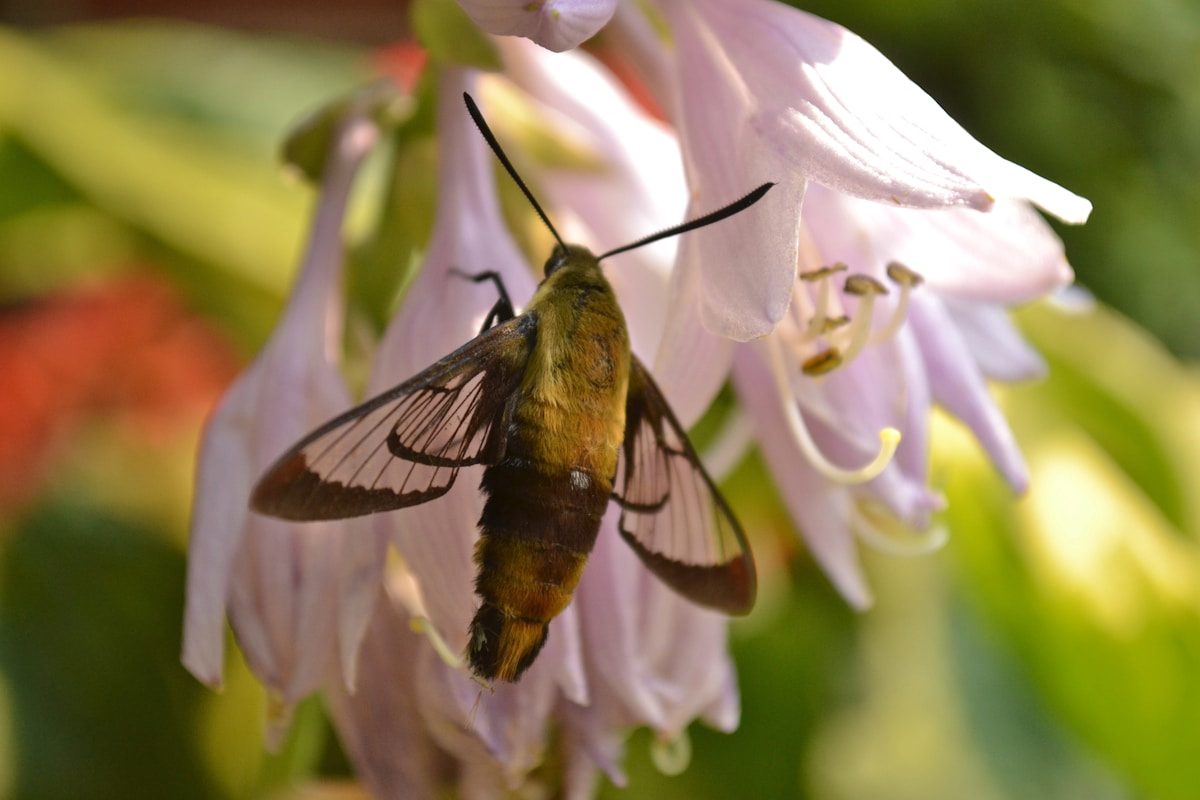
Hummingbird Moth
The hummingbird moth spends most of its life underground — as a pupa overwintering in leaf litter or loose soil before emerging as an adult the following spring. Most people who encounter a hummingbird moth as an adult have no idea what the caterpillar or pupa looked like, even though both stages are present in the same garden.
What Does a Hummingbird Moth Pupa Look Like?
The pupa (also called a chrysalis in butterflies, though moths technically form a cocoon) of hummingbird moth species is dark reddish-brown to mahogany, smooth and elongated, roughly 1.5 to 2 inches long. It has a distinctive curved, thorn-like projection at the tip — the cremaster — which anchors it to the cocoon structure. This projection is visible and is one of the easier identification features if you find one.
Unlike butterfly chrysalises, which are often attached to plant stems and exposed, hummingbird moth pupae are found underground or in leaf litter, sometimes wrapped in a loose cocoon of leaf fragments and silk threads. They are not conspicuous — most people never see one unless they’re actively digging around the base of a host plant.
The Life Cycle: From Caterpillar to Adult
| Stage | Timing | Where Found |
|---|---|---|
| Egg | Late spring to summer | Laid singly on host plant leaves |
| Caterpillar (larva) | Summer | Feeding on host plant foliage |
| Pre-pupal wandering | Late summer | Caterpillar descends from plant, moves to soil |
| Pupa | Late summer through winter | Underground or in leaf litter near host plant |
| Adult emergence | Spring (April-May in most areas) | Emerges from soil, begins feeding at flowers |
Host Plants for Hummingbird Moth Larvae
Where you find the pupa depends on where the caterpillar fed. The two main North American hummingbird moth species use different host plants:
- Snowberry Clearwing (Hemaris diffinis) — caterpillars feed on snowberry, honeysuckle, and occasionally viburnum. Pupae found at the base of these plants.
- Hummingbird Clearwing (Hemaris thysbe) — caterpillars feed on honeysuckle, hawthorn, cherry, plum, and European cranberry bush. Pupae found at the base of these plants or in nearby leaf litter.
If you have honeysuckle or snowberry in your garden and have seen adult hummingbird moths visiting flowers, there is a real chance pupae are overwintering in the soil near those plants right now.
How Long Does the Pupal Stage Last?
The pupal stage is the longest single stage in the hummingbird moth’s life cycle — typically lasting from late summer through the following spring, roughly 6 to 8 months depending on climate. The pupa remains dormant through winter, with adult emergence triggered by warming soil temperatures in spring.
In warmer climates with a longer growing season, some populations manage two generations per year, with a second pupal period much shorter (weeks rather than months) between summer generations.
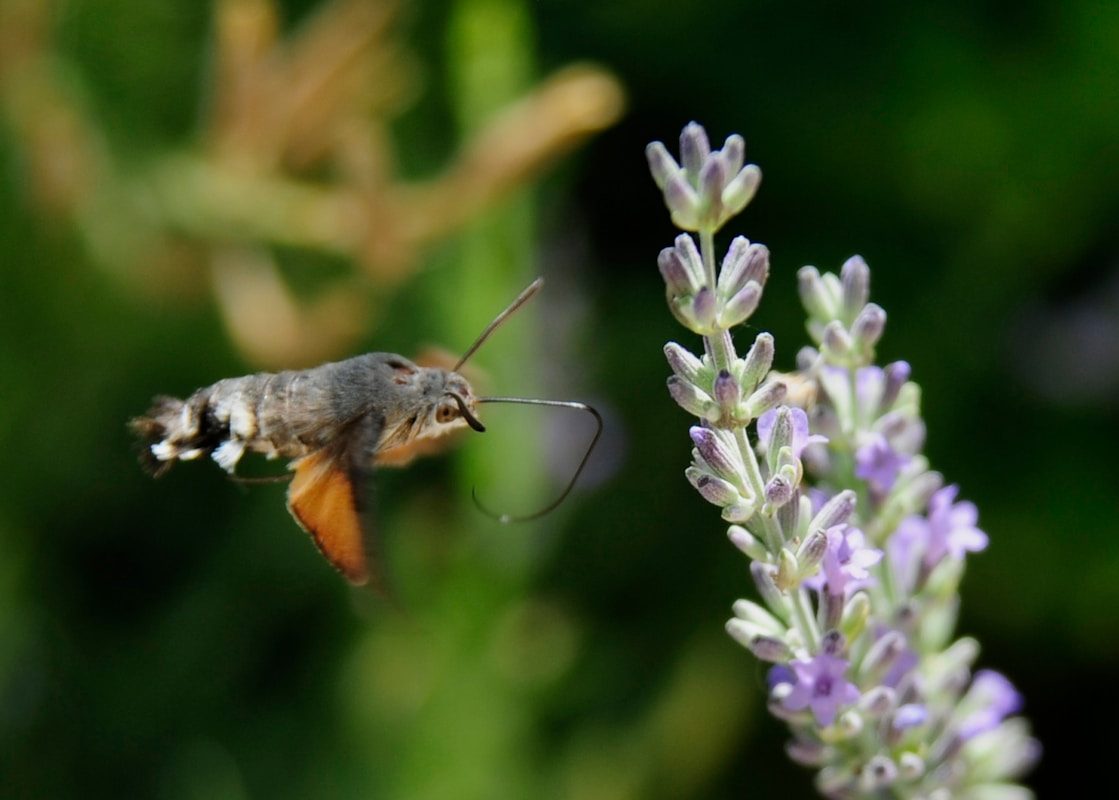
Hummingbird Moth
What to Do If You Find a Hummingbird Moth Pupa
If you find one while gardening:
- Leave it in place if possible — disturbing the pupal site can damage the developing adult
- If you’ve moved it accidentally, place it back near the soil surface under some loose leaf litter in a sheltered spot near where you found it
- Don’t bring it indoors — the temperature cycle of overwintering is part of what triggers successful emergence in spring
FAQ: Hummingbird Moth Pupa
What does a hummingbird moth pupa look like?
Dark reddish-brown, smooth, elongated at about 1.5-2 inches, with a curved projection at the tip called a cremaster. Found underground or in leaf litter near host plants.
Where do hummingbird moths pupate?
In soil or loose leaf litter at the base of their host plant — most often honeysuckle, snowberry, or hawthorn.
How long is the pupal stage?
About 6-8 months in most of North America, overwintering underground and emerging as adults the following spring.
For more on hummingbird moths, see our guides on hummingbird moth size and caterpillar identification and whether hummingbird moths are good for your garden.

MD Imdadul Haque is the founder of BirdzFly, a research-backed resource on North American backyard birds. Drawing on years of independent study into bird identification, behavior, and migration patterns, he writes in-depth guides designed to help US birders understand the species in their own backyards — from common feeder visitors to seasonal migrants passing through.