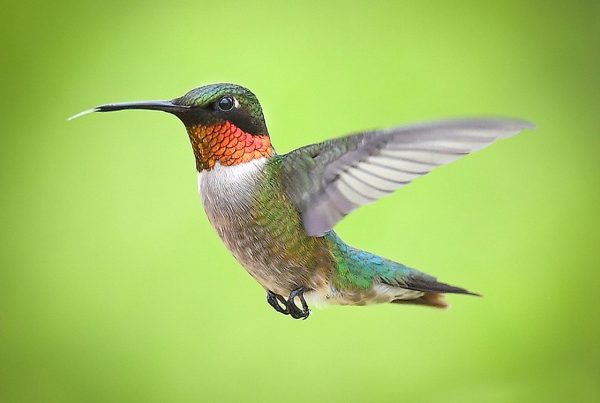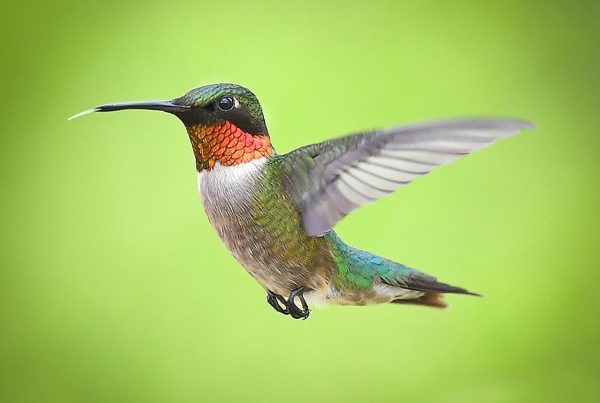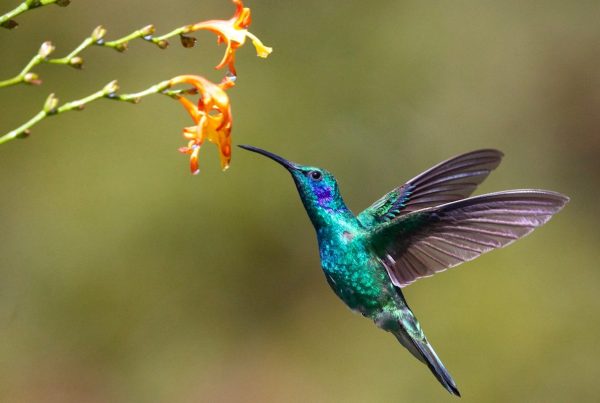

Hummingbird that looks like a bee? One of the most gratifying insect visitors to your garden is a hummingbird moth. Salvador Vitanza wrote Plumasson (1983). This makes the descriptor fit S. plumbago. Many species in this genus also deserve it!! (See my 5-2-06 blog posting. They fly and dance like hummingbirds. They stretch out their long tongues and dip them into flowers. They sip sweet nectar while hovering in front of a blossom. They also hum audibly in flight, like hummingbirds. “Who knew scary creatures could be so beautiful?” asked one gardener in Atlanta. Another in Bayport, Minn., works in an office with a window opening into our container garden. “I was right there when the sphinx Satellitia macropis appeared. Inexperienced garden visitors often mistake it for a tiny hummingbird. They see it flitting around flowers like bee balm (Monarda).” They listened in wonder when you pointed out something they just saw but couldn’t believe. You told them it wasn’t a bird but a moth. They paused at your claim for just a moment.
Hummingbird moths are chunky; their trailing end fans out. They are generally of a rich red-brown, at least in part. All Lepidoptera have scaly wings. Some species lose many scales, leaving clear spots on their wings. This is how they get their name. They, like most moths, have a very long tongue that they keep coiled up under their cins and use it to sip nectar from the bottom of long-throated flowers. This nectar is hard for many flower visitors to reach. So, these flowers attract long-tongued pollinators and keep others away.

hummingbird that looks like a bee
A hummingbird moth is a sphinx moth that looks like a hummingbird or bee. It has a fast, buzzing flight, can hover, and has a long proboscis for sipping nectar. These insects, such as the Bumblebee Moth and Hummingbird Clearwing Moth, are pollinators. They often get confused with hummingbirds or bees due to their similar appearances. They are common in day flying moths throughout North America. There are also a number of Old World species of hawk moth. Some of them are very similar and they all share the same genus – Hemaris. The British usually refer to them as Bee Hawk-Moths. There are four species of the hummingbird moth in North America. The Snowberry Clearwing (Hemaris diffinis) and the Hummingbird Clearwing (Hemaris thysbe) are the most common types. Both are found broadly in North America with the first perhaps occupying the west and the latter the east. Hummingbird moths, like many moths and butterflies, sip nectar from various flowers. However, their caterpillars are picky eaters. They depend on specific plants, including some honeysuckle, dogbane, and members of the rose family, like hawthorn, cherries, and plums.
Here we have a snowberry clear wing feeding on nectar from swamp milkweed (Asclepias incarnata). This snowberry clear wing moth (Hemaris diffinis) hovers just like a hummingbird while he sips nectar from a blazing star (Liatris spicata). The red end section on this hummingbird moth makes it very easy to tell it is a hummingbird clear wing (Hemaris thysbe) drinking its nectar. Here it is taking nectar from a beebalm (Monarda fistulosa). Adults may start flying in early spring, when bluebells (Mertensia) bloom. However, you’ll have the best chance to see them in summer, when bee balms are in full bloom. If you grow phlox (Phlox), beebalm, honeysuckle or verbena (Verbena)you’re just as likely to find these great bugs on members of these families.
Females attract males by emitting an odor or pheromone from glands located at the abdomen tip. They lay their small, round, green eggs, after mating, on their larval food plants often under the margin of the leaves. The caterpillars have a protuberance at the tail end and are often green and hard to see among the leaves. When full-grown they fall to the ground, spin up in a loose cocoon and pupate, partly protected from the leaf-litter. To this beautiful pollinator, that leaf litter so loathed by some gardeners offers a home. In the north, where the season is short, there is only one generation each year. The pupa stays dormant all winter, and the adult emerges the next spring. Multiple generations are common in the south each summer.
What is a Bee That Looks Like A Humming Bird
Today I saw a bee that both looks and hovers like a hummingbird. Can you tell me what it is? Melissa
I have had questions about this from both the UK and the USA, so I thought I should write something about this lovely creature. There is even a video, so you can see this lovely insect in action!
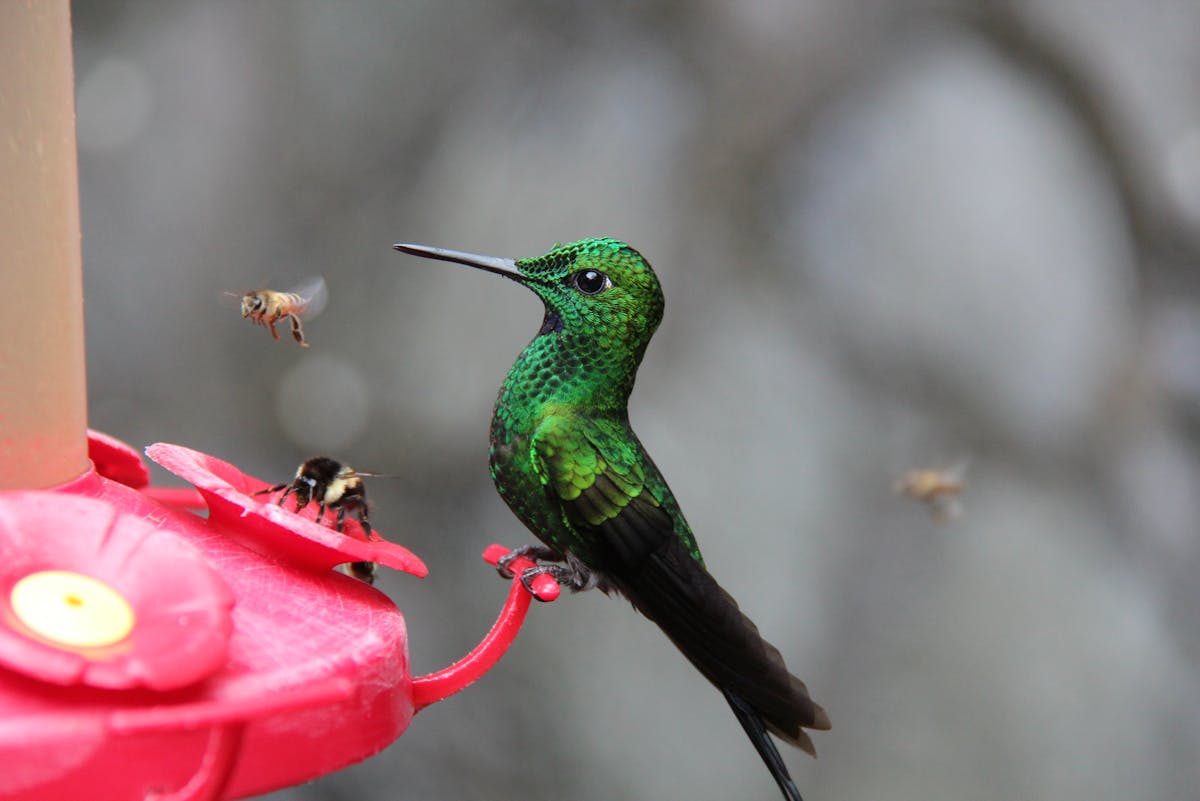
looks like a bee
What is this bee that looks like a hummingbird?
Actually, this is not a bee variety – it is a species of hawkmoth, or sphinx moth, which are also known as a hummingbird moth.
A ‘sphinx moth’ or hummingbird moth A Hemaris species
You might have spotted a lovely Hemaris species. Their wings can be partly transparent, so people often call them “clearwing moths.” There are approximately 20 species in the genus Hemaris, 5 of which are found in North America to Europe.
Macroglossum stellatarum visiting honeysuckle
Also hummingbird-like are those of genus Macroglossum. I’ve seen one of these: the Hummingbird Hawk-moth, Macroglossum stellatarum. It visited our climbing Jasmine. It’s a migratory species and in the UK can be mostly seen from June. Hemaris and Macroglossum are both species of moth in the insect family Sphingidae.
Flight
It makes sense to include “Hummingbird” in the common name for these charming moths. It’s a fitting and clear description.
It can be tough to capture this fascinating animal in my photos. They flit and hover quickly while flying, with a wingbeat of 50-58 beats per second for Macroglossum stellatarum. If you haven’t seen them yet, and you want to know how those beautiful moths look like, then do watch the visuals, right here at this page.
Foraging
Keep an eye out for hawkmoths nectaring on Buddleia, Jasmine, thistles, Red valerian and honeysuckle. Note the relatively long probing tongue (proboscis – at c. 25 mm long for M. stellatarum1) as they feed from flowers seeking nectar, a crucial food source. The proboscis can also often be observed in a coiled position when ‘in mid-air’ and not feeding (or just before or after feeding).
Hummingbird Hawkmoth – Macroglossum stellatarum
Macroglossum stellatarum will visit gardens on hot days, and can be found in wooded areas. It is one of the few day flying moths of the Sphingidae moth family1. Macroglossum stellatarum can be bred in the UK. However, winters are usually too cold. Only a few individuals survive in Britain during milder winters. Interestingly, most hawkmoths winter as pupae. However, Macroglossum stellatarum winters as adults, or imagines. An imago is the final stage of an insect, from its last molt until death.

MD Imdadul Haque is the founder of BirdzFly, a research-backed resource on North American backyard birds. Drawing on years of independent study into bird identification, behavior, and migration patterns, he writes in-depth guides designed to help US birders understand the species in their own backyards — from common feeder visitors to seasonal migrants passing through.