
Black Cardinal
There’s no bird officially called a “black cardinal.” But people keep searching for it — which tells you something. They saw a real bird and had no idea what it was.
Nine times out of ten, when someone in the Southwest describes a black cardinal, they’re looking at a Phainopepla. In the East, they’re usually looking at a cardinal in weird light, or a juvenile male that hasn’t turned red yet. Actual melanism in cardinals exists, but it’s rare enough that you shouldn’t lead with that explanation.
Here’s how to sort it out.
Phainopepla: The Southwest Answer
If you were in Arizona, California, New Mexico, Nevada, or Utah and you saw a slender, crested, all-black bird that made you think “cardinal” — you almost certainly saw a Phainopepla (say-no-PEP-lah). This is the bird behind “black cardinal” searches more than anything else.
The silhouette is genuinely cardinal-like: upright crest, similar body shape, similar size. But the Phainopepla is jet black where the cardinal is red, has vivid red eyes (both sexes), and flashes white wing patches in flight. Females are gray rather than black.
They’re desert birds, closely tied to mistletoe. Mistletoe berries make up the majority of their diet, and they’re one of the main ways mistletoe seeds spread across the Southwest. If there’s a mistletoe-covered mesquite or juniper nearby, check it.
They’re not actually related to cardinals — they’re silky-flycatchers. But the shape is similar enough that the confusion makes complete sense.
Melanistic Cardinal
Black Cardinal
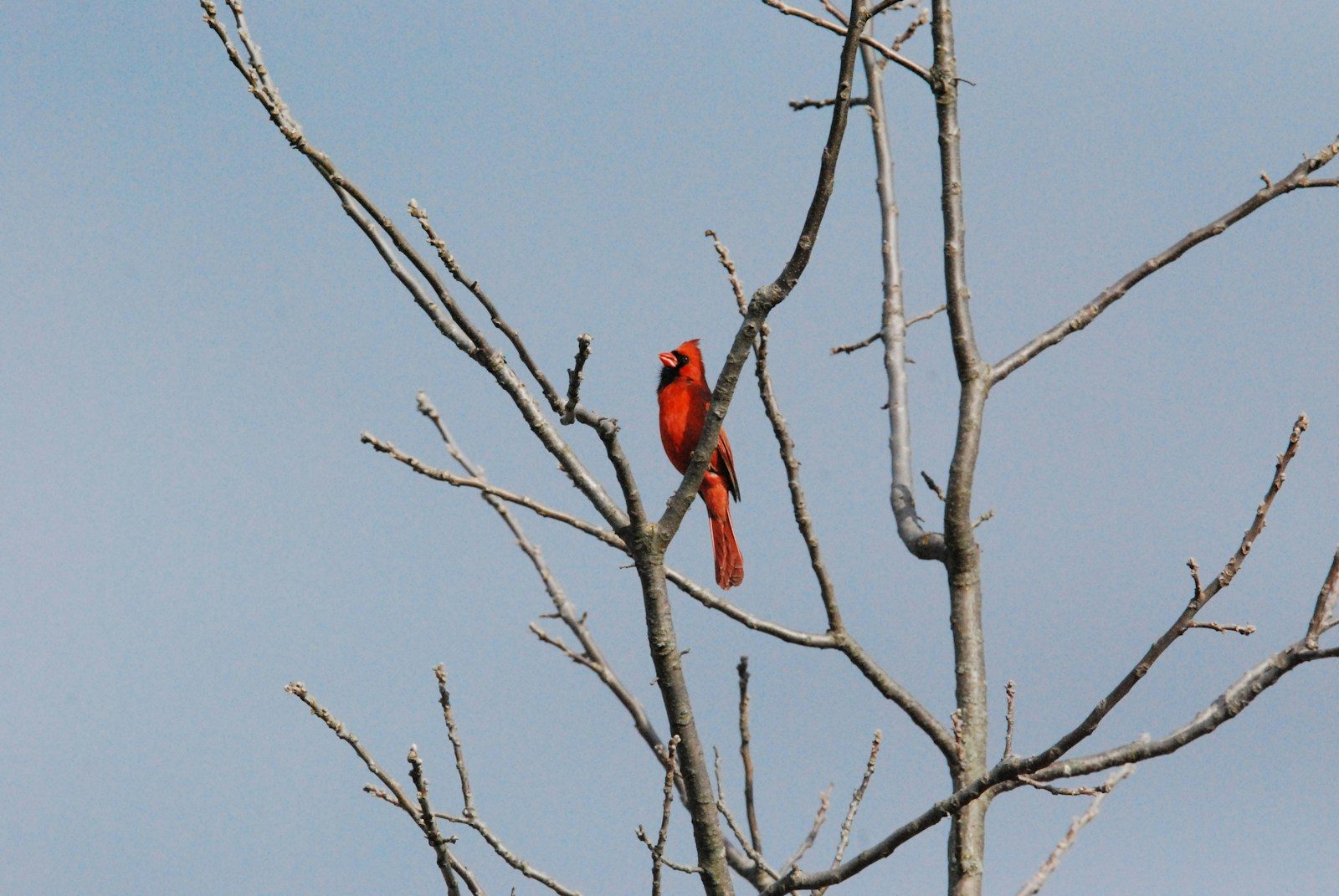
Melanism — excess dark pigment — occurs in Northern Cardinals, but it’s genuinely uncommon. A fully melanistic male can look dark brown to nearly black while keeping the distinctive crest and heavy orange bill. Partial melanism is more common: the red feathers turn a dark brownish-red that can read as almost black in certain light.
If you’re in the eastern US and the bird has the exact bill shape and crest of a cardinal, partial melanism is worth considering. But documented cases are rare. Don’t assume melanism before ruling out lighting and age.
Black-Headed Grosbeak
This one’s a western bird with a black head and orange body — not all-black, but the combination seen briefly at a distance can set off a “black cardinal” reaction, especially since the grosbeak has the same heavy seed-cracking bill.
Range is western North America, mostly forests and stream corridors from British Columbia south through Mexico. If the bird had a black head and orange underparts, grosbeak is your answer.
Female and Juvenile Cardinals in Bad Light
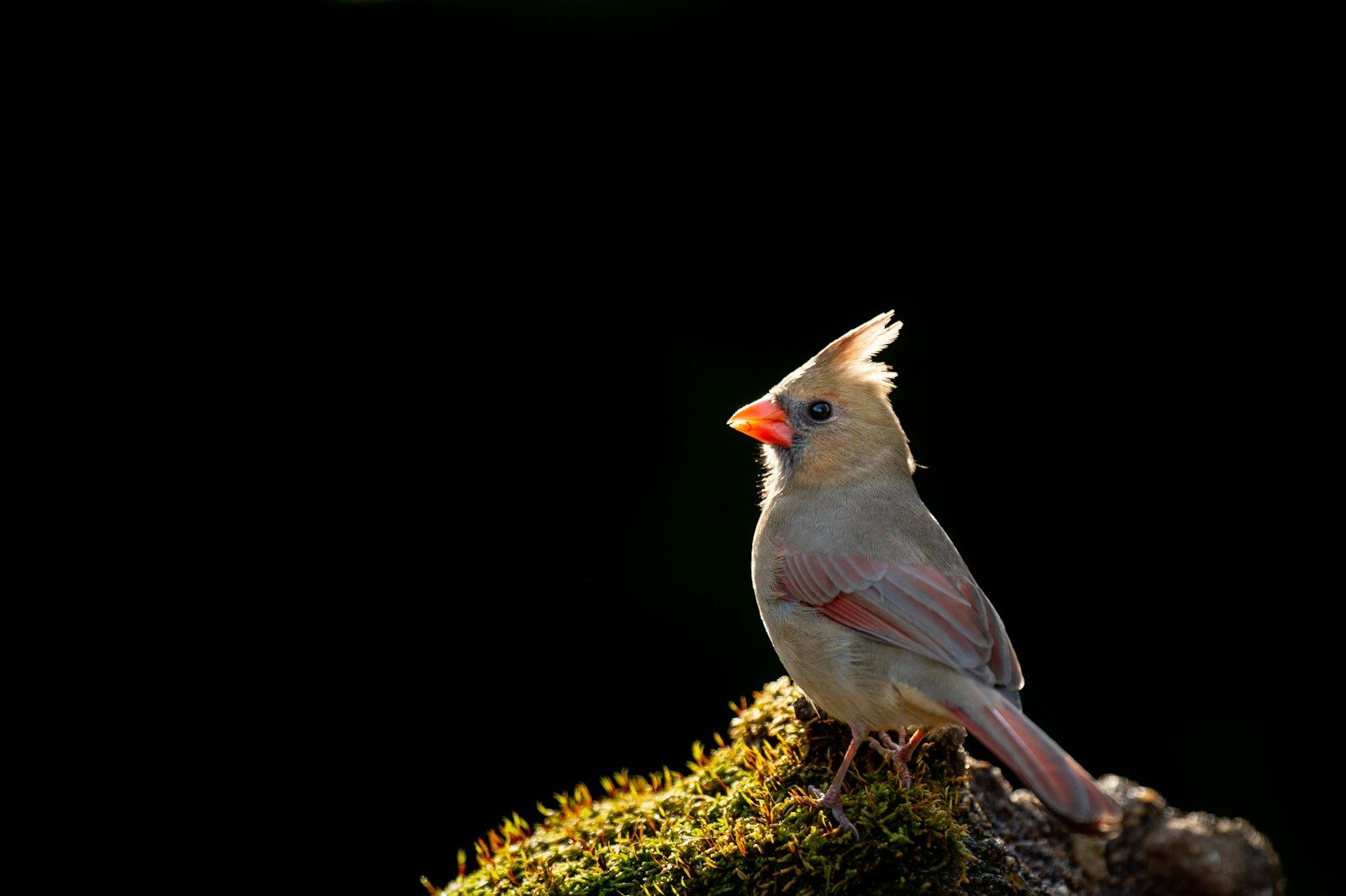
Female cardinals are brown with reddish tinges and a crest. At dusk, in deep shade, or through a dirty window, they can look quite dark. Juvenile males go through a brownish-gray phase before their red comes in — not black, but not what people expect either.
Dusk at a feeder in the eastern US is probably the most common source of “black cardinal” sightings. Check again in better light before deciding you’ve found something unusual.
Quick ID Table
| Bird | Range | Key Field Mark |
|---|---|---|
| Phainopepla | Southwest US | Slender, red eyes, white wing patches in flight |
| Melanistic Cardinal | Eastern US | Heavy orange bill, cardinal crest — just dark |
| Black-headed Grosbeak | Western US | Black head, orange body — not all-black |
| Dark juvenile Cardinal | Eastern US | Brownish-gray, crest present, at feeder |
Where you are does most of the work. Southwest = Phainopepla. East = cardinal variation or lighting. Simple as that for most sightings.
Is There Actually a Species Called the Black Cardinal?
Sort of, in South America. The Paroaria genus includes species sometimes called “black-throated cardinal” in older references. But these are tanagers, not true cardinals, and none of them are found wild in North America except as escaped cage birds occasionally turning up in Hawaii and Florida.
FAQ
Is there a black cardinal bird?
No species is officially named the black cardinal. Most people searching this term saw a Phainopepla (Southwest) or a cardinal in unusual light or with melanism (East).
What’s the black bird that looks like a cardinal?
In the West: Phainopepla — slender, black, crested, red eyes. In the East: likely a cardinal in low light or a juvenile male still in gray-brown plumage.
Can Northern Cardinals actually be black?
Rarely. Documented melanism exists but it’s uncommon. Most reports turn out to be lighting or juvenile plumage.
Where do Phainopeplas live?
Desert scrub and chaparral in California, Arizona, New Mexico, Nevada, Texas, and Utah. Look near mistletoe-covered trees.
For more on cardinals, see our guides on what a cardinal visit means and the best cardinal feeders.

MD Imdadul Haque is the founder of BirdzFly, a research-backed resource on North American backyard birds. Drawing on years of independent study into bird identification, behavior, and migration patterns, he writes in-depth guides designed to help US birders understand the species in their own backyards — from common feeder visitors to seasonal migrants passing through.