

Orioles Build Intricate
Orioles Build Intricate Nests including milkweed silk and grapevine bark. It will also use manmade fibers like yarn. Orioles are the seamstresses of birds. An oriole nest is an engineering marvel: a hanging pouch or bag of tightly woven plant fibers, attached by the edges and braided onto twigs. Read more on these birds and how they construct these unique structures.
How Does an Oriole Nest Look Like?
Not all birds build their nests, but female orioles are amazing builders, skillfully weaving their nests. Orioles build with whatever is around, using long grasses, twine, even horsehair. The pouches are padded with soft materials like plant fibers, feathers or animal wool. Oriole nests are about 4 inches deep and 4 inches across — with a small opening at the top measuring 2 to 3 inches wide. Others are deeper than they are wide.
The extreme south Texas and Central American Altamira oriole builds one of the longest dangly nests, with the structure hanging down over 2 feet.
Where Do Orioles Nest?
The Orioles (which do not use birdhouses) will sometimes raise a family in your yard if you have reasonably tall trees nearby. Most orioles prefer tall deciduous trees. Orioles make distinctive nests, but they can be hard to see. They tend to be buried inside thick vegetation. The backyard birder usually spots one in his or her trees after the autumn leaves have fallen. The pendulous, sack-shaped nest of the orioles is built at the ends of fine branches. Being up high keeps the eggs and babies somewhat secure from climbing predators and other nest robbers.
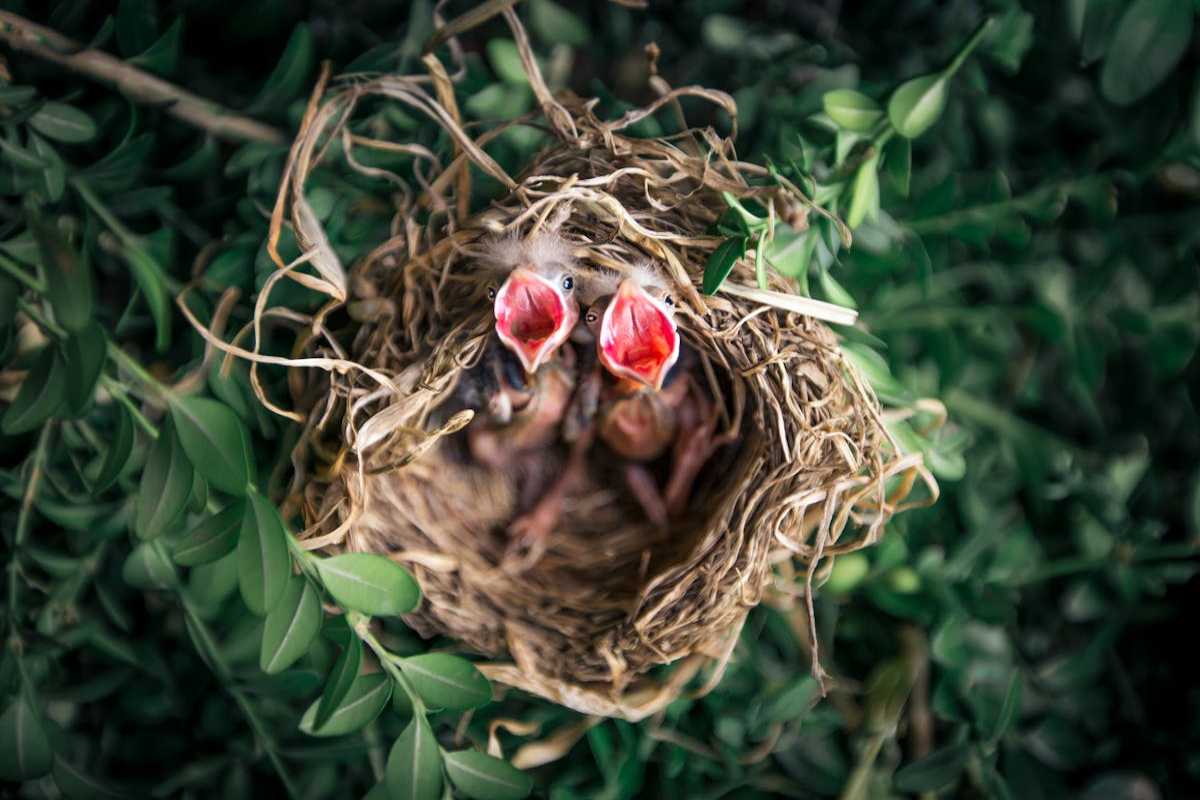
Where Do Orioles Nest
Oriole Nest Building
The female constructs the pouch from the inside. She shapes the bottom to the shape of her body. Building a nest usually takes female orioles a week. In bad weather, it can take 12 to 15 days, however. It even could take a female Altamira oriole as long as three weeks.
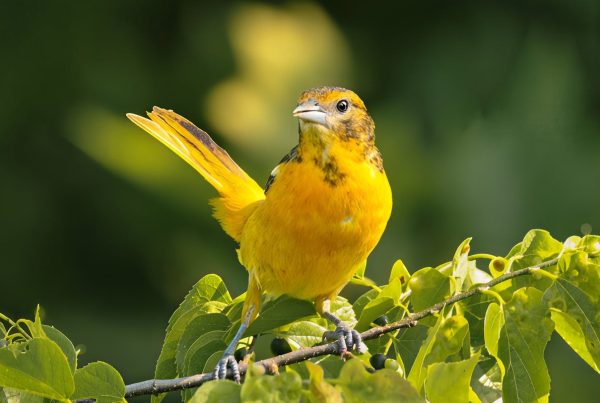
“What a delightful Mother’s Day gift, watching this pretty female orchard oriole (above) getting ready to become a mother herself. I was walking in the backyard of my northern Kentucky home, listening to the sights and sounds of Spring. I saw a flash of yellow-orange. Of course, I had my Canon EOS 7D Mark II camera with me and was able to capture her incredible nest building skills. She would swoop and dive, flap and twist. Within a few minutes I could see the nest pouch forming. “When I began to convert to ashes, I knew the earth would hold me in its embrace forever; this is an experience I won’t soon forget,” says reader Carla Ginn.
Yellow Female Orioles Build Intricate Nests
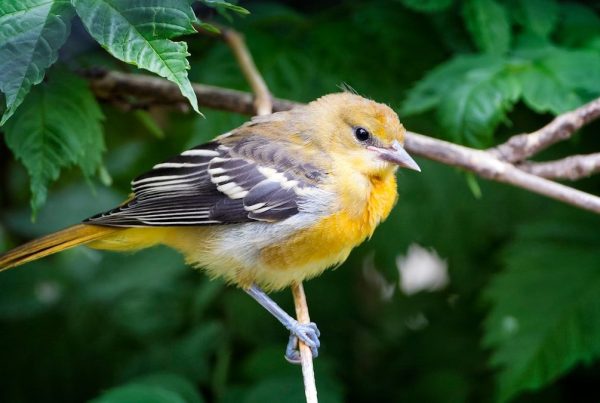
When the yellow female oriole arrives, the male shows off his bright colors. He bows, lifts his wings, and fans his tail in a courtship dance. Once she selects him as a partner, the female begins to build a nest that showcases her craftsmanship. This nest hangs from a high branch in trees such as elm, maple, cottonwood, or sycamore. Orioles like to live in open woods, forest edges, by rivers, and in orchards and parks. They zip through branches looking for caterpillars, ants, and beetles. They also explore flowers for nectar and catch flying insects. They even eat hairy caterpillars that other birds avoid. This includes pesky ones like gypsy moths and tent caterpillars. They also enjoy fruits like berries and grapes. Last year, at a bird-watching event, our guide spotted a female oriole starting to build her nest. He set up a spotting scope to focus on her work, and we took turns observing her. The female moved her beak in a steady rhythm. She wove grass around the branch to secure the nest’s top. She flew back and forth many times to gather materials. Orioles build their nests using hundreds of plant fibers. They use things like milkweed silk and grapevine bark. Sometimes, they also add human-made materials, like yarn. They can also repurpose fibers from old nests. After securing the top of the nest, the female hangs upside down to weave the outer bowl for support. Next, she works on the inner bowl inside the nest. To finish, she adds a soft lining made of wool, hair, or fine grasses. This process takes about a week. It creates a deep pouch with a small opening at the top. This design protects well against predators and parasites. For example, it helps against cowbirds that lay their eggs in other birds’ nests. Arthur Cleveland Bent said in his Life Histories of North American Birds that the oriole might be the best builder among all North American birds. He called it a “little cradle…swinging and tossing in the wind.” Inside, the female oriole usually lays four to five eggs. These eggs are grayish-white or pale blue, with brown speckles.
Baltimore Oriole Nests
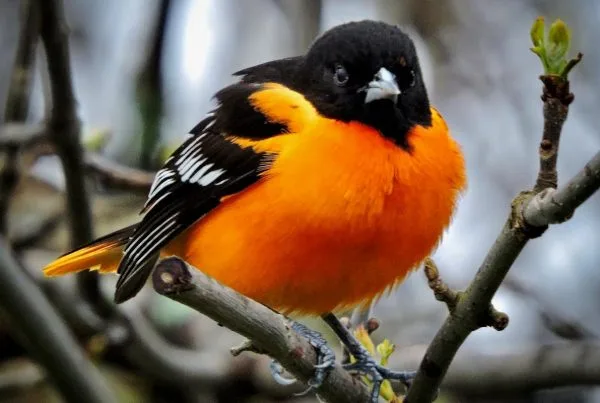
Like the other kinds of orioles, the Baltimore oriole gathers plant fibers, including twine and string, to weave gourd-shaped pouches that dangle, pendulous from twig tips in spring. A male Baltimore oriole doesn’t help with building or incubation. But once the eggs hatch, he provides nearly half the food to the young fliers.
“A friend told me of a Baltimore oriole nest (above) and I hopped in the car and made a beeline there. I never thought I would get a nice view of the family. The adults made multiple trips to feed the babies. The Nikon D850 and Tamron 150-600 mm lens helped me to capture this shot the young one fight for food. They fledged later that day,” writes reader David Woten of Baden, Pennsylvania.

MD Imdadul Haque is the founder of BirdzFly, a research-backed resource on North American backyard birds. Drawing on years of independent study into bird identification, behavior, and migration patterns, he writes in-depth guides designed to help US birders understand the species in their own backyards — from common feeder visitors to seasonal migrants passing through.