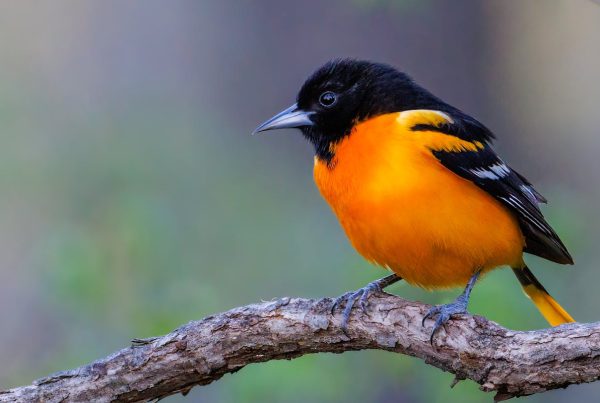

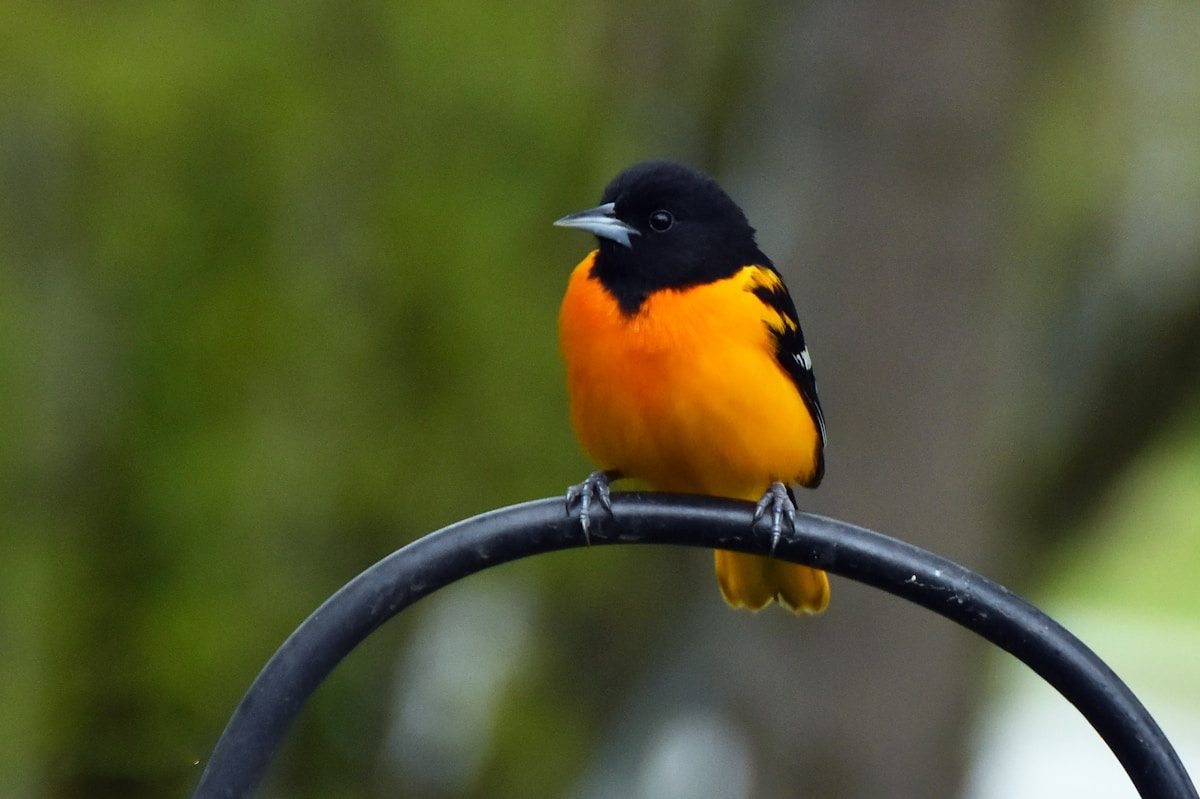
Baltimore Orioles
Baltimore Orioles are one of the earliest departing spring migrants. They arrive in late April, raise one brood, and start leaving in July — before most people realize summer is ending. By the time the leaves change color, orioles are already in Central America.
If your oriole feeder has been untouched for weeks and you’re wondering where they went — they left earlier than you thought.
When Do Baltimore Orioles Leave?
| Region | Adults Begin Leaving | Most Birds Gone | Last Stragglers |
|---|---|---|---|
| Canada | Late July | Mid August | Late August |
| Northeast (NY, PA, NE, MA) | Early August | Late August | Early September |
| Midwest (OH, IN, IL, MO) | Early–mid August | Late August | Mid September |
| Mid-Atlantic (VA, NC, TN) | Mid August | Early September | Late September |
| Southeast (GA, SC, AL) | Late August | Mid September | Early October |
| Gulf Coast (TX, LA, FL) | September | October | November |
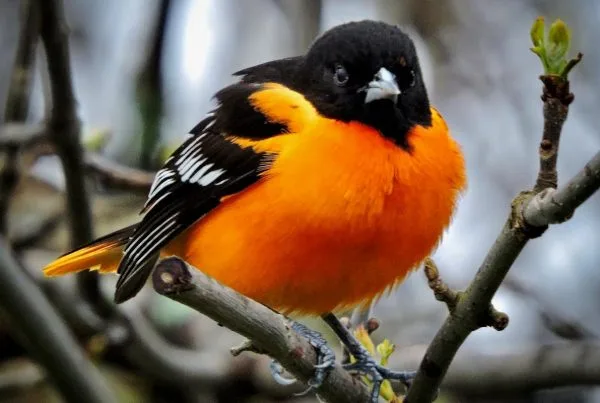
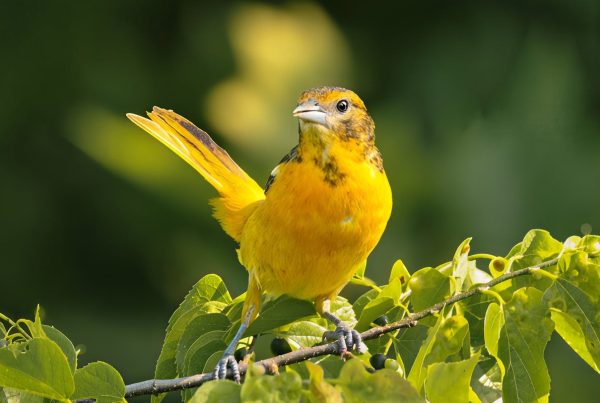
Adult males leave before females, and both adults leave before the juveniles — the same pattern as hummingbirds. A yard that had a brilliant orange male in June may only have dull females and young birds in August, making it feel like the orioles “mostly left” before they actually have.
Where Do Baltimore Orioles Go in Fall?
Baltimore Orioles winter in Central America and northern South America — primarily Colombia, Venezuela, and the northern Andes, with some birds wintering as far south as Ecuador and Peru. A smaller number winter in southern Florida and the Caribbean.
The fall route goes south through the eastern US, across the Gulf of Mexico or through Mexico, and continues through Central America. Unlike hummingbirds, which concentrate along the Gulf Coast before crossing, orioles are more dispersed migrants that move through a broader front.
The round trip for a typical breeding bird in the northeastern US is roughly 4,000–6,000 miles.
Why Orioles Leave Before You Notice
Three things combine to make oriole departure easy to miss:
Adults leave in July. Most people are still in full summer mode in late July. An oriole feeder that goes quiet in late July is easy to attribute to “they’re busy elsewhere” rather than migration beginning.
Females and juveniles look different. After adult males leave, the remaining birds are olive-yellow females and dull-colored first-year birds. They don’t look like the orioles people picture. A yard that “still has orioles” in August often has only females and juveniles that will be gone within a few weeks.
Orioles stop singing. The male’s flute-like song is what announces their presence in spring. In late summer, as breeding season ends, singing stops. A silent oriole foraging in a tree is easy to overlook.
Bullock’s Oriole: West Coast Timing
Bullock’s Orioles, the western counterpart to the Baltimore Oriole, follow a similar but slightly earlier schedule. They breed from British Columbia and the northern Plains south to Mexico, and begin fall migration in July and August.
Bullock’s Orioles winter in western Mexico. Most have left the US by September. They are similar to Baltimore Orioles in behavior but the male has an orange face rather than a full black hood, and white wing patches rather than white wing bars.
Orchard Oriole Departure
The Orchard Oriole — a smaller, darker oriole of the eastern US — leaves even earlier than the Baltimore. Many Orchard Orioles begin southward movement in late June and early July, making them one of the earliest-departing songbirds in North America. Most have left the US by August.
Should You Keep Oriole Feeders Up in Fall?
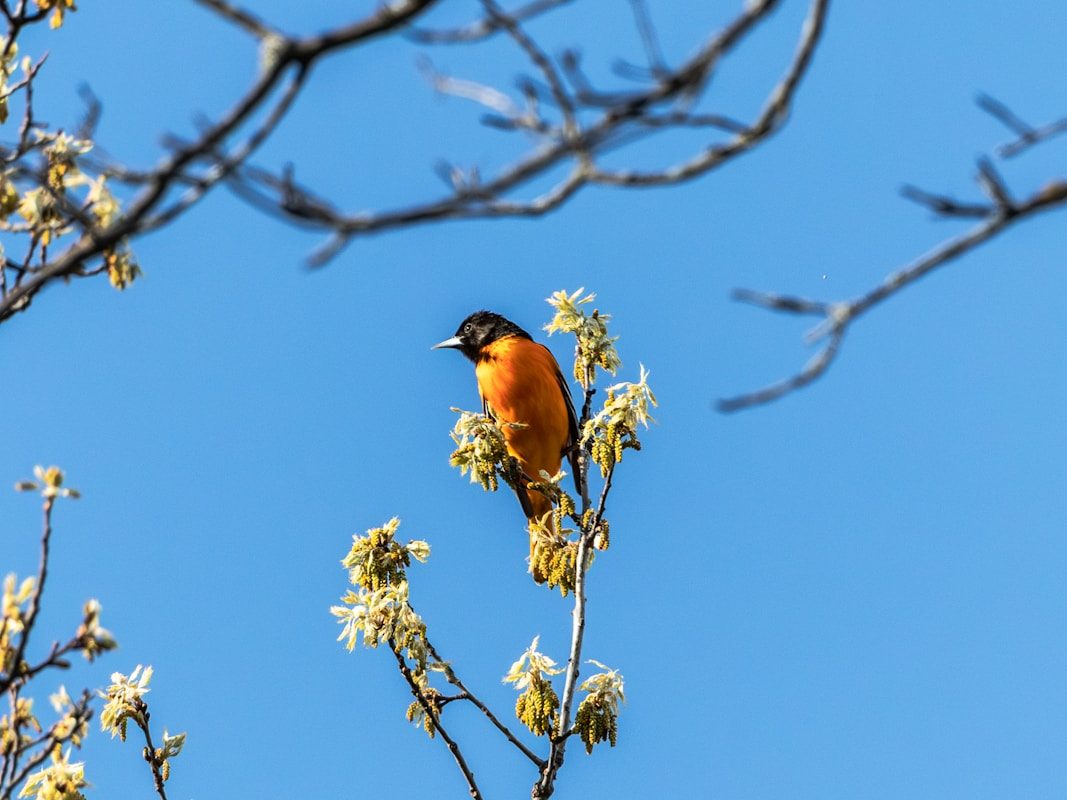
Baltimore Orioles
It depends on your location and when you last had birds:
Northeast and Midwest: Keep feeders up through early September. Juveniles and late adults pass through in August. After that, the season is over.
Southeast: Keep feeders up through October. Later departure dates mean stragglers are more likely in September.
Gulf Coast: Keep feeders up through November. Some birds linger, and Florida and Texas occasionally have individuals that attempt to winter.
Orange halves spoil faster than nectar feeders — replace them every 2–3 days in warm weather. A rotting orange half is not useful to migrating birds and can attract other wildlife.
How to Get Orioles Back Next Spring
The most important thing you can do for next spring’s oriole season: have feeders out by April 20th in the South and April 25th–May 1st in the mid-Atlantic and Midwest — before the first arrivals.
Orioles check yards early in migration. If your feeder isn’t out when the first male scouts arrive, he establishes his territory around a different yard. Once he’s committed elsewhere, he’s unlikely to switch.
Put out both types of food: orange halves on a spike or holder, and an oriole nectar feeder with 4-parts water to 1-part white sugar. The combination attracts them reliably. See our 2026 Baltimore Oriole migration map for exact arrival dates by state next spring.
FAQ: When Do Orioles Leave?
When do Baltimore Orioles leave?
Adult males begin leaving in late July. Females and juveniles follow in August. Most birds are gone from the northern US by early September, with Gulf Coast birds lingering into October.
Where do orioles go when they leave?
Central America and northern South America — primarily Colombia, Venezuela, and the northern Andes. A smaller number winter in southern Florida and the Caribbean.
Why did my oriole feeder go quiet so early?
Adult males leave in late July, weeks before most people notice. By August, only females and dull-colored juveniles remain, and they’re less visible. The season ends earlier than it appears.
Should I leave oriole feeders up in fall?
Yes, until at least 2 weeks after your last sighting. Late migrants pass through after the adults. After that, take feeders down and store them for winter.
For the spring side, see our 2026 Baltimore Oriole migration map with arrival dates by state. For fall hummingbird timing, see our guide on when hummingbirds leave.

MD Imdadul Haque is the founder of BirdzFly, a research-backed resource on North American backyard birds. Drawing on years of independent study into bird identification, behavior, and migration patterns, he writes in-depth guides designed to help US birders understand the species in their own backyards — from common feeder visitors to seasonal migrants passing through.