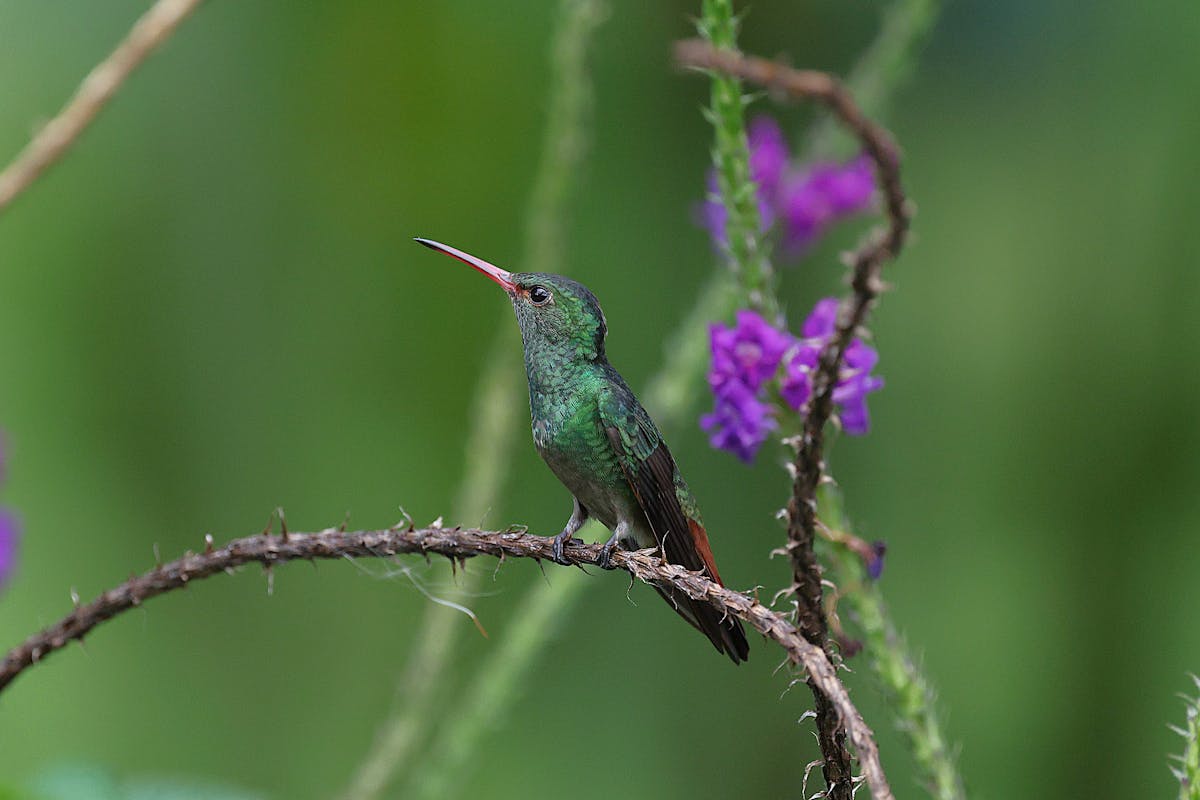
Hummingbirds and Flowers
1. Bee Balm (Monarda didyma)
The full spikes and rounded form of perennial bee balm attract hummingbirds, butterflies, and other pollinators. It usually stands 2 to 4 feet tall and should be divided every three to four years. Bee balm is a prolific self-seeder if you don’t deadhead the flowers after blooming.
-
USDA Growing Zones: 4 to 9
-
Colors Available: Red, purple, and orange
-
Exposure: Full sun to partial shade
-
Soil Tolerances: Rich, medium moisture to wet soils
2. Cardinal Flower (Lobelia cardinalis)
The hardy cardinal flower forms tall stalks of blossoms that reach up to 4 feet high. Its fragile, rich red flowers are great food sources for hummingbirds. Plant it at the back of mixed-perennial borders.
-
USDA Growing Zones: 3 to 9
-
Color Varieties: Scarlet red, white, and rose
-
Sun Exposure: Full sun to partial shade
-
Soil Type: Rich, medium-moisture to wet soil
3. Zinnias
Zinnias are a favorite among gardeners for their vibrant colors that attract hummingbirds. They can vary in height from 6 inches to 4 feet. Zinnias need plenty of moisture but are prone to fungal diseases in humidity.
-
USDA Growing Zones: 2 to 11 (usually grown as annuals)
-
Colors Available: All colors except blue and brown
-
Sun Exposure: Full sun
-
Soil Tolerances: Humus-rich, consistently moist, well-drained soil
Tip: Remove dead flowers to prevent self-seeding.
4. Salvia
Salvia includes a wide variety of annual and perennial plants. You can grow cultivars like Salvia nemorosa or Salvia greggii. This clump-forming plant reaches 18 to 36 inches tall and blooms from mid-summer to late summer.
-
USDA Growing Zones: 4 to 11
-
Colors Available: Mauve, pink, purple, blue
-
Sun Exposure: Full sun
-
Soil Tolerances: Dry to medium, well-drained soil
5. Bleeding Hearts (Lamprocapnos spectabilis)
Bleeding hearts showcase graceful, heart-shaped blooms in white or pink. They thrive in cooler climates and prefer partial to light shade.
-
USDA Growing Zones: 2 to 9
-
Color Varieties: Pink, white
-
Sun Exposure: Partial shade to full shade
-
Soil Tolerance: Moist but well-drained, rich soil
6. Butterfly Bush (Buddleia davidii)
The butterfly bush attracts hummingbirds and other pollinators with its heavy flower clusters. This drought-resistant plant does well in full sun.
-
USDA Growing Zones: 5 to 10
-
Color Varieties: Pink, purple, blue
-
Sun Exposure: Full sun
-
Soil Tolerance: Medium-moisture, well-drained soil
Note: Buddleia davidii can be invasive in some areas, so check local regulations.
7. Trumpet Creeper (Campsis radicans)
Also known as trumpet vine, this plant can spread quickly and grow on structures. Its long, tubular flowers are great for hummingbird gardens.
-
USDA Growing Zones: 4 to 10
-
Color Varieties: Orange, red, yellow
-
Sun Exposure: Full sun to partial shade
-
Soil Needs: Average, well-drained soil
Caution: It can be invasive, so regular pruning is necessary.
8. Lupines (Lupinus x hybridus)
Lupines bloom early in spring, attracting hummingbirds when other flowers are scarce. They can reach 3 to 4 feet, and dwarf types do not exceed 2 feet.
-
USDA Growing Zones: 4 to 8
-
Colors Available: Purple, blue, white, pink, yellow
-
Sun Exposure: Full sun
-
Soil Needs: Moist, well-drained, slightly acidic soil
Tip: Leave spider webs intact, as hummingbirds use them for nests.
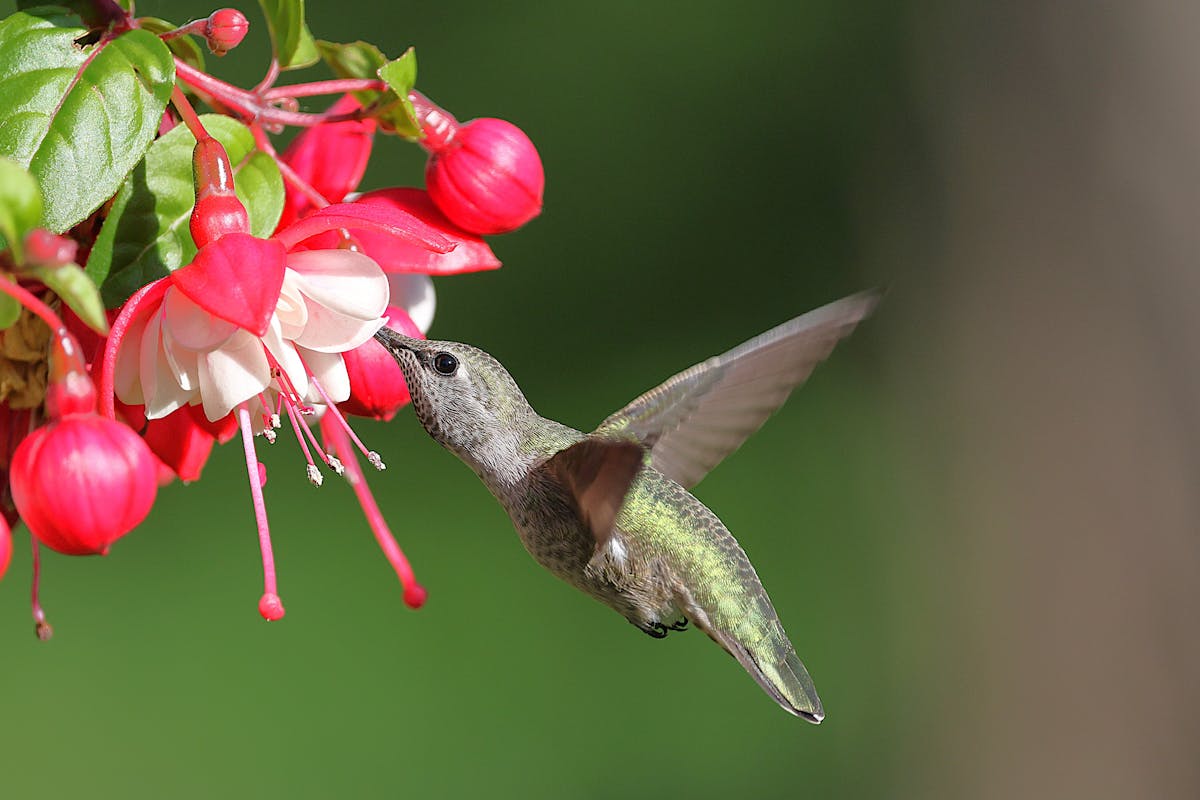
Hummingbirds and Flowers
9. Columbine (Aquilegia spp.)
Columbine is often used as an edge plant in gardens. It can reach heights of 1 to 3 feet. Cut the flowering stems after blooming for more flowers.
-
USDA Growing Zones: 3 to 8
-
Color Varieties: Blue, purple, pink
-
Sun Exposure: Full sun to partial shade
-
Soil Needs: Average, well-drained soil
10. Petunias
Petunias are popular annual bedding plants that thrive in sunny spots. They continuously bloom and provide a lot of nectar for hummingbirds.
-
USDA Growing Zones: 10 to 11 (usually grown as annuals)
-
Colors Available: Pink, white, red, purple, mixed colors
-
Sun Exposure: Full sun
-
Soil Needs: Medium-moisture, well-drained soil
11. Beardtongue (Penstemon spp.)
Beardtongue flowers are perfect for a bird-friendly garden. The tall plants are full of sweet nectar and easy to grow.
-
USDA Growing Zones: 3 to 8
-
Color Range: Purple, blue, orange, red, yellow, pink, and white
-
Sun Exposure: Full sun
-
Soil Needs: Well-drained soil
12. Trumpet Honeysuckle (Lonicera sempervirens)
This vining plant produces trumpet-shaped blossoms that provide early nectar for hummingbirds.
-
USDA Growing Zones: 4 to 11
-
Colors Available: Red, pink, orange, yellow
-
Sun Exposure: Full sun to partial shade
-
Soil Tolerances: Loam, sand, clay, well-drained
13. Coral Bells (Heuchera spp.)
The nectar from coral bells attracts pollinators. Regular division helps maintain these short-lived perennials.
-
USDA Growing Zones: 4 to 9
-
Colors Available: Red, white, pink, orange
-
Sun Exposure: Full sun to partial shade
-
Soil Tolerances: Moist, well-drained, fertile soil
With these flowers in your garden, you’ll create an inviting space for hummingbirds and other pollinators. Happy gardening!
Hummingbird-Friendly Flowers
Tobacco Flower (Nicotiana alata)
Another lesser-known flower for hummingbirds is the tobacco flower. Hummingbirds love its trumpet-shaped blooms. Plus, it’s deer-resistant.
Growing Conditions
-
USDA Growing Zones: 10 to 11; commonly treated as an annual
-
Colors: Yellow, green, white, pink, and red
-
Sun: Full sun to partial shade
-
Soil Needs: Moist, well-drained
Note: The tobacco flower is poisonous to humans and animals.
Delphinium
Delphiniums are ideal early-summer, long-bloomers. Their flower spikes stand out in gardens.
Growing Conditions
-
USDA Growing Zones: 3 to 9
-
Colors: Pastel, blue, pink, purple, and white
-
Sun: Full sun to partial shade
-
Soil Needs: Moist, loamy, well-drained
Note: These flowers are toxic to humans, pets, and horses.
Fuchsia
Fuchsia has hooked petals that are a real eye-catcher. Its bright pink-red outer and purple inner blossoms attract hummingbirds.
Growing Conditions
-
USDA Growing Zones: 10 to 11
-
Colors: Purple, pink, red, white, violet
-
Light: Partial shade to full sun
-
Soil Needs: Moist, but well-drained
Lantana (Lantana camara)
Lantana is great as both a hanging basket plant and ground cover. It loves full sun and needs six hours of direct sunlight daily.
Growing Conditions
-
USDA Growing Zones: 7 to 11
-
Colors: Red, orange, gold, blue, white, pink
-
Sun Exposure: Full sun
-
Soil Needs: Well-drained
Foxgloves (Digitalis purpurea)
Foxgloves have thin stems and vibrant, bell-shaped flowers that hummingbirds enjoy.
Growing Conditions
-
USDA Growing Zones: 4 to 10
-
Colors: Pink, purple, red, white, yellow
-
Sun Exposure: Full, partial
-
Soil Needs: Well-draining, loamy soil
Daylilies (Hemerocallis spp.)
Daylilies are long-lived perennials that are easy to grow. They can handle heat and various soil types.
Growing Conditions
-
USDA Growing Zones: 3 to 10
-
Colors: Red, orange, yellow, purple, pink
-
Sun Exposure: Full sun
-
Soil Needs: Deep, rich loamy soil
Catmint (Nepeta)
Catmint has delicate, fragrant foliage. It attracts hummingbirds with its colorful flowers.
Growing Conditions
-
USDA Growing Zones: 4 to 8
-
Colors: Purple, white, pink
-
Sun Exposure: Full, partial
-
Soil Needs: Well-drained
Phlox
Phlox has nearly 70 species with beautiful color variations. They prefer partial sun but can tolerate full sun.
Growing Conditions
-
USDA Growing Zones: 3 to 9
-
Colors: White, pink, purple, blue
-
Sun Exposure: Partial to full
-
Soil Needs: Loamy, rich, well-drained
Red Hot Pokers (Kniphofia)
Red hot pokers attract hummingbirds with their textural blooms. They thrive in sunny spots.
Growing Conditions
-
USDA Growing Zones: 5 to 9
-
Colors: Red, yellow, orange
-
Sun Exposure: Full sun
-
Soil Needs: Well-drained
Hummingbird Mint (Agastache cana)
Hummingbird mint is known for its light pink or purple blooms that flower all season long.
Growing Conditions
-
USDA Growing Zones: 5 to 10
-
Colors: Pink, purple
-
Sun Exposure: Full sun
-
Soil Needs: Fertile, loamy, well-drained
Morning Glory (Ipomoea purpurea)
Morning glory is a fast-growing, annual flowering vine that climbs with its tendrils.
Growing Conditions
-
USDA Growing Zones: 2 to 11
-
Colors: Purple, pink, blue, white
-
Sun Exposure: Full sun
-
Soil Needs: Moist, well-drained
Canna Lily (Canna spp.)
Canna lilies have sassy petals in various colors and bloom from June through October.
Growing Conditions
-
USDA Growing Zones: 8 to 10
-
Colors: Red, orange, yellow, pink, cream, and white
-
Sun Exposure: Full sun
-
Soil Needs: Rich, moist, well-draining
FAQ
-
What flowers do hummingbirds prefer?
-
Hummingbirds love blooms that are red or bright and tubular.
-
They enjoy cardinal flower, Eastern red columbine, and petunias.
-
-
What attracts hummingbirds to feeders?
-
Hummingbirds are less likely to visit feeders when there are many nectar-filled blooms nearby.
-
Adding feeders can help when blooms are scarce.
-
-
What flowers attract both hummingbirds and butterflies?
-
Bee balm, chrysanthemum, black-eyed Susan, aster, and zinnia are favorites of both.
-
-
What types of flowers attract hummingbirds?
-
Hummingbirds are most attracted to tubular red or orange flowers with plenty of nectar.
-
By planting these flowers, you can create a beautiful garden that attracts and nourishes hummingbirds!

MD Imdadul Haque is the founder of BirdzFly, a research-backed resource on North American backyard birds. Drawing on years of independent study into bird identification, behavior, and migration patterns, he writes in-depth guides designed to help US birders understand the species in their own backyards — from common feeder visitors to seasonal migrants passing through.