
Discover five fascinating facts about the puffin
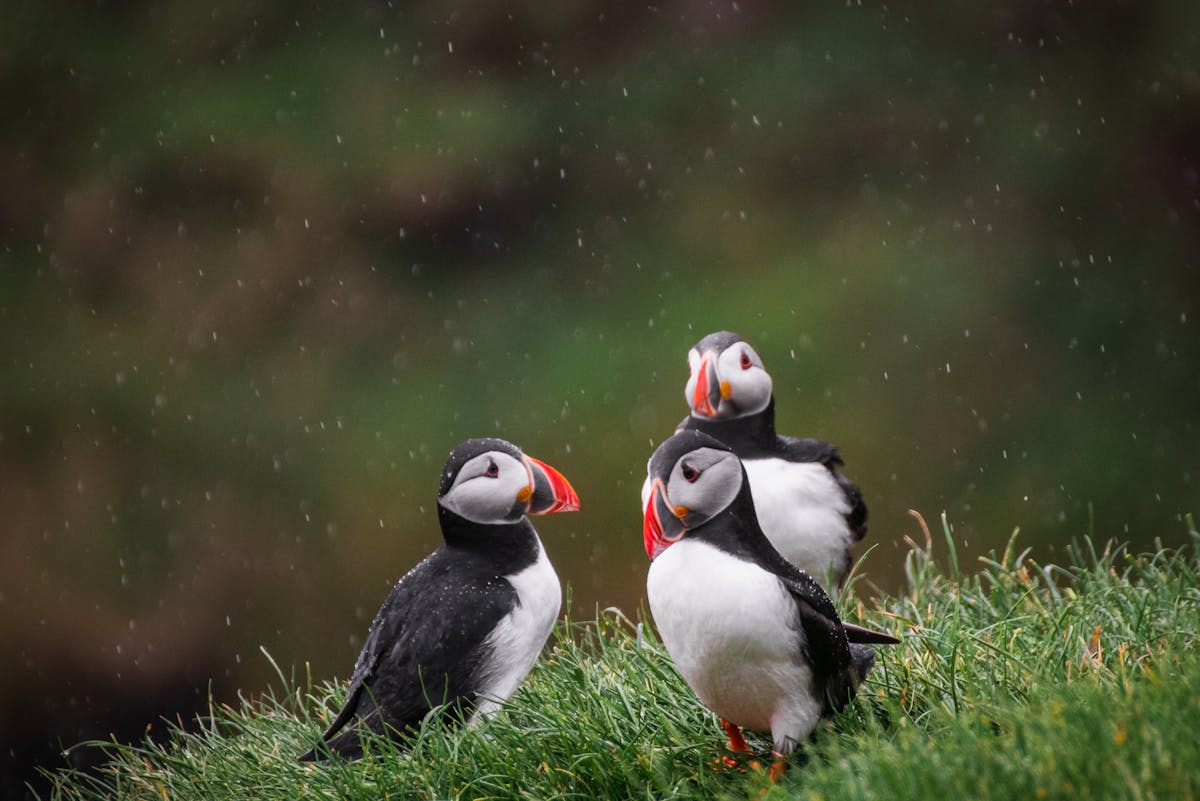
puffin bird Interesting Facts
When you visit Iceland you will soon realise that the colourful puffin is the unofficial mascot of this nation. Tourists flock to the island for its bird cliffs and boat tours. The Atlantic puffin draws them in with its charm.
Interested in learning more about this goofy bird? We’ve put together a few fun puffin facts so you’ll have more to share about them next time you go. Here’s more information about their behaviour, characteristics and when and where you will see them in Iceland.
Puffins are agile swimmers and flyers.
The puffin will likely call to mind the (unrelated) penguin. Their dumpy plumage and small wingspan are proportionate but puffins are in fact powerful fliers.
Puffin wings are small, so these eager seabirds must work hard to fly. They flap their wings about 400 times a minute. It’s all been worth it, though, as they can top 88 kilometres an hour (55 miles per hour).
That’s not their only body-braking feat, however. They’re also masters of diving and swimming. They flap their wings to swim beneath the surface and can dive more than 60 metres in pursuit of fish.
It’s a good thing that they are at least equally adept in water as on land because…
Most of the year they spend at sea
Eight months of the year puffins are well away from land, bobbing on the sea and diving for fish. In reality, they go on land only to mate and nest.
They return to their breeding grounds in mid-April annually. They then set off for another winter at sea towards the end of August.
Here’s what’s interesting: puffins are a monogamous species, but that doesn’t mean they spend all of their time at sea with their mate. Instead, mating couples return annually to the same nesting sites. Puffin chicks are called pufflings, and the parents co-parent for a few months before separating.
They breed in burrows that are up to about a metre underground.
Their breeding locations comprise the coasts of Iceland, Greenland Norway, Scotland and Ireland. In fact, the Cliffs of Moher on the Irish coast is a Special Protected Area for seabirds as so many colonies summer there.
Puffins are the comedians of the ocean
After a life spent on the water, puffins are nevertheless known as the clowns of the sea. Why? Well, if you see them taking off from the sea and landing again you will know why.
For all their aquatic grace, puffins are obvious clowns when it comes to how their water-and-sky lives combine.
Puffins don’t swim there. Instead, they have colorful feet. They use these feet to scuttle clumsily across the water’s surface before taking off. They don’t land gracefully like a swan. Instead, they often belly-flop, stumble, or tumble awkwardly across the water.
And they’re nicknamed clowns because of their brightly coloured beaks.
The puffin has a colourful beak which is actually seasonal
The distinctive appearance of the Atlantic puffin’s beak has become a symbol for conservation in the UK. But did you realize that those striking colors are seasonal? Puffins moult while they are at sea, and will lose all their colourful bill parts and black eye-markings.
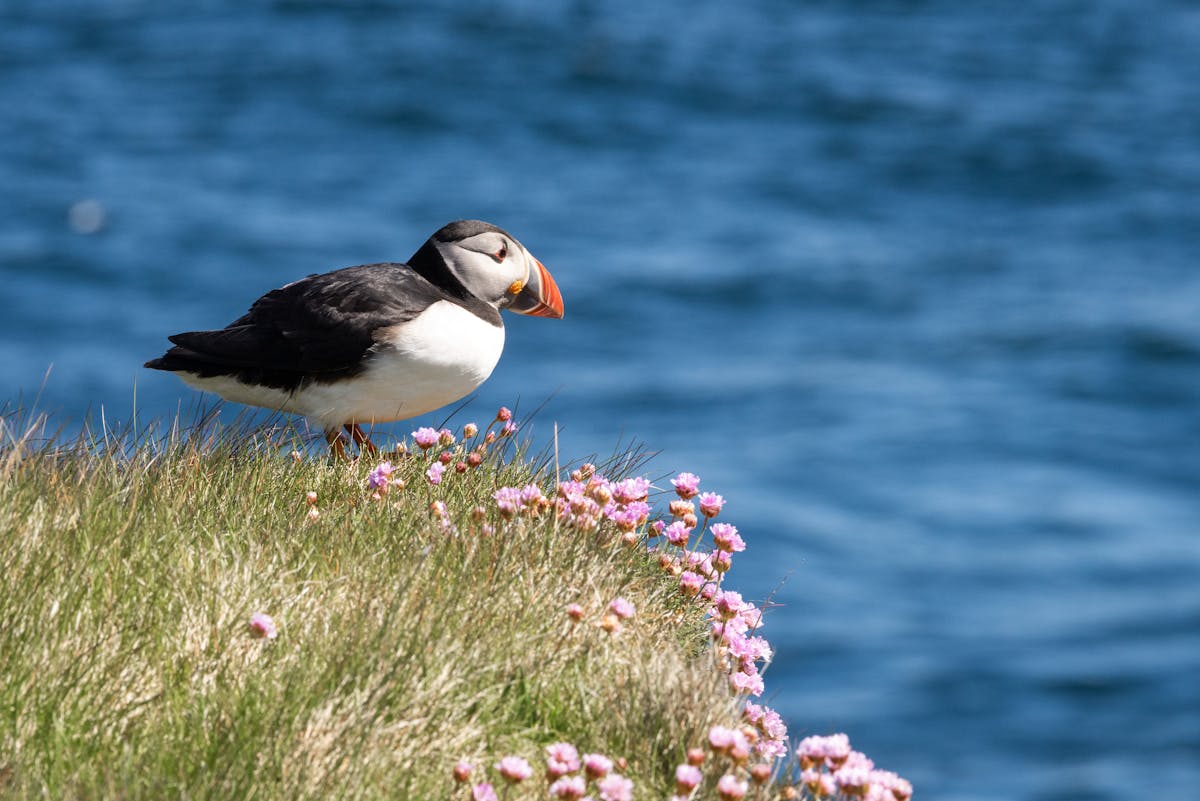
puffin bird Facts
So if you see a puffin thinking he is looking for grub in the winter, it’s not as colourful with his grey pecker. Except, you’re not going to because even scientists have very limited understanding about what puffins are up to at sea.
Young puffins are the same shade when they first encounter the big wide world. Their faces, beaks and feet are grey!
Puffins have big mouths
The puffin parents alternate between fishing for food and caring for the puffling. Their beak joints are serrated for best performance. This allows puffins to hold on to their catch, even when they dive back in for another open-mouthful.
Another impressive fact? A little puffin can hold as many as 10 fish at once in its beak.
puffin standing on grassy cliff in Iceland
Where and when to find puffins in Iceland?
It’s nice to learn about all these wonderful puffin facts, but would you like to see them in action? We know you do!
Iceland is home to some 60 % of the world population of Atlantic puffins at breeding time each spring and summer. That’s 8 to 10 million puffins visiting the island each year, and therefore one of the best places to see them.
These colourful birds first arrive in Iceland from April, but the best time to spot them is from May to early August. This is the best time to visit Iceland if you want to see puffins.
And where are the best places to see puffins in Iceland? There are colonies scattered all along the coast of iceland. But there are some places that are better than others.
We suggest visiting the Westman Islands in South Iceland and Grímsey Island in the North. You’ll likely fall for the charming melancholy of the Westfjords. The Látrabjarg cliffs are actually amongst the most densely populated bird cliffs in the world.
The top ways to view them are by hiking along the coast and boat excursions. A road trip around the island gives you the most flexibility. You can plan your days and fit in fun excursions.
And don’t forget to ask your travel consultant about including a puffin tour or whale watching cruise in your itinerary! It will make your trip to Iceland even more magical.
Interested to catch a glimpse of these mesmerizing birds, and discover the otherworldly sceneries in Iceland?
Take a look at these favorite Iceland tours to get inspired, or contact us directly so we can help you plan your trip. One of our Reykjavík travel consultants will design your dream vacation with you using their first-hand experience.

MD Imdadul Haque is the founder of BirdzFly, a research-backed resource on North American backyard birds. Drawing on years of independent study into bird identification, behavior, and migration patterns, he writes in-depth guides designed to help US birders understand the species in their own backyards — from common feeder visitors to seasonal migrants passing through.