
Baltimore Oriole Look Like
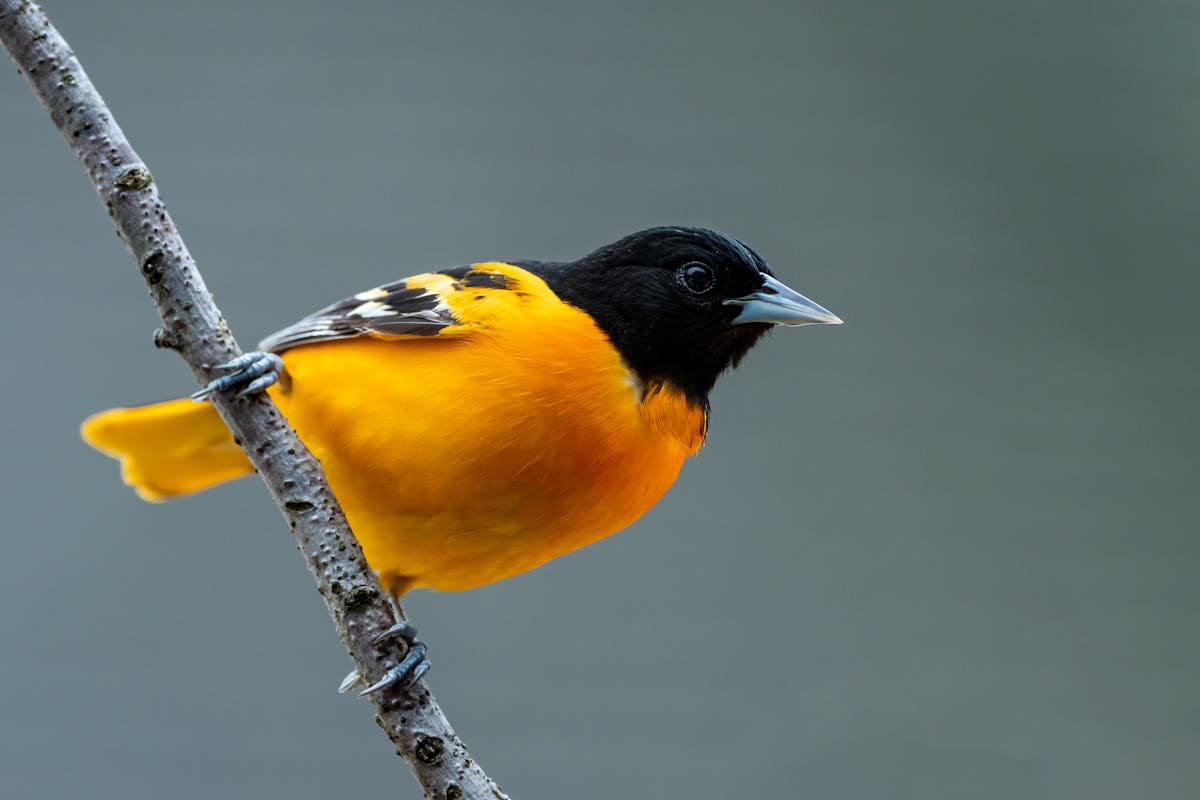
Male Baltimore Oriole
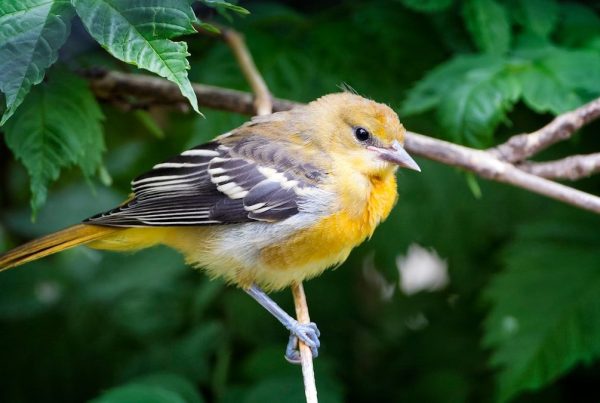
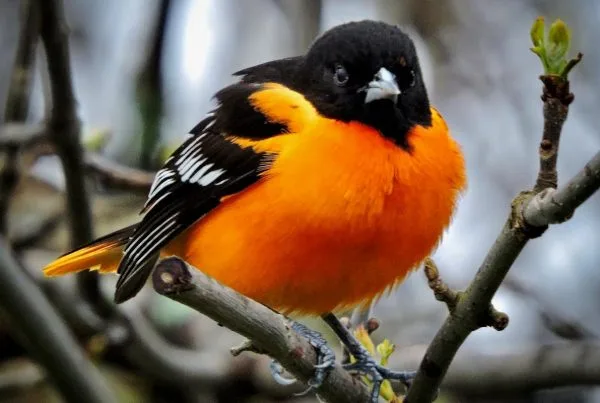
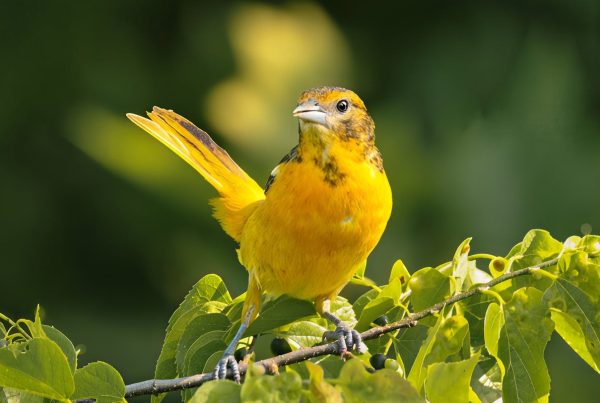
A male Baltimore oriole is striking with its black hood and flaming orange plumage. The bird’s vivid belly, shoulders, and rump can range from fiery orange to yellow-orange. In contrast, adult females are brownish-yellow with dark wings barred with black.
-
Male orioles have their distinctive colors by age one.
-
Before that, they are dull and resemble females.
Discover How to Draw Orioles to Your Yard
Baltimore Oriole Name
This stunning oriole is named after Cecil Calvert, the 2nd Baron of Baltimore. Its feather colors resemble those on the Maryland founder’s coat of arms. It became the state bird in 1947.
Baltimore Oriole vs. Bullock’s Oriole
From 1973 to 1995, both Baltimore and Bullock’s orioles were known as northern orioles. Research later confirmed they were separate species, leading to the revival of both names.
Baltimore Oriole:
-
Summer Range: Great Plains eastward, parts of southern Canada.
-
Looks: Brilliant orange and black above, black wings with white wing bars.
-
Sounds: Flutelike whistles and fast blabber.
-
Habitat: Open woods, orchards, and park trees, especially elm.
Bullock’s Oriole:
-
Summer Range: Great Plains westward, south to Mexico.
-
Appearance: Orange with a black back; orange face with a black throat and eye stripe.
-
Sounds: Flutelike whistles and rapid chatter.
-
Habitat: Open woods, clearings, and suburban areas with trees; prefers cottonwood trees.
Watch for Hybrids
Where the ranges of Baltimore and Bullock’s orioles overlap in central North America, they may interbreed. This results in hybrid offspring with variable facial patterns and wing coloration.
Baltimore Orioles Are Blackbirds
The Baltimore oriole belongs to the Icteridae family, which includes 106 species of blackbirds.
Baltimore Oriole Nest and Eggs
Following pairing, the female constructs a purse-shaped nest. This nest hangs from the tip of a deciduous tree branch, often in open woodlands. Preferred trees include:
-
Elms
-
Cottonwoods
-
Maples
-
Willows
-
Apple trees
The female takes about seven days to weave the nest. It is made from plant fibers, hair, and other materials. Each female lays 3–6 light gray-blue eggs, which hatch in about two weeks. Both parents help raise the chicks, which fledge after two weeks.
Baltimore Oriole Lifespan
The longest known lifespan of a Baltimore oriole is 14 years in captivity and 12 years in the wild.
Baltimore Oriole Favorite Foods
Baltimore orioles enjoy sugar water from feeders. They also love:
-
Half an orange (cut side down)
-
Grape jelly
-
Red cherries and red grapes (not yellow cherries or green grapes)
They perform acrobatic flips to grab bugs and caterpillars. They eat fuzzy caterpillars, smacking them against a branch to remove the hair before swallowing them whole.
You can attract them with:
-
Nectar-producing tubular flowers
-
Native trees and shrubs that produce dark fruits
-
Insects and sugar water
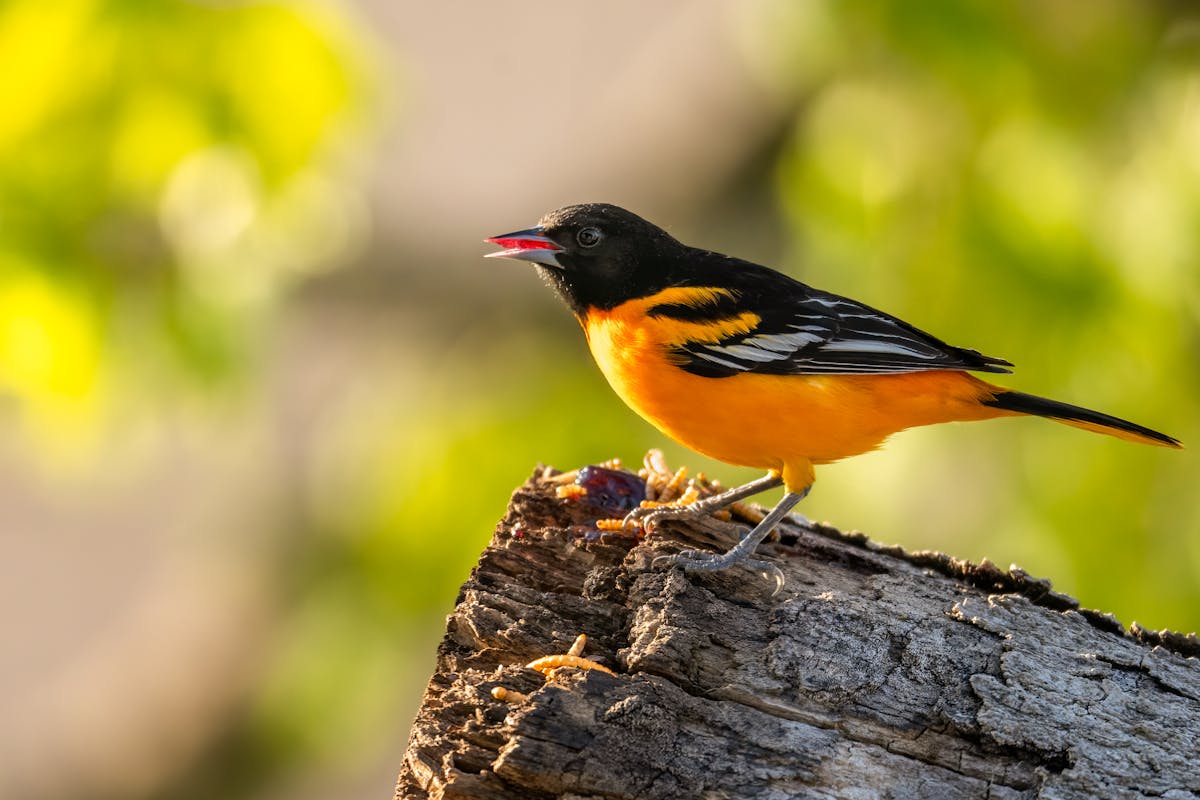
Baltimore orioles use a feeding strategy called gaping to extract juice from fruit.
Baltimore Oriole Look Like
Baltimore Oriole Habitat
You’ll find Baltimore orioles in:
-
Deciduous woodlands
-
Parks
-
Suburbs
They prefer areas with tall trees and are common in backyards, with an estimated 12 million of them.
What Time of Year Do Baltimore Orioles Show Up?
Baltimore Oriole Song
Listen for crisp, whistled notes with a mixed rhythm.
Birdsong audio provided by The Cornell Lab of Ornithology.
Find Other Kinds of Orioles to Search for in North America
Baltimore Oriole Range Map
Baltimore orioles can be found in many regions east of the Rockies. They winter in the Southeast, Central America, and up to northern South America. They breed from Georgia to southern Canada.

MD Imdadul Haque is the founder of BirdzFly, a research-backed resource on North American backyard birds. Drawing on years of independent study into bird identification, behavior, and migration patterns, he writes in-depth guides designed to help US birders understand the species in their own backyards — from common feeder visitors to seasonal migrants passing through.