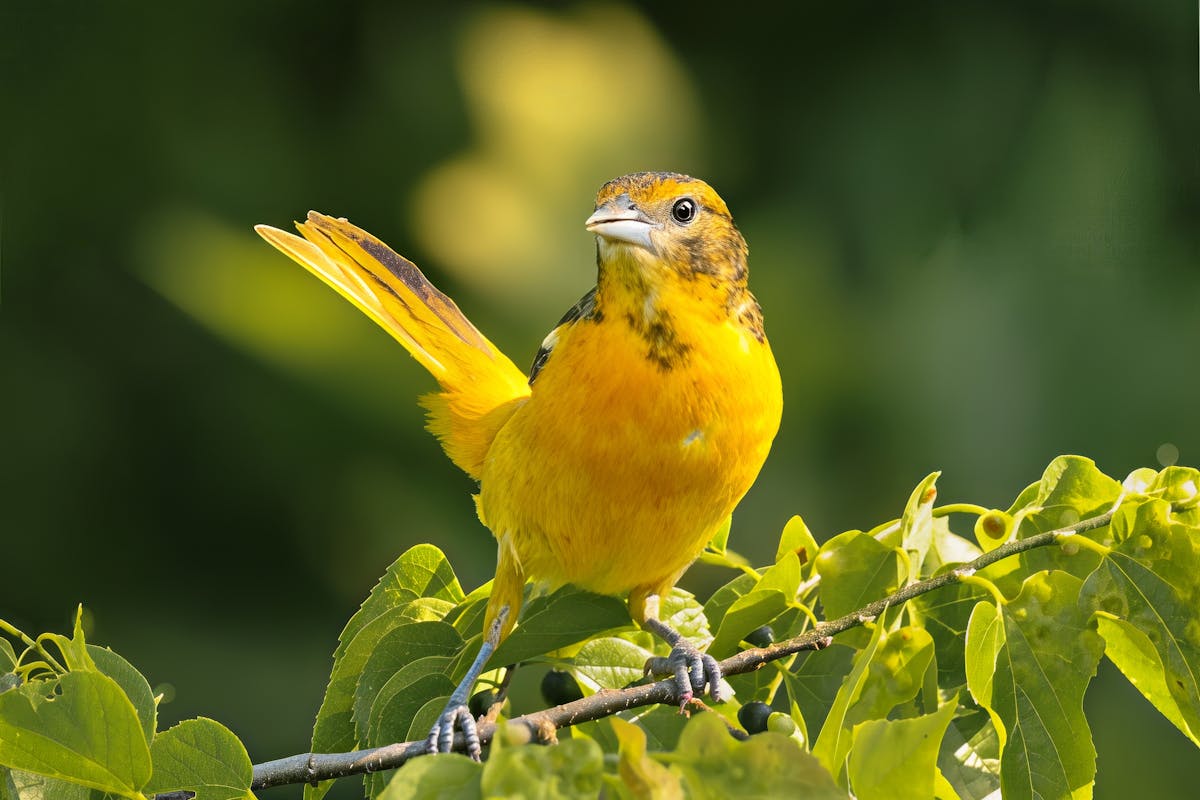
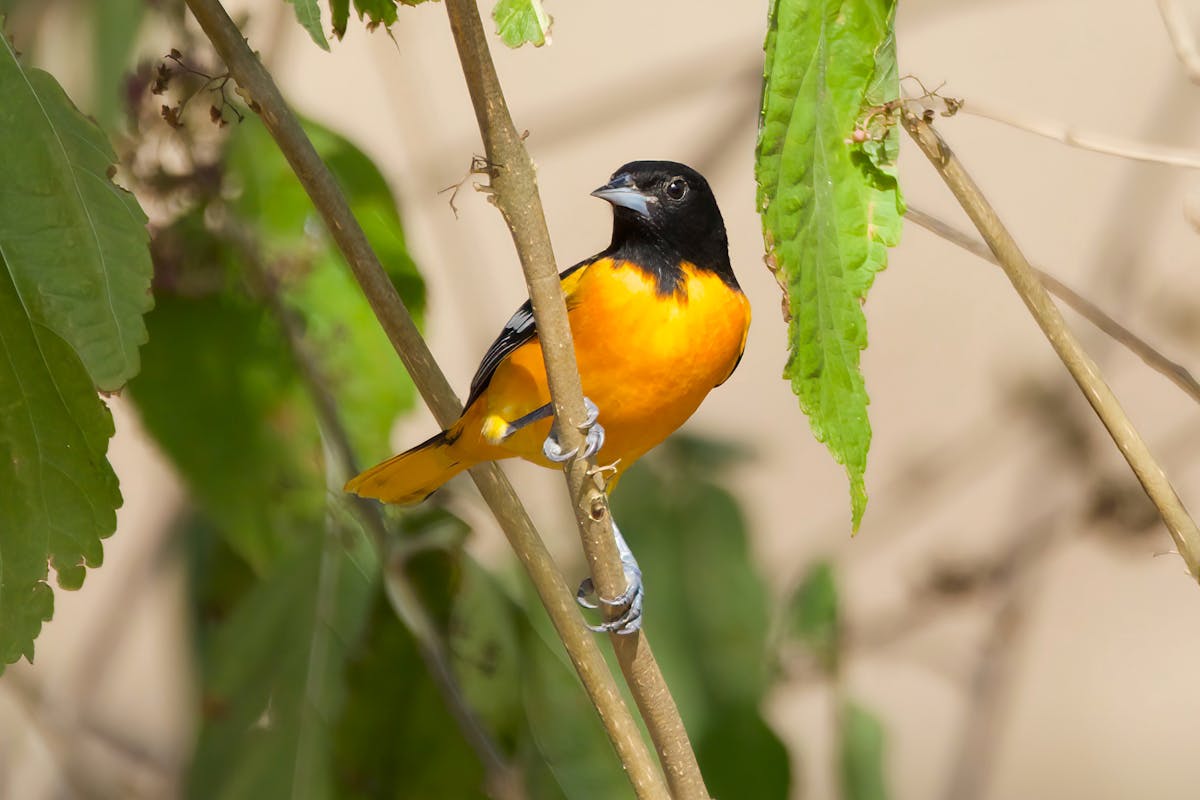
2026 Baltimore Oriole Migration Map
One morning in late April, you step outside and hear it — a rich, flute-like whistle from the treetops. You scan the branches and spot it: a splash of fire-orange on fresh green leaves.
The Baltimore Orioles are back.
If you’ve been looking for them, that first sighting of the season is rewarding. If you’ve never listened closely before, it seems like a revelation. There’s something festive about that bright orange-and-black bird landing in your yard after a harsh winter.
When to Expect Them
When should you expect them? It varies based on location. Knowing their migration pattern will help you prepare for their arrival.
Where Do Baltimore Orioles Go in the Winter?
Baltimore Orioles are long-distance migrants. Each fall, they leave their breeding grounds in eastern and central North America and migrate south. They cross the Gulf of Mexico in one overnight flight and spend winter in:
-
Central America
-
Northern South America
-
Caribbean islands
From October through March, countries like Costa Rica, Panama, Colombia, and Venezuela host many wintering orioles. While some winter in Florida and along the Gulf Coast, most take a longer trek.
This journey is a round trip of thousands of miles, made with precision. By the time your oriole appears in May, it has likely crossed an ocean.
How Migration Works: What Makes Them Go North
Baltimore Orioles don’t leave based on a calendar date. They respond to environmental signals. The main trigger is increased day length, which causes hormonal changes that drive their urge to travel north.
As days grow brighter, orioles start storing fat reserves to prepare for the trip. They leave just in time to follow warming temperatures across the continent as insects and nectar flowers bloom.
Important Note: The timing of migration can vary each year due to weather patterns. A warm early spring can move arrivals a week ahead of normal, while a late cold snap can delay them. The dates below are based on typical averages. Always check local birding reports for real-time updates.
2026 Baltimore Oriole Arrival Map by State
🌴 Gulf Coast States — The First to Experience Them
States: Louisiana, Mississippi, Alabama, Florida (northern) Average Arrival: Late March — Early April
Many orioles crossing from Central America land first on the Gulf Coast. Birds that arrive in late March are usually exhausted from their journey and will stop to rest before heading north.
Tip: Place your feeders by March 20th to catch early arrivals.
🌿 South-Central & Southeastern States
States: Texas, Arkansas, Tennessee, North Carolina, South Carolina Typical Arrival: Early to Mid-April
In early April, warmer temperatures and hatching insects prompt a swift wave of orioles through these states. Texas sees a large influx, especially along the coast and through the Hill Country.
Tip: Have feeders or fruits out by April 1st for the first scouts.
🌸 Mid-Atlantic & Southern Midwest
States: Virginia, West Virginia, Kentucky, Missouri, Kansas, Oklahoma Typical Arrival: Mid-April
By mid-April, the migration front moves into this zone. Reports on platforms like eBird begin to increase.
Tip: Set up feeders by April 10th.
🌳 Northeast & Great Lakes
States: Pennsylvania, New York, New Jersey, Connecticut, Massachusetts, Rhode Island, Vermont, New Hampshire, Maine, Ohio, Michigan, Indiana, Illinois, Wisconsin Arrival: Late April to Early May
This area is the main breeding ground for Baltimore Orioles. Late April arrivals are common in Pennsylvania and New York, while New England and the upper Great Lakes see their first birds in early May.
Tip: Put out feeders by April 20 in the Mid-Atlantic and by May 1 in upper New England.
🌲 Upper Midwest & Northern States
States: Minnesota, Iowa, North Dakota, South Dakota, Nebraska, Wisconsin (northern) Typical Arrival: Early to Mid-May
In the northern breeding range, arrivals occur in early May, completing their surge by mid-May.
Tip: Set up by May 1 and expect males to arrive a few days before females.
🍁 Canada
States: Ontario, Quebec, Manitoba, New Brunswick, Nova Scotia Typical Arrival: Late May to Early June
Canadian orioles are the last to arrive. Ontario and southern Quebec typically see arrivals in the second week of May, while more northern areas may not see their first bird until late May.
Tip: Set up by June 10th in southern Canada.
Quick Reference: 2026 Arrival Timeline
| Region | States/Areas | Set Up Feeders By |
|---|---|---|
| Gulf Coast | LA, MS, AL, N. Florida | March 20 |
| South-Central | TX, AR, TN, GA, SC, NC | April 1 |
| Mid-Atlantic / S. Midwest | VA, KY, MO, KS, OK | April 10 |
| Northeast / Great Lakes | NY, PA, NJ, OH, MI, IL, WI | April 20 |
| Upper Midwest | MN, IA, ND, SD, NE | May 1 |
| New England (upper) | VT, NH, ME | May 1 |
| Canada | ON, QC, MB, NB, NS | May 10 |
What Does a Baltimore Oriole Look Like?
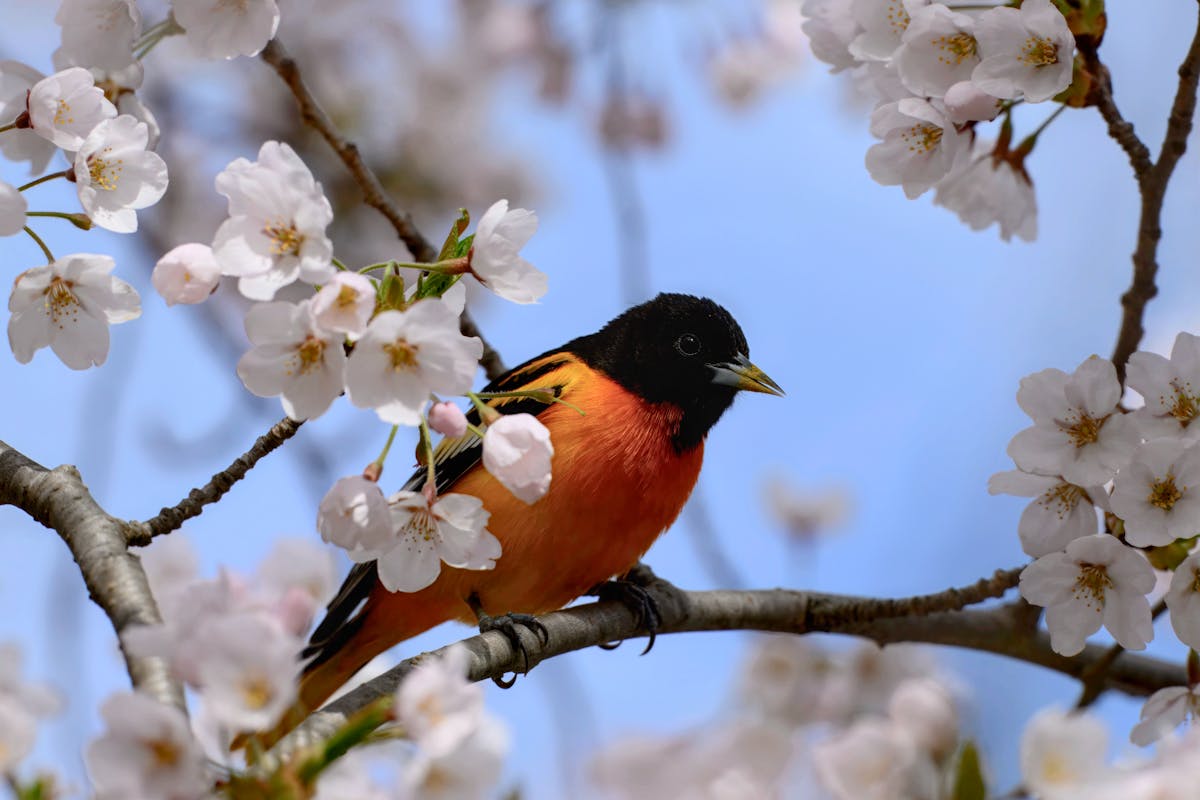
Baltimore Oriole Look Like
If you’ve never recognized one, you won’t confuse it for long.
-
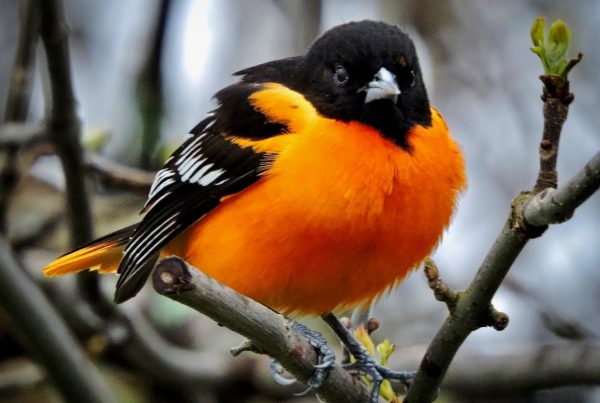
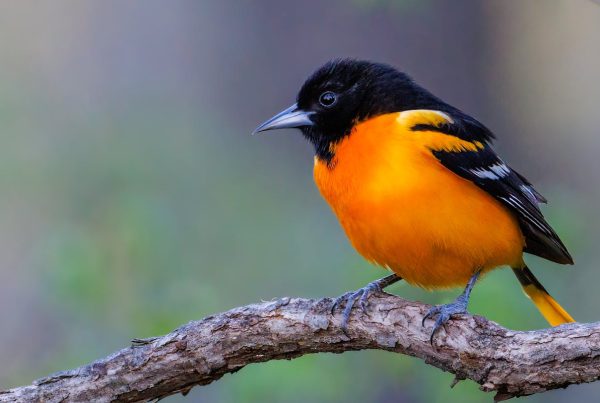
Adult Male: Distinctive flame-orange body with a jet-black head, back, and wings. Bold white wing bars.
-
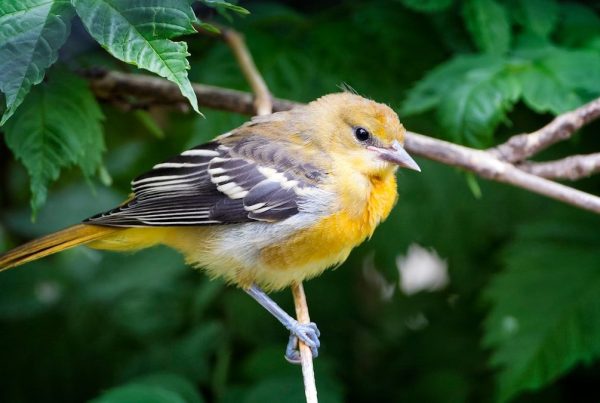
Adult Female: Pale yellowish-orange below with olive drab brownish upper parts; 2 white wing bars. Less colorful but still unmistakably oriole-shaped.
-
Juvenile Males: Resemble females but show mottled orange by late summer.
Their song is familiar in North American birding — a series of rich, clear whistled notes. Once you learn it, you will hear it every spring before you see the bird.
How to Lure Baltimore Orioles Into Your Yard
Many people don’t realize that orioles can fly by yards that could attract them, simply because there’s nothing to catch their interest.
Oriole Feeders
-
Install a specialized oriole feeder with orange-colored ports or dishes.
-
Place it in a visible open spot, not deep among shrubs.
Fresh Orange Halves
-
Cut an orange in half and place it on a feeder peg or nail on a wooden post.
-
Replace every 2–3 days.
Grape Jelly
-
Use grape jelly in small quantities.
-
A tablespoon or two is enough. Avoid jelly with artificial sweeteners or high fructose corn syrup.
Nectar
-
Use a dedicated oriole nectar feeder with a 6:1 water-to-sugar ratio.
-
No red dye is needed.
Native Trees and Shrubs
-
Orioles nest in tall deciduous trees.
-
Favorites include American elms, cottonwoods, and maples.
The Nest You May Not Notice
Baltimore Oriole nests are masterpieces of engineering and hard to see until leaves fall in autumn.
The female creates a deep, sock-shaped hanging nest using plant fibers, grasses, and even plastic.
It takes about a week to finish and can cradle eggs and nestlings safely, even in storms.
You can search for last year’s empty nests in November and December. They dangle like gray pouches from tall trees.
How to Track Their Arrival in Real Time
You don’t need to wonder when orioles will arrive. These resources can help you track actual reported sightings as migration unfolds:
-
eBird (ebird.org): The best source of real-time data about bird sightings. Filter by species and state to find out when and where Baltimore Orioles are reported near you.
-
Journey North (journeynorth.org): A migration tracking platform that crowdsources thousands of sightings and shows the wave moving north on an interactive map.
-
Birding Groups on Facebook: Local observers report first-of-season sightings on the day they occur.
What to Do When They Arrive
The first few days of oriole presence are critical for making them feel welcome.
Tips:
-
Clean feeders regularly. Oriole nectar and jelly can ferment quickly in warm weather. Replace every 2–3 days.
-
If you miss the first wave, don’t worry. Females follow a few days after males, and the entire migration may take 3–4 weeks to complete.
The Wait Is Part of It
Seasonal migration reconnects people to nature’s rhythm.
You put out the feeder, slice the orange, and wait. One morning, unexpectedly, you see that flash of orange in the tree and hear that familiar whistle.
The Baltimore Oriole had no idea you were waiting. But it showed up anyway.
Put out the welcome mat by April. The rest takes care of itself.
Want to go deeper? Learn more at BirdzFly:

MD Imdadul Haque is the founder of BirdzFly, a research-backed resource on North American backyard birds. Drawing on years of independent study into bird identification, behavior, and migration patterns, he writes in-depth guides designed to help US birders understand the species in their own backyards — from common feeder visitors to seasonal migrants passing through.