
Robin Nests
If you find a nest in a tree in your yard in late fall or winter, when the leaves are gone and the structure is visible for the first time, there’s a good chance it’s a robin nest. They’re sturdy, cup-shaped, and built from materials that hold up through a season of rain.
Most people walk past them all spring and summer without seeing them. The leaves do that.
What a Robin Nest Looks Like
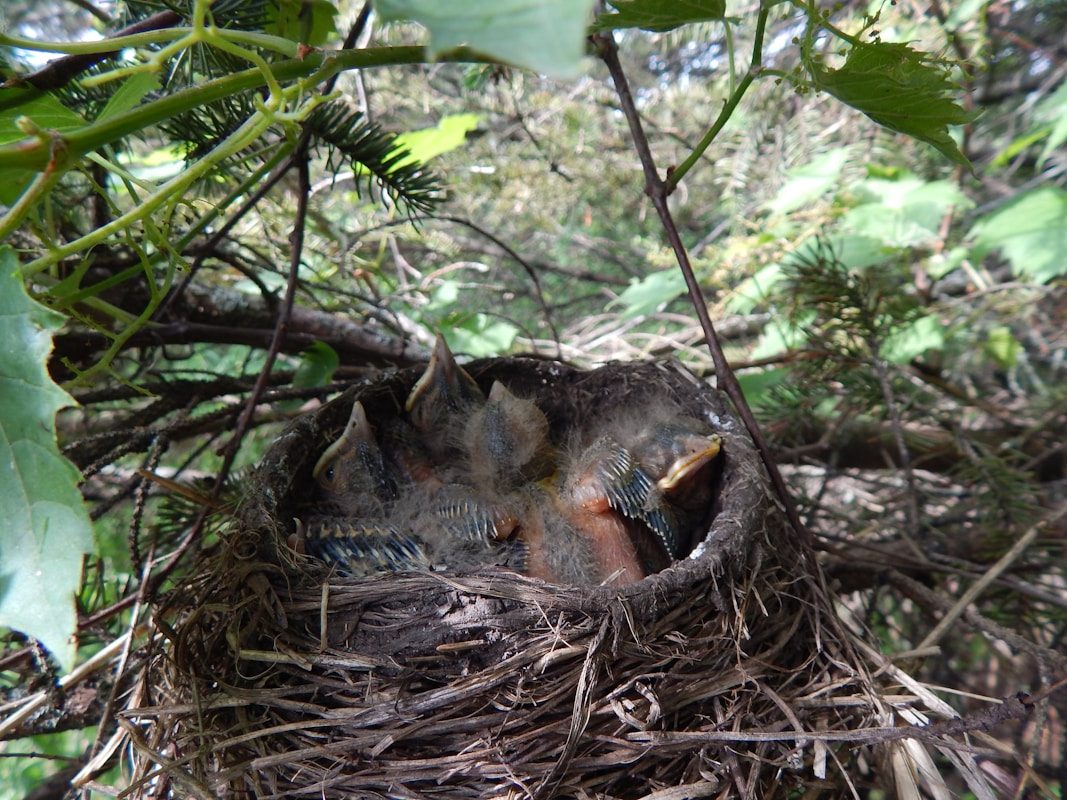
A robin nest is a cup. Round, about 6–8 inches in outer diameter, 3–4 inches across the inner cup, 2–3 inches deep. The inside is smooth — lined with a layer of mud that dries hard and gives the cup its shape, topped with soft dry grass.
The outside is rougher — grass, leaves, strips of bark, moss, and other plant material woven together into a thick wall. The mud layer is the structural core. Without it, the nest would be a loose pile of grass. With it, the nest holds its shape well enough that you can find intact robin nests months after they’ve been abandoned.
The color is generally a muted brown-green from the outside, with the pale mud interior visible if you look down into the cup.
How Robins Build the Nest
The female does the construction. The male accompanies her and occasionally brings material, but the building itself is the female’s work.
She starts with a foundation of coarse grass and twigs, pressed into the chosen fork. Then wet mud, applied with her bill and shaped by pressing her body into it, rotating to form the smooth interior. Then a layer of fine grass on top of the mud, which cushions the eggs and chicks.
The whole process takes about a week, sometimes less. She makes dozens of trips per day to collect mud and grass during active construction.
The mud has to be wet to work. This is why robin nests are built in spring when wet soil is available, and why you sometimes see robins collecting mud from puddles or wet garden beds.
Where Robins Build Their Nests
Almost anywhere with a stable horizontal surface and some overhead cover. The most common locations:
- Fork of a deciduous tree, 5–25 feet up — the classic location
- Dense shrubs or hedges, sometimes quite low — 3–5 feet
- On ledges of buildings, windowsills, gutters, downpipe brackets
- On porch lights, security cameras, or any bracket that provides a flat surface
- On top of outdoor speakers, electrical boxes, or similar structures
Robins are not particularly secretive about nest placement — they don’t seek out hidden spots the way some birds do. What they’re looking for is structural stability and some overhead cover from rain. They’ll use human structures readily if those structures provide what they need.
Nests on buildings and structures are common enough that many people find them by accident during spring cleaning or when they go to use the porch light and find it occupied.
How Many Times Do Robins Nest?
Two or three times per year, typically. The first clutch starts as early as March in the South, April or May in northern states. After the chicks fledge, the female may reuse the same nest for the second brood, sometimes refurbishing it with fresh material. More often she builds a new nest nearby.
The male takes over feeding the fledglings from the first brood while the female starts the second nest. They work fast — the breeding season is long enough for multiple rounds, and they use it.
When to Look for Robin Nests
Robin Nests
The best time to find active nests is April through July, when breeding is underway. Watch the female — she’ll lead you to the general area by her pattern of movement.
The best time to find empty nests and actually look at them is November through February, after the leaves are down and before the next breeding season. Intact robin nests in bare trees are easy to spot. If you find one, leave it — even empty nests provide habitat value for other species and insects over winter.
Robin Egg Color
Robin blue. The phrase exists because the eggs are that specific shade — a medium, clear turquoise-blue with no markings. Three to five eggs per clutch, usually four. The color is produced by a bile pigment called biliverdin deposited in the shell during laying. It fades somewhat in direct sunlight over the incubation period.
The color may help the male identify his own nest, or signal egg health to the female. The research on this is ongoing and not fully settled.
FAQ
What does a robin nest look like?
A sturdy mud cup, 6–8 inches outer diameter, lined with mud and dry grass. Brown-green exterior, pale smooth interior. Holds its shape well and is findable in bare trees in winter.
Where do robins build their nests?
Tree forks, dense shrubs, building ledges, porch lights, and any stable horizontal surface with overhead cover. They adapt readily to human structures.
How many times a year do robins nest?
Two to three times, typically. First clutch in spring, additional clutches through summer into early fall in southern states.
What color are robin eggs?
Turquoise blue — the specific shade known as “robin’s egg blue.” Three to five per clutch, no markings.
Does the male robin build the nest?
The female does the construction. The male accompanies her and may bring material, but building is primarily the female’s work.
For more on robins, see our guides on robin symbolism and where robins go in winter.

MD Imdadul Haque is the founder of BirdzFly, a research-backed resource on North American backyard birds. Drawing on years of independent study into bird identification, behavior, and migration patterns, he writes in-depth guides designed to help US birders understand the species in their own backyards — from common feeder visitors to seasonal migrants passing through.