
Hummingbird Feeders be in the Sun
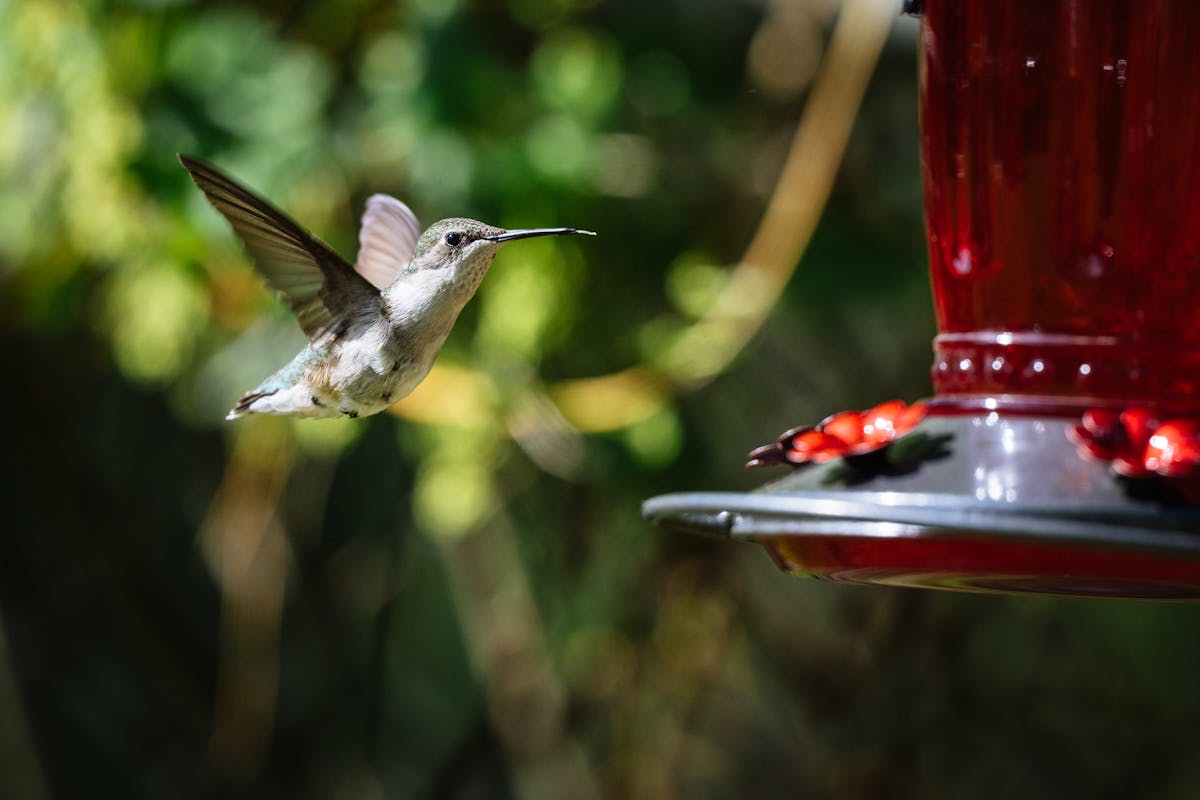
Hummingbird feeders should not be placed in direct sunlight. The heat can spoil the nectar quickly and encourage bacteria and mold growth. Instead, hang feeders in the shade. This will slow fermentation, meaning you won’t have to clean and refill them as often. If a feeder is in the sun, you might need to change the nectar daily during hot weather.
Benefits of Shade
-
Prevents spoilage: Direct sunlight heats the sugar water, causing it to spoil too soon.
-
Deters bacteria growth: Spoiled nectar is harmful to hummingbirds. Keeping the feeder in the shade helps keep their food safe longer.
-
Less frequent cleaning: Nectar lasts longer in the shade, so you won’t need to clean or refill the feeder as often!
Hummingbird Feeders be in the Sun
Tips for Placing Feeders
Find a Shady Spot
-
Hang the feeder where it will get afternoon shade, like near a tree or on a porch.
Provide Quick Cover
-
Position the feeder close to trees or shrubs. This gives birds a safe place to rest and perch before and after feeding.
Create Your Own Shade
-
If there are no trees nearby, make your own shade. You can use a homemade cover, like a plastic placemat or small umbrella, as shown in this YouTube video.
Consider Hummingbird Preferences
-
In general, shade is best. However, some hummingbirds might visit feeders in the sun. If your feeder is in the sun, be ready to clean and change the nectar more often.
Do Hummingbirds Prefer Feeders in the Sun or Shade?
Hang your hummingbird feeder in a spot with afternoon shade. This helps prevent the nectar from spoiling too quickly. Morning sun is okay, but intense afternoon sun can cause the sugar water to ferment or mold, which is bad for hummingbirds.
Key Points to Remember
-
Prevent spoilage: Direct sun heats the nectar and speeds up spoilage.
-
Keep it visible: Choose a spot that is still visible to the birds, like dappled shade under a tree.
-
Provide perching spots: Shade serves as a natural resting place for hummingbirds, making it more attractive to them.
-
Adjust for heat: In very hot conditions, you may need to change the nectar every one to two days, even if the feeder is in shade.

MD Imdadul Haque is the founder of BirdzFly, a research-backed resource on North American backyard birds. Drawing on years of independent study into bird identification, behavior, and migration patterns, he writes in-depth guides designed to help US birders understand the species in their own backyards — from common feeder visitors to seasonal migrants passing through.