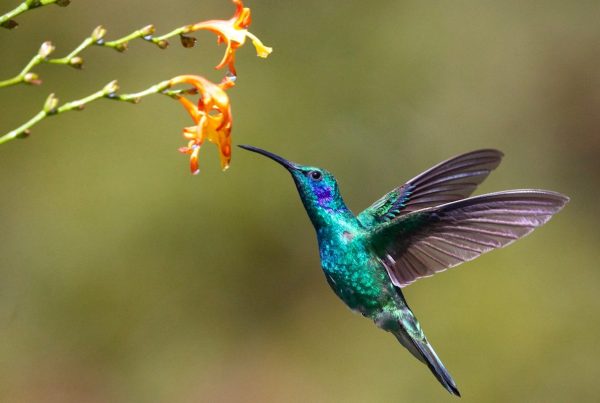

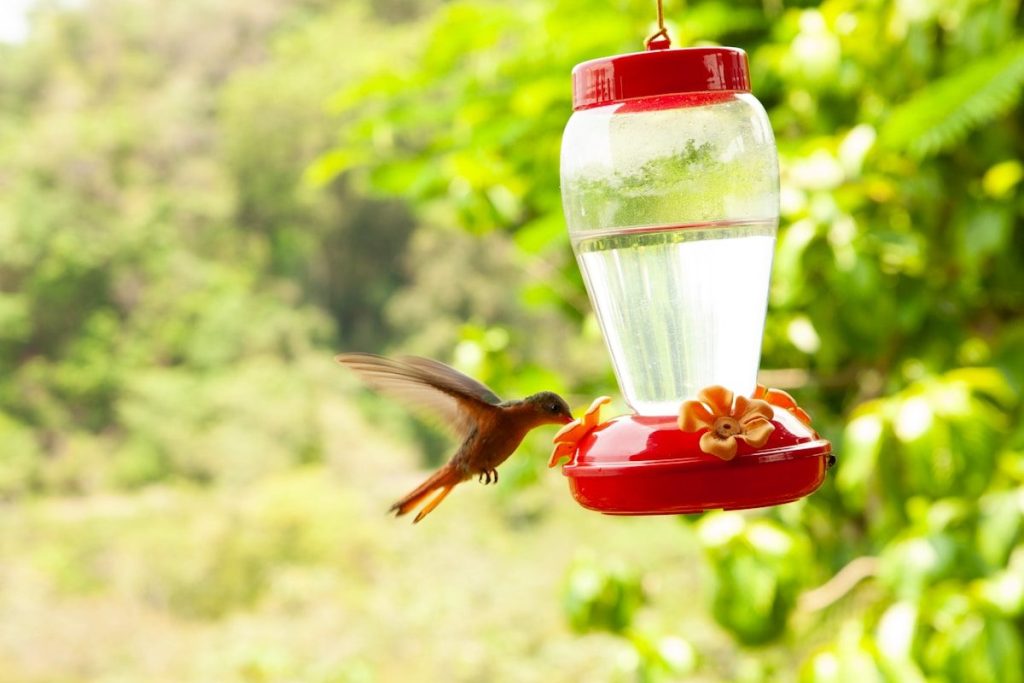
Hummingbird Feeder
Hummingbird feeders need to be cleaned more often than most people clean them. Sugar water spoils fast — especially in summer heat — and a feeder with cloudy nectar or black mold isn’t just unappealing to hummingbirds. It can make them sick and kill them.
The good news is that a thorough cleaning takes about five minutes once you have the right tools and a routine.
How Often
- Above 90°F: Every 1–2 days
- 70–90°F: Every 2–3 days
- Below 70°F: Every 4–5 days
These are maximums, not targets. Cloudy nectar, black spots, or a syrupy film on the ports means clean it now regardless of schedule.
Most people clean far less often than this. A feeder left unchanged for a week in summer heat is almost certainly growing mold and fermenting sugar.
What You Need
- Warm water
- White vinegar or unscented dish soap
- Bottle brush for the reservoir
- Port cleaning brushes — small narrow brushes that fit inside the feeding ports
- A basin or sink large enough to soak the parts
Port brushes are sold in packs specifically for hummingbird feeders, cheap, and genuinely worth having. The ports are where mold hides and where a regular brush can’t reach.
Skip bleach for routine cleaning. It leaves residue that’s hard to fully rinse and can harm hummingbirds if traces remain. White vinegar handles mold and mineral deposits without that risk.
Step by Step
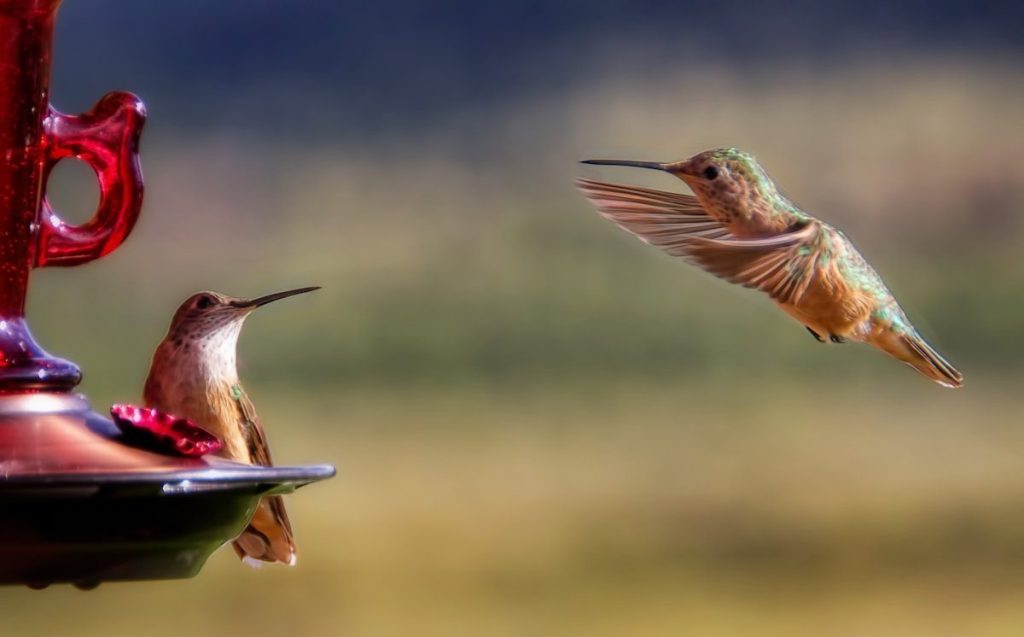
Hummingbird Feeder
Step 1: Empty completely
Pour out remaining nectar. Never refill over old nectar — even clear-looking sugar water can be fermenting or bacterially contaminated.
Step 2: Disassemble
Take apart everything removable: reservoir, base, port inserts, flower decorations, perch rings. Clean each piece separately. Mold hides in every joint.
Step 3: Hot water rinse
Rinse all parts under hot running water first to remove loose residue before scrubbing.
Step 4: Scrub
Soak in warm water with white vinegar (1 part vinegar to 4 parts water) or a small amount of dish soap for 10–15 minutes if there’s visible buildup. Then:
- Bottle brush on the reservoir interior
- Port brushes through every port — push all the way through and twist
- Toothbrush or small brush on the base channels and crevices
Black mold spots need direct scrubbing — soaking alone won’t remove them. If mold is deeply embedded in soft plastic or rubber parts, replace them.
Step 5: Thorough rinse
Rinse everything under running water until no soap or vinegar smell remains. Incomplete rinsing is a common failure point.
Step 6: Dry and refill
Air dry or dry with a clean cloth. Reassemble when dry. Refill with fresh nectar: 1 part plain white sugar to 4 parts water, boiled and cooled. No honey, no brown sugar, no red dye.
Dealing with Black Mold
Black mold (typically Aspergillus) produces toxins that cause aspergillosis — a fatal fungal infection in hummingbirds. To remove it: soak in undiluted white vinegar for 30–60 minutes, scrub with port brushes, rinse very thoroughly. If spots remain after scrubbing, replace that part.
Prevention is simpler than treatment: clean on schedule and the mold never gets a foothold.
What Makes a Feeder Easy to Clean
When buying a feeder, look for: wide mouth opening a bottle brush can reach, ports that unscrew or pop out, smooth interior surfaces, dishwasher-safe parts. Decorative feeders with narrow necks and non-removable ports look attractive but are much harder to clean properly. A simple feeder that gets cleaned regularly beats a beautiful one that doesn’t.
FAQ
How often should I clean my hummingbird feeder?
Every 2–3 days in moderate weather, every 1–2 days above 90°F. More often if you see cloudiness or black spots.
Can I use bleach?
Not for routine cleaning. White vinegar is effective and safe. Bleach residue is hard to fully remove and can harm birds.
What causes black spots?
Black mold, most commonly Aspergillus. It grows in sugar water left too long, especially in heat. Scrub with undiluted white vinegar and rinse thoroughly.
How do I make the nectar?
One part plain white sugar to four parts water. Boil, cool completely, fill. See our complete nectar recipe for details.
For more on feeder setup, see our post on why hummingbirds fight at feeders and how to reduce it.

MD Imdadul Haque is the founder of BirdzFly, a research-backed resource on North American backyard birds. Drawing on years of independent study into bird identification, behavior, and migration patterns, he writes in-depth guides designed to help US birders understand the species in their own backyards — from common feeder visitors to seasonal migrants passing through.