
Juvenile Cardinal Male vs Female
Juvenile cardinals confuse a lot of people. You’re used to the brilliant red male or the warm brown female, and then in July you see something at the feeder that looks like neither — gray-brown, dark-billed, vaguely cardinal-shaped. Both sexes look this way when they first leave the nest, and telling them apart at that stage is genuinely hard.
Here’s what to look for and when the differences start showing up.
What All Juvenile Cardinals Look Like at First
Regardless of sex, freshly fledged cardinals share the same look:
- Grayish-brown body, sometimes with a faint reddish tinge on wings and tail
- Dark bill — gray to black, nothing like the bright orange of an adult. This is the clearest signal you’re looking at a young bird.
- Crest present but less developed
- Slightly streaky or mottled on the chest and back
This holds for both sexes from fledging through the first couple of months. If the bill is dark, it’s a juvenile — full stop.
How to Separate Males from Females
In the first few weeks, it’s genuinely difficult. Even experienced birders hedge on this. The differences are subtle and develop gradually rather than appearing all at once.
Juvenile Males
- Slightly redder tinge on wings and tail — easier to see in direct light
- Red starts appearing on the crest first, usually by late summer
- The red comes in unevenly — an August male might look oddly patchy, brown in some places, reddish in others
- By October or November, most first-year males have a recognizable red tinge, though duller than adult males
Juvenile Females
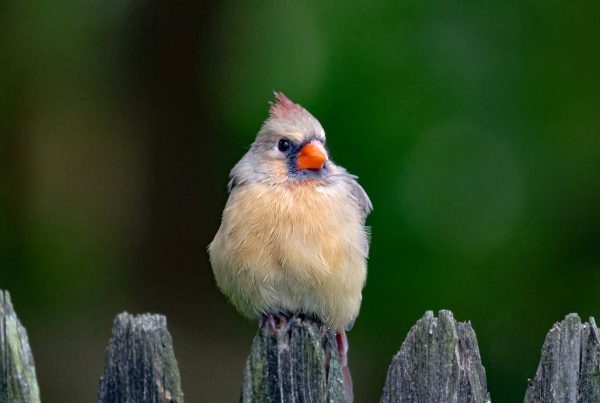
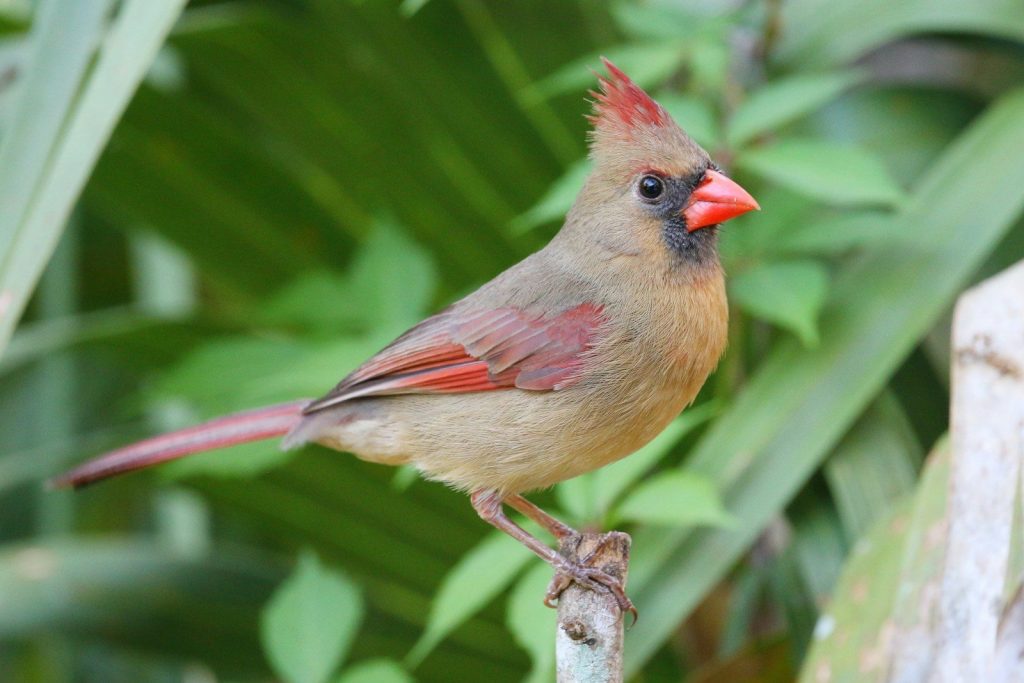
- Warmer, more consistently brown — less red tinge than males at the same age
- The brown deepens straight into adult female plumage without going through a patchy red stage
- Bill lightens to orange on roughly the same timeline as males
- Most females look like adult females by their first winter
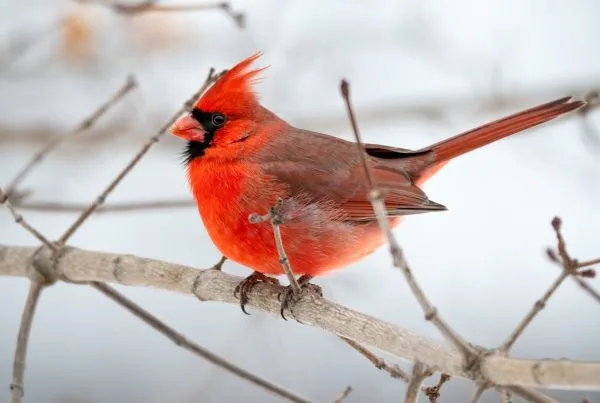
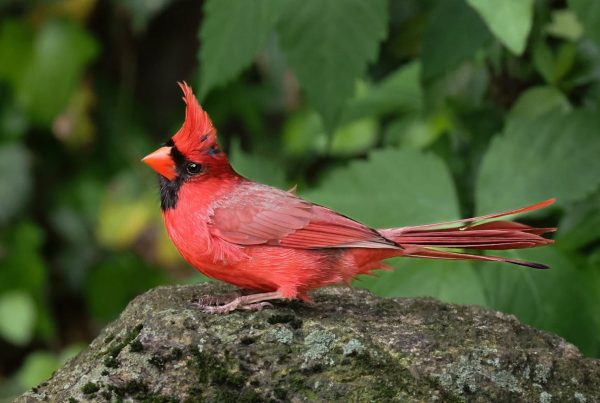
The practical shortcut: any red feathers at all means male. A single red feather on the crest or wing is diagnostic. Females don’t develop red at any age.
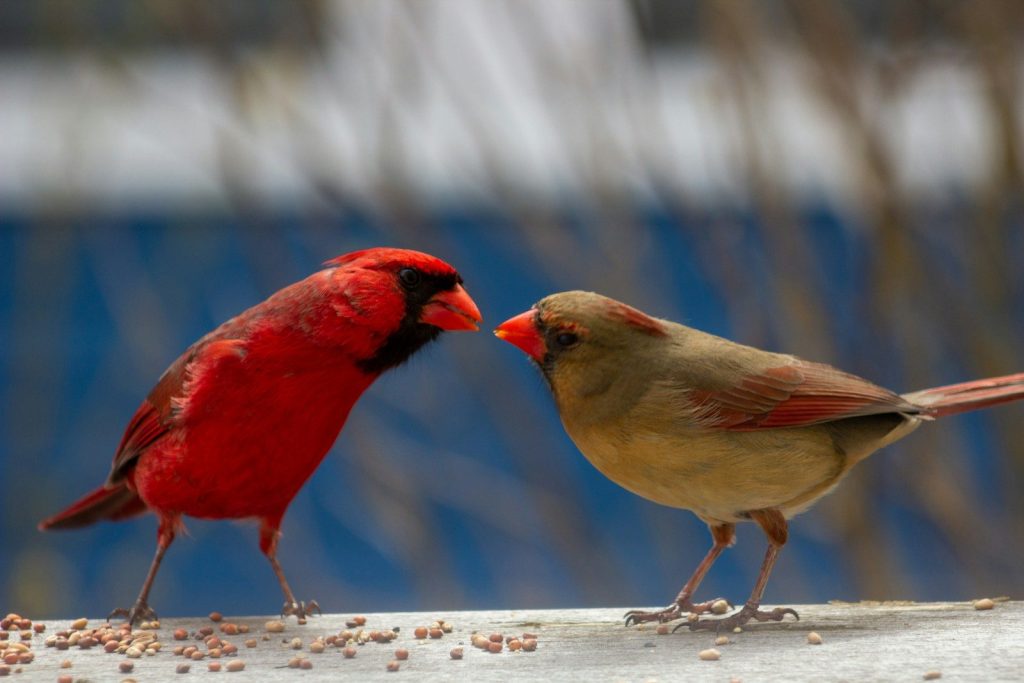
Juvenile Cardinal Male vs Female
How the Plumage Changes Over Time
| Age | Male | Female |
|---|---|---|
| Fledgling (0–4 weeks) | Gray-brown, dark bill | Gray-brown, dark bill |
| 2–3 months | Faint red tinge on wings/tail | Warming to brown, bill lightening |
| 4–5 months (fall) | Patchy red — crest and wings first | Adult female coloring mostly in |
| 6–8 months (first winter) | Recognizably red but duller than adult | Full adult female plumage |
| 12+ months | Full bright red adult plumage | Full adult female plumage |
Males take a full year to hit their adult colors. Females get there faster — most look like adult females by their first winter, which is part of what makes sexing juveniles tricky in fall.
The Dark Bill Trick
Adult cardinals of both sexes have bright orange bills. Juvenile bills start dark gray to black and lighten gradually over the first several months. You can roughly age a young cardinal by bill color: all dark means recently fledged, partly orange means a few months old, fully orange means approaching adult.
It’s not a perfect aging tool, but it’s useful — especially when you can’t get a clear look at the feathers.
When to Expect Juvenile Cardinals at Your Feeder
June through September is the main window, though in southern states you can see juveniles from late May through early October since cardinals often raise 2–3 broods a year.
Young birds at feeders tend to be slightly awkward — landing clumsily, sitting still longer than an adult would, sometimes waiting for a parent to bring food before learning to find it themselves. Within a few weeks they settle in and become as confident as any adult.
FAQ
How do you tell a juvenile male cardinal from a juvenile female?
Look for any red feathers. Even one or two on the crest or wings means male. Juvenile females stay brown throughout and never develop red feathers.
What does a baby cardinal look like?
Gray-brown, dark bill, smaller crest than adults. Both sexes look nearly identical at first.
When do male cardinals turn red?
Red starts showing around 3–5 months, usually on the crest and wings first. Full adult plumage takes about 12 months.
Why does my cardinal have a black bill?
It’s a juvenile. Dark bills are always young birds — the bill lightens to orange over the first several months of life.
For more on cardinals, see our guides on feeding cardinal birds and the best cardinal feeders.

MD Imdadul Haque is the founder of BirdzFly, a research-backed resource on North American backyard birds. Drawing on years of independent study into bird identification, behavior, and migration patterns, he writes in-depth guides designed to help US birders understand the species in their own backyards — from common feeder visitors to seasonal migrants passing through.