
Blue Jay Behavior
Blue Jays Eat
I saw a blue jay fly up to the eaves of my house and then down to the roof. It had been carving out a wasps’ or bees’ nest. Do blue jays eat those bugs? asks Melody VanOteghem from Milan, Illinois. The question, What Foods Do Blue Jays Eat? encompasses a diverse diet that includes insects such as wasps and bees, which are indeed part of their nutritional intake. In addition to these insects, blue jays also consume seeds, nuts, fruits, and occasionally small vertebrates. Their foraging behavior demonstrates adaptability, allowing them to thrive in various habitats. Understanding their dietary preferences can enhance our appreciation for these vibrant birds.
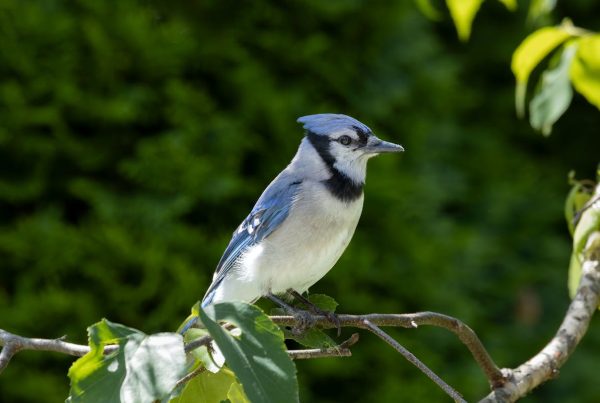
“Blue jays are fun to watch,” say birding authorities Kenn and Kimberly Kaufman. They are intelligent and adaptable birds. Their diet is highly varied.
Diet of Blue Jays
Blue jays feed on more than just nuts and seeds. They eat:
-
Berries
-
Bugs
-
Frogs
They don’t usually eat adult bees or wasps. However, they will sometimes bust open a wasps’ nest to feast on the soft larvae inside. Blue jays have been observed swarming a small wasps’ nest, catching and squashing the adult wasps. The jays “just chop down with their beak and grab the wasp larvae,” Kenn and Kimberly noted.
Feeding Habits
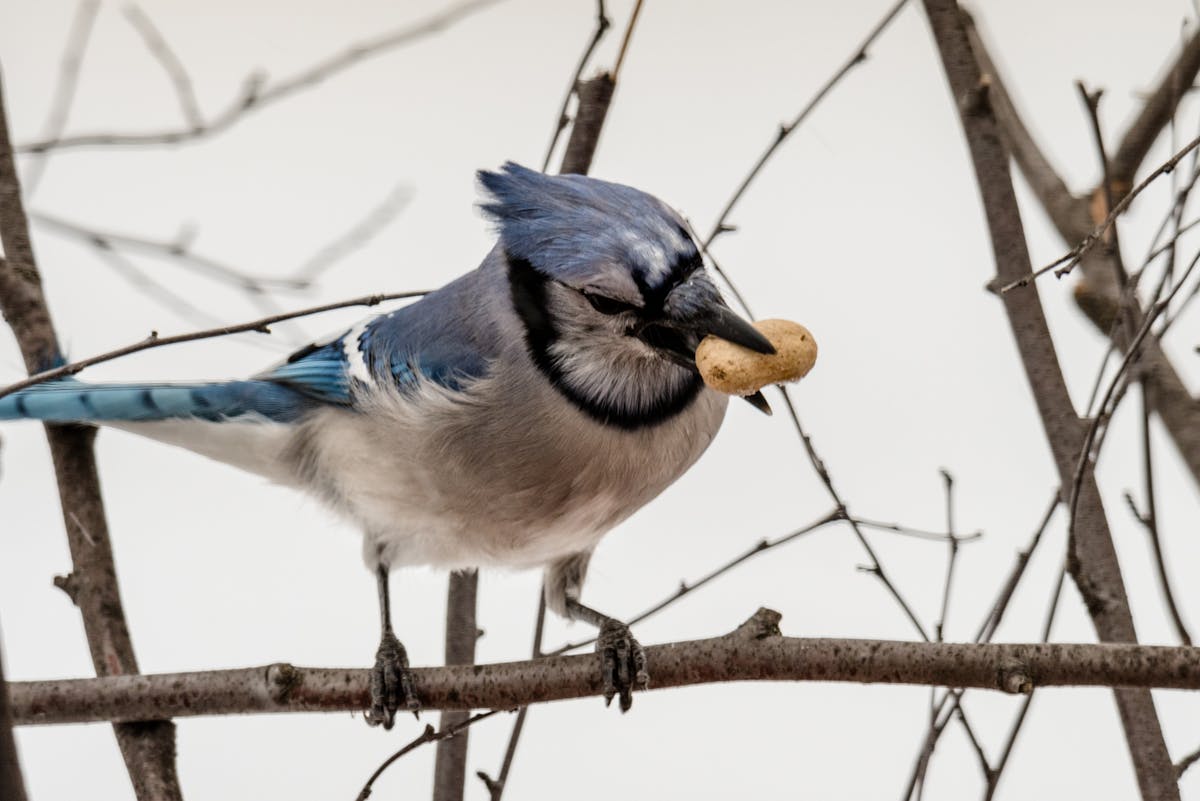
“Blue jays like to eat from tray and hopper feeders, or just about anything flat that holds pet food,” say Kenn and Kimberly. Their substantial bill can quickly crack open:
-
Peanuts
-
Acorns
-
Sunflower seeds
-
Suet
“We joke that these bright birds must have what we call ‘peanut radar.’ We may not see any blue jays for days, but as soon as we put out the peanuts, they show up. Peanuts offer more than protein; they also provide unsaturated fat.”
Blue Jays Crack Open Nuts
“How do blue jays know to crack open the shell of a peanut?” asks reader Dennis Hockensmith from Boonsboro, Maryland.
Blue jays are intelligent and versatile. They can get more than 40% of their diet from nuts. They eat:
-
Acorns
-
Hazelnuts
-
Hickory nuts
To break these open, jays place them against a perch with one foot and hammer away at them with their beaks.
Peanuts aren’t native to North America, but they resemble native nuts enough that blue jays quickly learn to crack them open. They also watch each other, so once one jay figures out the peanuts, others will follow.
Foods Blue Jays Eat
Do Blue Jays Cache Food?
Extra seeds and peanuts may be stored by blue jays for future consumption. The first jay of the season to greet us is the blue jay, its throat pouch filled with peanuts or acorns. These birds cache seeds and nuts, stuffing them into the ground to recover later. Unused caches may grow into new trees, renewing forests or surprising us with sunflower sprouts!
“The blue jays around my feeders are almost impossible to photograph,” says Linda Taylor from Waco, Texas. “They swoop in, grab a peanut, and dart away to eat or store it. For a snack for a blue jay, crack open some peanuts and toss them in the yard. Watch as they grab one peanut and take off, often popping another one in their craw before flying off.”
Conclusion
Next, find out how to distinguish between bluebirds and blue jays!

MD Imdadul Haque is the founder of BirdzFly, a research-backed resource on North American backyard birds. Drawing on years of independent study into bird identification, behavior, and migration patterns, he writes in-depth guides designed to help US birders understand the species in their own backyards — from common feeder visitors to seasonal migrants passing through.