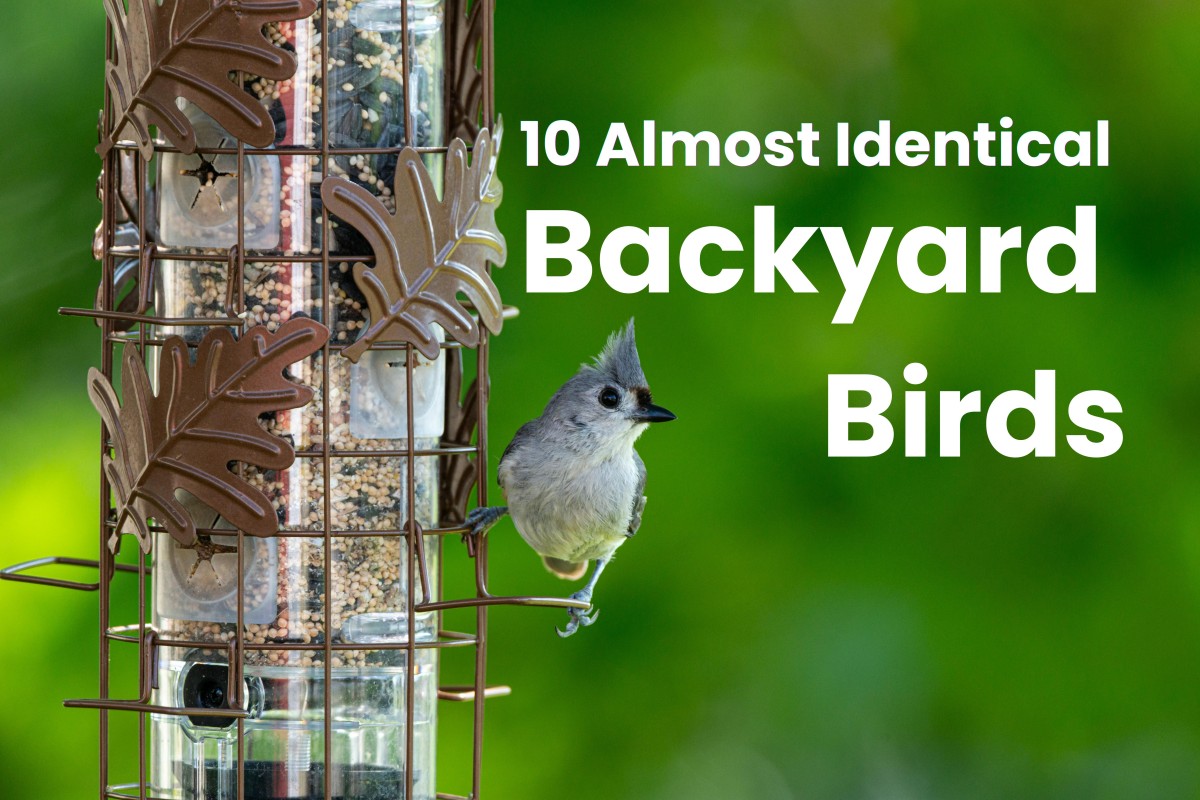
10 Almost Identical Backyard Birds
Birdwatching can be tricky for everyone, from beginners to experts. When you see a bird at your feeder, you might wonder: Is that a House Finch or a Purple Finch? Is it a Downy or a Hairy Woodpecker? Here’s a guide to help you identify 10 of North America’s most commonly confused backyard bird pairs.
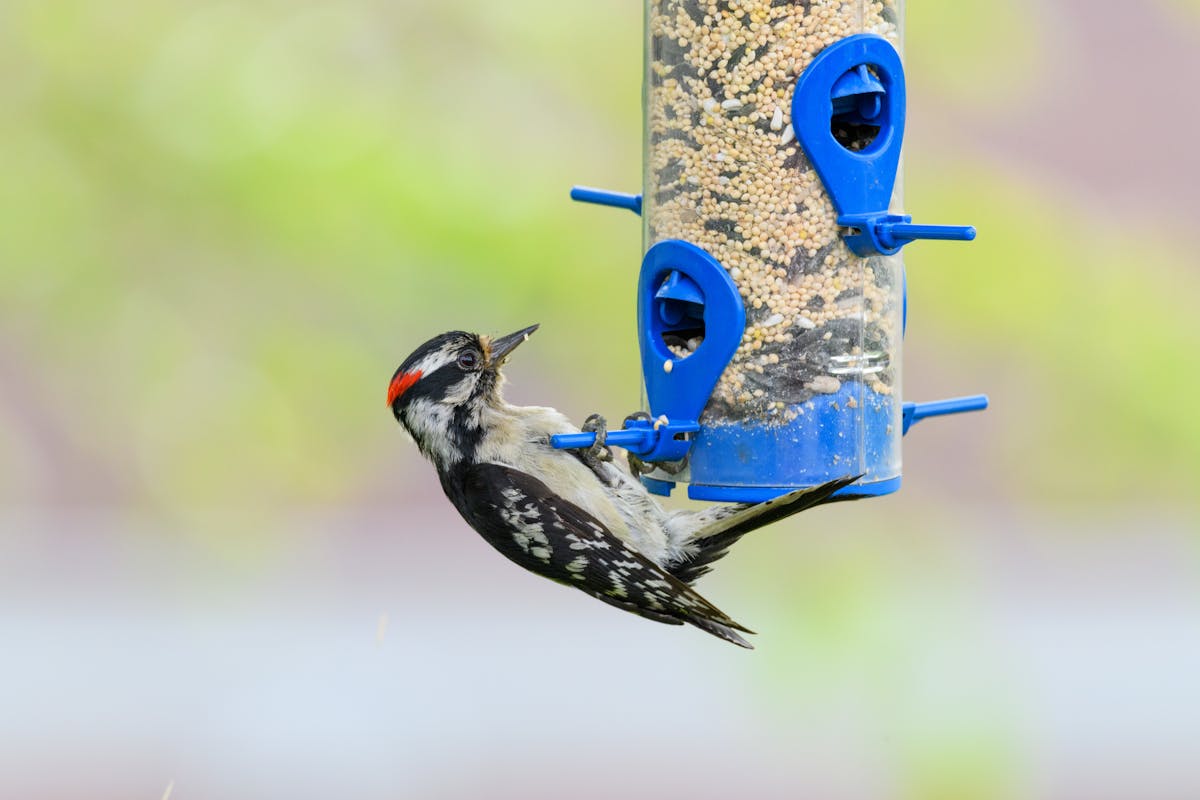
Downy Woodpecker vs. Hairy Woodpecker
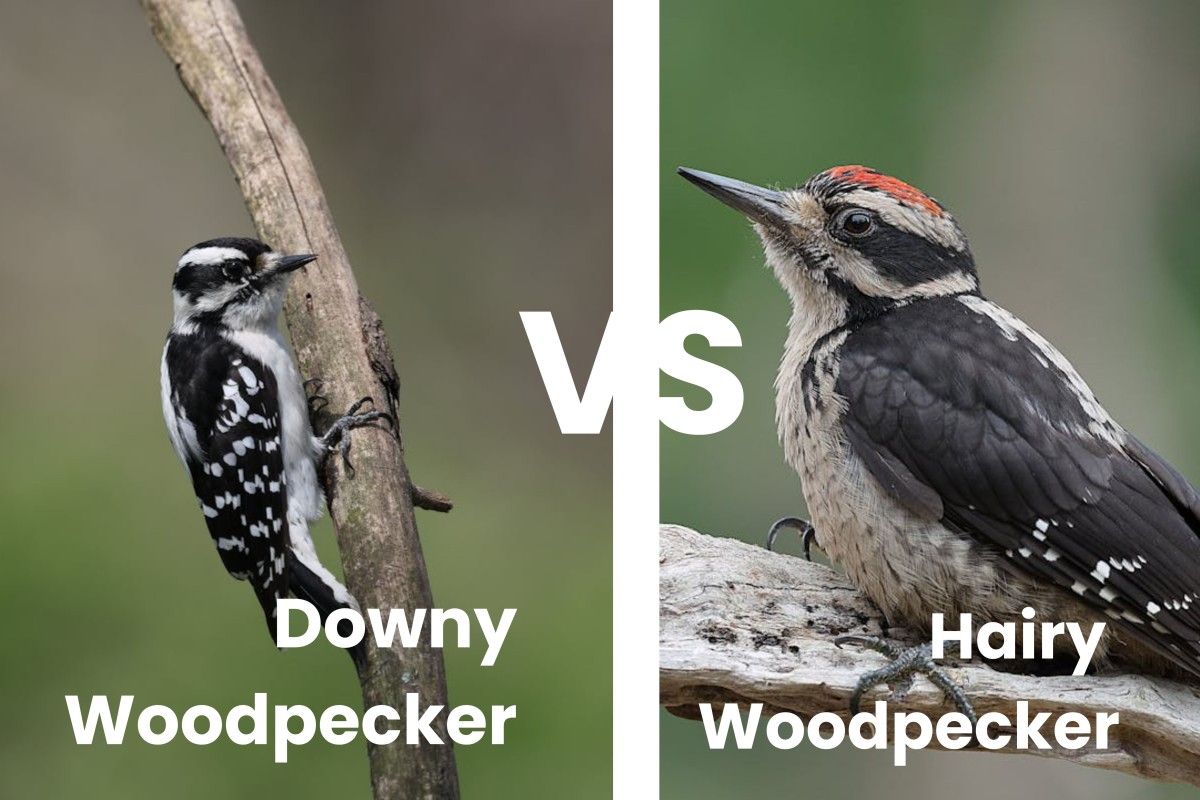
Downy Woodpecker vs. Hairy Woodpecker
Why They’re Confusing
These two birds look very similar. They are both black and white with:
-
A white back stripe
-
Spotted wings
-
A red patch on the male’s head
The Key Difference
Bill length is the main way to tell them apart:
-
Downy Woodpecker: Short, stubby bill (about half the length of its head)
-
Hairy Woodpecker: Long, chisel-like bill (nearly the width of its head)
Other Helpful Clues
-
Size: Hairy is larger, about the size of a robin, while Downy is sparrow-sized.
-
Outer Tail Feathers: Downy has small black spots; Hairy’s are all white.
-
Call: Downy has a soft, descending whinny; Hairy’s call is sharper and louder.
The One-Line Rule
If the bill seems too small for a woodpecker, it’s a Downy. If it looks just right, it’s a Hairy.
House Finch vs. Purple Finch
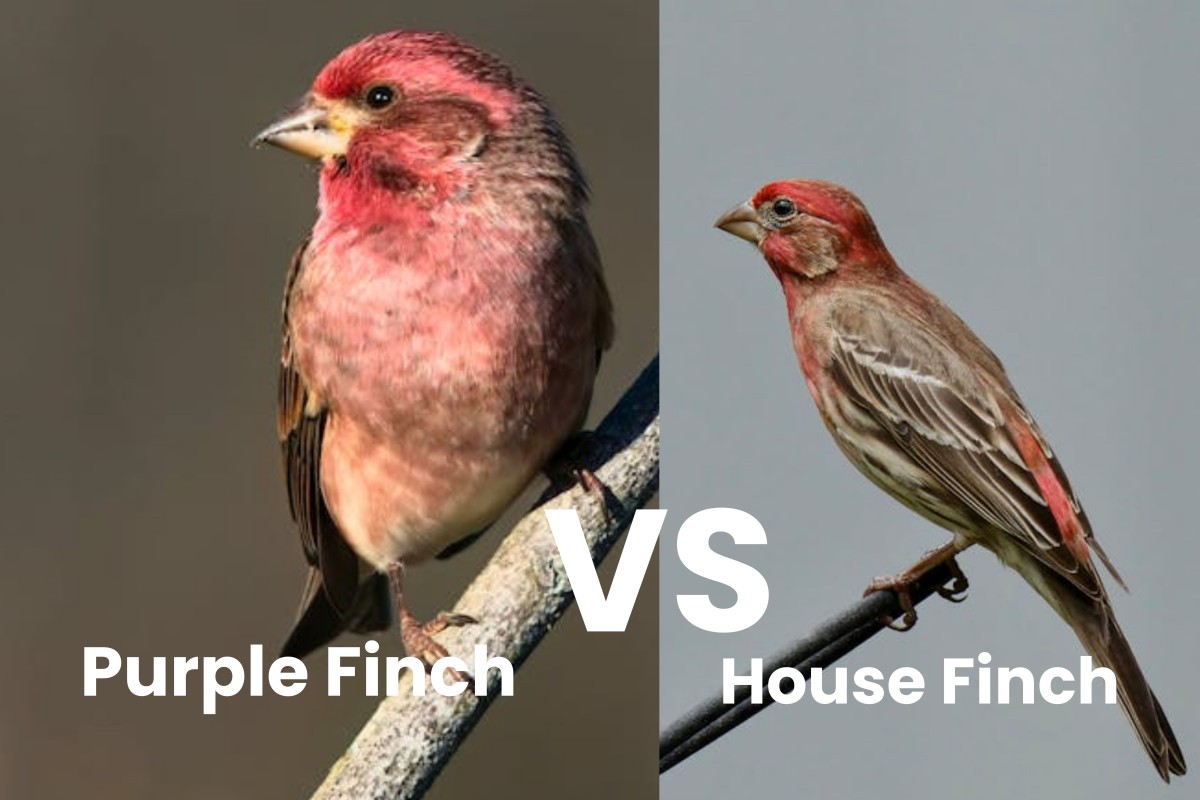
House Finch vs. Purple Finch
Why They’re Confusing
Both are small, streaky brown finches with red on the males. They visit feeders and have similar songs.
The One Difference
Where the red is located:
-
House Finch: Red is on the forehead, breast, and rump, with brown streaking beneath.
-
Purple Finch: Red appears more washed over, especially on the head and upper body.
Other Helpful Clues
-
Face Pattern: Purple Finch has a bold facial pattern; House Finch has a less ornate face.
-
Bill: Purple Finch has a fuller, curved bill; House Finch has a slender bill.
-
Female: Female Purple Finches have a pronounced facial pattern; House Sparrows are more plain.
The One-Line Rule
If the red is a uniform wash, it’s a Purple Finch. If it’s in patches, it’s a House Finch.
Cooper’s Hawk vs. Sharp-Shinned Hawk
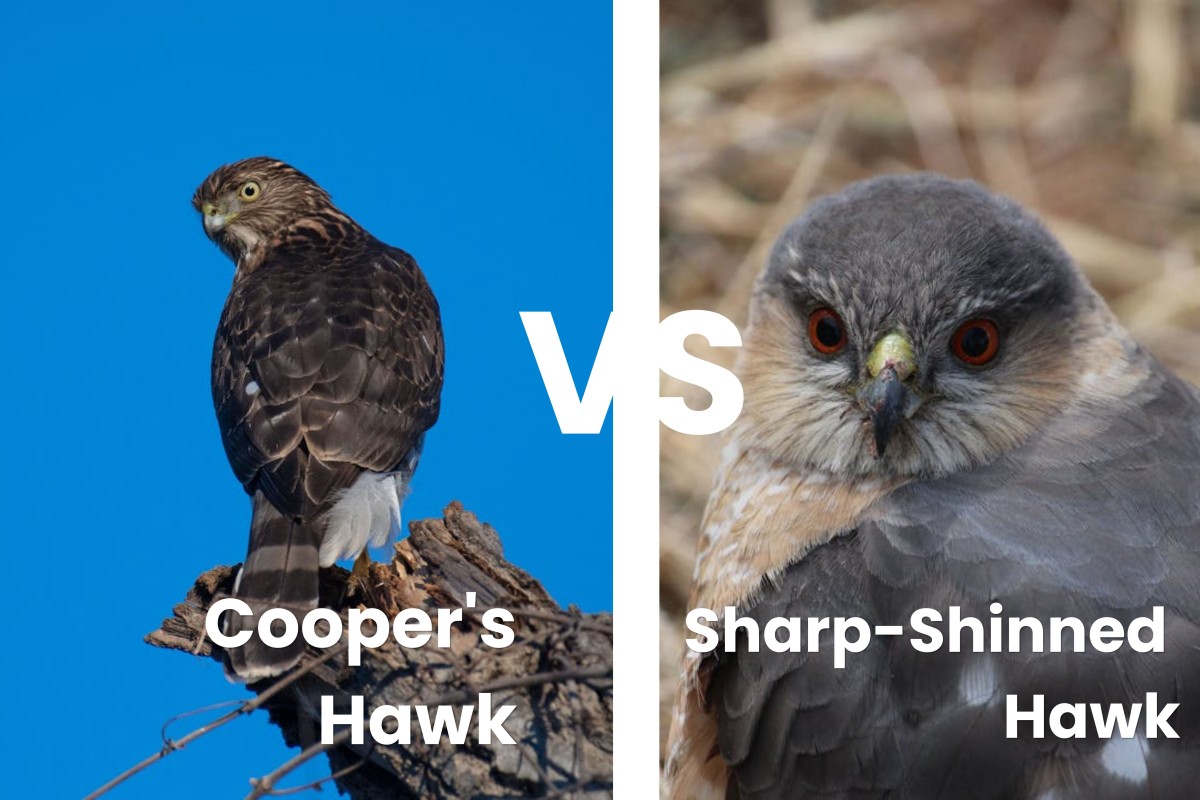
Cooper’s Hawk vs. Sharp-Shinned Hawk
Why You’re Confused
Both hawks are similar in appearance and chase songbirds at feeders.
What They Differ On
The shape of their head and tail:
-
Sharp-Shinned Hawk: Small, round head, squarish tail tip.
-
Cooper’s Hawk: Larger head that appears to have a neck, rounded tail tip.
Other Helpful Clues
-
Size: Sharp-Shinned is about the size of a Blue Jay; Cooper’s is crow-sized.
-
Cap: Cooper’s has a dark cap; Sharp-Shinned looks darker overall.
-
Flight: Cooper’s has a sharper wingbeat.
The One-Line Rule
If it has a prominent head and rounded tail, it’s a Cooper’s. If it seems headless with a square tail, it’s a Sharp-Shinned.
House Sparrow vs. Song Sparrow
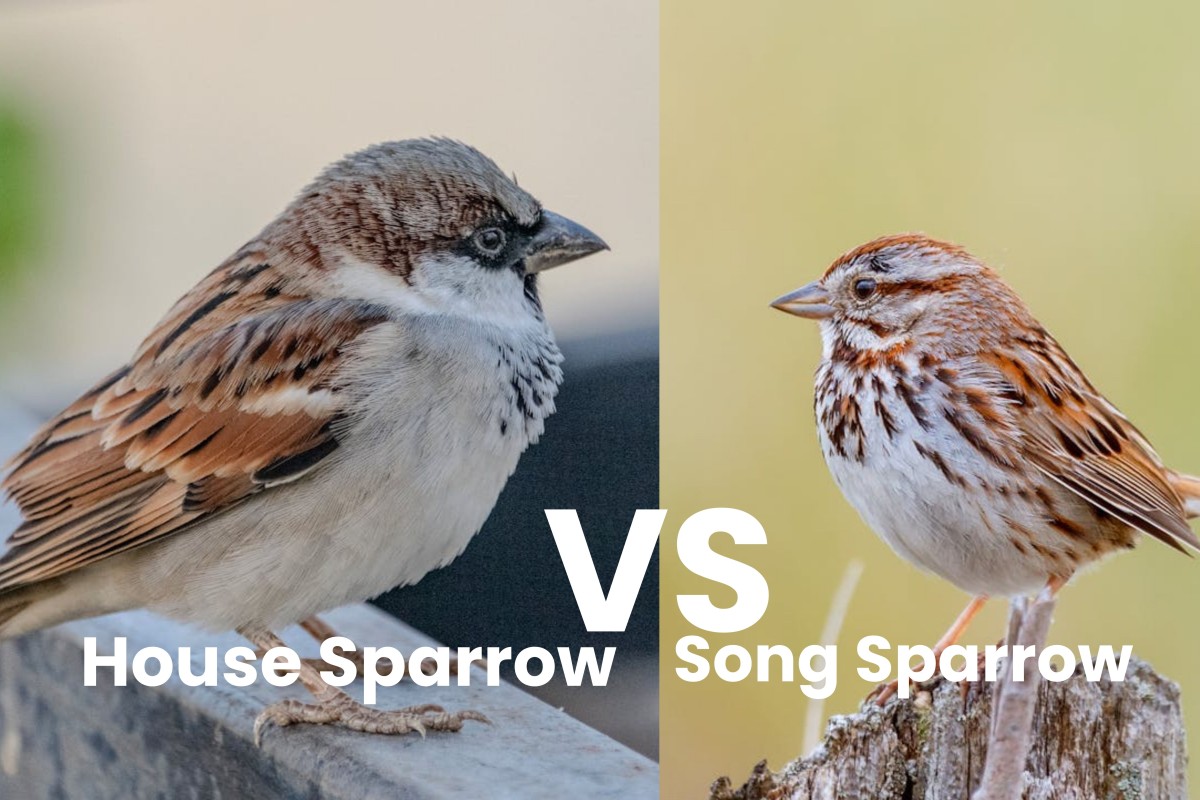
House Sparrow vs. Song Sparrow
Why They’re Tricky
Both are small, brown, streaky sparrows, making them easy to overlook.
The Key Difference
Breast pattern:
-
Song Sparrow: Heavy brown streaking with a dark breast spot.
-
House Sparrow: Gray crown and a black bib with no central spot.
Other Helpful Clues
-
Face: Song Sparrows have a bold facial pattern; House Sparrows are less defined.
-
Behavior: Song Sparrows pump their tails in flight.
-
Song: Song Sparrows sing complex melodies; House Sparrows have a monotonous chirp.
The One-Line Rule
Spot on the breast = Song Sparrow. Male black bib = House Sparrow.
American Crow vs. Common Raven
Why They’re Confusing
Both are large, all-black birds with thick bills and loud calls.
The Main Differences
-
Tail Shape: Crows have a rounded tail; ravens have a wedge-shaped tail.
Other Helpful Clues
-
Size: Ravens are larger, about the size of a Red-tailed Hawk.
-
Bill: Ravens have a curvier bill; crows have a shorter, straighter bill.
-
Voice: Crows caw; ravens have a deep, rolling croak.
The One-Line Rule
Rounded tail and classic caw = Crow. Wedge tail + deep croak = Raven.
Eastern Towhee vs. Spotted Towhee
Why They’re Two Species
Once thought to be the same, they are now recognized as different due to genetic and behavioral differences.
The Clinching Detail
White wing spots:
-
Spotted Towhee: Has white spots on its wings.
-
Eastern Towhee: Mostly solid black wings with few white spots.
Other Helpful Clues
-
Eye Color: Eastern Towhees may have pale or white eyes in the Southeast.
With these tips, you can confidently identify these backyard birds and enjoy your birdwatching experience!
Ruby-Throated Hummingbird vs. Black-Chinned Hummingbird
Why They Baffle You
In the narrow zone where these two species overlap—mostly in Texas and parts of the central Great Plains—you may face real ID challenges. Both are small, green-backed hummingbirds. Both males have dark throats. Both sexes are green above and white below with buffy sides.
The Main Difference
Throat color and tail-pumping behavior.
-
The male Ruby-Throated Hummingbird has a throat that glows bright ruby-red in good light. At times, it can look black in poor light or at the wrong angles.
-
The Black-Chinned Hummingbird male has a two-tone throat: a black upper chin and a violet purple lower gorget. It is subtler in color and lacks the same flamboyance.
Other Helpful Clues
-
Tail Pumping: Black-Chinned Hummingbirds pump their tail downward almost continuously when hovering. The Ruby-Throated Hummingbird holds its tail relatively still.
-
Primary Feathers: In high-quality photos, the Ruby-Throated has narrow, tapered outer primaries. The Black-Chinned has outer primaries that flare out more.
Millions of Hummingbirds
East of the Mississippi, it is almost certain that any hummingbird you see is a Ruby-Throated. The Black-Chinned becomes more common the farther west of the Rockies you go.
One-Line Rule
Tail movement while hovering is a strong indicator of Black-Chinned. Tail shape while hovering suggests Ruby-Throated.
Tufted Titmouse vs. Black-Crested Titmouse
Why They’re Confusing
These two species were once grouped together. Both are small, gray, crested birds with dark eyes and a similar body shape. They frequent feeders in their respective ranges.
The Key Difference
Crest color.
-
The Tufted Titmouse, found across eastern North America, has a gray crest that blends in with its gray body.
-
The Black-Crested Titmouse, from Texas and northeastern Mexico, features a bold black crest. This stands out against a pale forehead and gray body.
Other Helpful Clues
-
Forehead: The Black-Crested has a very pale whitish forehead below its black crest, giving it a two-tone effect. The Tufted Titmouse usually has a dull gray forehead.
-
Geography: In Texas, both are possible. East of Texas, only the Tufted is present.
One-Line Rule
Black crest = Black-Crested; Gray crest = Tufted.
Dark-Eyed Junco Variations: Oregon or Slate-Colored
Dark-Eyed Junco Variations
Why They’re So Confusing
The Dark-Eyed Junco has many different-looking forms. The two winter forms most confused at feeders are the Slate-Colored form and the Oregon form.
Cross Colors
Hood and back color.
-
The Slate-Colored Junco has a solid dark gray hood and back. This creates a clean, monochromatic look.
-
The male Oregon Junco has a striking black hood with a rusty brown back and buffy sides. It looks like a different bird.
Other Helpful Clues
-
Range: The Oregon form is in the West, while the Slate-Colored is in the East. There is some overlap in the central states during winter.
-
Field Mark: Both forms have white outer tail feathers that flash brightly when the bird flies.
One-Line Rule
Uniform gray = Slate-Colored; Rusty back with black hood = Oregon.
Carolina Wren vs. House Wren
Why They’re Confusing
Both are small, brown, and active wrens. They enter dense vegetation and visit backyard spots. They keep their tail upright and are vocal for their size.
The Important Difference
Eyebrow stripe and color saturation.
-
The Carolina Wren has a large, bright white eyebrow stripe. This is visible from a distance. Its body is warm rufous-brown on top with warm buff below.
-
The House Wren has a very faint eyebrow stripe—if it exists at all. Its body is a duller grayish-brown with thin dark barring.
Other Helpful Clues
-
Bill: The Carolina Wren has a longer, more curved bill. The House Wren’s bill is shorter and less curved.
-
Voice: The Carolina Wren’s song is loud and rich, often described as “teakettle-teakettle-teakettle.” The House Wren’s song is a fast, bubbling torrent.
One-Line Rule
Bold white eyebrow and warm color = Carolina Wren; Dull brown overall with a pale brow = House Wren.
A Quick Reference Guide
| Pair | Key Field Mark | Reliable Trick |
|---|---|---|
| Downy vs. Hairy Woodpecker | Bill length | Short bill = Downy, Long bill = Hairy |
| House Finch vs. Purple Finch | Red distribution | Patchy red = House, Washed red = Purple |
| Cooper’s vs. Sharp-Shinned Hawk | Head projection + tail shape | Big head = Cooper’s, Headless = Sharp-Shinned |
| House Sparrow vs. Song Sparrow | Breast pattern | Central breast spot = Song Sparrow |
| American Crow vs. Common Raven | Tail shape + voice | Fan tail + caw = Crow, Wedge tail + cronk = Raven |
| Eastern vs. Spotted Towhee | Wing spots | White spots = Spotted, Plain = Eastern |
| Ruby-Throated vs. Black-Chinned Hummingbird | Tail behavior | Pumping tail = Black-Chinned |
| Tufted vs. Black-Crested Titmouse | Crest color | Black crest = Black-Crested |
| Slate-Colored vs. Oregon Junco | Hood + back color | Rusty back = Oregon form |
| Carolina Wren vs. House Wren | Eyebrow stripe | Bold white eyebrow = Carolina |
The Secret That the Best Birders Know
What makes a good birder great? It’s not just memorizing all field marks. It’s developing what ornithologists call jizz. This term describes the overall impression a bird presents—its shape, posture, movement, behavior, and energy.
Before you identify a bird, consider how it behaves:
-
Does it appear nervous or confident?
-
Does it dart quickly or hop steadily?
-
Does it stay close to the feeder or stick to the edges?
-
Does it flee at the slightest noise or stand its ground?
For example, the Hairy Woodpecker moves with purpose, while the Cooper’s Hawk holds itself with authority.
Learn the field marks, but also learn to feel the bird. This combination of details and overall impression makes identification more about recognition than detective work.
It’s like meeting someone you’ve already met!
Still learning? Check out:

MD Imdadul Haque is the founder of BirdzFly, a research-backed resource on North American backyard birds. Drawing on years of independent study into bird identification, behavior, and migration patterns, he writes in-depth guides designed to help US birders understand the species in their own backyards — from common feeder visitors to seasonal migrants passing through.