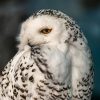

Big yellow eyes, nocturnal habits, a habit of hunting from a still perch at night — the Tawny Frogmouth checks every visual box people associate with owls. It isn’t one. It’s not even a close relative. The Tawny Frogmouth belongs to an entirely different bird order, and the confusion is common enough that Australian wildlife groups regularly publish articles specifically to correct it.
Not an Owl — A Different Order Entirely
Owls belong to the order Strigiformes. The Tawny Frogmouth belongs to Caprimulgiformes, the order that includes nightjars, and its own specific family, Podargidae — genuinely closer in evolutionary terms to nightjars than to any owl species. Despite the striking surface resemblance in appearance and nocturnal lifestyle, the two groups are not closely related at all; the similarities are a case of convergent evolution, where unrelated species independently develop similar traits because they’re solving similar survival problems.
Basic Facts
| Feature | Detail |
|---|---|
| Scientific name | Podargus strigoides |
| Family | Podargidae (frogmouths) |
| Length | 13–21 inches (34–53 cm); females smaller than males |
| Weight | Up to 1.5 lbs (680g) |
| Wingspan | 25–38 inches (64–97 cm) |
| Lifespan | Up to 10 years documented under human care |
| Eggs per clutch | 1–3, white |
| Incubation | About 30 days |
| Conservation status | Least concern (IUCN) |
The Field Marks That Actually Separate Them
A few reliable differences distinguish a Tawny Frogmouth from any true owl at a glance:
- Bill shape — Owls have a downward-hooked bill built for tearing prey; frogmouths have a broad, flattened, wide bill that rises slightly at the tip, built for a completely different hunting method
- Feet — Owls have strong, sharply taloned feet used to grip and kill prey. Frogmouth feet are comparatively weak, since they don’t rely on their feet to catch food at all
- Eye position and posture — Frogmouths often perch upright with the bill pointed skyward during their camouflage display, a posture true owls don’t typically adopt
A Completely Different Hunting Strategy
This is the real functional difference behind the physical one. Owls hunt primarily using their feet — striking prey with powerful, taloned feet and killing with the grip itself. Tawny Frogmouths do the opposite: their feet are weak and largely irrelevant to hunting, so they catch prey entirely with the bill. They typically hunt by sitting motionless on a low perch, watching for movement, then dropping or lunging directly onto prey on the ground — insects, small reptiles, and occasionally small mammals — seizing it with the wide bill rather than the feet.
The Camouflage Display: A Broken Branch
The Tawny Frogmouth’s most famous defense has nothing to do with flight or fighting. When it senses a threat, it freezes in place, points its bill straight up toward the sky, closes its eyes to narrow slits, and holds the pose motionless — an act so convincing that the bird genuinely disappears against the mottled gray-brown bark of the branch it’s perched on. This “broken branch” display works specifically because the bird’s actual plumage pattern — streaked gray, black, white, and rusty brown — closely mimics tree bark texture, making the illusion functional rather than just a behavioral trick.
During the day, Tawny Frogmouths typically roost lengthwise along a branch with the body held rigid, eyes closed, relying entirely on this camouflage rather than fleeing from approaching threats — a strategy that works remarkably well against most predators but makes the species vulnerable to a very different modern threat: vehicle collisions, since a motionless bird on a low branch near a road doesn’t register as something to avoid.
Diet and Hunting Behavior
Tawny Frogmouths are opportunistic nocturnal hunters, taking a genuinely wide range of prey: insects (moths, beetles, and other night-flying insects make up a large portion of the diet), along with spiders, small reptiles, frogs, and occasionally small mammals and birds when the opportunity arises. Unlike true owls, which typically strike prey mid-flight or on open ground using their feet, frogmouths more often forage from a low perch, watching for movement below before dropping directly onto prey and seizing it with the bill.
Long-Term Pair Bonds
Tawny Frogmouths are typically socially monogamous, with pairs remaining together across breeding seasons and returning to the same general nesting area year after year. Both parents share incubation and chick-feeding duties — research has found that daytime incubation is often performed by the male in many observed pairs, while the female frequently takes the night shift, a division of labor that lines up with each sex’s alertness patterns relative to the bird’s overall nocturnal lifestyle.
Suburban Success Story
Unlike many native species that struggle as urban development expands, Tawny Frogmouths have adapted remarkably well to suburban environments across Australia, regularly roosting and breeding in garden trees and street trees as long as nearby foraging habitat remains available at night. Research published in the journal Emu has specifically documented high reproductive success for the species in urban and suburban settings, making it one of the more visible nocturnal birds for Australians without needing to venture into remote bush habitat.
FAQ: Tawny Frogmouth
Is a Tawny Frogmouth an owl?
No — despite the strong visual resemblance, it belongs to an entirely different bird order (Caprimulgiformes) and is more closely related to nightjars than to any owl species.
How can you tell a Tawny Frogmouth apart from an owl?
Bill shape is the clearest difference — frogmouths have a broad, flattened bill that rises slightly at the tip, while owls have a downward-hooked bill. Frogmouths also have comparatively weak feet, since they catch prey with the bill rather than the talons owls rely on.
Why does a Tawny Frogmouth point its bill upward and freeze?
It’s a camouflage defense — the posture combined with its bark-patterned plumage makes it look like a broken tree branch, allowing it to effectively disappear from predators without needing to flee.
What does a Tawny Frogmouth eat?
Primarily insects, along with spiders, small reptiles, frogs, and occasionally small mammals — caught by watching from a low perch and seizing prey directly with the bill.
For more on owls and nocturnal birds, see our guides on Great Horned Owl, Barn Owl, and Barred Owl.

MD Imdadul Haque is the founder of BirdzFly, a research-backed resource on North American backyard birds. Drawing on years of independent study into bird identification, behavior, and migration patterns, he writes in-depth guides designed to help US birders understand the species in their own backyards — from common feeder visitors to seasonal migrants passing through.